
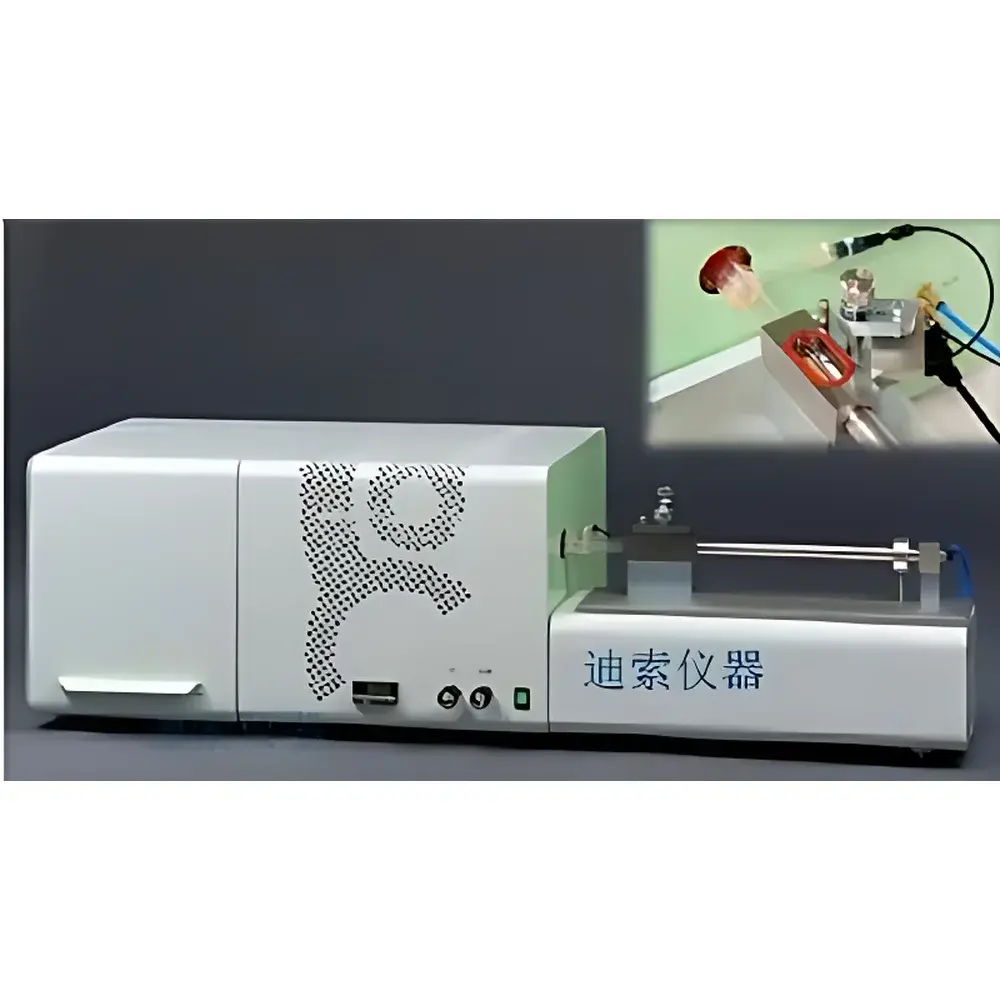
LTX Unique AOX Halogen Analyzer
| Origin | Czech Republic |
|---|---|
| Manufacturer Type | Authorized Distributor |
| Origin Category | Imported Instrument |
| Model | LTX Unique |
| Price Range | USD 55,000 – 69,000 (FOB) |
| Measurement Principle | Combustion-Coulometric Titration |
| Measurement Range | 0.1–200 µg Cl⁻ per sample |
| Accuracy | Better than ±1.5% (for 10–50 µg Cl⁻ or S) |
| Repeatability | <1% RSD |
| Detection Limit | 0.1–200 µg Cl⁻ |
| Resolution | 0.01 µg Cl⁻ |
| AOX/TX/EOX/POX Quantification Range | 0.1–320 mg Cl⁻ (absolute) |
| Analysis Time | 3–6 min per sample |
| Electrolytic Signal Resolution | 5 mV |
| Titration Current Range | 0–2000 µA |
| Electrolyte Volume | 5–35 mL |
| Software | ENGINE XS v5.2 |
| Max. Liquid Sample Volume | 100 mL (AOX/POX) |
| Max. Solid Sample Mass | 5 g |
| Dual-Furnace System | High-Temperature Combustion Furnace (up to 1200 °C |
| Power Supply | 230 V / 50 Hz, max. 1000 W (6 A) |
| Dimensions (L×W×H) | 1070 × 360 × 385 mm |
| Standard Configuration | Main analyzer unit with dual-furnace module, coulometric titration cell, integrated gas purification system, and ENGINE XS software suite |
Overview
The LTX Unique AOX Halogen Analyzer is a fully automated, combustion-coulometric instrumentation platform engineered for the precise quantification of adsorbable organic halogens (AOX), total halogens (TX), extractable organic halogens (EOX), and purgeable organic halogens (POX) in environmental matrices. It operates on the internationally recognized combustion-coulometric titration principle: samples are thermally decomposed under controlled oxygen-rich conditions in a dual-furnace system—first in a high-temperature combustion furnace (up to 1200 °C), followed by catalytic reduction in a secondary furnace (0–1100 °C)—to convert all organically bound chlorine, bromine, and iodine into soluble halide ions (predominantly Cl⁻). These ions are subsequently absorbed into an electrolyte solution and quantified via coulometric titration, where stoichiometric silver ion generation enables direct, calibration-free mass determination based on Faraday’s law. Designed to meet stringent regulatory requirements—including ISO 9562, DIN 38409-H11, EPA Method 1650, and EN ISO 9562—the instrument delivers trace-level sensitivity and high reproducibility across complex aqueous, solid, and slurry samples.
Key Features
- Dual-zone programmable furnace architecture with independent thermal control: combustion zone (0–1200 °C, 10-step ramping capability) and reduction zone (0–1100 °C, isothermal stability ±2 °C)
- Coulometric titration cell with real-time voltage monitoring (5 mV resolution) and digitally regulated current output (0–2000 µA)
- Integrated gas purification train including CO₂ scrubbers, moisture traps, and halogen-specific absorbers to eliminate interferences
- Automated liquid handling for electrolyte dosing (5–35 mL range) and post-analysis cell rinsing
- High-resolution detection limit of 0.01 µg Cl⁻, enabling reliable quantification down to 0.1 µg Cl⁻ per analysis
- Robust mechanical design compliant with IEC 61000-6-3 (EMC) and IEC 61010-1 (safety), housed in a compact footprint (1070 × 360 × 385 mm)
Sample Compatibility & Compliance
The LTX Unique supports diverse environmental sample types without pre-concentration: untreated wastewater, drinking water, surface water, leachates, soil extracts, and solid matrices (up to 5 g dry mass). Its AOX/TX/EOX/POX measurement range spans 0.1–320 mg Cl⁻ (absolute), accommodating both low-background compliance monitoring and high-load industrial effluent screening. All analytical protocols align with GLP-compliant workflows and support full audit trails per FDA 21 CFR Part 11 when paired with ENGINE XS software. The system satisfies method validation criteria outlined in ISO/IEC 17025 for testing laboratories and is routinely deployed in accredited environmental testing facilities across the EU and North America.
Software & Data Management
ENGINE XS v5.2 provides a validated, Windows-based control and data evaluation environment. It enables full method scripting—including furnace temperature profiles, gas flow rates, electrolyte volume selection, and titration parameters—as well as automatic calculation of AOX equivalents (as Cl⁻), blank correction, and spike recovery assessment. Raw coulometric signals, furnace thermograms, and titration curves are stored in encrypted binary format with embedded metadata (operator ID, timestamp, instrument serial number). Export options include CSV, PDF analytical reports, and XML for LIMS integration. Audit trail functionality logs all user actions, parameter changes, and result modifications with time-stamped, non-erasable entries.
Applications
- Regulatory compliance testing for wastewater discharge permits (e.g., EU Urban Wastewater Treatment Directive, German AwSV)
- Monitoring halogenated disinfection by-products (DBPs) in drinking water treatment plants
- Assessment of chlorinated solvent contamination in groundwater and soil remediation sites
- Quality control of pulp and paper mill effluents for organochlorine load tracking
- Research applications in environmental fate studies of persistent organic pollutants (POPs), including PCBs, dioxins, and brominated flame retardants
- Validation of advanced oxidation processes (AOPs) for dehalogenation efficiency
FAQ
What halogen species can the LTX Unique quantify?
It measures total oxidizable chlorine, bromine, and iodine bound in organic structures—reported as AOX (adsorbable), TX (total), EOX (extractable), or POX (purgeable)—all expressed as chloride-equivalent mass.
Is calibration required before each analysis?
No. Coulometric titration is inherently absolute and does not rely on external calibration standards; only system blanks and certified reference materials (e.g., potassium hydrogen phthalate spiked with KCl) are used for performance verification.
Can the instrument analyze seawater or high-salinity samples?
Yes—with optional matrix-matched calibration and dilution protocols; the gas purification system effectively separates volatile halogens from inorganic chloride interference.
How is data integrity ensured during long-term operation?
ENGINE XS enforces role-based access control, electronic signatures, and immutable audit logs compliant with ISO/IEC 17025 and 21 CFR Part 11 requirements.
What maintenance intervals are recommended?
Furnace tubes and catalyst beds require replacement every 6–12 months depending on sample load; electrolyte is replenished per analysis; full system performance verification is advised quarterly using certified AOX reference materials.
Related Products







