
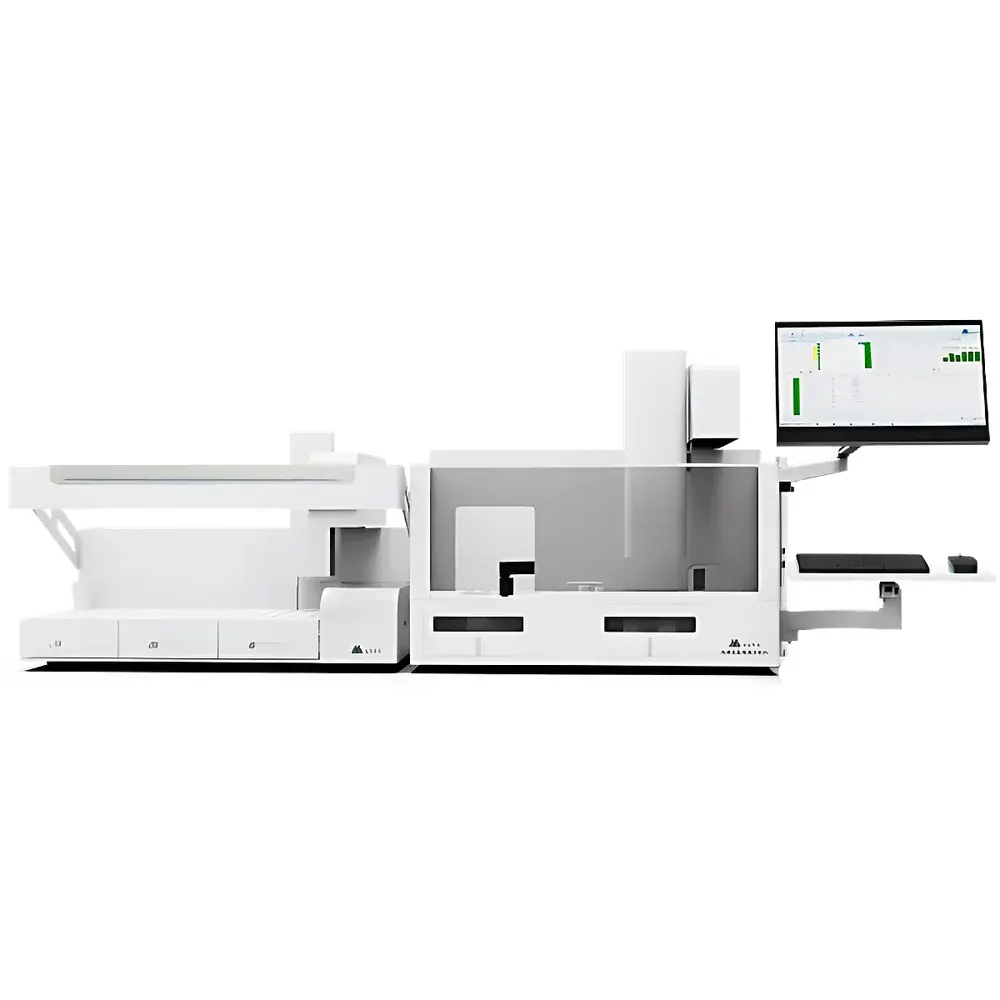
BEIYU CTP-700N Total Phosphorus and Total Nitrogen Intelligent Analyzer
| Brand | BEIYU TECHNOLOGIES |
|---|---|
| Origin | Shanghai, China |
| Model | CTP-700N |
| Sample Capacity | 78 or 118 positions |
| Digestion Positions | 10 |
| Detection Limit | Compliant with GB/T 11893, HJ 636, and GB/T 7467 |
| Repeatability | RSD ≤ 1% at 1.0 ppm |
| Analysis Time per Sample | 7 min |
| Temperature Control Accuracy | ±0.5 °C |
| Digestion Conditions | 120 °C, 1.1 kg/cm² (≈108 kPa) |
| Auto-dilution Range | up to 100× |
Overview
The BEIYU CTP-700N Total Phosphorus and Total Nitrogen Intelligent Analyzer is an integrated, standards-compliant laboratory instrument engineered for precise, automated quantification of total phosphorus (TP), total nitrogen (TN), orthophosphate, and hexavalent chromium (Cr(VI)) in aqueous environmental samples. It implements two core analytical principles: (1) molybdate antimony ascorbic acid spectrophotometry (per GB/T 11893–1989 and the *Standard Methods for the Examination of Water and Wastewater*, 4th Ed.) for TP and phosphate; (2) alkaline potassium persulfate digestion followed by UV spectrophotometric detection at 220 nm and 275 nm (per HJ 636–2012) for TN; and (3) 1,5-diphenylcarbazide colorimetry at 540 nm (per GB/T 7467–1987) for Cr(VI). Unlike conventional benchtop analyzers requiring manual digestion and multi-step reagent addition, the CTP-700N embeds a fully robotic “digestion–detection” workflow—eliminating operator intervention while maintaining strict adherence to regulatory method requirements.
Key Features
- Robotic arm-driven sample handling: automatic vial pickup, reagent dispensing, cap sealing, high-pressure digestion, post-digestion dilution, color development, and dual-wavelength photometric measurement
- Integrated digestion module with 10 independent, pressure-rated digestion vessels (tested to >1.5 kg/cm² burst pressure), each equipped with real-time temperature and pressure monitoring
- On-board standard curve generation: automatic serial dilution of stock standards, multi-point calibration, and spike recovery verification
- Intelligent sample preprocessing: auto-dilution up to 100× based on preliminary absorbance screening; turbidity and color compensation applied per individual sample cup—not averaged across replicates
- Reagent management system: real-time level sensing, low-reagent alerts, and traceable reagent lot logging for audit readiness
- Modular autosampler: configurable for either 78- or 118-position racks to accommodate variable daily throughput without hardware modification
- Self-cleaning digestion tubes: acid-resistant quartz-glass composite construction with automated rinse cycles between runs; validated for ≥500 consecutive uses under routine QC conditions
- Dual-beam, dual-wavelength photometer with thermoelectrically stabilized detectors; optical path length calibrated to ISO 6779 compliance
- Full GLP/GMP-aligned software architecture supporting 21 CFR Part 11-compliant electronic signatures, audit trails, and user-role-based access control
Sample Compatibility & Compliance
The CTP-700N accepts liquid samples in standard 16 mm × 100 mm borosilicate glass or polypropylene digestion vials. It is validated for use with surface water, wastewater effluent, drinking water, groundwater, and industrial process streams. All operational protocols align with Chinese national standards (GB/T 11893–1989, HJ 636–2012, GB/T 7467–1987) and are methodologically equivalent to EPA 365.4 (for TP), EPA 351.2 (for TN), and ISO 6878:2004 (for phosphate). Instrument design conforms to IEC 61010-1 safety requirements for laboratory equipment. Data integrity features—including immutable timestamps, operator ID tagging, and revision-controlled method files—support regulatory audits under ISO/IEC 17025 and CNAS accreditation frameworks.
Software & Data Management
The embedded CTP-OS v4.x software provides a browser-accessible interface with role-based dashboards for analysts, supervisors, and QA officers. It supports automated export of structured CSV and PDF reports compliant with ISO/IEC 17025 Annex A.2 requirements. Raw absorbance values, digestion logs, calibration histories, and maintenance records are stored in a relational SQLite database with daily encrypted backups. The system includes native RESTful API endpoints for bidirectional integration with enterprise LIMS platforms (e.g., Thermo Fisher SampleManager, LabVantage), enabling seamless sample assignment, result ingestion, and QC flag propagation. All data modifications generate timestamped, signed audit entries meeting FDA 21 CFR Part 11 Subpart B criteria.
Applications
- Regulatory environmental monitoring programs mandated by municipal EPBs and provincial ecological environment bureaus
- Wastewater treatment plant (WWTP) influent/effluent compliance reporting per GB 18918–2002
- Drinking water quality surveillance under GB 5749–2022
- Industrial discharge monitoring for electroplating, chemical manufacturing, and fertilizer production facilities
- Research-grade nutrient cycling studies in limnology and estuarine ecology laboratories
- Third-party testing laboratories seeking CNAS accreditation for water analysis scope extension
FAQ
Does the CTP-700N support unattended overnight operation?
Yes—the system is designed for continuous 24/7 operation with automated error recovery, reagent-level monitoring, and thermal shutdown safeguards.
Can the instrument validate its own digestion efficiency?
Yes—built-in certified reference materials (CRMs) and procedural blanks are scheduled automatically; recovery rates and digestion completeness are reported per batch.
Is method validation documentation provided?
Yes—each shipment includes a Factory Acceptance Test (FAT) report, method verification data against NIST-traceable standards, and IQ/OQ documentation templates aligned with ISO/IEC 17025.
What maintenance intervals are recommended?
Daily: optical window cleaning and waste container check; Quarterly: robotic arm calibration and digestion vessel leak test; Annually: photometer wavelength verification and temperature sensor recalibration.
How is data security ensured during cloud or LIMS transmission?
All external communications use TLS 1.2+ encryption; no raw data is stored on cloud servers unless explicitly configured via on-premise gateway deployment.







