
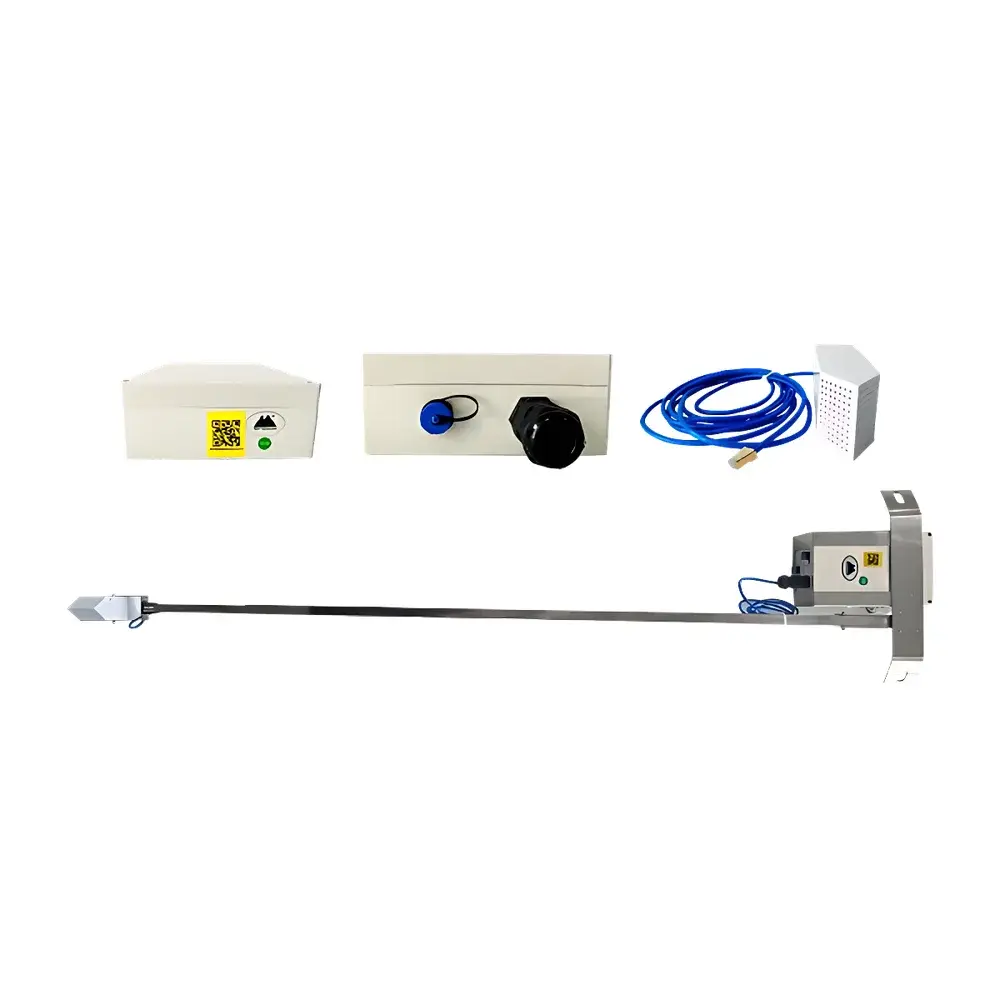
BEIYU TECHNOLOGIES Rainwater-Sewage Cross-Connection Intelligent Monitoring System
| Brand | BEIYU TECHNOLOGIES |
|---|---|
| Origin | Shanghai, China |
| Manufacturer Type | Authorized Distributor |
| Country of Origin | China |
| Model | Rainwater-Sewage Cross-Connection Intelligent Monitoring System |
| Pricing | Available Upon Request |
Overview
The BEIYU TECHNOLOGIES Rainwater-Sewage Cross-Connection Intelligent Monitoring System is an integrated, real-time online water quality monitoring platform engineered for early detection and quantitative assessment of illicit rainwater-sewer cross-connections in urban drainage infrastructure. Unlike conventional grab sampling or periodic manual inspection, this system employs continuous, multi-parameter optical and electrochemical sensing to distinguish between stormwater runoff and wastewater effluent based on dynamic shifts in water quality signatures—including turbidity, conductivity, ammonium-nitrogen (NH₄⁺-N), total phosphorus (TP), pH, and redox potential. Its deployment at strategic nodes—such as combined sewer overflows (CSOs), manholes, trunk lines, and outfall points—enables autonomous classification of flow events without chemical reagents or routine calibration, thereby supporting regulatory compliance with national and municipal stormwater management mandates, including China’s “Sponge City” initiative and the Ministry of Ecology and Environment’s Technical Guidelines for Urban Drainage Network Monitoring (HJ 1205–2021).
Key Features
- Reagent-free operation: Utilizes solid-state ion-selective electrodes and UV-Vis spectral absorption for NH₄⁺-N and TP quantification, eliminating liquid reagent consumption and associated waste disposal requirements.
- Autonomous flow classification: Embedded machine learning algorithms process real-time sensor fusion data to classify inflow as stormwater, domestic wastewater, or industrial discharge with configurable confidence thresholds.
- Submersible-rated hardware: IP68-rated stainless steel 316L housing with epoxy-coated electronics; certified for continuous immersion up to 5 m depth and resistant to H₂S, chlorine, and sulfate corrosion.
- No-intrusion installation: Clamp-on ultrasonic flow sensors and non-contact optical probes enable deployment without pipeline excavation, hot work permits, or confined-space entry—reducing operational downtime and safety risk.
- Modular expansion architecture: Standardized RS-485/Modbus RTU and optional LoRaWAN/NB-IoT interfaces support integration of additional sensors (e.g., COD, heavy metals, microbial indicators) via field-upgradable firmware.
Sample Compatibility & Compliance
The system is validated for use in municipal combined and separate sewer networks carrying variable-flow, heterogeneous wastewater matrices—including diluted domestic sewage, roof runoff, street wash-off, and intermittent industrial discharges. Sensor response remains stable across temperature ranges of 0–40 °C and salinity up to 5 g/L TDS. All measurement protocols align with ISO 5667-3 (water sampling), ISO 7027 (turbidity), ISO 11908 (ammonium determination), and GB/T 11893–1989 (total phosphorus). Data integrity meets GLP-aligned audit trail requirements, with timestamped raw sensor outputs, configuration logs, and alarm event records stored locally and synchronized to secure cloud storage.
Software & Data Management
The BEIYU Cloud Monitoring Platform provides browser-based access to real-time dashboards, historical trend analysis, georeferenced node mapping, and automated report generation (daily/weekly/monthly PDF/Excel exports). Each monitoring node maintains local edge processing capability with onboard SD card logging (≥12 months at 1-second resolution). Alarm logic supports multi-level severity classification (warning, alert, critical), with configurable notification channels—including SMS, email, and WeCom/Enterprise WeChat API integration. All data transfers comply with TLS 1.2 encryption, and system authentication follows role-based access control (RBAC) principles. Audit logs record user actions per ISO/IEC 27001 Annex A.9.4, supporting internal QA reviews and regulatory inspections.
Applications
- Detection of illegal sanitary sewer connections to storm drains during post-construction verification and routine network audits.
- Quantifying wet-weather wastewater intrusion into stormwater systems to inform CSO abatement strategies and infrastructure rehabilitation prioritization.
- Supporting municipal compliance reporting under China’s “Three-Year Action Plan for Urban Black and Odorous Water Body Remediation” (2022–2024).
- Enabling adaptive control of smart pumping stations by triggering diversion valve actuation upon real-time detection of wastewater signatures.
- Providing evidentiary-grade data for enforcement actions, including time-stamped photographic capture (via integrated IP camera option) and GPS-tagged incident reports.
FAQ
Does the system require routine calibration or reagent replacement?
No. The core sensors operate on drift-compensated solid-state principles and are factory-calibrated; no field recalibration or chemical reagents are required during standard operation.
Can it distinguish between domestic sewage and industrial effluent?
Yes—through multivariate pattern recognition of concurrent parameter deviations (e.g., elevated Cl⁻/NH₄⁺ ratio, anomalous UV254 absorbance), though definitive source attribution requires supplementary tracer analysis.
What communication protocols does it support for SCADA integration?
Standard Modbus RTU over RS-485; optional MQTT, OPC UA, and IEC 60870-5-104 gateways are available for legacy or utility-scale SCADA environments.
Is the system compliant with cybersecurity standards for critical infrastructure?
Yes—the embedded Linux OS implements secure boot, encrypted firmware updates, and configurable firewall rules aligned with NIST SP 800-82 Rev. 2 guidelines for industrial control systems.
How is power supplied in remote or underground installations?
Primary operation uses 12–24 VDC from solar-charged lithium iron phosphate (LiFePO₄) battery packs (7–14 day autonomy); AC mains backup and PoE options are available upon request.
Related Products







