
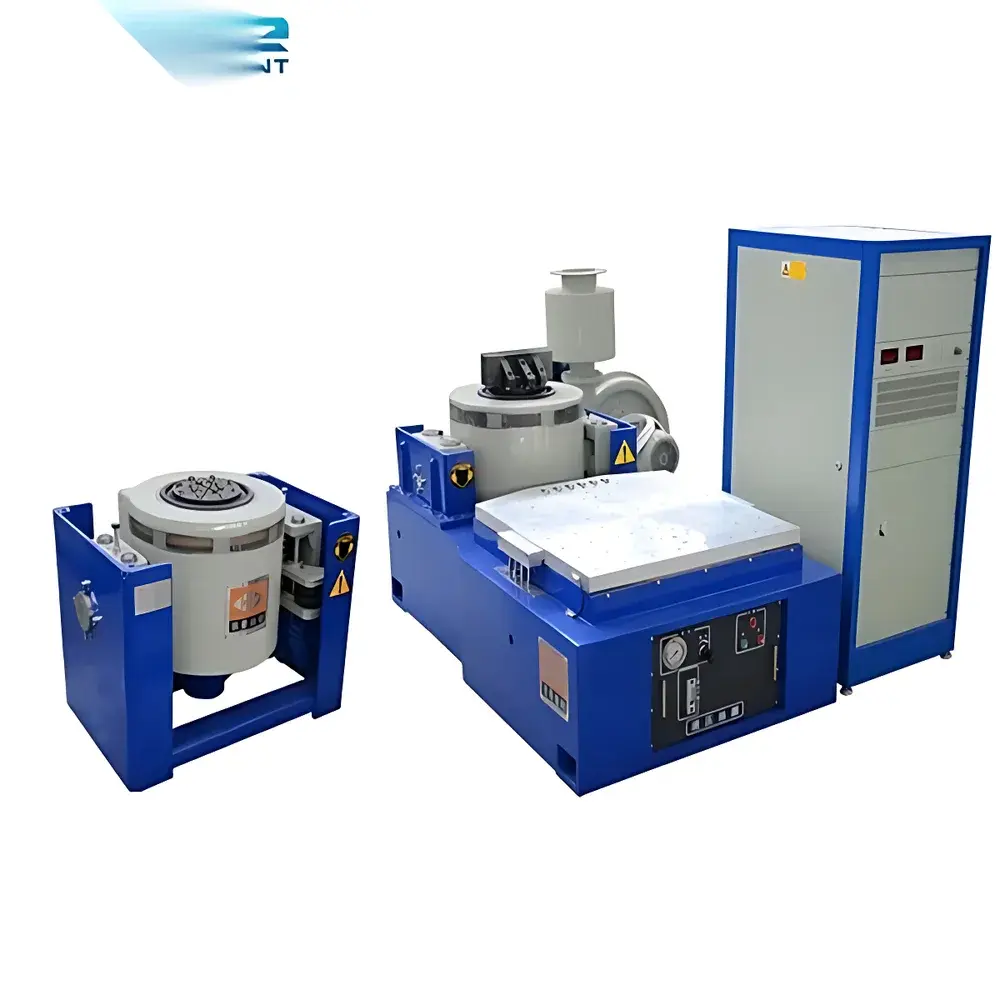
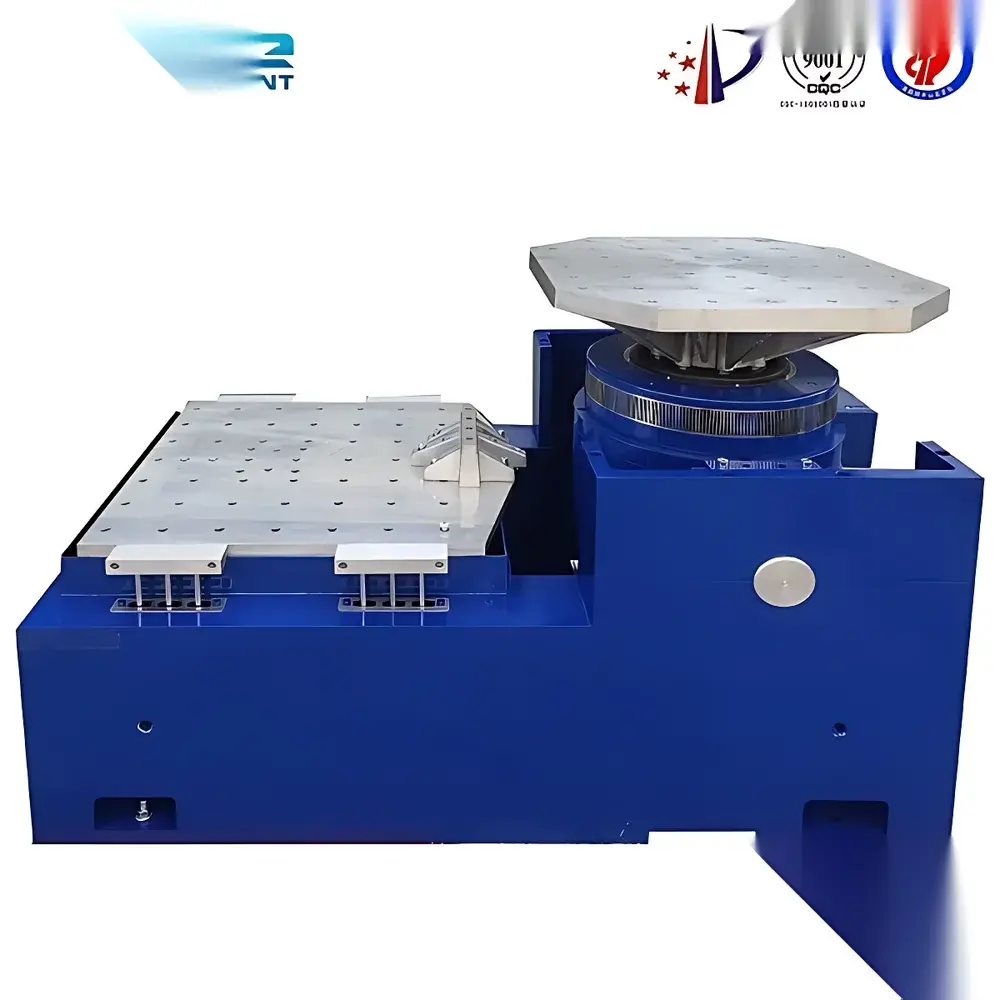
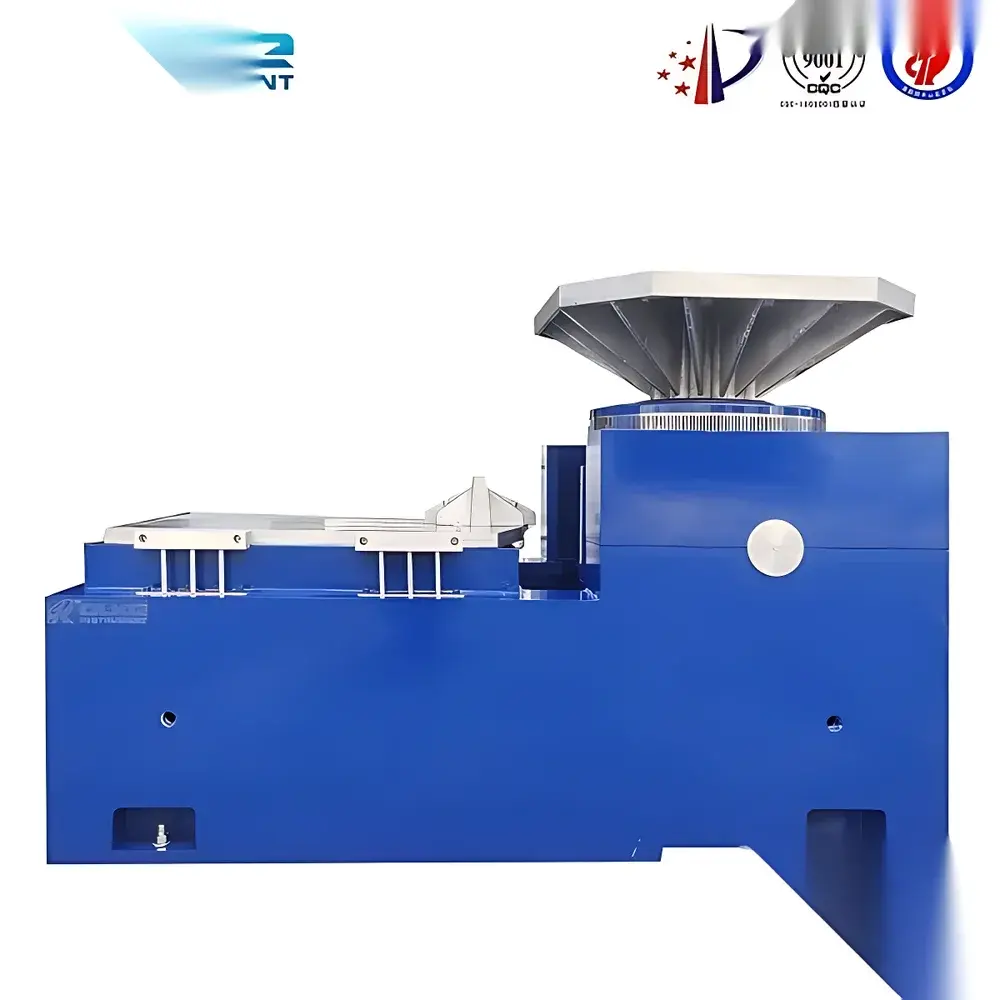
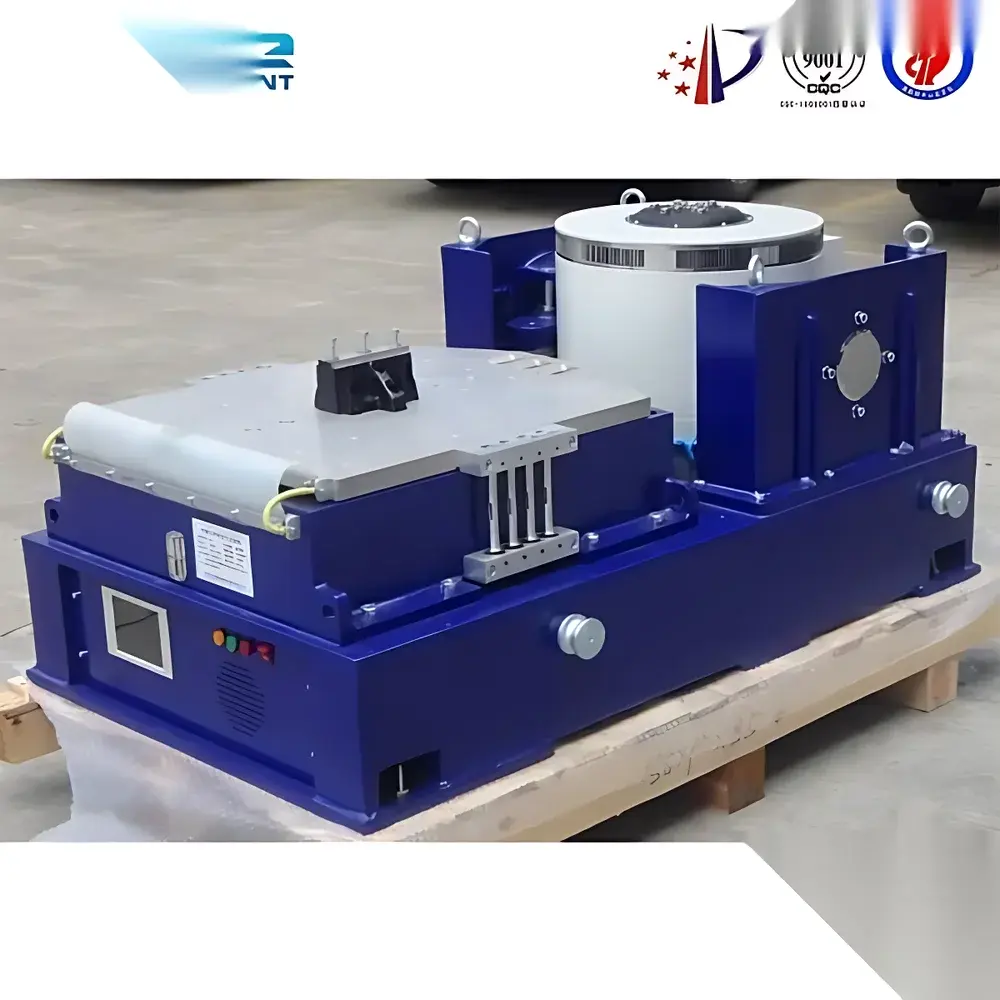
OK-ES-10 Triaxial Electromagnetic Vibration Shaker System
| Brand | OK Instruments |
|---|---|
| Model | OK-ES-10 |
| Drive Type | Electromagnetic, DC motor with synchronous timing belt |
| Speed Range | 60–300 rpm (adjustable) |
| Speed Resolution | ±1 rpm |
| Vibration Mode | Reciprocating motion |
| Peak-to-Peak Amplitude | 25.4 mm |
| Load Capacity | 70 kg |
| Effective Table Area | 1200 × 1100 mm |
| Time Setting Range | 0 s to 99 h |
| Motor Power | 1 HP |
| Table Material | Stainless steel |
| Base Structure | Heavy-duty channel steel with vibration-damping rubber mounts |
| Weight | 230 kg |
| Power Supply | 220 V, 50 Hz |
| Compliance | ASTM D999, ISO 2247, EN 71-1, ISTA 3A |
Overview
The OK-ES-10 Triaxial Electromagnetic Vibration Shaker System is an engineered solution for simulating real-world transportation and handling-induced mechanical stresses on packaged goods and finished products. Unlike single-axis shakers, this system delivers synchronized reciprocating motion along the X, Y, and Z orthogonal axes—enabling comprehensive assessment of structural integrity, packaging performance, and early-stage defect detection under multi-directional dynamic loading. Its electromagnetic actuation architecture ensures high reproducibility, low harmonic distortion, and stable amplitude control across the operational speed range (60–300 rpm), making it suitable for routine qualification testing in QC laboratories, R&D centers, and third-party certification facilities. The system adheres to internationally recognized transport simulation standards—including ASTM D999 (vibration testing of shipping containers), ISO 2247 (vibration testing of packaged products), and EN 71-1 (mechanical and physical properties of toys)—and supports both deterministic and stochastic vibration profiles required for compliance validation.
Key Features
- Triaxial reciprocating motion generated via precision-tuned electromagnetic drive mechanism, eliminating hydraulic complexity and oil contamination risks.
- Stainless-steel test table (1200 × 1100 mm) with integrated aluminum clamping fixtures and manual micrometer-adjustable positioning for rapid sample setup and repeatable fixturing.
- Heavy-gauge channel steel base mounted with high-damping rubber isolators to suppress parasitic resonance and ensure stable operation under full 70 kg load.
- DC motor with soft-start circuitry and noise-optimized synchronous timing belt transmission—achieving sound pressure levels below 65 dB(A) at 1 m distance.
- Digital speed controller with ±1 rpm resolution and programmable dwell time (0 seconds to 99 hours), supporting both continuous and interval-based test protocols.
- Robust mechanical architecture designed for long-term reliability in industrial environments; total mass of 230 kg ensures minimal floor coupling during high-amplitude operation.
Sample Compatibility & Compliance
The OK-ES-10 accommodates a broad spectrum of product categories—including consumer electronics, automotive components, household appliances, toys, ceramics, furniture, and medical device packaging—without requiring custom adapters. Its 25.4 mm peak-to-peak displacement and 70 kg payload capacity enable evaluation of both lightweight consumer goods and mid-weight industrial assemblies. All test configurations comply with regulatory frameworks governing transport simulation: ASTM D999 (for corrugated boxes and fiberboard containers), ISO 2247 (for packaged products subjected to vehicle transport), EN 71-1 (safety requirements for toys), and ISTA 3A (general simulation for parcel delivery systems). The system’s mechanical design satisfies GLP-aligned laboratory infrastructure requirements, including stable mounting, electrical safety per IEC 61000-6-3, and thermal management compatible with ambient operating conditions (−10 °C to +60 °C, ≤95% RH).
Software & Data Management
While the OK-ES-10 operates via embedded hardware controls for basic speed, duration, and amplitude settings, it integrates seamlessly with external data acquisition systems via analog voltage output (0–10 V) for real-time acceleration monitoring. Optional USB- or RS-232–enabled interface modules support traceable test logging and export to CSV or Excel formats. All test parameters—including start/stop timestamps, actual rotational speed, elapsed time, and operator ID—are stored in non-volatile memory for audit readiness. The system meets foundational requirements for electronic record integrity under FDA 21 CFR Part 11 when paired with validated software platforms, and its event-driven log structure supports GMP-compliant change control documentation.
Applications
- Transportation simulation for packaged electronics to identify solder joint fatigue, connector loosening, or internal component misalignment prior to field deployment.
- Structural durability screening of automotive interior trim parts under multi-axis vibratory stress mimicking road-induced excitation.
- Verification of child-resistant packaging integrity for pharmaceuticals and household chemicals per ISO 8317 and ASTM D3475.
- Pre-shipment qualification of ceramic tableware and glassware to assess crack propagation thresholds under resonant vibration exposure.
- Design validation of toy packaging against EN 71-1 mechanical hazards, including drop resistance, compression stability, and fastener retention.
- Supplier qualification testing for Tier-1 automotive suppliers requiring adherence to OEM-specific vibration specifications (e.g., GMW14872, Ford CETP).
FAQ
Does the OK-ES-10 support random vibration profiles?
No—the OK-ES-10 is configured exclusively for deterministic reciprocating motion at fixed or swept rotational speeds. Random vibration capability requires a dedicated electrodynamic shaker with digital signal processing and closed-loop controller architecture.
What is the maximum allowable center-of-gravity height for test specimens?
For optimal stability and amplitude fidelity, the center of gravity of the loaded specimen should not exceed 300 mm above the table surface. Taller assemblies require supplemental lateral bracing per ASTM D999 Annex A3.
Can the system be integrated into an automated test cell?
Yes—digital I/O ports (24 V DC) are available for start/stop triggering, fault signaling, and interlock coordination with robotic handlers or environmental chambers.
Is calibration certification included with shipment?
A factory-issued calibration report (traceable to NIST standards) is provided for speed and timer functions. Full metrological validation per ISO 16063-21 requires third-party calibration services.
What maintenance intervals are recommended?
Belt tension verification every 500 operational hours; rubber isolation mounts inspected annually; motor brush replacement every 5,000 hours (if applicable); all procedures documented in the supplied maintenance logbook.



