
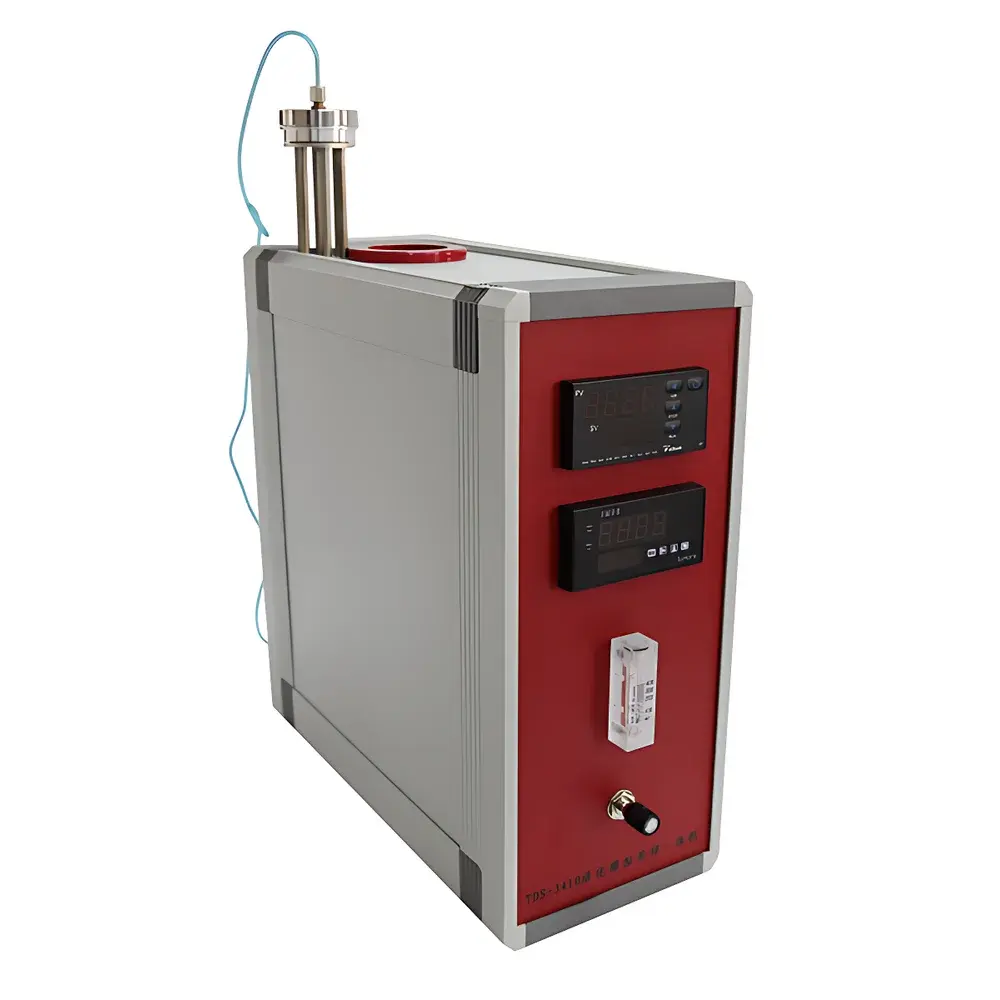
Huayisanpu TDS-3410 Adsorption Tube Aging and Calibration Simulator
| Brand | Huayisanpu |
|---|---|
| Origin | Beijing, China |
| Model | TDS-3410 |
| Temperature Range | Ambient to 400 °C |
| Gas Flow Rate | 10–250 mL/min |
| Tube Capacity | 12 tubes |
| Temperature Control Resolution | 1 °C |
| Temperature Accuracy | ±0.5% of setpoint |
| Timer Range | 0–655 min |
| Power Consumption | <500 W |
| Dimensions (W×D×H) | 170×390×400 mm |
| Weight | ~8 kg |
Overview
The Huayisanpu TDS-3410 Adsorption Tube Aging and Calibration Simulator is a benchtop thermal conditioning system engineered for the precise regeneration and performance validation of sorbent-packed sampling tubes used in thermal desorption–gas chromatography (TD–GC) workflows. It operates on two complementary thermal gas-phase principles: (1) high-temperature inert gas purging to thermally desorb residual analytes and restore sorbent capacity (tube aging/activation), and (2) controlled vapor-phase calibration standard introduction via dynamic spiking—either through direct gas-phase dilution or heated liquid standard volatilization—for trace-level method verification. Designed for laboratories performing VOC, SVOC, BTEX, and TVOC analysis per EPA TO-17, ISO 16017-1, and ASTM D6196 protocols, the TDS-3410 ensures consistent tube conditioning prior to sampling and enables traceable, repeatable calibration checks without requiring dedicated GC injection hardware.
Key Features
- Integrated dual-mode operation: independent yet synchronized control of tube aging and dynamic calibration simulation on a single platform
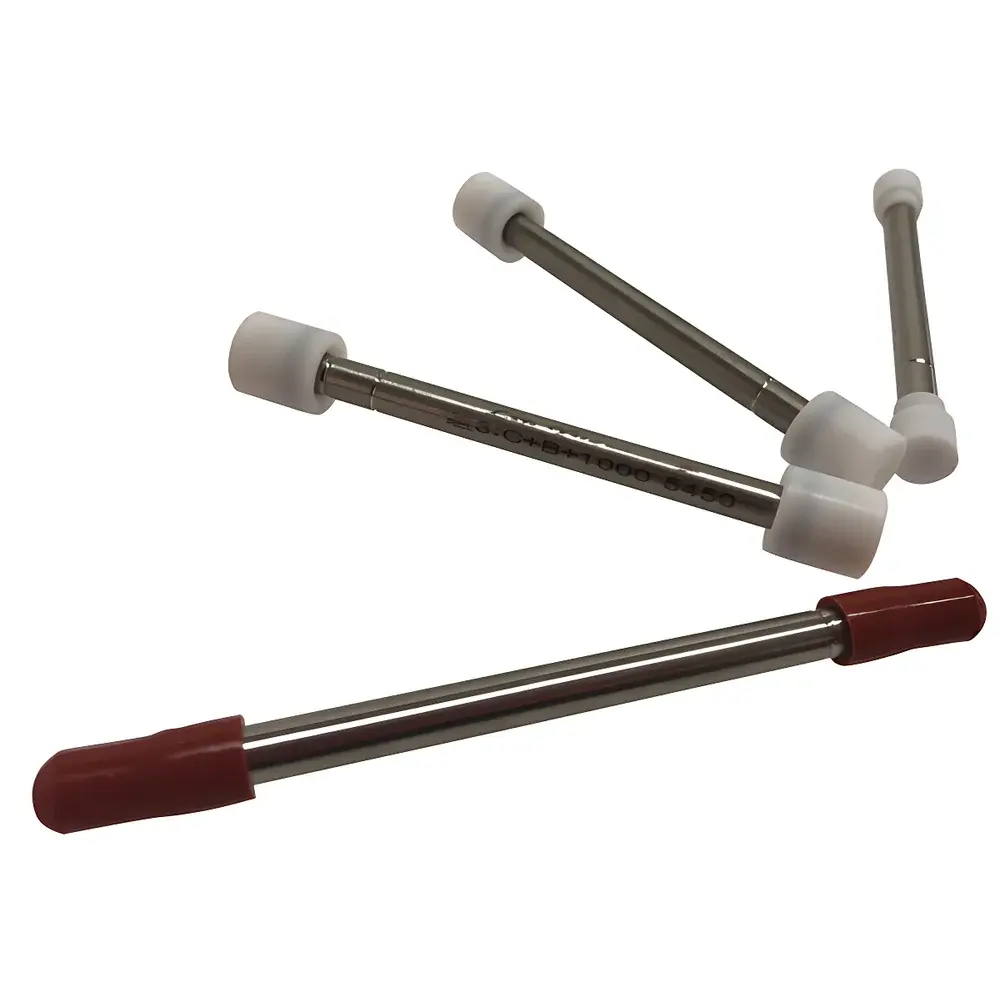
- 12-position tube carousel with universal 6 mm OD (¼″) tube compatibility—supports stainless steel, quartz, and glass micro-tubes up to 180 mm in length
- Precision PID-controlled furnace with ambient-to-400 °C range, 1 °C resolution, and ±0.5% setpoint accuracy—validated across full operating span
- Mass-flow-regulated inert gas delivery (N₂ or He) from 10 to 250 mL/min, with integrated pressure-compensated flow control for stable operation under variable backpressure
- Dedicated deep-bed hydrocarbon and moisture trap (replaceable cartridge) upstream of the calibration stream, minimizing background interference during standard spiking
- Programmable timer with 1-second resolution and 0–655-minute range, supporting multi-step sequences (e.g., pre-purge → ramp → hold → cool-down)
- Low thermal mass design (<500 W nominal draw) and compact footprint (170 × 390 × 400 mm) for integration into regulated QC/QA environments
Sample Compatibility & Compliance
The TDS-3410 accommodates industry-standard adsorption tubes packed with common sorbents including Tenax TA, Carbopack B/C, Carboxen, and graphitized carbon blacks. Its temperature and flow specifications align with EPA Method TO-17 requirements for tube bake-out (typically 30–350 °C, 10–30 min, 40–100 mL/min N₂). The calibrated flow path and traceable timing function support GLP-compliant documentation of tube preparation history. While the instrument itself does not carry CE or UL certification, its operational parameters are fully compatible with ISO/IEC 17025-accredited laboratory procedures when used within documented SOPs. All thermal and flow settings are manually entered and recorded—no embedded audit trail; users are advised to maintain external logbooks or LIMS-integrated records for regulatory audits (e.g., FDA 21 CFR Part 11, where electronic signatures apply).
Software & Data Management
The TDS-3410 is a standalone hardware unit with no embedded microprocessor or digital interface. All parameter inputs—including temperature setpoint, gas flow rate, and timer duration—are configured via front-panel rotary encoder and LED display. No drivers, firmware updates, or proprietary software are required. This architecture eliminates cybersecurity risks associated with network-connected instruments and ensures long-term operational stability in resource-constrained or highly regulated labs. For data integrity, laboratories routinely pair the TDS-3410 with external digital thermocouple loggers (e.g., Omega OM-CP-HITEMP140) and mass flow meters (e.g., Brooks 5850E) to generate time-stamped, third-party-verified calibration records. Exported CSV logs may be imported into LIMS or ELN systems for full traceability.
Applications
- Regenerative aging of sorbent tubes prior to environmental air, indoor air, or workplace monitoring campaigns
- Pre-analysis validation of tube blank levels per ISO 16017-1 section 7.2.2
- Dynamic generation of trace-level calibration standards for BTEX, aldehydes, halogenated VOCs, and semi-volatiles
- Method development for TD–GC–MS quantification—especially for low-concentration target analytes requiring ultra-clean tubing
- Verification of tube sealing integrity and sorbent degradation after extended storage or field deployment
- Supporting ISO 17025 clause 7.7 (uncertainty estimation) by enabling reproducible blank subtraction and recovery testing
FAQ
Can the TDS-3410 be used with both stainless steel and glass thermal desorption tubes?
Yes—it accepts any tube with 6 mm outer diameter (or ¼″), regardless of material, provided length does not exceed 180 mm and tube ends are properly sealed during heating.
Does the instrument include built-in data logging or USB connectivity?
No. The TDS-3410 is an analog-controlled system with manual parameter entry only. External data loggers must be used for traceable recordkeeping.
What gas purity is recommended for optimal tube aging performance?
Grade 5.0 (99.999%) nitrogen or helium is recommended; use with the included deep-bed gas purifier further reduces hydrocarbon and moisture residuals to sub-ppb levels.
Is the timer programmable for multi-stage heating profiles?
The single-stage timer supports one continuous interval. Multi-step protocols (e.g., ramp + hold + purge) require manual intervention or external sequencing controllers.
How frequently should the gas purifier cartridge be replaced?
Under typical lab usage (≤10 tube cycles/day), replacement is recommended every 6 months—or sooner if baseline GC–MS chromatograms show increasing C1–C4 hydrocarbon artifacts.




