
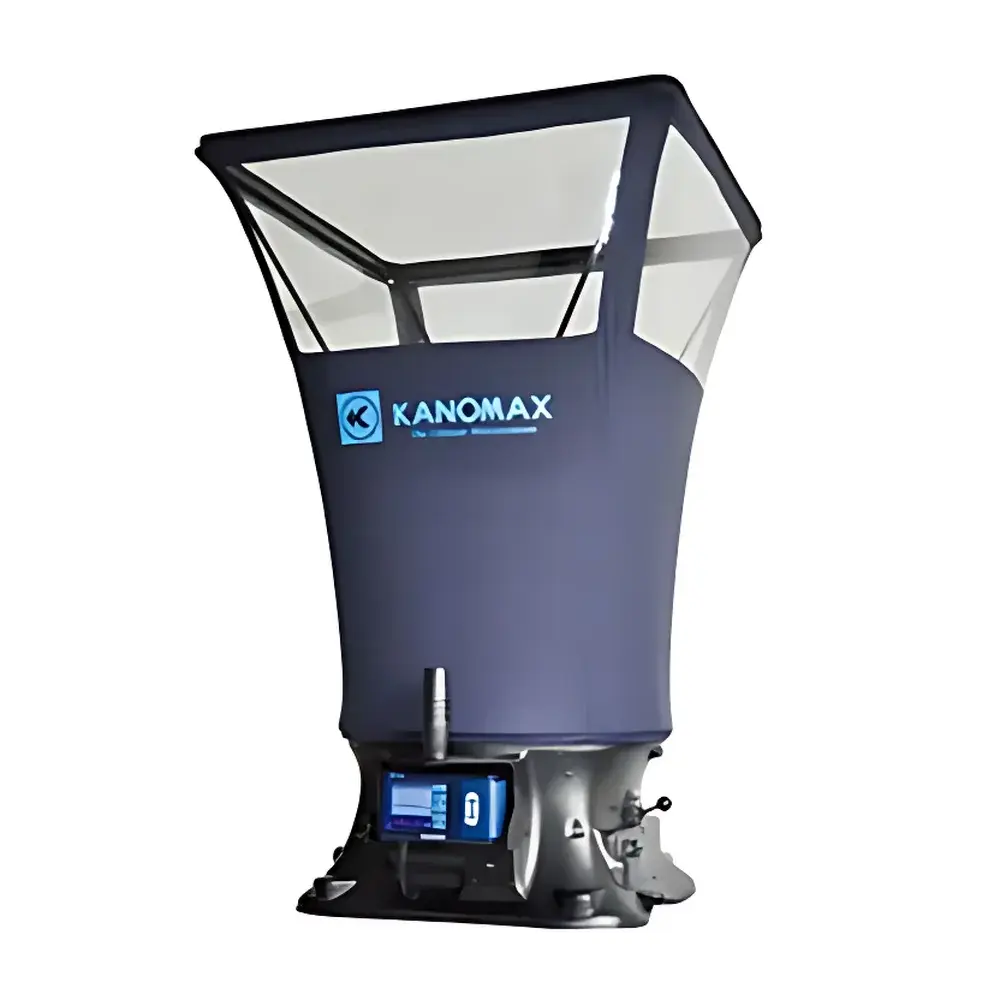
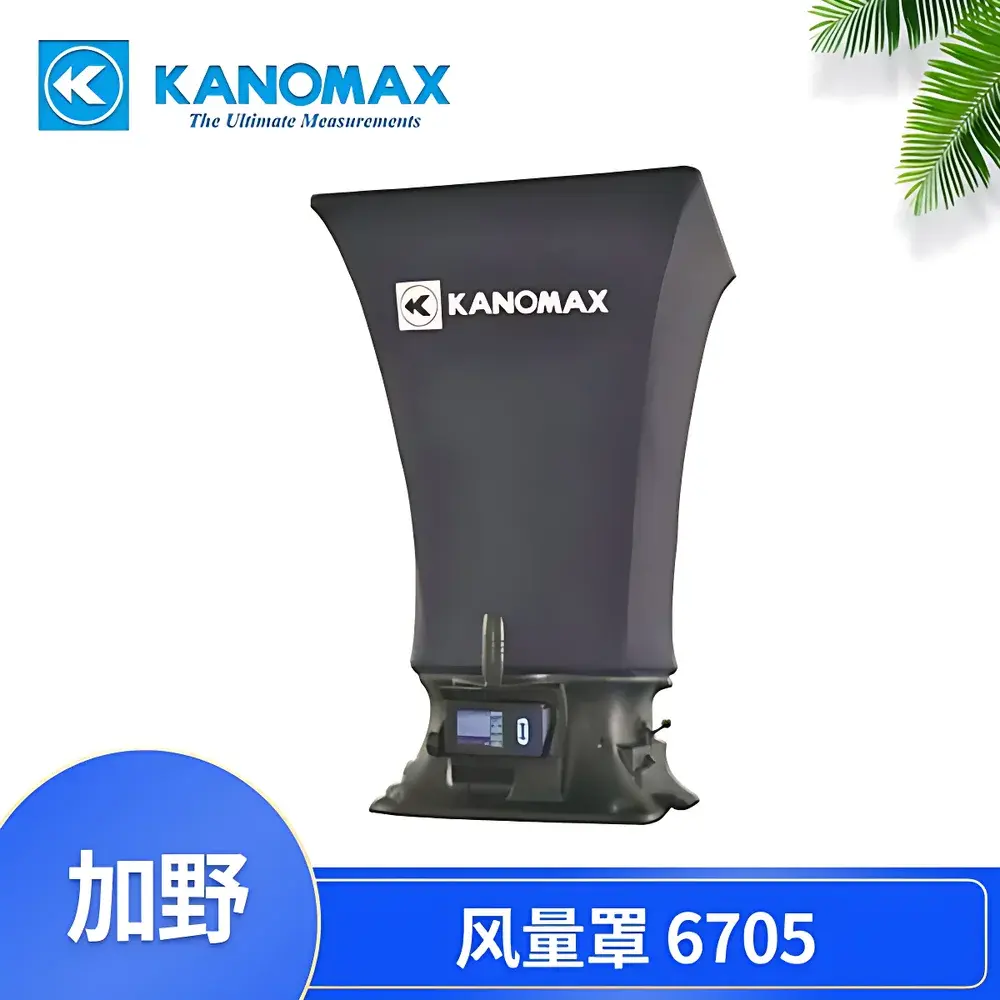
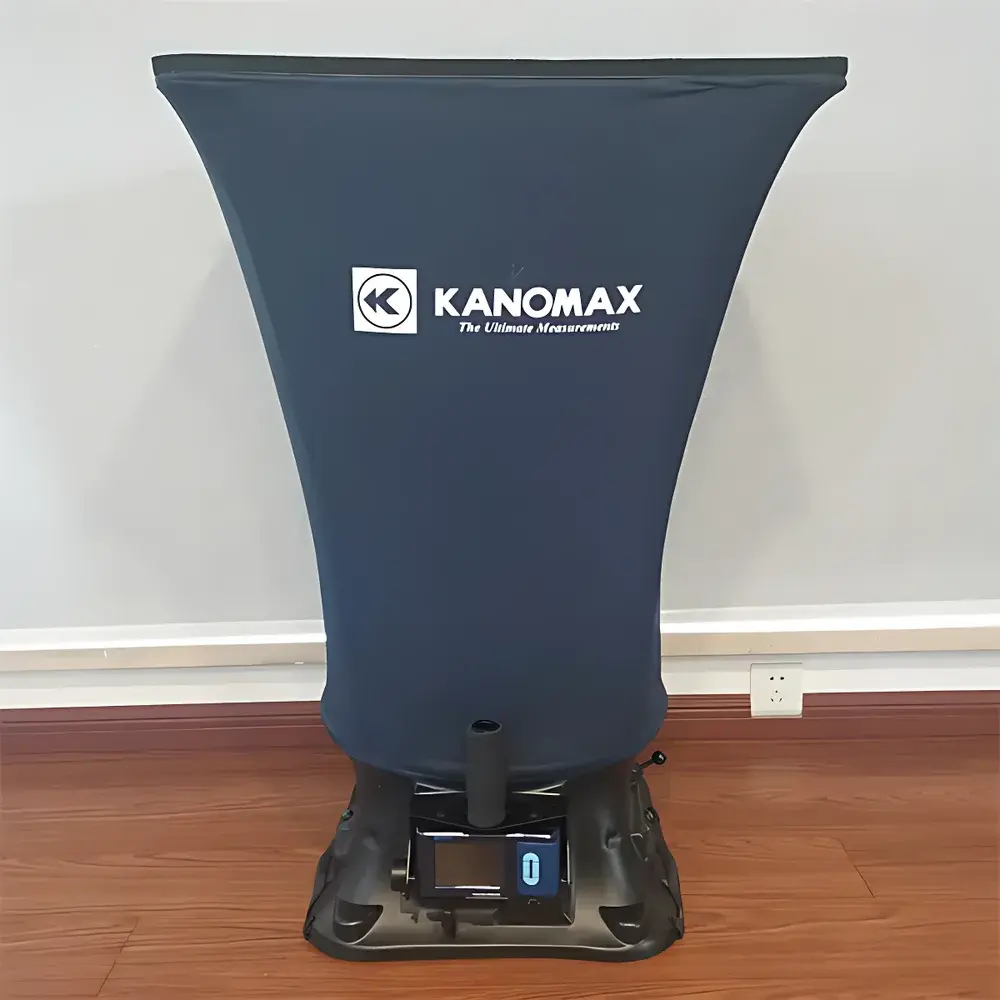
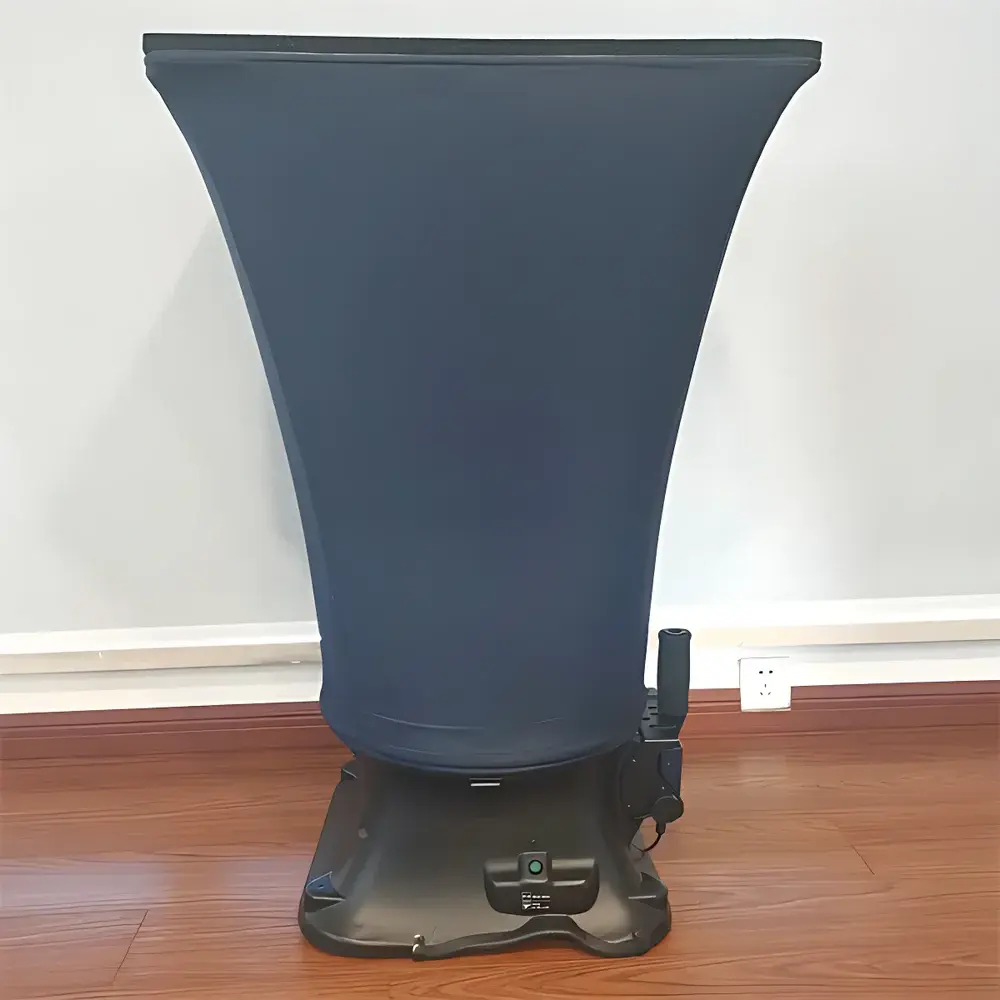
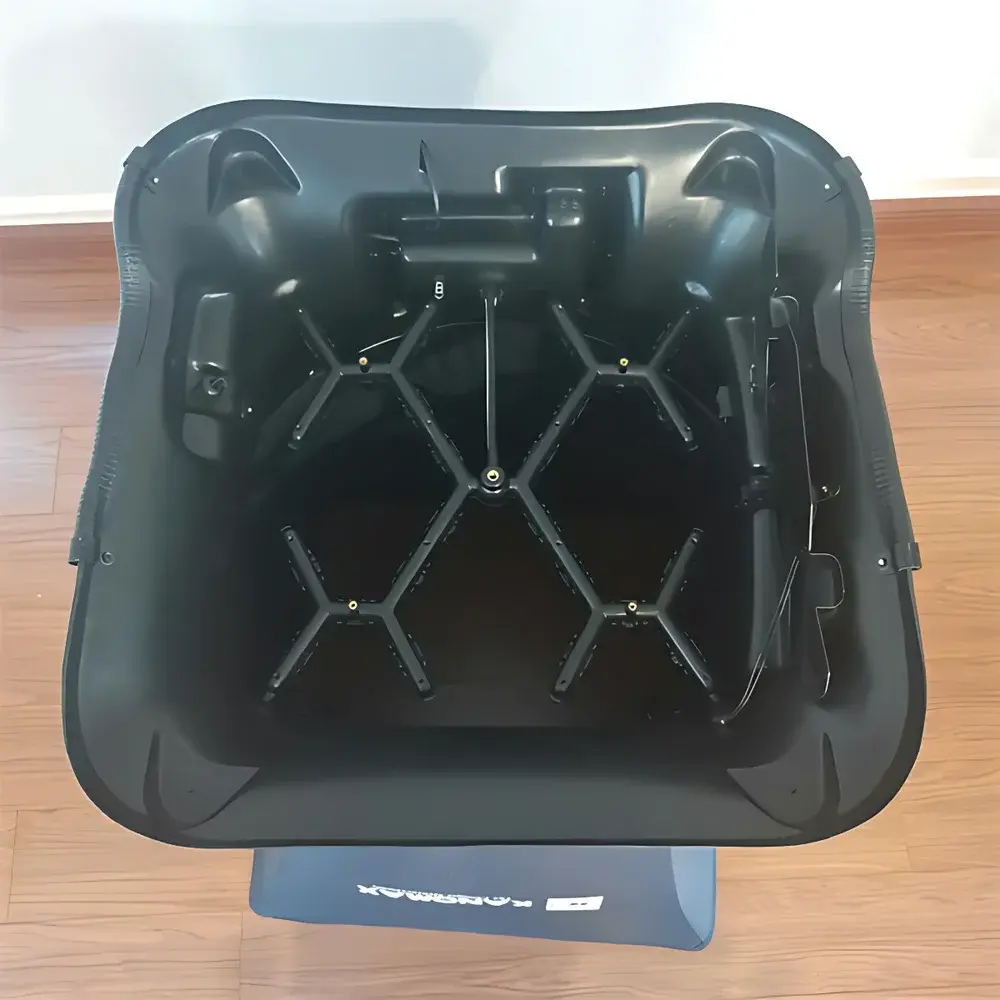
Kanomax 6710 & 6705 Air Flow Hood Systems
| Brand | Kanomax |
|---|---|
| Origin | Japan |
| Model | 6710 / 6705 |
| Measurement Range | 40–3800 m³/h |
| Resolution | 1 m³/h |
| Accuracy | ±3% of reading ±10 m³/h (6710) |
| Operating Temperature | 0–60 °C |
| Operating Humidity | 20–85% RH |
| Display | 3.5-inch backlit LCD (rotatable) |
| Data Storage | 3,000 sets |
| Power | 4 × AA batteries (≈9 h) or DC 5 V adapter |
| Weight | ≈3.4 kg (6705), ≈3.5 kg (6710) |
| Hood Sizes | Standard 610×610 mm |
| Communication | USB output, RS-232 printing interface |
| Additional Features | Real-time clock, battery level indicator, data export/delete, backpressure compensation (6710), K-factor adjustment (6710), detachable velocity matrix (6720 only) |
Overview
The Kanomax 6710 and 6705 Air Flow Hood Systems are precision-engineered instruments designed for quantitative measurement of volumetric air flow at HVAC diffusers, grilles, and registers in commercial, healthcare, and laboratory environments. Based on the principle of integrated velocity-area measurement, these hoods employ a calibrated internal grid of thermal anemometer sensors (6705) or a removable multi-point velocity matrix (6710/6720 variants) to capture spatially resolved airflow profiles across the hood aperture. The measured velocities are automatically integrated—applying real-time backpressure compensation (6710) and user-adjustable K-factors—to compute total volumetric flow in m³/h with traceable uncertainty. Unlike handheld anemometers requiring manual point sampling and extrapolation, the Kanomax hood systems deliver ISO 16813-compliant, repeatable measurements under dynamic duct pressure conditions, making them essential tools for commissioning, TAB (Testing, Adjusting, and Balancing), and routine HVAC performance verification.
Key Features
- Wide dynamic range: 40–3800 m³/h (6705/6710), extendable via interchangeable hood frames up to 1400×800 mm for large-format diffusers
- High-resolution display: 3.5-inch rotatable backlit LCD (6705/6710) with intuitive menu navigation, real-time clock, and battery status monitoring
- Robust data management: On-device storage of up to 3,000 measurement records with timestamp, location ID, and operator tag support
- Flexible connectivity: USB interface for direct data export to PC; RS-232 port for optional thermal printer integration; Bluetooth enabled on 6710 for wireless synchronization with Kanomax AirFlow Manager mobile app
- Comprehensive environmental sensing: Integrated temperature (±0.5 °C) and relative humidity (±3% RH, 10–90% RH) sensors support psychrometric correction where required
- Field-configurable calibration: K-factor adjustment allows fine-tuning for specific hood geometries or installation configurations, enhancing measurement fidelity across diverse duct terminations
Sample Compatibility & Compliance
The 6705 and 6710 hoods accommodate standard and custom-sized air terminals through a modular frame system—including 610×610 mm (standard), 915×915 mm, 1220×1220 mm, and 1400×800 mm options—ensuring full coverage without bypass leakage. Each hood is supplied with NIST-traceable calibration documentation per ISO/IEC 17025 requirements. The systems comply with key industry standards including ASHRAE Guideline 12-2020 (for infection control in healthcare HVAC), ISO 16813:2021 (indoor air quality—ventilation performance assessment), and EN 12599 (commissioning of HVAC systems). Data integrity meets GLP/GMP expectations through audit-ready timestamps, non-editable record IDs, and exportable CSV/Excel reports suitable for FDA 21 CFR Part 11–aligned validation protocols when used with Kanomax’s compliant software suite.
Software & Data Management
Kanomax AirFlow Manager (Windows/macOS) and the companion iOS/Android mobile application provide full instrument control, real-time visualization, and post-processing capabilities. The software supports batch import of field data, automatic report generation (PDF/Excel), deviation flagging against setpoint targets, and comparative analysis across multiple test points or time intervals. All exported datasets include metadata: date/time, ambient T/RH, battery level, hood ID, operator name, and measurement mode. Audit trails are preserved in local database logs with immutable timestamps—critical for QA/QC departments managing HVAC compliance in pharmaceutical cleanrooms or hospital isolation rooms. Firmware updates and configuration templates are distributed via secure Kanomax portal access.
Applications
- HVAC commissioning and TAB (Testing, Adjusting, Balancing) in office buildings, hospitals, and laboratories
- Annual airflow verification for ISO Class 5–8 cleanrooms per ISO 14644-3
- Infection control audits in negative-pressure isolation rooms and operating theatres (per ASHRAE 170)
- Energy efficiency assessments and retrocommissioning studies
- Filter leakage testing support via upstream/downstream flow balance verification
- Educational use in building science and mechanical engineering curricula
FAQ
What is the difference between the 6705 and 6710 models?
The 6705 uses a fixed internal sensor grid and offers ±2% full-scale accuracy; the 6710 features a detachable velocity matrix, backpressure compensation, Bluetooth, and higher resolution (±3% of reading ±8 m³/h), supporting more complex airflow patterns.
Can I use the same hood frame across all Kanomax models?
Yes—610×610 mm, 915×915 mm, and other interchangeable frames are compatible with the 6705, 6710, and 6720 series, ensuring long-term hardware investment protection.
Is the device suitable for high-humidity environments like steam sterilizer exhaust ducts?
It operates reliably at 20–85% RH and 0–60 °C; however, condensation-prone or saturated steam applications require external cooling/drying pre-treatment to avoid sensor drift.
Does the system support automated calibration verification?
While not self-calibrating, the devices accept user-defined K-factor adjustments and store calibration due dates; periodic verification against a reference flow standard (e.g., ISO 6706 orifice plate) is recommended annually per ISO/IEC 17025.
How is data security handled during Bluetooth transmission?
Bluetooth pairing uses AES-128 encryption; no credentials or raw measurement data are stored on the mobile device unless explicitly exported—local storage remains under user control per GDPR and HIPAA-aligned policies.
Related Products







