
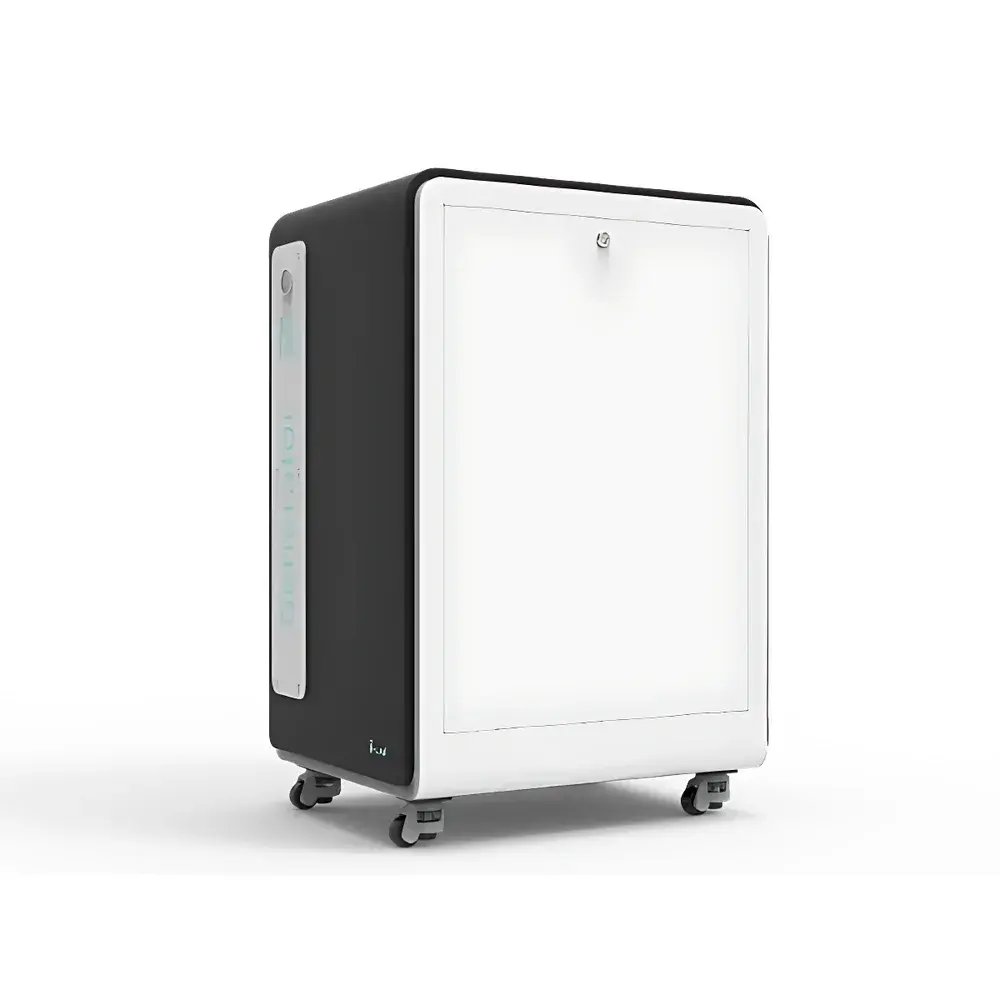
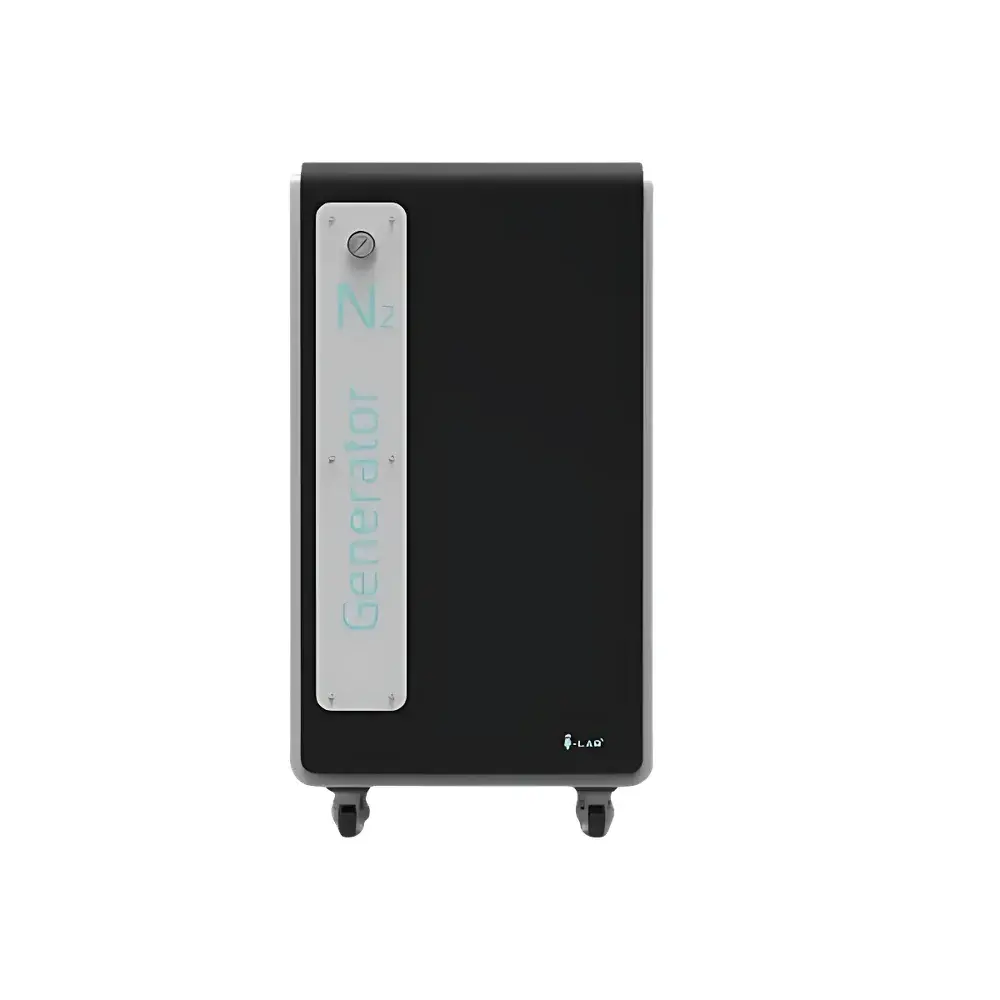
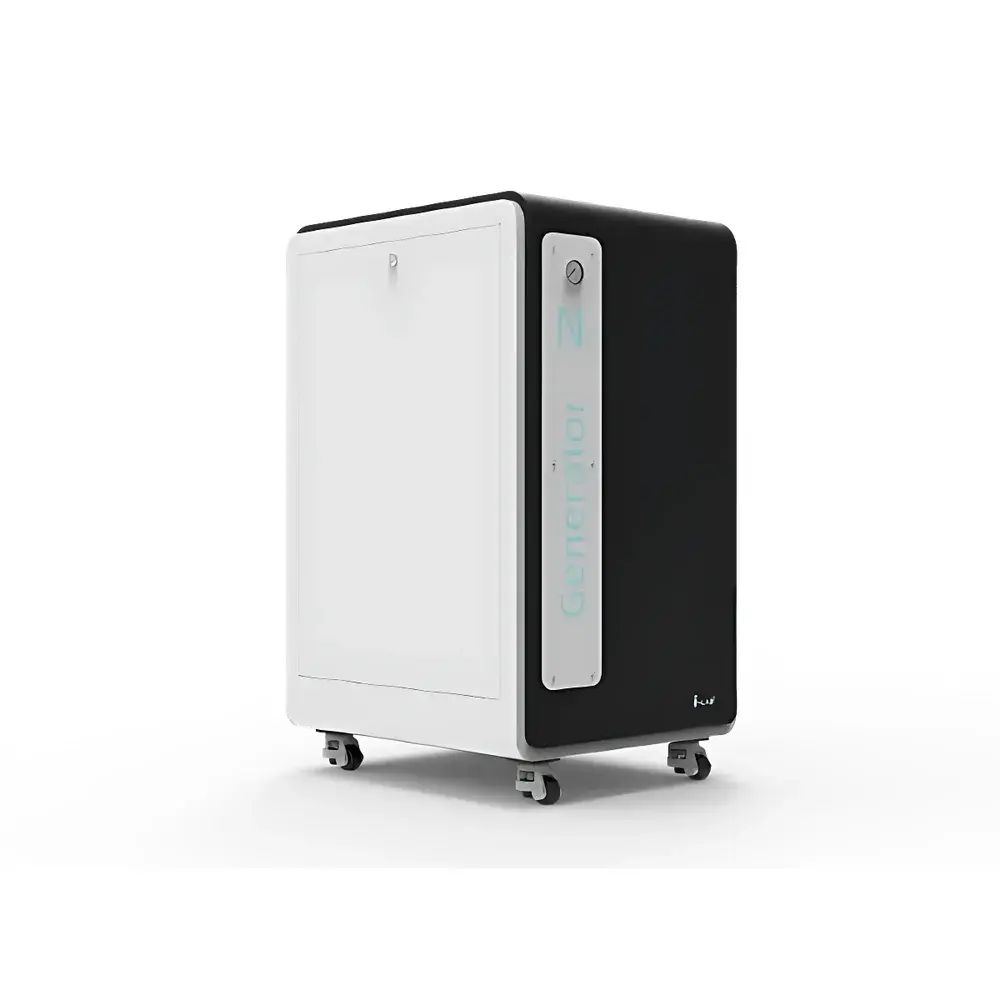
i-Lab KLDC100-1 Nitrogen Generator
| Brand | i-Lab |
|---|---|
| Origin | Shanghai, China |
| Manufacturer Type | Direct Manufacturer |
| Product Category | Domestic |
| Model | KLDC100-1 |
| Instrument Type | Nitrogen Generator |
| Nitrogen Generation Principle | Hollow Fiber Membrane Separation |
| Output Flow Rate | 100 L/min |
| Output Pressure Range | 0–5 bar |
| Nitrogen Purity | 99.9% |
| Dew Point | ≤ −40 °C (typical, at 100 L/min and 5 bar) |
Overview
The i-Lab KLDC100-1 Nitrogen Generator is a high-capacity, laboratory-grade membrane-based nitrogen supply system engineered for continuous, oil-free, and chemically inert gas delivery in demanding analytical and preparative workflows. It employs hollow fiber membrane separation technology—a physical gas separation process that exploits differential permeation rates of oxygen, water vapor, and carbon dioxide through polymeric membranes—to selectively remove these components from compressed ambient air, yielding a stable stream of nitrogen with ≥99.9% purity. Unlike pressure swing adsorption (PSA) systems, the KLDC100-1 requires no consumable adsorbents, regeneration cycles, or chemical purifiers, delivering consistent output without downtime or purity drift. Designed specifically for high-flow applications—including nitrogen blow-down evaporation, LC-MS carrier and curtain gas supply, glovebox inerting, and industrial blanketing—the KLDC100-1 integrates an oil-free scroll air compressor, precision pressure regulation, integrated buffer tank, and real-time monitoring into a single compact footprint. Its architecture complies with fundamental safety and operational expectations for Class II laboratory gas generators under ISO 8573-1:2010 (compressed air quality) and supports GLP/GMP-aligned documentation practices.
Key Features
- Hollow fiber membrane core: Sourced from certified European suppliers, enabling stable 99.9% N₂ output without catalysts, desiccants, or secondary purification stages.
- Integrated oil-free scroll air compressor: Rated for ≥8,000 hours MTBF, eliminating hydrocarbon contamination risk—critical for LC-MS, FTIR, and cell culture applications.
- Onboard buffer tank: Reduces compressor cycling frequency by up to 70%, ensuring uninterrupted gas flow during nitrogen blow-down procedures and preventing pressure surges or flow interruptions.
- Wide operating pressure range: Adjustable 0–5 bar output with digital pressure control and built-in safety relief valves compliant with PED 2014/68/EU standards.
- Acoustic optimization: Engineered enclosure and vibration-damping mounts achieve ≤60 dB(A) sound pressure level at 1 m—suitable for shared lab spaces and noise-sensitive environments such as biosafety cabinets and cleanrooms.
- Multi-layer protection system: Automatic shutdown triggered by overpressure, overheating, membrane module temperature anomaly, or air intake blockage; all events logged with timestamps for audit readiness.
Sample Compatibility & Compliance
The KLDC100-1 delivers nitrogen meeting ASTM D6866-22 (for inerting validation), ISO 8573-1 Class 2:2:2 (solid particle, water, and oil content), and USP requirements for instrument-grade nitrogen. Its oil-free design ensures compatibility with mass spectrometry interfaces, GC carrier lines, and chromatographic detectors where trace hydrocarbons would compromise baseline stability or column longevity. The unit is CE-marked per Machinery Directive 2006/42/EC and Electromagnetic Compatibility Directive 2014/30/EU. For regulated environments, optional data logging modules support 21 CFR Part 11-compliant electronic records, including user access control, audit trails, and exportable CSV event logs.
Software & Data Management
While the KLDC100-1 operates autonomously via front-panel LCD interface with tactile navigation, it includes RS-485 and optional Ethernet connectivity for integration into centralized lab infrastructure. The embedded firmware supports Modbus RTU protocol for remote status polling (flow rate, outlet pressure, compressor runtime, fault codes) and scheduled maintenance alerts. Third-party SCADA or LIMS platforms can ingest real-time telemetry for predictive service scheduling and energy consumption analytics. All configuration changes are timestamped and attributed to operator ID when network authentication is enabled—facilitating traceability in GLP and ISO/IEC 17025-accredited laboratories.
Applications
- Nitrogen blow-down concentration: Rapid solvent evaporation in pesticide residue analysis, pharmaceutical impurity profiling, and environmental water testing (EPA Method 525.3).
- LC-MS support: Provision of curtain gas, nebulizer gas, and collision gas with documented purity and dew point (≤−40 °C), minimizing ion source fouling and improving signal-to-noise ratios.
- Sample preparation: Inert atmosphere maintenance during SPE cartridge drying, DNA/RNA precipitation, and HPLC fraction collection.
- Controlled environment systems: Continuous feed for gloveboxes, anaerobic chambers, and laser cutting assist gas lines requiring dry, particle-free N₂.
- Industrial process support: Food packaging inerting (EN 13755), catalytic reaction blanketing in fine chemical synthesis, and stack gas calibration dilution in EPA Method TO-15 applications.
FAQ
What is the typical dew point of nitrogen output at full flow?
At rated 100 L/min and 5 bar, the dew point is ≤−40 °C, verified per ISO 8573-1 Annex B using chilled mirror hygrometry.
Can multiple KLDC100-1 units be manifolded for higher total capacity?
Yes—the system includes standardized ISO-KF 25 vacuum flanges and pressure-rated stainless steel manifolds for parallel operation with synchronized pressure balancing.
Is routine membrane replacement required?
No. The hollow fiber modules are sealed, non-serviceable components with a design life exceeding 15,000 operating hours under specified inlet air quality (ISO 8573-1 Class 4:4:4).
Does the generator require external cooling or ventilation?
It operates passively cooled; however, ambient temperature must remain between 10–35 °C, and minimum clearance of 15 cm on all sides is recommended for convection airflow.
How is compliance with 21 CFR Part 11 ensured?
Optional firmware upgrade enables role-based login, electronic signatures, immutable audit logs, and encrypted data export—fully configurable to meet FDA-defined electronic record requirements.



