
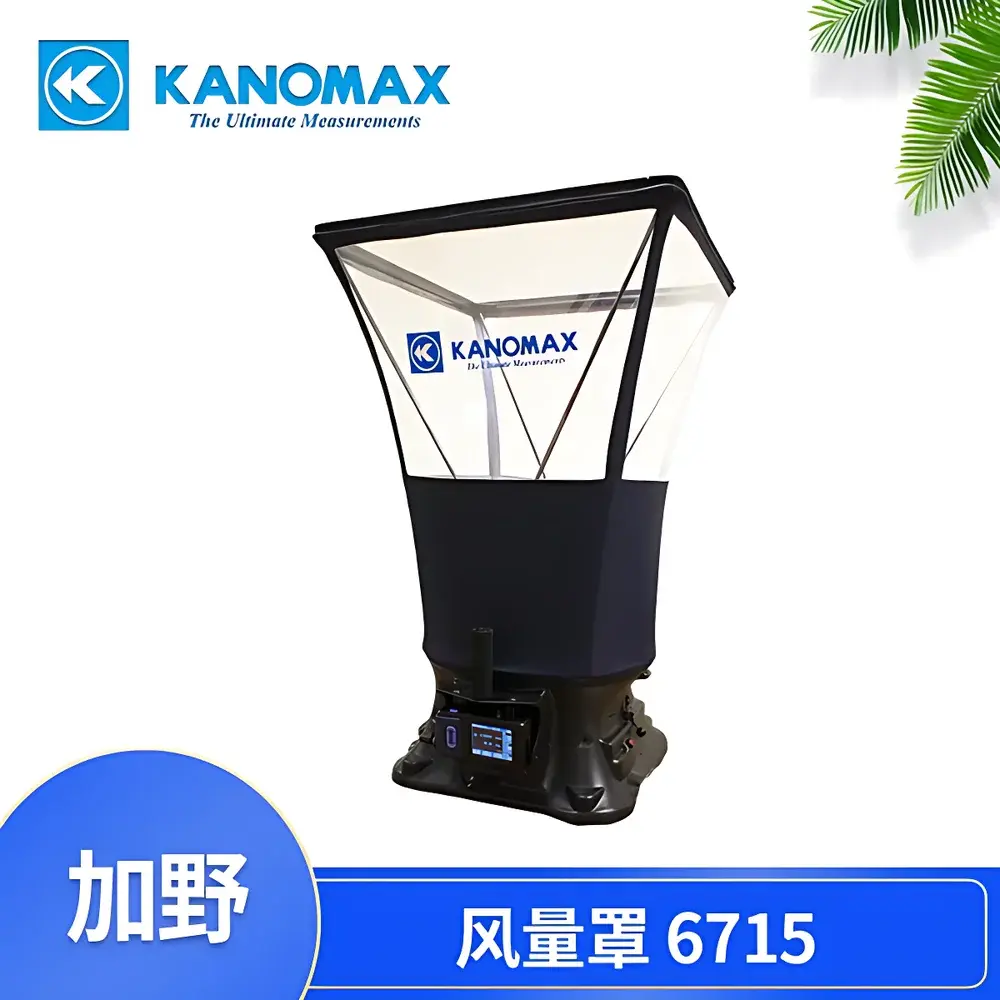
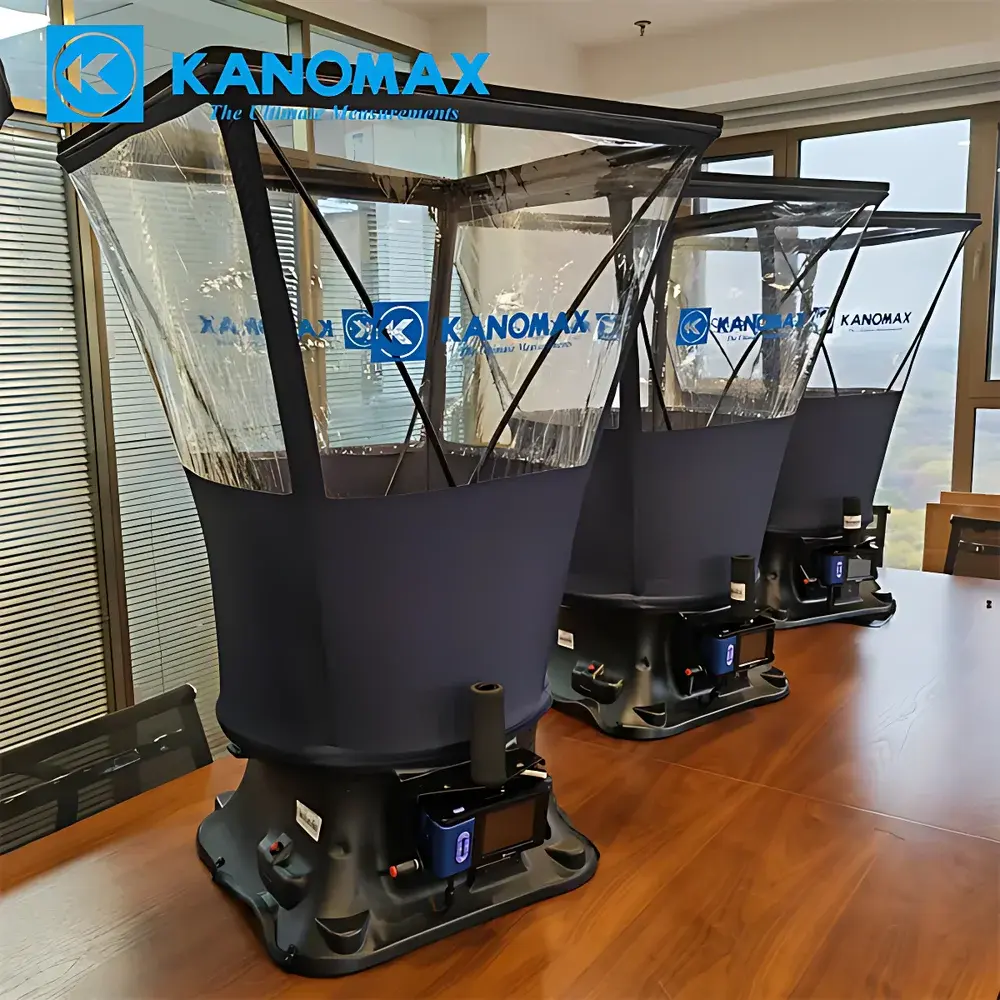
Kanomax Matrix Air Flow Hood Model 6715
| Brand | Kanomax |
|---|---|
| Origin | Japan |
| Model | 6715+ |
| Resolution | 1 m³/h |
| Measurement Range | 40–4300 m³/h |
| Accuracy | ±3% of reading ±10 m³/h |
| Operating Temperature | 0–50 °C |
| Operating Humidity | 0–100 %RH |
| Display | 3.5-inch color LCD (rotatable ±30°) |
| Data Storage Capacity | 8,000 sets |
| Power Supply | 4 × AA batteries (up to 9 h) or DC 5 V adapter |
| Weight | 3.6 kg |
| Standard Hood Size | 610 × 610 mm |
| Optional Hood Sizes | 305×1220 mm, 500×500 mm, 610×1220 mm, 800×800 mm, 800×1100 mm, 915×610 mm, 915×915 mm, 1220×1220 mm, 1400×800 mm |
| Connectivity | Bluetooth, USB, RS-232 |
| Compliance Features | Backpressure compensation, real-time clock, battery level indicator, audit-ready data logging |
Overview
The Kanomax Matrix Air Flow Hood Model 6715 is a precision-engineered, multi-parameter environmental airflow measurement instrument designed for HVAC commissioning, laboratory ventilation validation, cleanroom certification, and facility energy audits. It operates on the principle of volumetric flow determination via integrated velocity profiling across a calibrated matrix grid—combined with real-time static pressure compensation—to deliver traceable, ISO/IEC 17025-aligned airflow measurements under variable backpressure conditions. Unlike single-point anemometers, the 6715 employs a distributed sensor array (matrix-type velocity probe) to capture spatially resolved air velocity profiles across the hood’s capture area, enabling accurate integration of volumetric flow even in turbulent or non-uniform duct or grille discharge patterns. Its dual-mode capability supports both matrix-based low-velocity measurements (0.15–15 m/s) and optional pitot-tube attachment for high-velocity applications (0.15–40 m/s), making it suitable for supply diffusers, exhaust hoods, fume cabinets, and laminar flow benches.
Key Features
- Simultaneous measurement of volumetric airflow (40–4300 m³/h), air velocity (matrix: 0.15–15 m/s; pitot: 0.15–40 m/s), differential pressure (–2500 to +2500 Pa), ambient temperature (0–50 °C), and relative humidity (0–100 %RH)
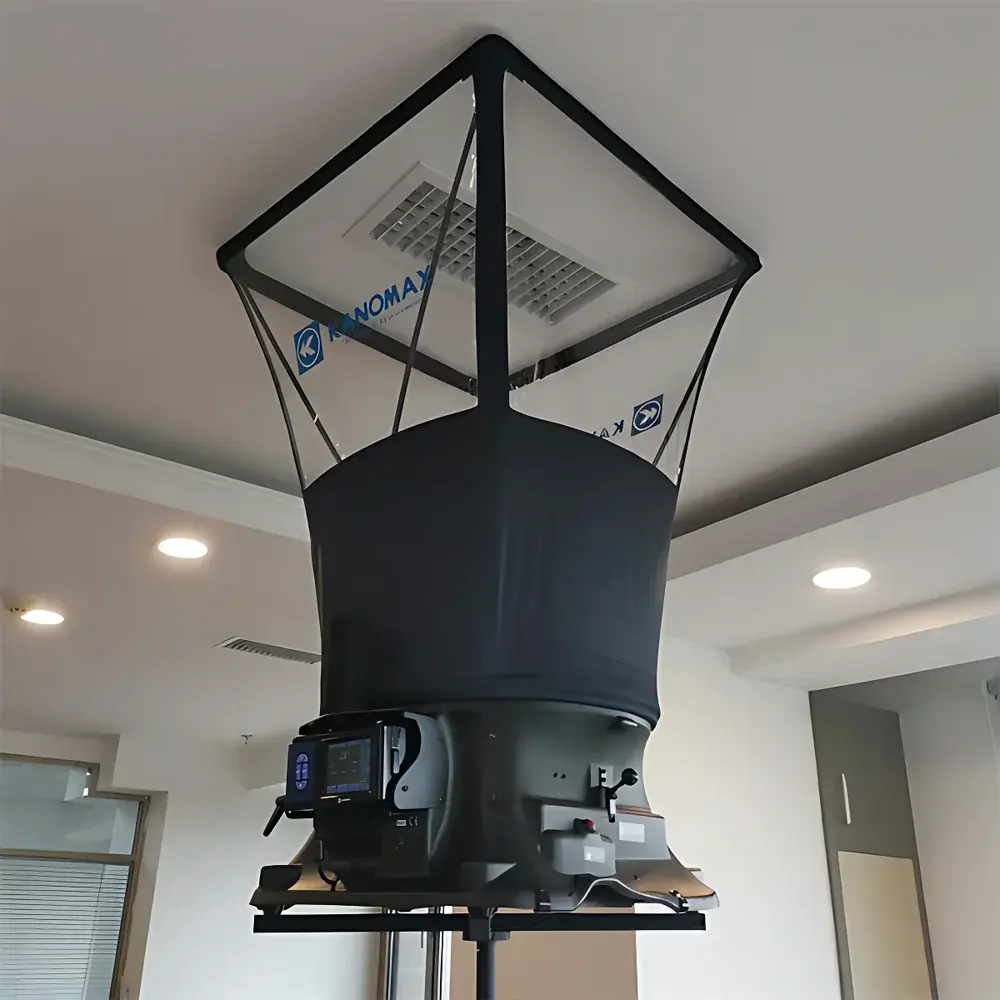
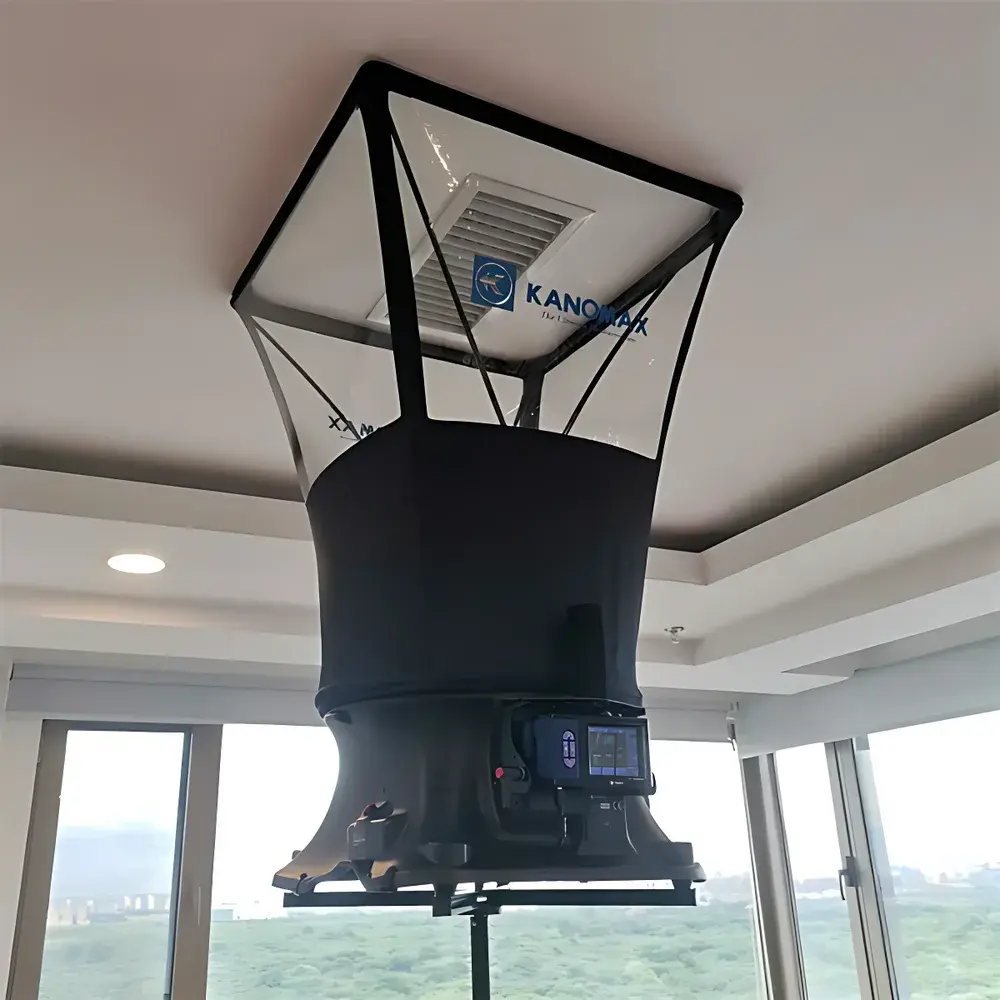
- Integrated backpressure compensation algorithm—automatically corrects for resistance-induced flow reduction during hood placement on registers or grilles
- 3.5-inch full-color LCD display with ±30° mechanical tilt adjustment for ergonomic field viewing under varied installation angles
- Onboard storage of up to 8,000 complete measurement records with timestamp, location tag, and operator ID fields
- Bluetooth 4.2 wireless connectivity for real-time telemetry and remote control via the official Kanomax AirFlow Manager mobile application (iOS/Android)
- Comprehensive I/O interface: USB 2.0 for PC synchronization, RS-232 serial port for legacy thermal printers, and micro-USB for firmware updates
- Modular hood system with standardized 610 × 610 mm base and 9 additional optional sizes—including oversized configurations up to 1400 × 800 mm—for flexible coverage of ceiling diffusers, VAV boxes, and large exhaust openings
Sample Compatibility & Compliance
The Model 6715 is validated for use with standard HVAC terminal devices including perforated diffusers, linear slot grilles, swirl outlets, and laboratory fume hood face openings. Its matrix sensor geometry conforms to ASHRAE Guideline 12-2020 requirements for uniformity sampling density and minimum grid point count per unit area. All airflow calculations adhere to ISO 16813:2006 (HVAC performance testing) and ANSI/ASHRAE Standard 111-2013 (measurement uncertainty protocols). The instrument’s data logging architecture supports GLP/GMP-compliant workflows through time-stamped, non-erasable records and optional password-protected user access levels. While not FDA 21 CFR Part 11 certified out-of-the-box, its exportable CSV/Excel-formatted datasets are compatible with validated third-party LIMS and electronic lab notebook (ELN) platforms used in regulated pharmaceutical and biotech facilities.
Software & Data Management
The Kanomax AirFlow Manager desktop software (Windows/macOS) and companion mobile app provide end-to-end data lifecycle management—from pre-test configuration (K-factor selection, hood size registration, calibration date entry) to post-test analysis (trend charts, pass/fail reporting against ASHRAE 62.1 or ISO 14644-3 thresholds). Raw datasets include full metadata: measurement duration, ambient conditions, battery voltage, and sensor health status. Export options include PDF reports with embedded signature fields, CSV for statistical process control (SPC) integration, and XML for enterprise CMMS systems. Audit trails record all parameter changes, data deletions, and firmware modifications—enabling compliance with internal QA procedures and external accreditation audits (e.g., A2LA, UKAS).
Applications
- HVAC system balancing and TAB (Testing, Adjusting, and Balancing) in commercial buildings and hospitals
- Cleanroom ISO Class verification per ISO 14644-3:2019 Annex B (air change rate and uniformity assessment)
- Fume hood face velocity mapping and containment validation per ANSI Z9.5-2022
- Pharmaceutical facility qualification (IQ/OQ/PQ) of laminar airflow workstations and isolators
- Educational laboratory demonstrations of Bernoulli’s principle, continuity equation, and pressure-loss modeling
- Energy efficiency retrocommissioning studies requiring baseline airflow quantification across multiple zones
FAQ
Is the Model 6715 still in production?
No—the Model 6715 has been officially discontinued and superseded by the enhanced Model 6720, which features a 4.3-inch capacitive touchscreen, extended battery life (14 h), improved differential pressure accuracy (±0.25% ±1 Pa), and expanded K-factor customization.
Can the 6715 be used for fume hood certification?
Yes—when equipped with the optional pitot tube and configured with appropriate K-factors per ANSI Z9.5, it meets the face velocity measurement requirements (0.3–0.6 m/s) and spatial averaging criteria for routine fume hood performance verification.
Does the instrument support NIST-traceable calibration?
Kanomax provides factory calibration certificates traceable to JCSS (Japan Calibration Service System); users may arrange third-party recalibration at ISO/IEC 17025-accredited labs using the built-in zero and span adjustment functions.
What is the role of the backpressure compensation feature?
It dynamically adjusts the calculated airflow value based on real-time differential pressure readings across the hood inlet, correcting for flow restriction caused by proximity to walls, duct elbows, or restrictive grilles—ensuring consistency regardless of installation geometry.
Are custom hood sizes supported beyond the listed options?
Yes—Kanomax offers OEM design consultation for bespoke hood geometries; lead times and validation documentation apply for non-standard configurations intended for regulatory submissions.
Related Products







