
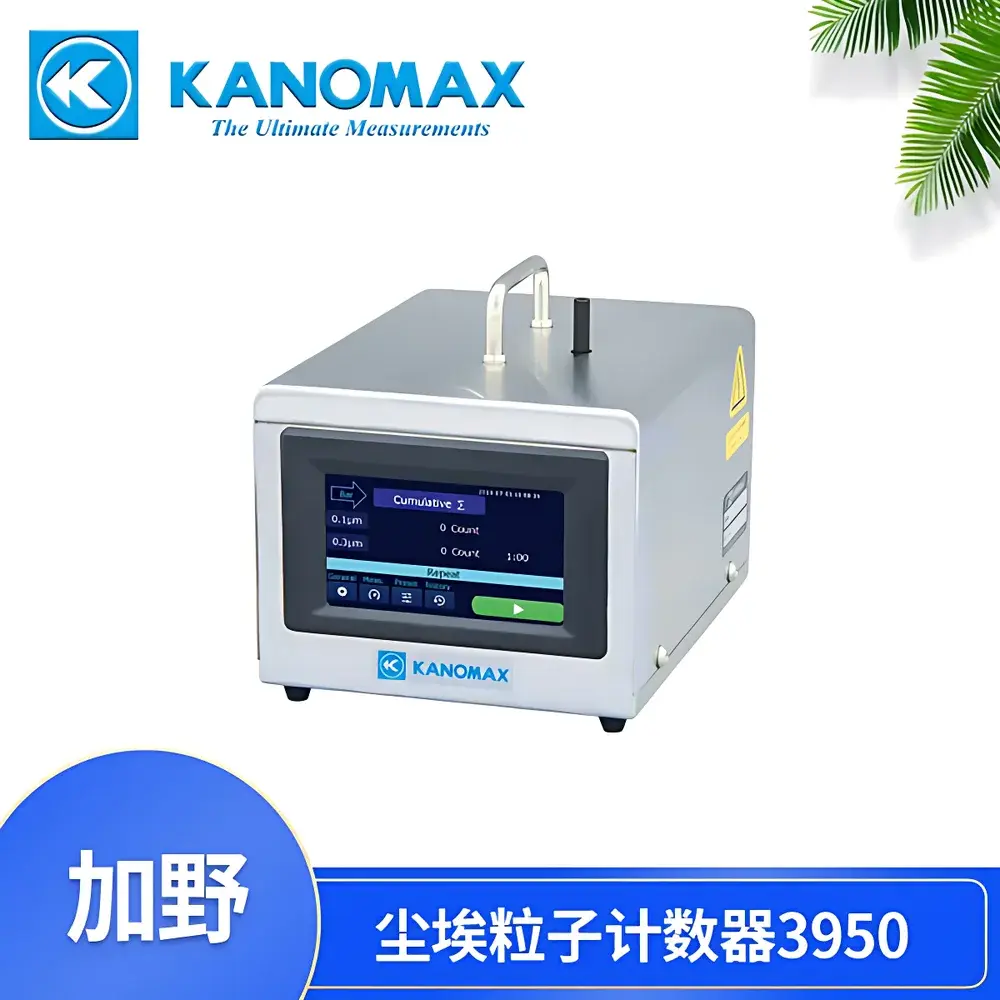
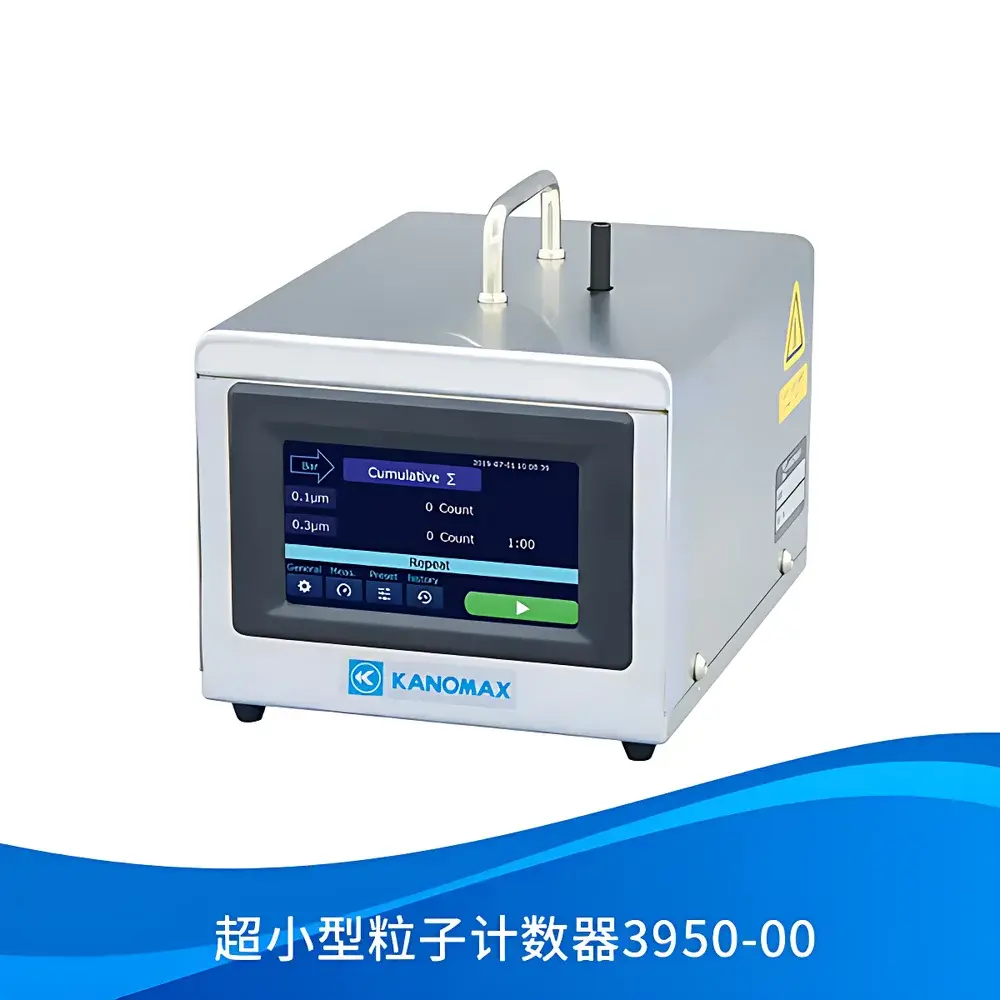
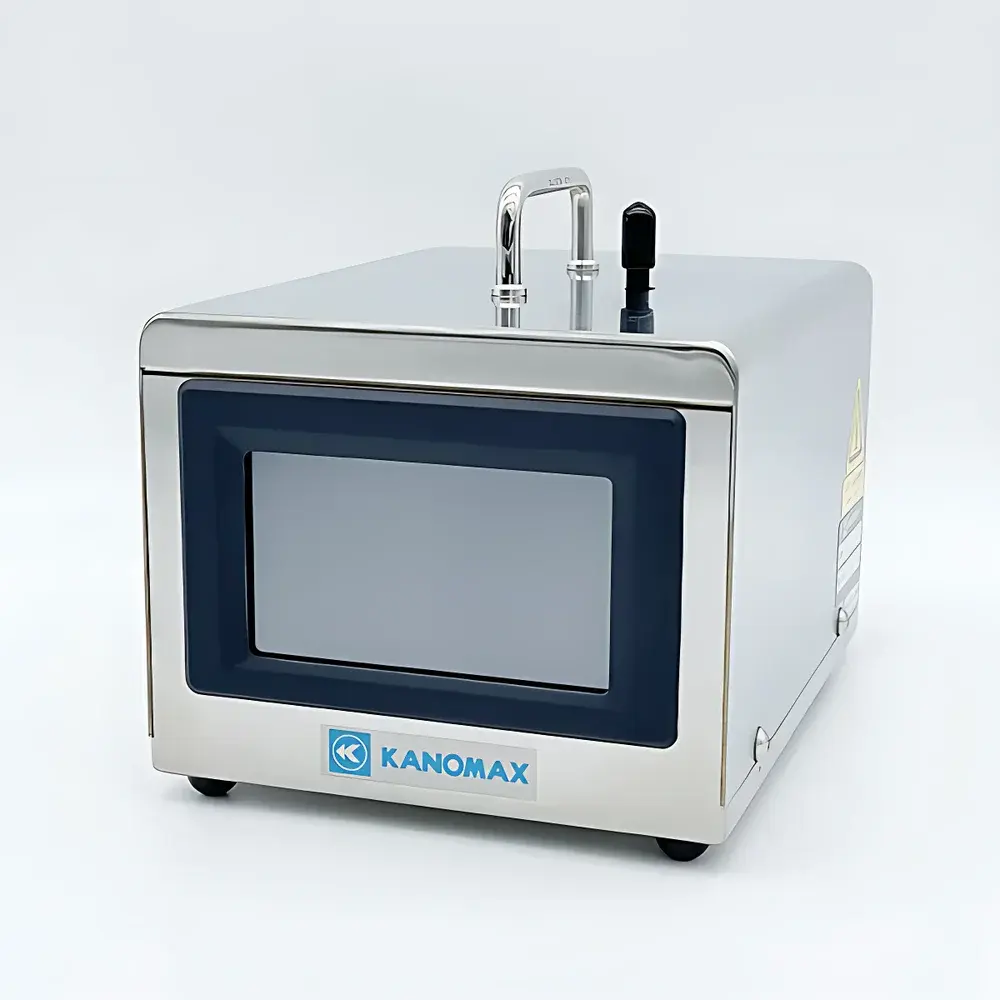
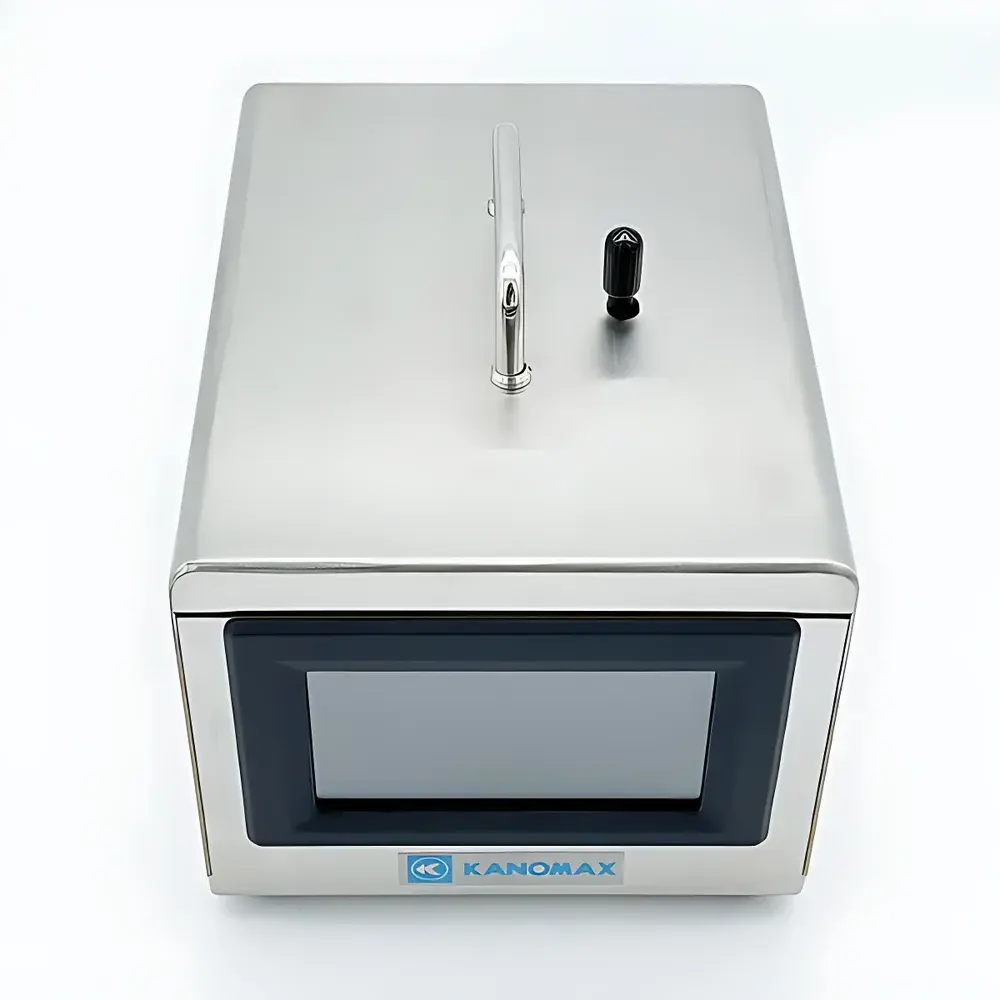
KANOMAX 3950-00 Portable 0.1 µm Particle Counter for Semiconductor Cleanroom Monitoring
| Brand | KANOMAX |
|---|---|
| Origin | Japan |
| Model | 3950-00 |
| Flow Rate | 2.83 L/min (0.1 CFM) |
| Flow Accuracy | ±5% |
| Timing Accuracy | ±1 s per 6 min |
| Repeatability | ±5% |
| Size Distribution Error | ±15% |
| Indication Error | ±30% |
| Particle Detection Principle | Light Scattering |
| Calibration Standards | Compliant with JIS B9921 and ISO 21501-4 |
| Channel Configuration | Dual-channel (0.1 µm, 0.3 µm) |
| Maximum Concentration | 10⁷ particles/m³ |
| Counting Efficiency | 50±20% at 0.1 µm (PSL), 100±10% at 0.15–0.2 µm (PSL) |
| False Count Rate | <1 count per 35 min |
| Size Resolution | ≤15% (relative to 0.3 µm PSL) |
| Display | 4.3" color TFT touchscreen |
| Communication Interfaces | USB (Host/Device), Ethernet, RS-485 (9600–38400 baud) |
| Data Storage | Internal memory (up to 10,000 records, CSV format) |
| Operating Environment | 15–35 °C, 0–85% RH (non-condensing) |
| Dimensions | 150 × 163 × 228 mm |
| Weight | 3.4 kg |
Overview
The KANOMAX 3950-00 is a compact, high-sensitivity portable particle counter engineered specifically for real-time airborne particulate monitoring in ultra-clean environments—particularly semiconductor fabrication cleanrooms, microelectronics assembly zones, and advanced packaging facilities. Utilizing calibrated laser light scattering technology, the instrument detects and quantifies particles as small as 0.1 µm with traceable metrological performance aligned to international standards. Its dual-channel optical system simultaneously resolves particles at 0.1 µm and 0.3 µm thresholds, enabling granular assessment of sub-100 nm contamination critical to photolithography process control and wafer defect prevention. Designed for both handheld deployment and OEM integration, the 3950-00 features a sealed, low-vibration optical chamber and thermally stabilized laser diode to ensure signal integrity across extended measurement cycles. Unlike conventional benchtop counters, its ultra-compact footprint (150 × 163 × 228 mm) and 3.4 kg mass permit direct mounting inside tool enclosures, mini-environments, or FOUP load ports—eliminating sampling line artifacts and transport-induced particle loss.
Key Features
- Sub-100 nm detection capability: Certified 0.1 µm lower size threshold with counting efficiency validated per JIS B9921 and ISO 21501-4 using monodisperse PSL standards.
- Integrated dual-channel photodetector array: Simultaneous acquisition at 0.1 µm and 0.3 µm enables real-time differential analysis for trending early-stage filter degradation or process drift.
- OEM-ready mechanical and electrical architecture: RS-485 Modbus RTU and Ethernet TCP/IP protocols support seamless integration into SECS/GEM-compliant factory automation systems; USB Device mode allows direct firmware updates and configuration sync via host PC.
- High-fidelity 4.3-inch capacitive touchscreen interface: Supports multi-language UI (English/Japanese), intuitive menu navigation, and on-device visualization of cumulative (∑), differential (Δ), and histogram-based concentration profiles.
- Robust internal sampling pump: Maintains stable 2.83 L/min (0.1 CFM) volumetric flow across pressure differentials up to ±1.5 kPa, with flow calibration traceable to NIST-traceable rotameters.
- Embedded data governance: Internal flash memory stores up to 10,000 timestamped records in CSV format—including location ID, measurement mode, duration, and environmental metadata—facilitating audit-ready export for ISO 14644-1 classification reports.
Sample Compatibility & Compliance
The KANOMAX 3950-00 is validated for continuous monitoring of ISO Class 1–5 cleanrooms (per ISO 14644-1:2015) and controlled environments governed by SEMI S2/S8 safety guidelines. Its aerosol inlet design minimizes particle bounce and electrostatic losses for non-viable particulates in dry nitrogen or compressed air streams typical of EUV lithography tools. Instrument performance meets the metrological requirements of JIS B9921 (2019) for airborne particle counters and conforms to ISO 21501-4:2018 Annex A for calibration uncertainty reporting. While not FDA 21 CFR Part 11–certified out-of-the-box, its audit trail-capable logging architecture—combined with user-accessible configuration locks and timestamped record immutability—supports validation under GMP/GLP frameworks when deployed with appropriate SOPs and electronic signature controls.
Software & Data Management
Data acquisition and post-processing are supported via KANOMAX’s proprietary CleanView™ PC software (Windows 10/11 compatible), which provides real-time dashboarding, spatial mapping of multi-point measurements, and automated generation of ISO 14644-1 compliance tables. The software implements configurable alarm thresholds (per channel), statistical process control (SPC) charting (X-bar/R), and batch export to LIMS-compatible formats (CSV, XML). All communication interfaces—USB Device, Ethernet, and RS-485—support bi-directional command/response protocol (KANOMAX Command Set v2.1), enabling remote scheduling, firmware version interrogation, and sensor health diagnostics. Internal memory writes are atomic and power-fail resilient; no data corruption occurs during unexpected shutdown.
Applications
- Real-time contamination monitoring at lithography track tool interfaces and reticle storage cabinets.
- In-line verification of ULPA filter integrity in mini-environments and point-of-use purging systems.
- Qualification of chemical vapor deposition (CVD) and atomic layer deposition (ALD) chamber purge cycles.
- Validation of glovebox and transfer port particle ingress during wafer handling operations.
- Root-cause analysis of yield-limiting defects through correlation of particle burst events with process step timestamps.
- Supporting ISO 14644-2 surveillance testing programs with programmable multi-location sampling sequences.
FAQ
Does the 3950-00 require external calibration to maintain ISO 21501-4 compliance?
No—factory calibration is performed using NIST-traceable PSL aerosols and documented in the Certificate of Conformance shipped with each unit. Annual recalibration is recommended per ISO 21501-4 Clause 7.3.
Can the device operate continuously for 24/7 unattended monitoring?
Yes—thermal management and solid-state pump design support indefinite operation within specified ambient conditions (15–35 °C, non-condensing). Internal memory overflow behavior defaults to FIFO overwrite with warning log entry.
Is the 0.1 µm channel validated for metallic or high-refractive-index particles?
Calibration is performed with PSL spheres (refractive index 1.59); for metal oxides or silicon nanoparticles, users should apply Mie scattering correction factors based on known morphology and RI—refer to ISO 21501-4 Annex C for guidance.
What is the minimum sampling time per measurement cycle?
The shortest programmable interval is 6 seconds, corresponding to 0.283 liters per sample—sufficient for statistically robust counts above 100 particles/m³ at 0.1 µm.
How does the instrument handle high-concentration excursions without coincidence error?
The maximum detectable concentration is 10⁷ particles/m³; above this, the built-in coincidence loss correction algorithm (based on Poisson statistics) applies attenuation compensation per ISO 21501-4 Section 6.4.3.
Related Products







