
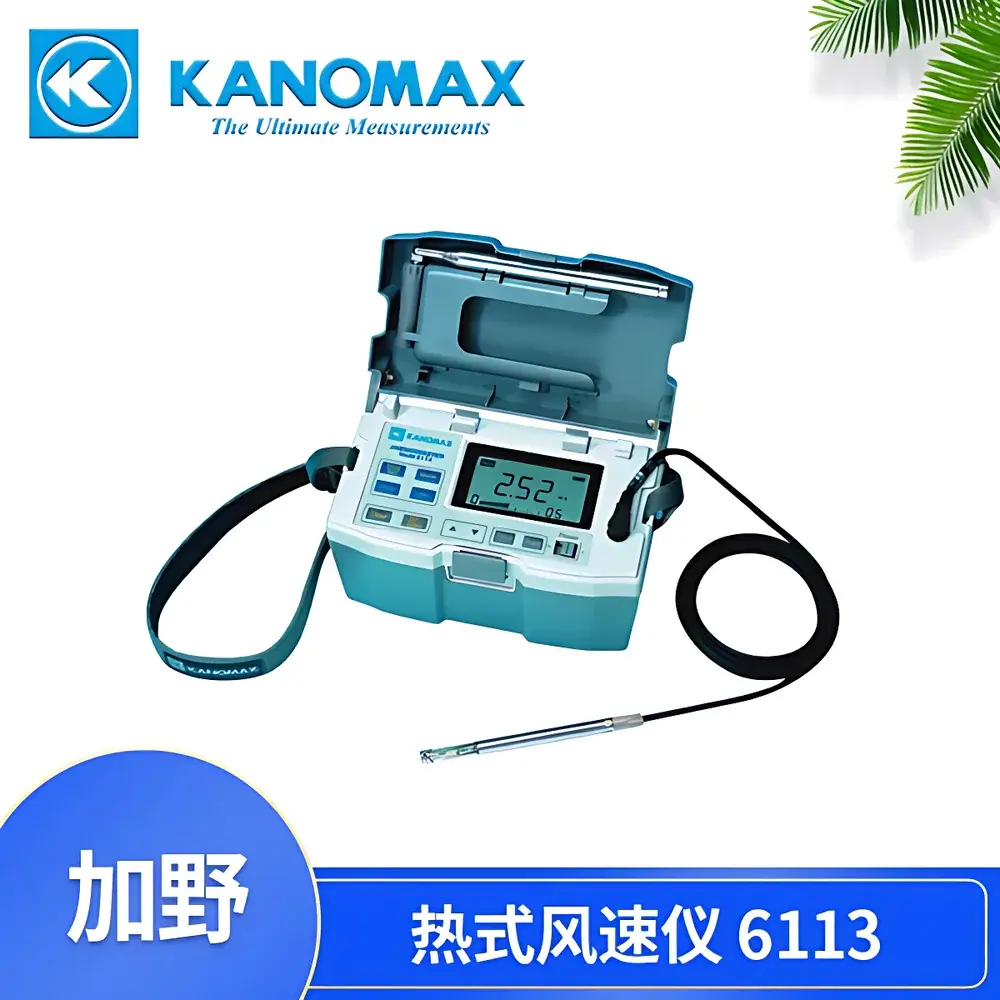
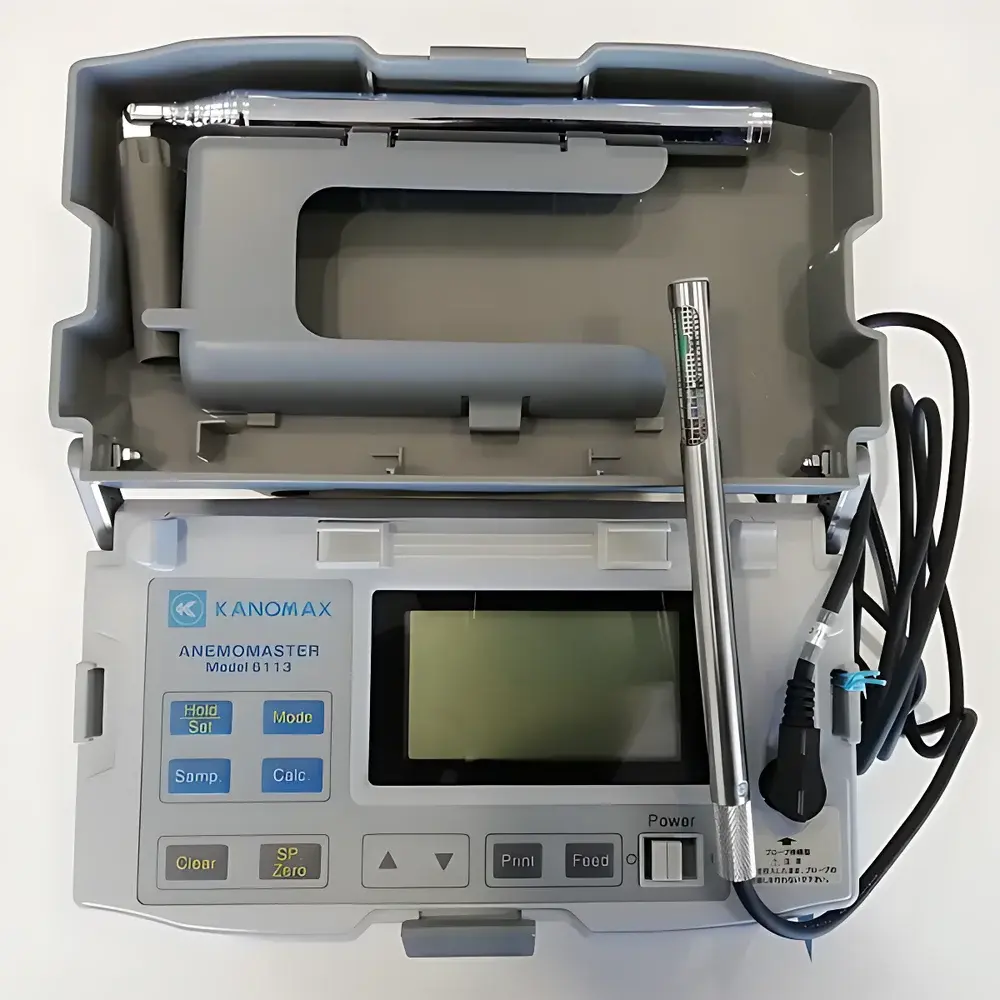
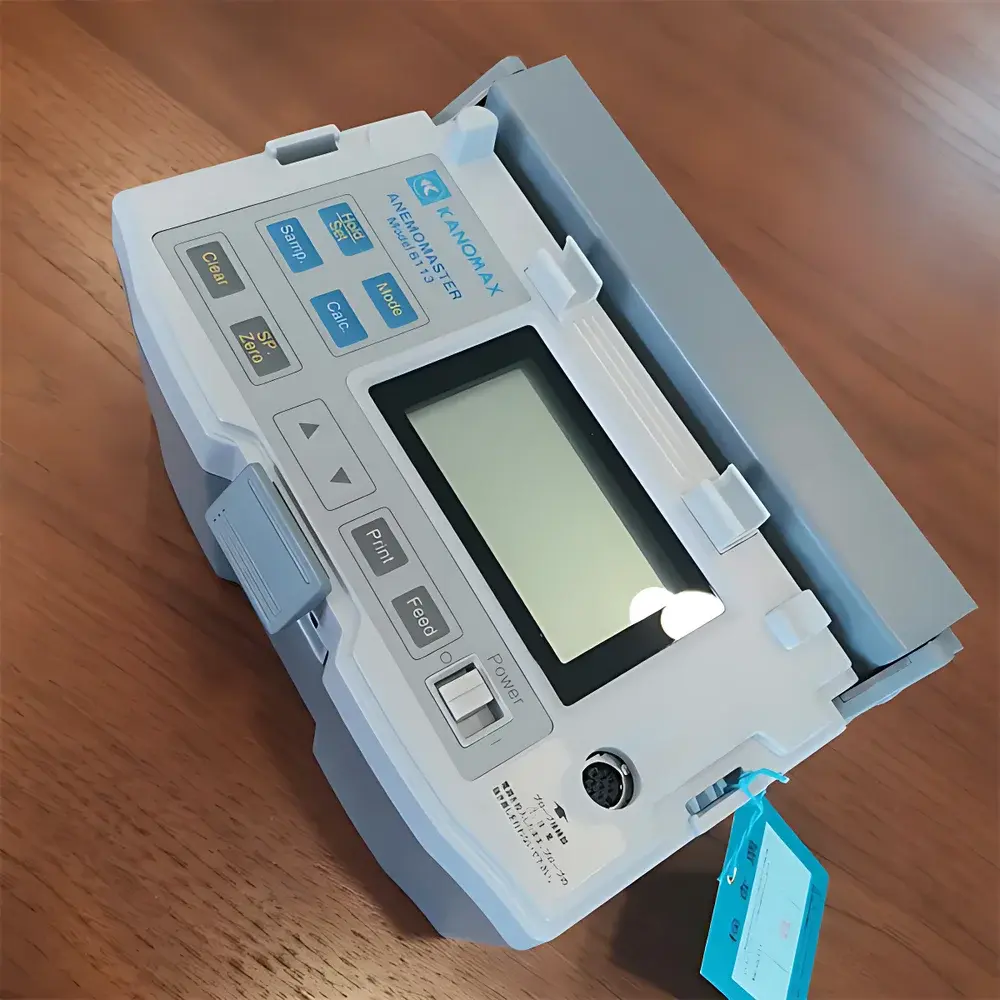
Kanomax 6113 Intelligent Thermal Anemometer for Pharmaceutical Cleanroom Air Velocity Monitoring
| Brand | Kanomax |
|---|---|
| Origin | Japan |
| Model | 6113 |
| Instrument Type | Thermal Anemometer |
| Measurement Range | 0.1–50.0 m/s |
| Accuracy | ±(3% of reading + 0.1) m/s |
| Operating Temperature | 0–100 °C |
| Temperature Range | 0–100 °C |
| Temperature Accuracy | ±1 °C |
| Pressure Range | –5 to +5 kPa |
| Pressure Accuracy | ±(3% of reading + 0.01) kPa |
| Communication Interface | RS-232C |
| Data Storage Capacity | 100 measurement sets |
| Built-in Printer | Yes |
| Analog Output | 0–1 V (optional) |
| Power Supply | 6 × AA batteries |
| Dimensions | 210 × 120 × 133 mm |
| Weight | 1.0 kg |
Overview
The Kanomax 6113 Intelligent Thermal Anemometer is a precision-engineered environmental monitoring instrument designed specifically for continuous and spot-check air velocity validation in regulated pharmaceutical cleanrooms, ISO Class 5–8 environments, and HVAC commissioning workflows. It operates on constant-temperature anemometry (CTA) principles—measuring convective heat loss from a heated sensor element to determine volumetric airflow velocity with high temporal resolution and low thermal inertia. Unlike cup or vane anemometers, the 6113’s thermistor-based probe delivers stable, drift-resistant readings across laminar and turbulent flow regimes typical of unidirectional airflow systems (UDAF), supply diffusers, and return grilles. Its calibrated range of 0.1–50.0 m/s supports both low-velocity validation (e.g., 0.45 ± 20% m/s at ISO 5 workstations) and higher-velocity duct traversals, making it suitable for GMP-compliant airflow mapping per EU Annex 1 and FDA Guidance for Industry: Sterile Drug Products.
Key Features
- Triple-parameter simultaneous measurement: air velocity, ambient temperature (0–100 °C), and differential pressure (–5 to +5 kPa) — all captured in a single acquisition cycle.
- Interchangeable, field-replaceable probe modules: ensures operational continuity during routine maintenance or unexpected sensor failure without system downtime.
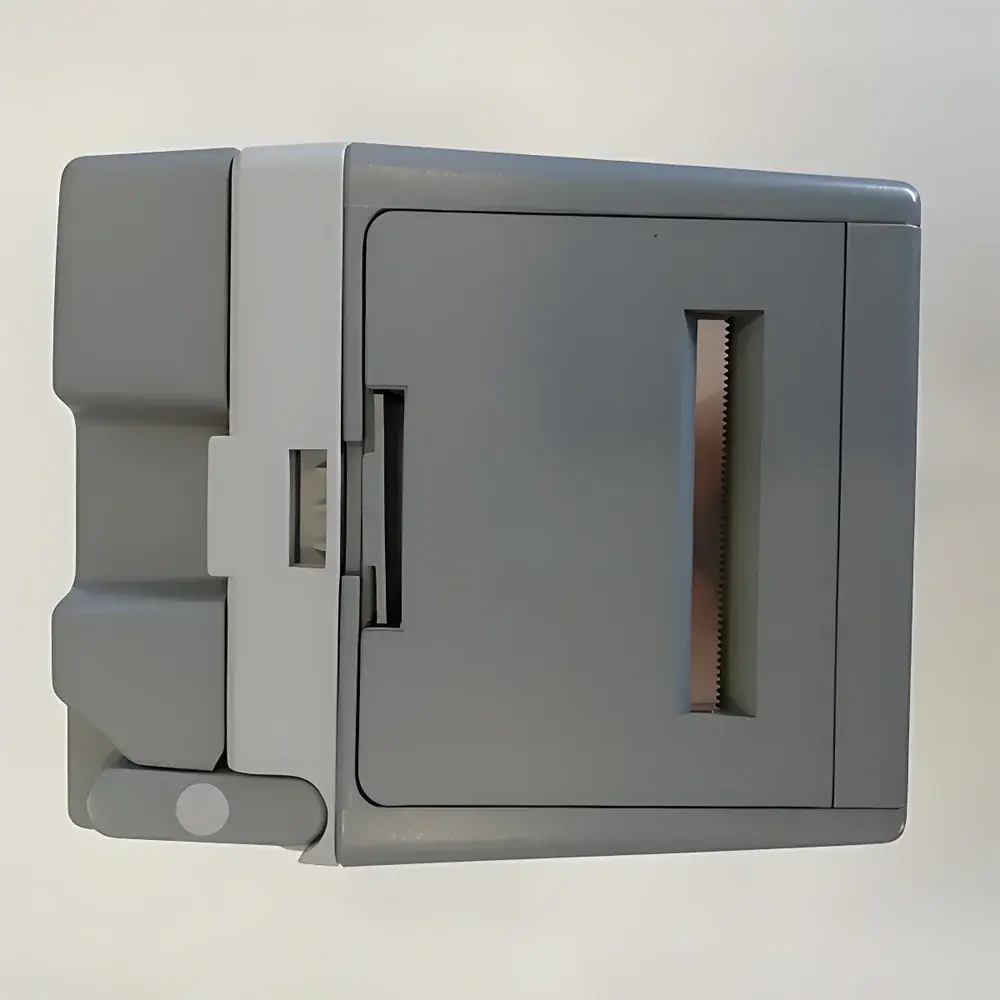
- Integrated thermal printer: enables real-time hardcopy documentation at point-of-test — critical for audit-ready cleanroom qualification reports and 21 CFR Part 11-aligned recordkeeping when paired with timestamped data export.
- Ruggedized handheld housing (210 × 120 × 133 mm; 1.0 kg) with IP54-rated ingress protection — validated for use inside glove ports, above ceiling plenums, and within stainless-steel ductwork.
- Large backlit LCD display with dual-unit readability: supports concurrent visualization of velocity (m/s), temperature (°C), and pressure (kPa) without menu navigation overhead.
- Onboard statistical processing: calculates and stores max/min/mean values across up to 100 user-defined test sets — essential for ISO 14644-3 airflow uniformity assessments.
Sample Compatibility & Compliance
The 6113 is optimized for non-intrusive, non-contaminating measurements in Grade A/B/C/D cleanroom zones. Its stainless-steel probe tip meets USP surface compatibility requirements and exhibits negligible particle shedding under ISO 14644-1 Class 5 airflow conditions. All calibration certificates trace to JCSS (Japan Calibration Service System) and include NIST-traceable reference standards. The instrument conforms to IEC 61000-4 electromagnetic immunity specifications and satisfies EN 61326-1 for electrical equipment used in industrial and laboratory environments. When deployed with documented SOPs, it supports compliance with EU GMP Annex 1 (2022), PIC/S PI 007-6, and ISO 14644-3:2019 Annex B for cleanroom airflow characterization.
Software & Data Management
Data acquisition is managed via native RS-232C serial interface (standard) or optional analog 0–1 V output for integration into SCADA or building management systems (BMS). Kanomax-provided PC software (compatible with Windows 10/11) enables batch download, CSV export, time-stamped trend plotting, and automated report generation compliant with ALCOA+ data integrity principles. Audit trail functionality — including operator ID, calibration date, and parameter modification logs — can be enabled to meet FDA 21 CFR Part 11 electronic record requirements. All stored datasets retain metadata (date/time, probe ID, environmental context), supporting retrospective analysis during regulatory inspections or deviation investigations.
Applications
- Airflow velocity mapping across laminar flow hoods (LFHs), isolators, and RABS during qualification (IQ/OQ/PQ) and periodic requalification.
- Duct traverse surveys for HVAC system balancing and energy efficiency audits in pharmaceutical manufacturing facilities.
- Filter integrity verification through upstream/downstream velocity profiling adjacent to HEPA/ULPA filters.
- Environmental monitoring during aseptic process simulations (media fills) to verify dynamic airflow stability.
- Validation of personnel gowning room air showers and pass-through chamber interlocks.
- Supporting risk-based monitoring strategies under ICH Q9 and Q10 frameworks through trending of long-term velocity drift.
FAQ
Is the Kanomax 6113 suitable for ISO 5 (Class 100) laminar airflow verification?
Yes — its 0.1 m/s lower detection limit and ±(3% + 0.1) m/s accuracy meet the sensitivity and tolerance requirements specified in ISO 14644-3 for unidirectional airflow systems.
Can the built-in printer generate GMP-compliant records without additional configuration?
The thermal printer outputs date/time-stamped raw data; however, full GMP compliance requires integration with a controlled document management system and operator authentication protocols — which are supported via RS-232C and Kanomax PC software.
Does the 6113 require annual recalibration, and is certificate traceability provided?
Yes — Kanomax recommends annual recalibration against JCSS-accredited standards; each unit ships with a factory calibration certificate bearing JCSS registration number and uncertainty budget.
How is probe interchangeability validated across multiple 6113 units in a multi-site facility?
Each probe carries a unique calibration coefficient stored in EEPROM; the host unit auto-reads this upon insertion, ensuring measurement consistency without manual coefficient entry or cross-unit drift.
What is the battery life under continuous logging mode?
With six AA alkaline cells, the instrument provides ≥12 hours of continuous measurement and printing at 2-second sampling intervals — sufficient for full-room airflow mapping campaigns.







