
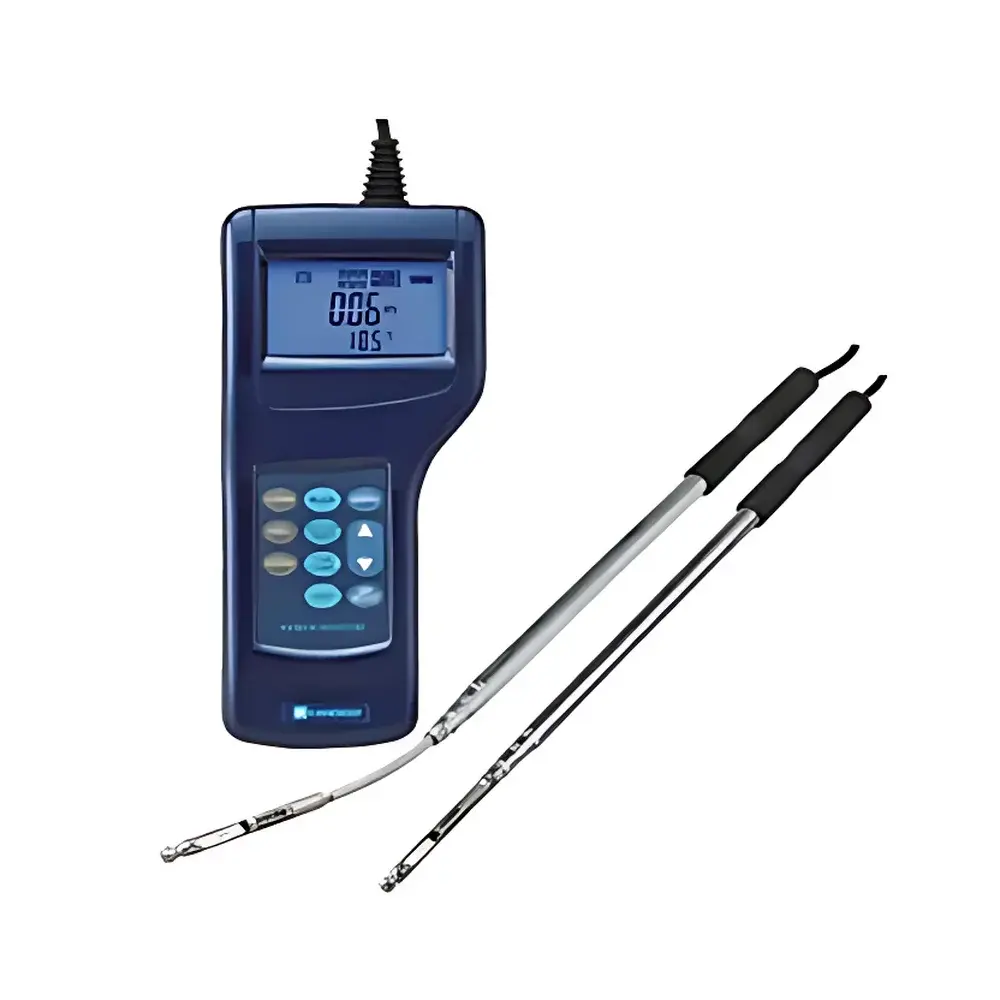
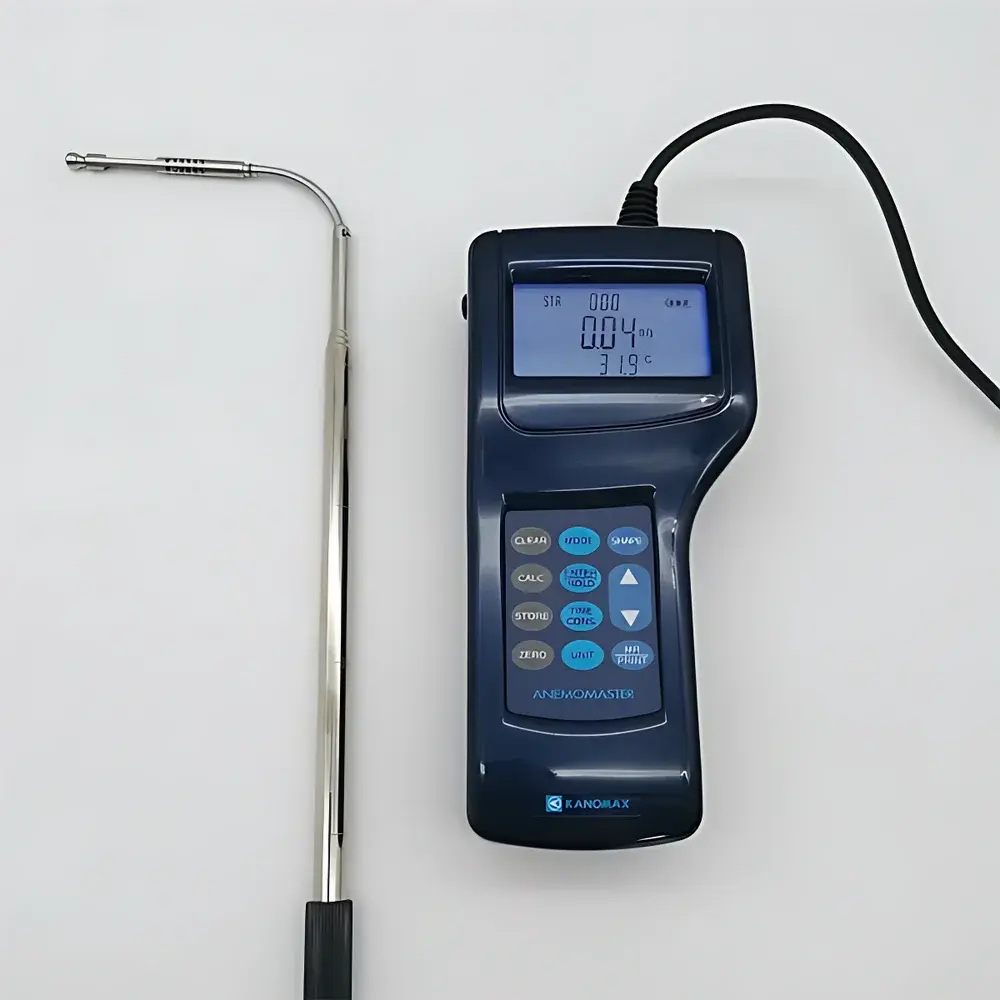
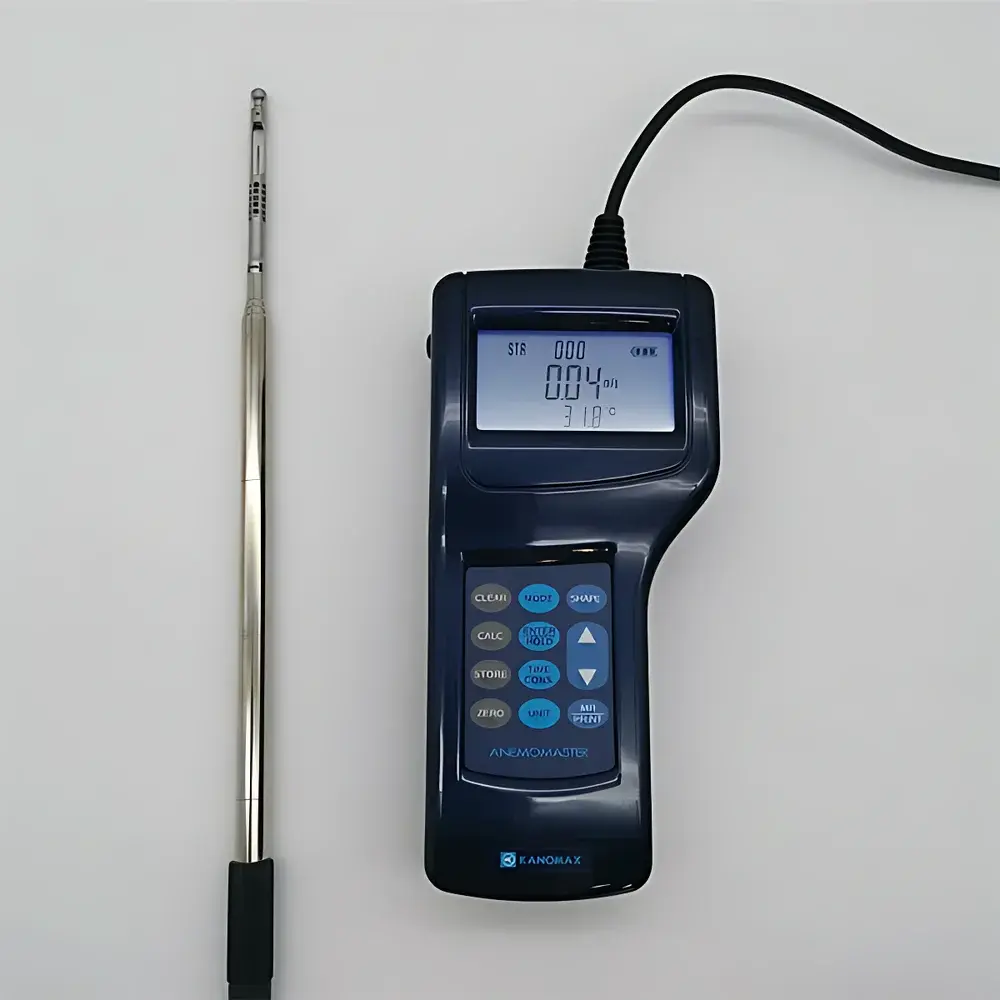
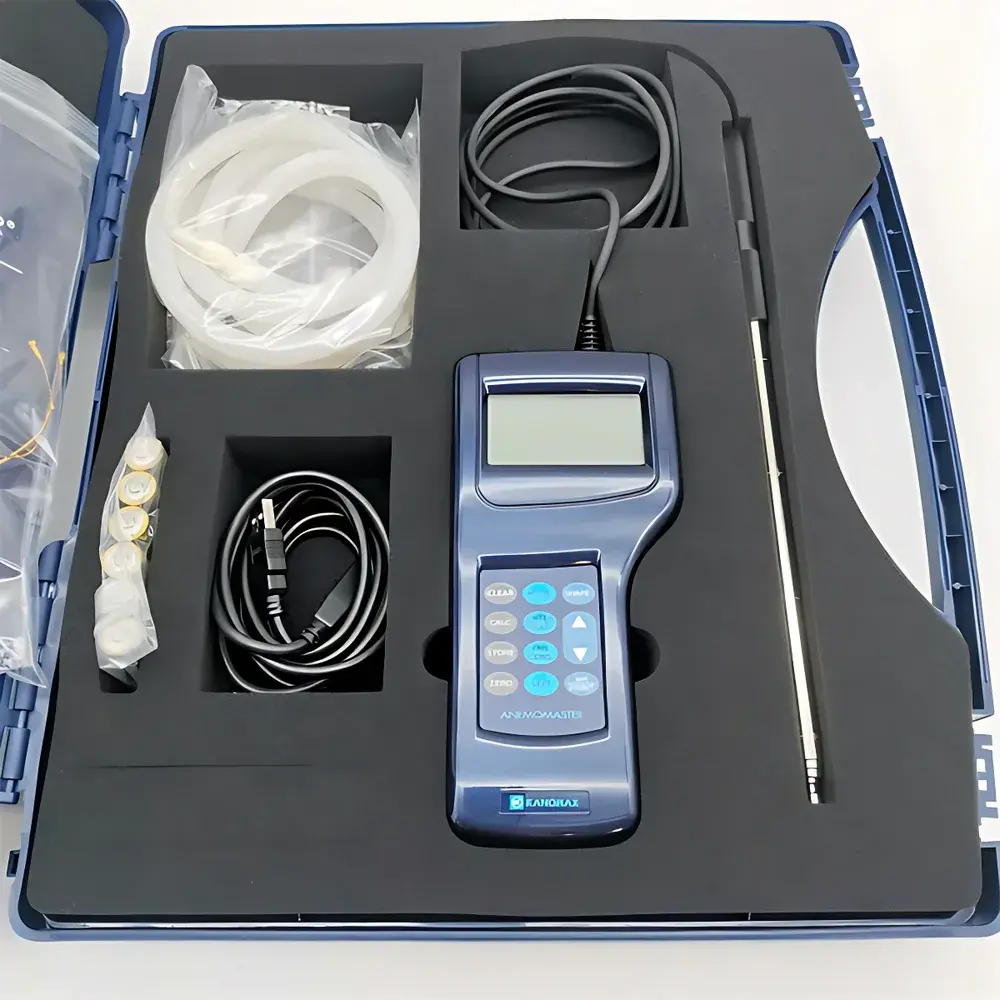
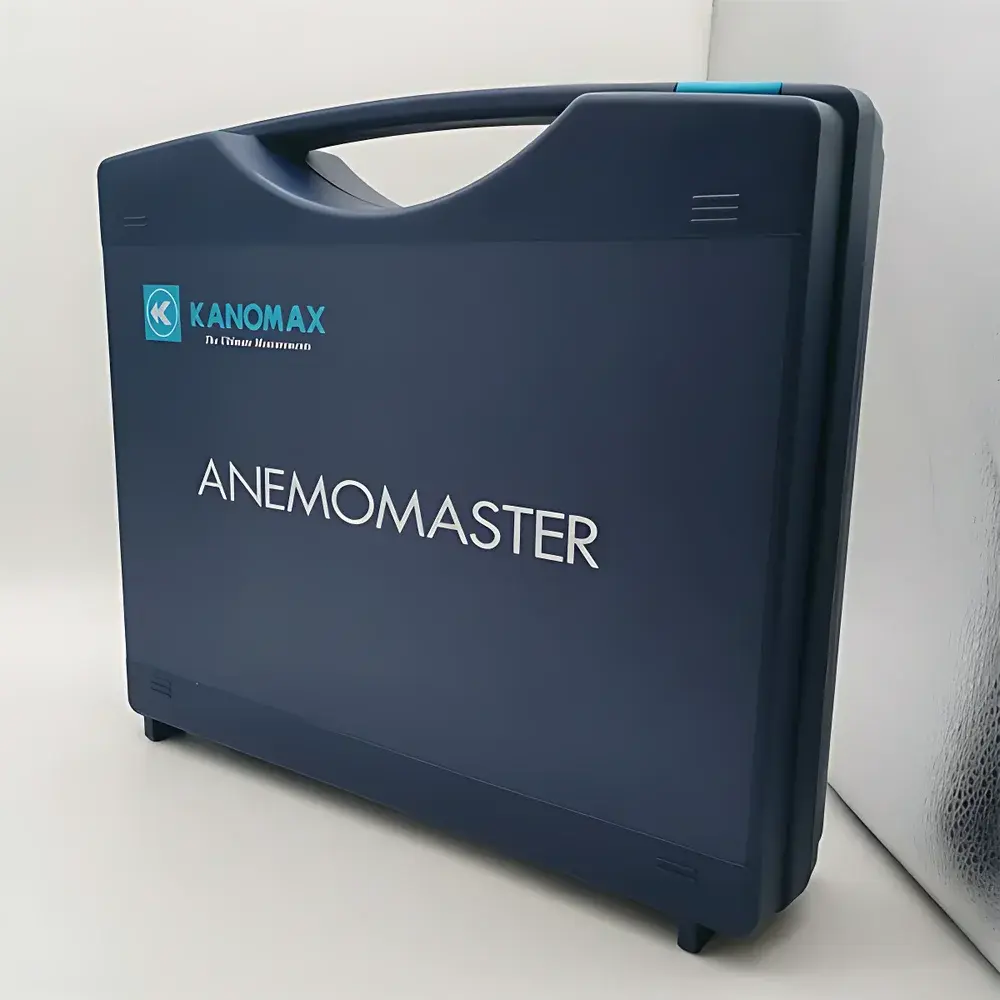
Kanomax 6036-0C / 6036P-BC Thermal Anemometer & Air Flow Meter
| Brand | Kanomax |
|---|---|
| Origin | Japan |
| Model | 6036-0C / 6036P-BC |
| Instrument Type | Thermal Anemometer |
| Velocity Range | 0.01–30.0 m/s |
| Accuracy | ±3% of reading (velocity), ±0.5 °C (temperature), ±3% of reading (pressure, 6036P-BC only) |
| Resolution | ±2% of reading |
| Operating Temperature | −20 to +70 °C |
| Operating Humidity | 2.0–98.0% RH |
| Data Storage | 1500 measurement sets |
| Interface | USB |
| Dimensions | 66 × 51 × 188 mm |
| Weight | 400 g (without batteries) |
| Probe | Telescoping and flexible |
Overview
The Kanomax 6036-0C and 6036P-BC are precision-engineered thermal anemometers designed for simultaneous measurement of air velocity, volumetric flow rate, temperature, and—on the 6036P-BC model—differential pressure. Based on constant-temperature anemometry (CTA), these instruments utilize a heated platinum resistance sensor whose cooling rate correlates directly with local airflow velocity. This principle enables high-sensitivity detection down to 0.01 m/s while maintaining robust performance across turbulent, low-velocity, or transient flow conditions typical in HVAC commissioning, duct balancing, cleanroom validation, and laboratory ventilation assessment. Unlike cup or vane anemometers, the thermal sensing architecture offers near-instant response time (<100 ms), minimal flow disturbance, and insensitivity to flow direction—making it ideal for spot-checking grilles, diffusers, and small-diameter ducts where spatial constraints limit probe placement.
Key Features
- Simultaneous real-time acquisition of air velocity (0.01–30.0 m/s), temperature (−20 to +70 °C), and—on the 6036P-BC model—differential pressure (±5 kPa)
- Telescoping and bendable probe assembly for access to confined or irregularly shaped duct sections without disassembly
- Onboard calculation of volumetric airflow (m³/h or CFM) using user-defined cross-sectional geometry (rectangular, circular, or custom polygonal inputs)
- Statistical data logging: automatic computation of mean, maximum, and minimum values over user-specified sampling intervals
- Internal memory capacity for up to 1500 timestamped measurement records, each including velocity, temperature, pressure (if applicable), and derived flow rate
- USB interface compliant with USB 2.0 specifications for direct connection to Windows-based PCs; supports firmware updates and configuration backup
- Rugged handheld enclosure (66 × 51 × 188 mm, 400 g) with IP54-rated ingress protection against dust and water splashes during field use
Sample Compatibility & Compliance
The 6036 series is validated for use in non-corrosive, non-explosive ambient air and inert gas streams within specified environmental limits (2.0–98.0% RH, −20 to +70 °C). Its thermal sensor is not suitable for high-particulate, oil-laden, or chemically aggressive airstreams without protective filtration. The instrument meets IEC 61000-4 electromagnetic compatibility standards and conforms to JIS B 7554 (Japanese Industrial Standard for anemometers). While not intrinsically safe, its low-power design (2×AA alkaline or Ni-MH batteries) ensures operational safety in standard commercial and industrial indoor environments. For regulated applications—including HVAC system validation under ASHRAE Guideline 12, ISO 14644 cleanroom monitoring, or GLP-compliant facility audits—the device supports traceable calibration via NIST-traceable reference standards and maintains audit-ready data logs with timestamps and operator IDs when used with Kanomax’s optional software suite.
Software & Data Management
Kanomax provides dedicated PC software compatible with Windows 10/11 for post-processing and reporting. The application enables real-time graphing of velocity vs. time, export of raw datasets in CSV or Excel format, and generation of summary reports compliant with ISO/IEC 17025 documentation requirements. All stored measurements retain metadata including date/time stamp, probe orientation flag, measurement mode (spot/average), and user-assigned location tags. Audit trail functionality records configuration changes, calibration events, and data export actions—supporting compliance with FDA 21 CFR Part 11 when deployed in pharmaceutical or medical device manufacturing settings. Software updates and firmware patches are distributed through Kanomax’s official support portal, ensuring long-term maintainability and cybersecurity alignment.
Applications
- HVAC system commissioning and TAB (Testing, Adjusting, Balancing) per ASHRAE Standard 111
- Duct traverse surveys for airflow uniformity assessment in rectangular and round ducts
- Performance verification of fume hoods, biosafety cabinets, and laminar flow workstations
- Thermal comfort evaluation in occupied spaces (PMV/PPD modeling input)
- Validation of air curtain effectiveness and localized exhaust ventilation efficiency
- R&D testing of fans, blowers, heat exchangers, and electronic cooling systems
- Environmental chamber airflow mapping and leak detection in pressurized enclosures
FAQ
What is the difference between the 6036-0C and 6036P-BC models?
The 6036-0C measures air velocity and temperature only, while the 6036P-BC adds differential pressure sensing (±5 kPa range) for total/dynamic/static pressure analysis and enhanced flow calculation accuracy in complex duct networks.
Can the instrument be calibrated in-house?
Field calibration requires a certified reference anemometer and controlled wind tunnel or calibrator (e.g., ISO 17025-accredited primary standard). Kanomax recommends annual recalibration by an authorized service center to maintain traceability.
Does the probe require periodic cleaning or maintenance?
Yes—the thermal sensor tip must be cleaned gently with isopropyl alcohol and lint-free swabs after exposure to dusty or oily environments to prevent drift and ensure repeatability.
Is the USB interface compatible with macOS or Linux?
The native Kanomax software is Windows-only; however, raw data files (CSV) exported via USB can be imported into cross-platform analysis tools such as Python (Pandas), MATLAB, or LibreOffice Calc.
How does the instrument calculate volumetric flow rate?
Users input duct geometry (height, width, or diameter) and select integration method (grid traverse or single-point approximation); the device computes flow rate using Q = V̄ × A, where V̄ is the averaged velocity and A is the cross-sectional area.







