
Xenon Arc Weathering Test Chamber – OEM/ODM Manufacturer Supply
No specifications available.
Overview
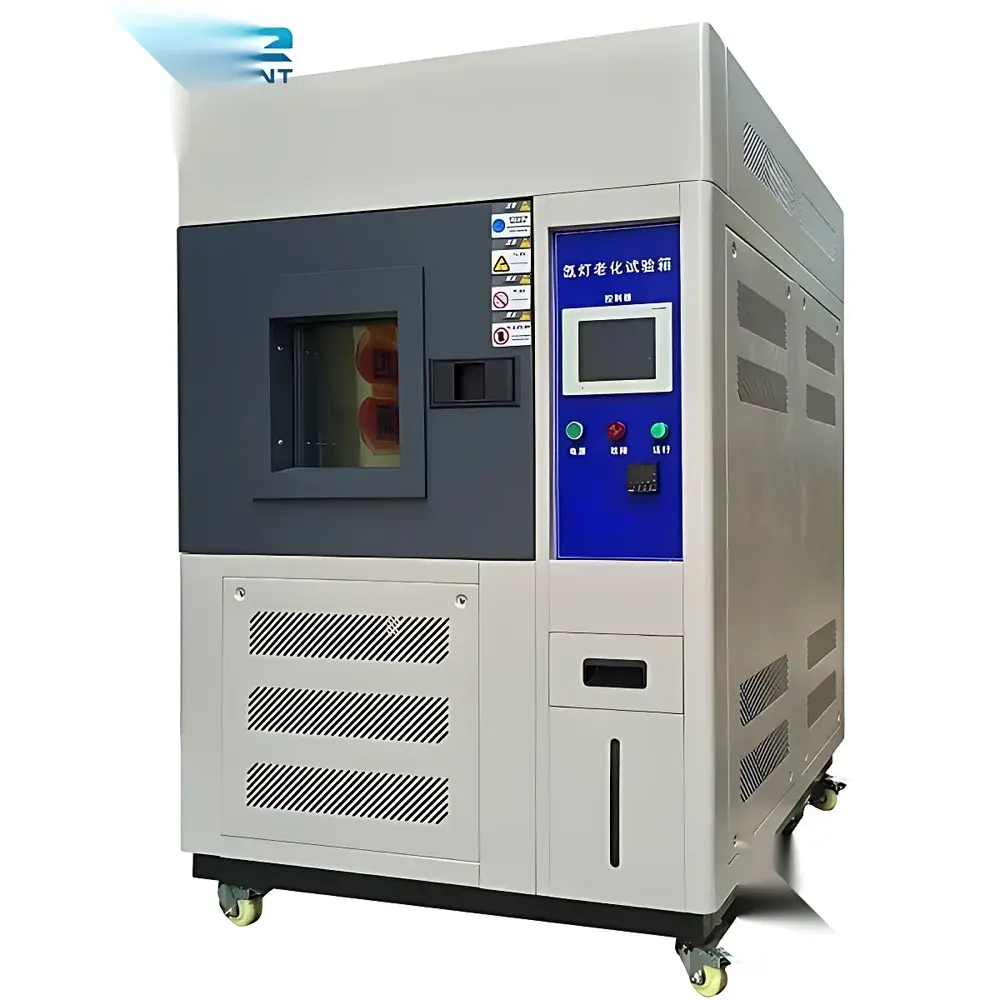
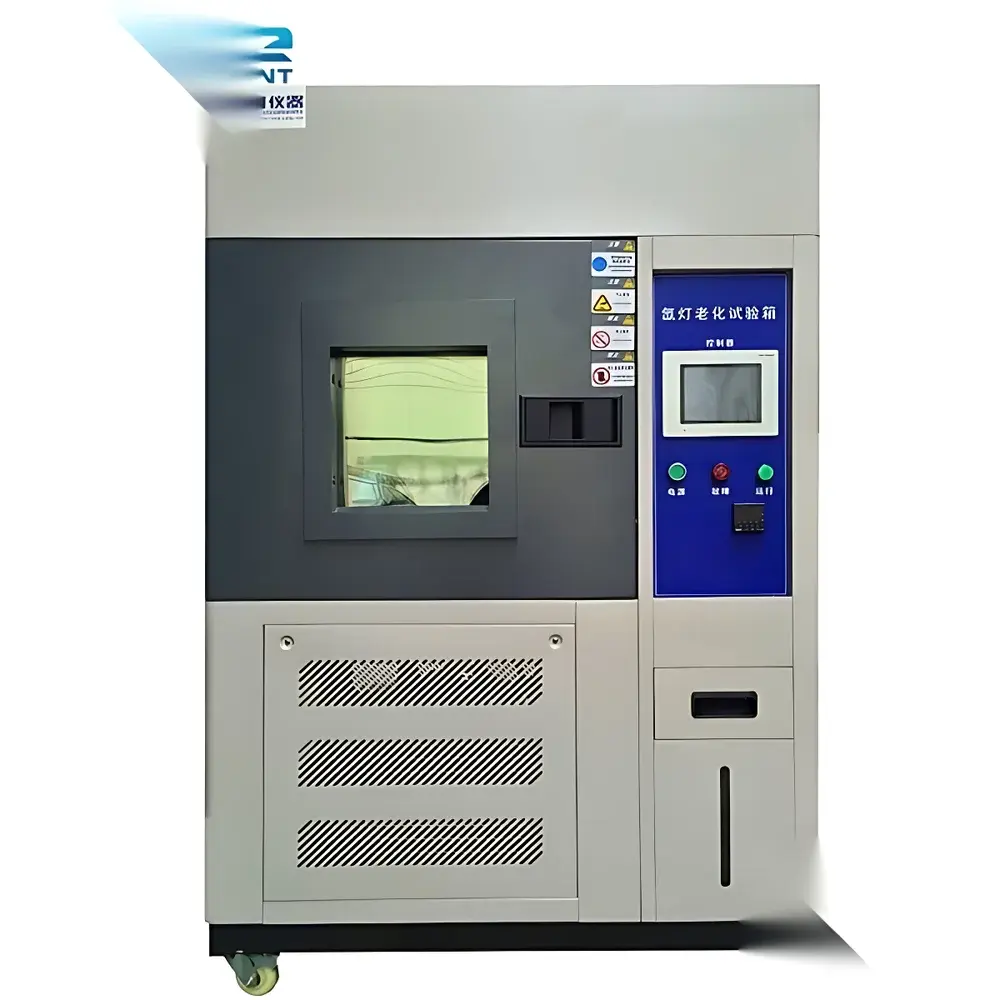
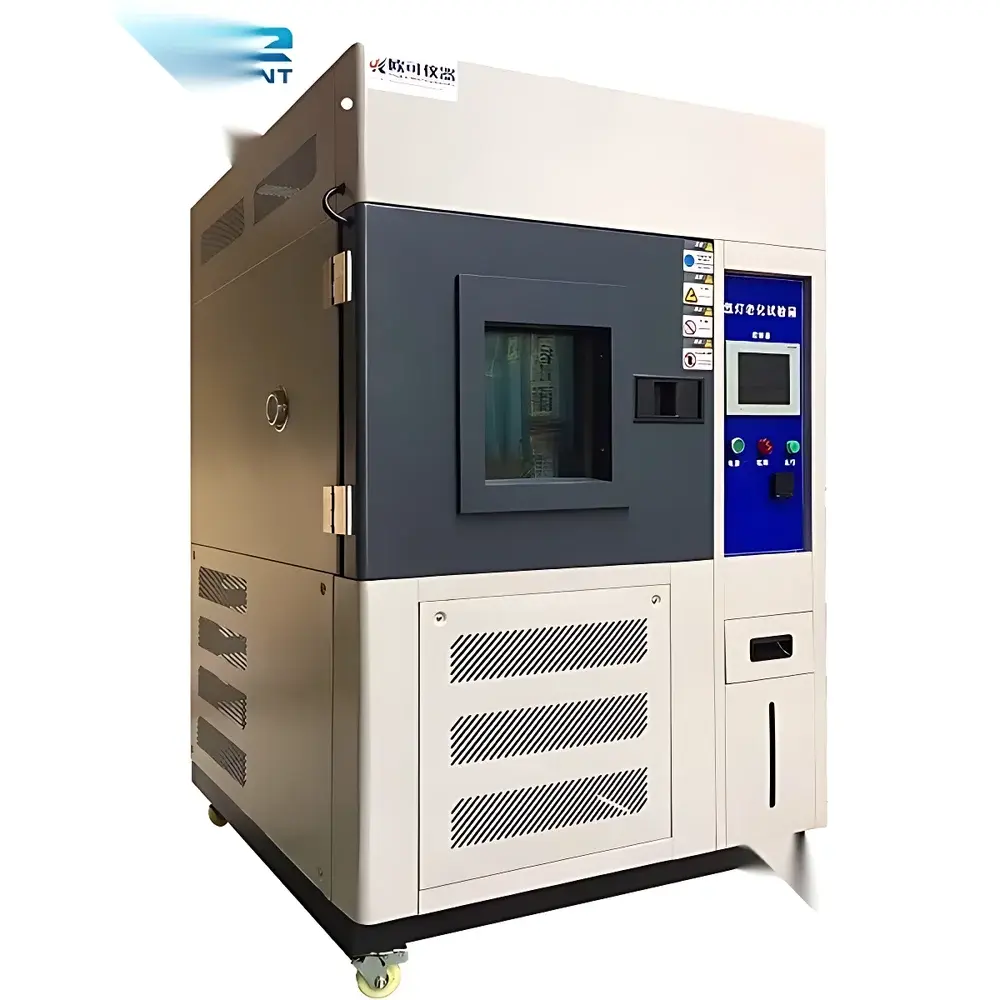
The Xenon Arc Weathering Test Chamber is an environmental simulation system engineered to replicate the damaging effects of natural sunlight, heat, and moisture on materials—primarily for evaluating long-term durability, colorfastness, gloss retention, and surface degradation. It employs a high-intensity xenon arc lamp as the light source, which closely matches the spectral power distribution (SPD) of terrestrial solar radiation (290–800 nm), including critical UV, visible, and near-infrared regions. This enables accelerated aging testing in accordance with internationally recognized standards such as ISO 4892-2, ASTM G155, SAE J2527, and GB/T 16422.2. The chamber integrates precise control of irradiance, black-panel temperature, relative humidity, and water spray cycles to simulate realistic outdoor exposure conditions—including diurnal cycles, rain, dew, and condensation—within a controlled laboratory environment.
Key Features
- Xenon Light Source: Equipped with a stabilized 1.8 kW or 3.5 kW air-cooled or water-cooled xenon lamp assembly, calibrated to maintain ±5% irradiance uniformity across the test area per ISO 4892-2 requirements.
- Humidity Control System: Steam-based humidification using SUS304 stainless steel immersion heaters and water-level auto-regulation; operational range: 30–80% RH during light cycles, up to 90% RH during dark cycles; dry/wet bulb sensor configuration ensures traceable humidity measurement.
- Water Spray Function: Programmable spray duration (1 min to 99 h), adjustable on/off intervals; stainless steel nozzles (0.4 mm orifice) deliver uniform water distribution at regulated pressure (78–127 kPa); integrated reservoir with level-sensing and auto-refill capability.
- Rotating Sample Holder: 360° continuously rotating turntable (1 rpm) accommodating standard 75 × 150 mm specimens; ensures uniform irradiance exposure and minimizes positional bias.
- Intelligent Controller: Full-color LCD touchscreen interface with programmable multi-step test profiles; temperature control accuracy ±0.1°C, humidity resolution ±1% RH; timer range up to 99 h 99 min 99 s with real-time data logging.
- Robust Chamber Construction: Exterior: cold-rolled steel with electrostatic gray powder coating; interior: mirror-finish SUS304 stainless steel; high-performance silicone gasket seal rated for -70°C to +150°C operation.
Sample Compatibility & Compliance
The chamber accommodates flat-panel specimens, textiles, automotive trim, coatings, plastics, and elastomers—typically mounted on aluminum or stainless steel sample holders. Its design supports compliance with regulatory and industry-specific test protocols, including but not limited to: ISO 11341 (paints and varnishes), ISO 105-B02 (textile colorfastness), AATCC TM16 (apparel), and Ford CETP 00.00-L-467. All critical parameters—including irradiance, black-standard temperature, and humidity—are monitored and logged in alignment with GLP/GMP documentation requirements. Optional audit trail and user access control modules are available to support FDA 21 CFR Part 11-compliant environments.
Software & Data Management
The embedded controller provides local data storage and USB export functionality for time-stamped test logs (temperature, humidity, irradiance, spray status, cycle phase). Optional PC-based software enables remote monitoring, multi-chamber fleet management, automated report generation (PDF/CSV), and trend analysis against historical datasets. Calibration records, maintenance logs, and operator entries are timestamped and digitally signed to satisfy traceability needs under ISO/IEC 17025-accredited laboratories.
Applications
This instrument serves quality assurance, R&D, and regulatory submission workflows across diverse sectors: polymer formulation validation, automotive exterior component qualification, aerospace material certification, architectural coating performance benchmarking, and medical device packaging stability assessment. It is routinely deployed to support accelerated life-cycle predictions, comparative benchmarking of competing materials, and root-cause analysis of premature field failures linked to photooxidation or hydrolytic degradation.
FAQ
What standards does this xenon weatherometer comply with?
It meets core requirements of ISO 4892-2, ASTM G155, SAE J2527, and GB/T 16422.2; full conformance depends on configuration (e.g., filter type, sensor calibration, and control algorithm version).
Can the chamber operate without water spray or humidity cycles?
Yes—test profiles can be configured for dry-heat-only, UV-only, or dark-condensation-only sequences via the programmable controller.
Is black-panel temperature (BPT) or black-standard temperature (BST) measurement supported?
Standard configuration includes a BST sensor; BPT is available as an optional upgrade with dedicated mounting hardware and compensation algorithms.
What maintenance is required for long-term reliability?
Routine tasks include xenon lamp replacement every 1,500–2,000 hours, quartz filter cleaning/replacement every 6 months, and periodic verification of humidity sensor drift and irradiance calibration using NIST-traceable reference cells.
Does the system support third-party integration via Modbus or Ethernet/IP?
Yes—RS485 Modbus RTU is standard; Ethernet/IP and OPC UA interfaces are available upon request for MES/SCADA connectivity.



