
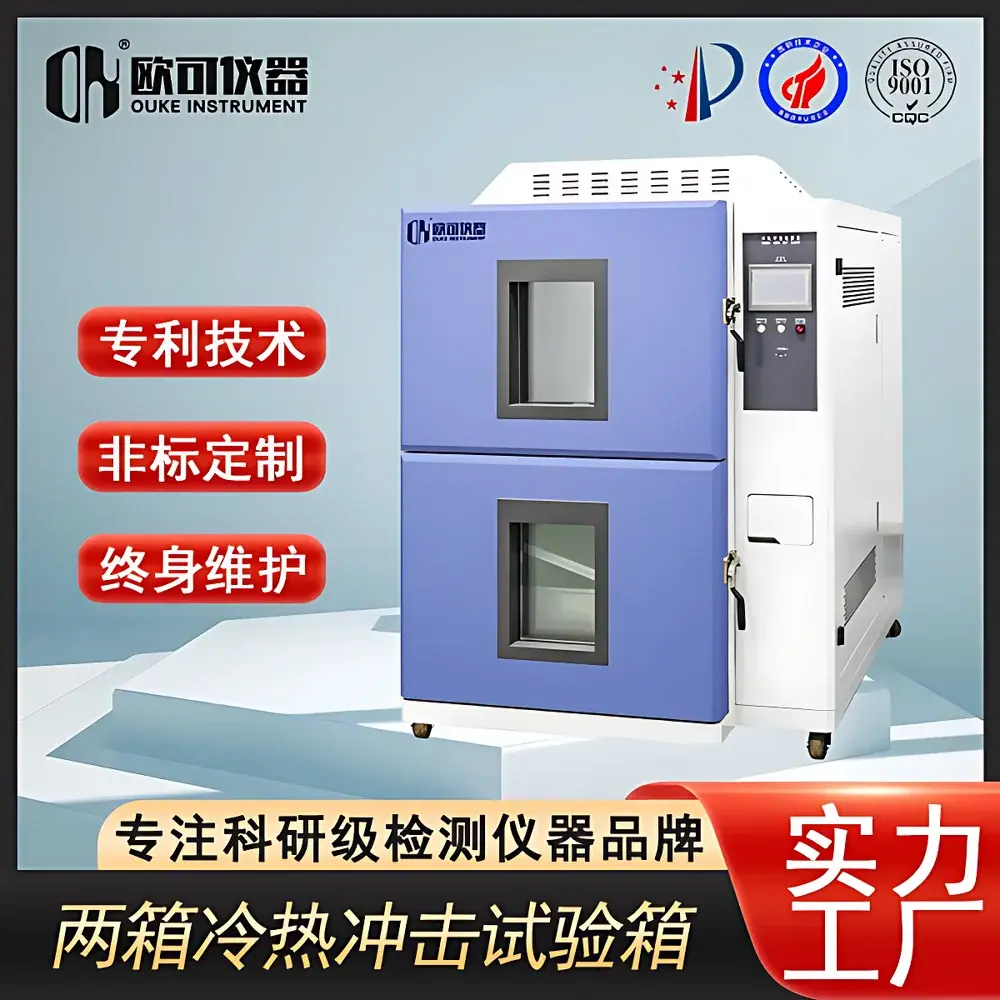
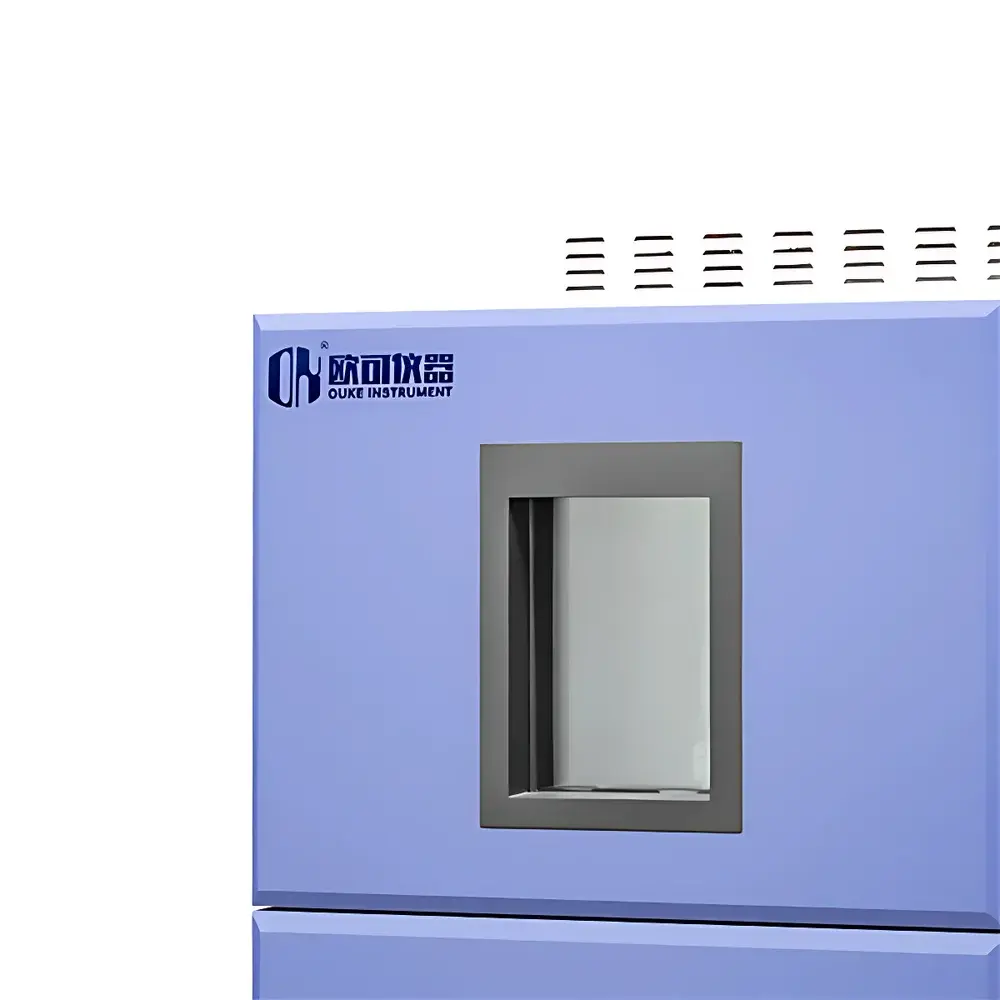
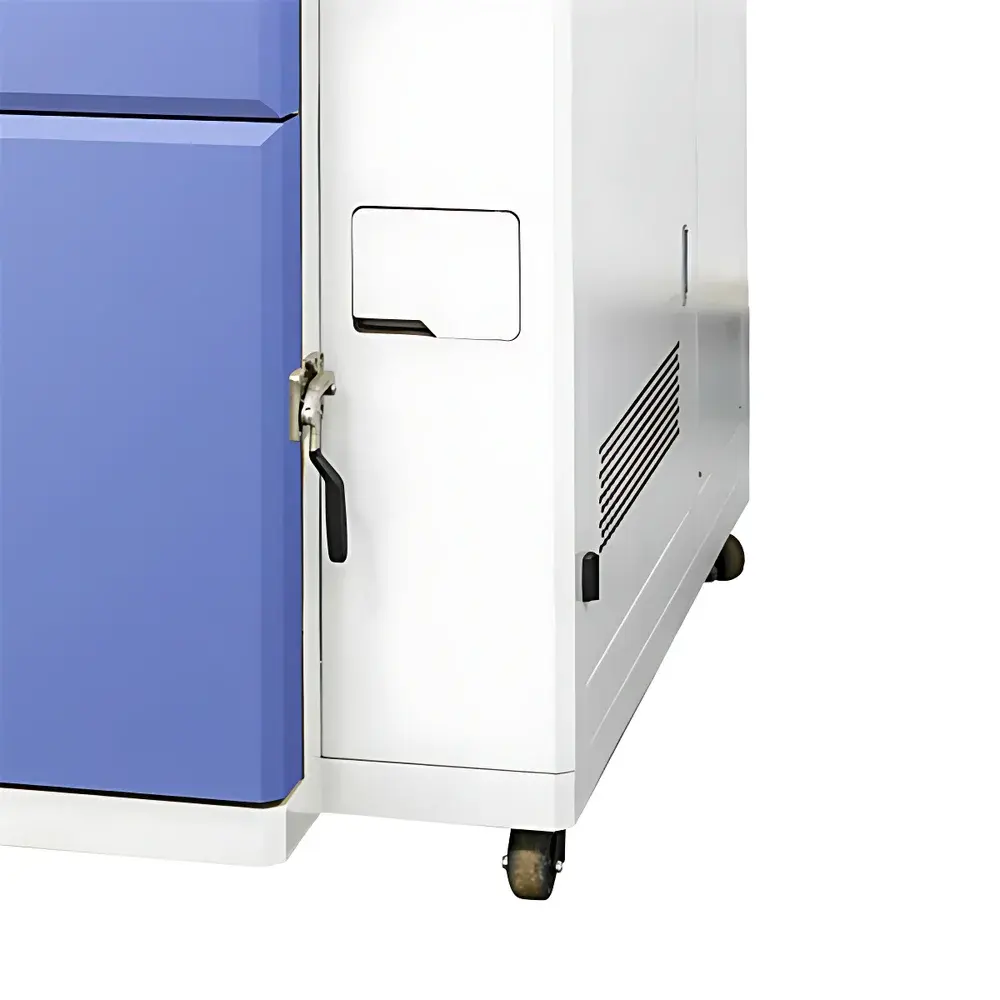
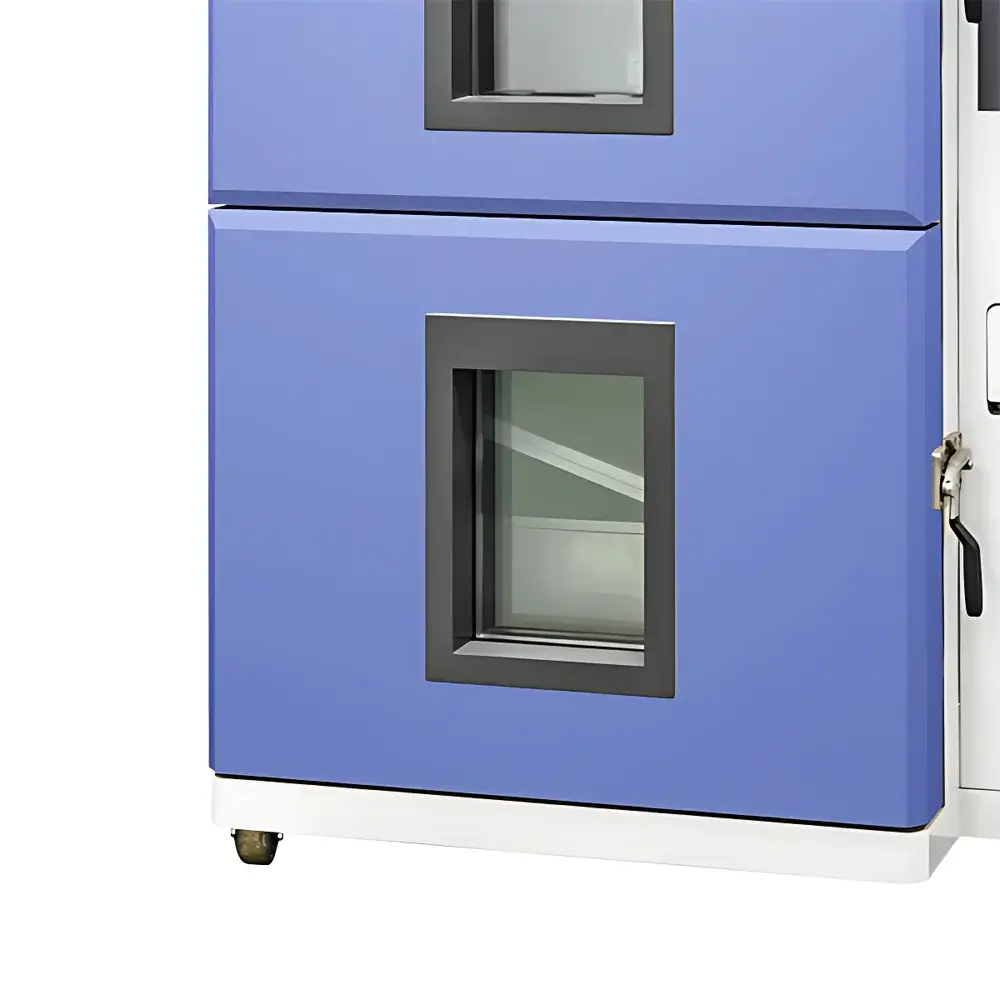
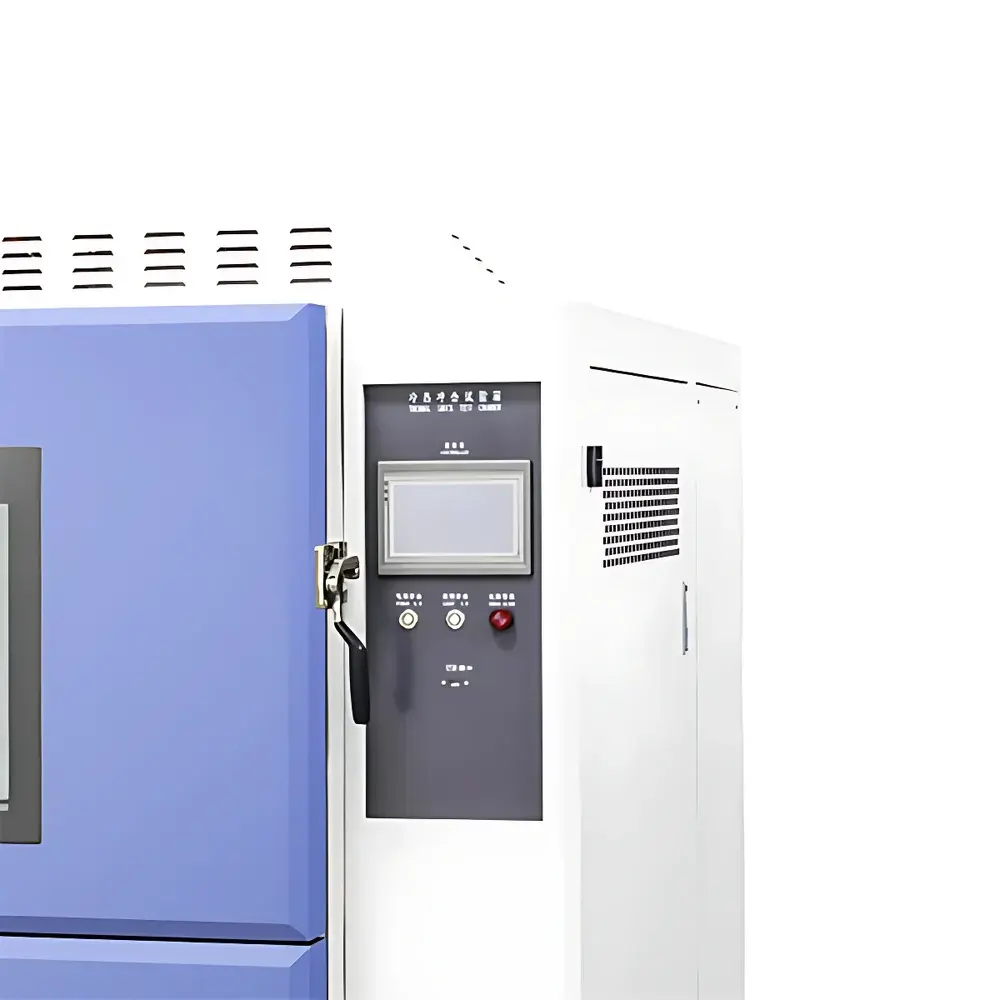
OK-TS-80.11 Basket-Type Thermal Shock Test Chamber
| Brand | OK Instruments |
|---|---|
| Origin | Guangdong, China |
| Manufacturer Type | Direct Manufacturer |
| Model | OK-TS-80.11 |
| High-Temperature Range | +150 °C |
| Low-Temperature Range | −50 °C |
| Thermal Shock Range | −50 °C to +150 °C |
| Temperature Stability | ±2 °C |
| Temperature Transition Time | ≤10 s (basket transfer) |
| Heating/Cooling Rate (chamber ambient) | 20 °C/s (typical ambient recovery post-transfer) |
Overview
The OK-TS-80.11 Basket-Type Thermal Shock Test Chamber is an engineered environmental test system designed to perform rigorous thermal shock testing in accordance with internationally recognized standards including IEC 60068-2-14 (equivalent to GB/T 2423.22), MIL-STD-883 Method 1010, and JESD22-A104. Unlike temperature cycling or rapid temperature change chambers—which apply gradual, linear thermal profiles—the OK-TS-80.11 delivers true step-function thermal stress by physically relocating test specimens between two independently controlled, thermally isolated chambers: a high-temperature zone (+150 °C) and a low-temperature zone (−50 °C). This two-chamber, basket-transfer architecture enables transition times of ≤10 seconds—meeting the strictest definition of “thermal shock” per standard requirements. The mechanism relies on pneumatically actuated vertical basket movement, ensuring direct exposure of the specimen to extreme ambient conditions without intermediate thermal buffering. This method intentionally subjects materials and assemblies to transient mechanical stress arising from differential thermal expansion, exposing latent defects such as interfacial delamination, solder joint fracture, hermetic seal failure, and contact resistance anomalies.
Key Features
- Two-zone independent chamber design with dual PID-controlled heating and cryogenic cooling systems
- Pneumatically driven stainless-steel sample basket with precision-guided vertical motion and position feedback
- Thermal transition time ≤10 seconds (measured from basket departure in one chamber to full immersion in the opposing chamber)
- Temperature stability maintained at ±2 °C across both chambers during dwell phases
- Robust insulation using multi-layer vacuum-insulated panels (VIPs) and low-conductivity foams to minimize cross-chamber thermal bleed
- Integrated safety interlocks: door position sensors, over-temperature cutoff, pressure relief valves, and emergency stop circuitry compliant with IEC 61000-6-2/6-4
- Front-access loading configuration optimized for benchtop integration and routine QC workflow
Sample Compatibility & Compliance
The OK-TS-80.11 accommodates specimens up to 300 mm × 300 mm × 250 mm (W×D×H) and supports maximum payload of 15 kg per cycle. Its basket-based architecture is particularly suited for small-to-medium electronic packages (e.g., QFP, BGA, CSP), PCB subassemblies, automotive sensors, optical modules, and polymer-encapsulated components. The system conforms to the physical test requirements of MIL-STD-883H (Test Method 1010.9), IEC 60068-2-14:2016, and JESD22-A104D. All operational parameters—including dwell time, transition count, and chamber setpoints—are programmable and auditable to support GLP/GMP-aligned validation protocols. While not inherently compliant with FDA 21 CFR Part 11, the optional data logging module provides timestamped, user-identifiable records suitable for internal quality audits and regulatory submissions when paired with validated SOPs.
Software & Data Management
The chamber is operated via a 7-inch capacitive touchscreen HMI running embedded Linux firmware. Test programs are defined using a hierarchical script editor supporting up to 999 cycles, nested dwell steps, and conditional branching based on real-time sensor feedback. All temperature readings (chamber A, chamber B, basket surface, and optional specimen thermocouple inputs) are sampled at 1 Hz and stored locally on encrypted microSD card. Export formats include CSV and PDF reports with configurable metadata (operator ID, batch number, calibration due date). Optional Ethernet interface enables integration into LabVIEW or Python-based test orchestration frameworks. Audit trail functionality logs all parameter changes, start/stop events, and alarm occurrences with ISO 8601 timestamps and SHA-256 hash integrity verification.
Applications
- Qualification testing of semiconductor devices prior to automotive AEC-Q200 release
- Failure analysis root cause identification in MEMS packaging and wafer-level chip-scale packages
- Validation of adhesive bond integrity in multi-material assemblies (e.g., metal-to-ceramic, plastic-to-metal)
- Reliability screening of battery management systems (BMS) and EV power electronics under thermal transients
- Verification of thermal interface material (TIM) performance under repeated shock-induced shear stress
- Pre-compliance assessment for space-grade components subjected to orbital thermal cycling extremes
FAQ
What distinguishes thermal shock testing from temperature cycling?
Thermal shock applies instantaneous, discontinuous temperature transitions between two stable extremes—inducing mechanical stress via differential expansion. Temperature cycling uses continuous, ramped profiles to simulate long-term thermal fatigue.
Is liquid nitrogen required for operation?
No. The OK-TS-80.11 achieves −50 °C using a cascade refrigeration system; LN₂ is optional only for accelerated cooldown in specialized applications.
Can the chamber be integrated into an automated test line?
Yes—via dry-contact I/O signals (start, stop, cycle complete, fault) and Modbus TCP for remote supervision.
How is temperature uniformity verified across the basket?
Uniformity is characterized per IEC 60068-3-5 using nine-point sensor mapping during qualification; typical deviation is ≤±1.5 °C at steady state.
Does the system support user-defined pass/fail criteria?
While the chamber itself does not perform functional testing, it exports synchronized thermal data streams compatible with external DAQ systems that implement custom pass/fail logic based on real-time electrical or optical response.



