
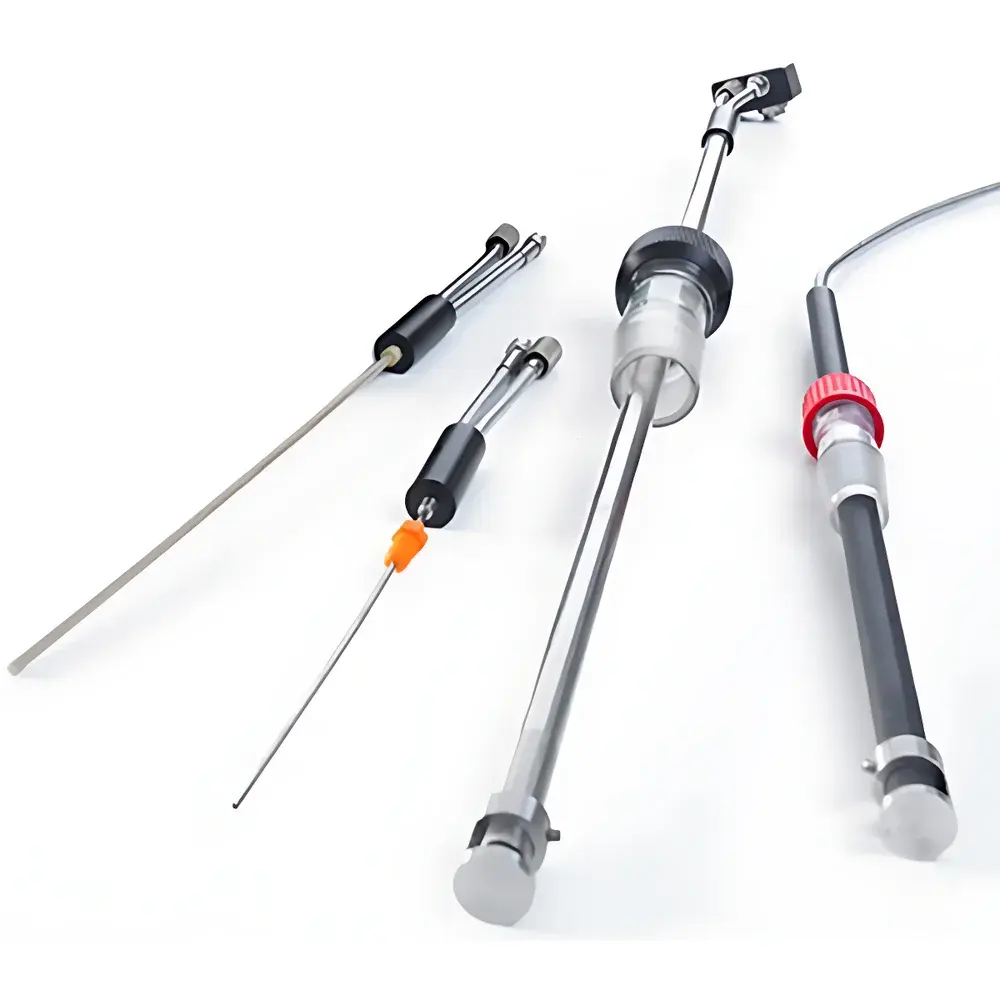
BioVIS Cell Viability and Density Probe by HEL Group
| Brand | HEL |
|---|---|
| Origin | United Kingdom |
| Model | BioVIS |
| Construction Material | Stainless Steel (316L) |
| Maximum Working Pressure | 0.1 MPa (gauge) |
| Vacuum Range | 0–1 MPa (absolute) |
| Compatible Vessel Capacity | Up to 5 L |
| Sterilization | Autoclavable (121 °C, 20 min, steam) |
| Probe Length Options | Standard 100 mm, 150 mm, 200 mm, or custom-engineered lengths |
| Measurement Principle | In-situ optical backscatter at multiple wavelengths (650 nm & 850 nm) with temperature-compensated signal processing |
| Output Interface | 4–20 mA analog + RS-485 Modbus RTU |
| IP Rating | IP68 |
| Compliance | CE-marked, RoHS-compliant, compatible with ISO 13485 and FDA 21 CFR Part 11–enabled SCADA/HMI systems |
Overview
The BioVIS Cell Viability and Density Probe is an in-situ, non-invasive optical sensing platform engineered by HEL Group (UK) for real-time monitoring of viable cell concentration and physiological state in bioprocess vessels. Unlike traditional offline sampling methods—such as OD600, hemocytometry, or ATP assays—the BioVIS probe operates on dual-wavelength optical backscatter spectroscopy (650 nm and 850 nm), enabling simultaneous discrimination between viable and non-viable biomass across a broad dynamic range (0.1–200 gDCW/L). Its stainless steel (316L) wetted parts ensure full compatibility with autoclave sterilization cycles (121 °C, 20 min), supporting aseptic operation in GMP-compliant upstream biomanufacturing environments. Designed for integration into benchtop and pilot-scale bioreactors up to 5 L working volume, the BioVIS probe delivers continuous, high-temporal-resolution data without perturbing culture homogeneity or introducing contamination risk.
Key Features
- True in-situ measurement: No sampling, no dilution, no calibration drift—eliminates manual intervention and associated sterility breaches.
- Dual-wavelength optical architecture: Compensates for media turbidity, pigment interference (e.g., heme, carotenoids), and bubble artifacts common in mammalian, microbial, and plant cell cultures.
- Autoclavable stainless steel housing (316L): Fully compliant with ASME BPE surface finish standards (Ra ≤ 0.4 µm) and validated for repeated steam sterilization.
- Configurable probe length: Standard options (100/150/200 mm) and custom lengths accommodate diverse vessel geometries—including stirred-tank, wave, and single-use bioreactors—with minimal dead volume.
- Robust industrial interface: 4–20 mA analog output for PLC integration + RS-485 Modbus RTU for direct connection to SCADA, DCS, or PAT data historians.
- Embedded temperature compensation: Integrated Pt100 sensor corrects for refractive index shifts induced by temperature gradients (±0.1 °C resolution).
Sample Compatibility & Compliance
The BioVIS probe is validated for use across suspension and adherent cell systems—including CHO, HEK293, Sf9, E. coli, S. cerevisiae, and primary plant tissue cultures—under aerobic, microaerobic, and anaerobic conditions. It maintains measurement fidelity in viscous, foaming, or particulate-laden media (e.g., fed-batch CHO processes with >10 g/L feed supplements). The device conforms to IEC 61000-6-2 (EMC immunity) and IEC 61000-6-4 (EMC emissions), carries CE marking per Directive 2014/30/EU (EMC) and 2014/35/EU (LVD), and supports audit-ready data integrity when deployed with 21 CFR Part 11–compliant software platforms. Its materials meet USP Class VI biocompatibility requirements and are compatible with cleaning-in-place (CIP) protocols using 1 M NaOH or 0.5 M HNO3.
Software & Data Management
BioVIS operates as a standalone sensor node but is fully interoperable with HEL’s WinISO and Synthware process control suites, as well as third-party platforms including DeltaV, Siemens Desigo, and LabVIEW-based PAT frameworks. Raw backscatter intensity values (I650, I850) and derived metrics—including normalized viability index (NVI), relative growth rate (RGR), and onset-of-stationary-phase detection—are timestamped with microsecond precision and stored with full audit trail (user ID, parameter change history, firmware version). Data export supports CSV, HDF5, and OPC UA formats, enabling seamless ingestion into QbD workflows and multivariate statistical process control (MSPC) models.
Applications
- Real-time monitoring of monoclonal antibody production in CHO bioreactors during fed-batch and perfusion modes.
- Early detection of microbial contamination events in vaccine seed train expansion.
- Optimization of induction timing in recombinant protein expression (E. coli, Pichia).
- Quantitative assessment of cryopreservation recovery kinetics in stem cell banking.
- In-process control of mycelial morphology in fungal antibiotic fermentation.
- Validation of mixing efficiency and oxygen transfer profiles in single-use bioreactor bags.
FAQ
Can BioVIS distinguish between live and dead cells without staining?
Yes. It leverages differential light scattering signatures arising from membrane integrity and intracellular granularity—validated against flow cytometry with propidium iodide exclusion (r² = 0.987, n = 42 batches).
Is calibration required before each run?
No. The probe is factory-calibrated using NIST-traceable cell standards; zero-point verification is performed automatically during sterilization cooldown via reference medium (sterile PBS).
Does BioVIS support integration with existing DCS systems?
Yes. Native Modbus RTU and 4–20 mA outputs enable plug-and-play integration with Emerson DeltaV, Honeywell Experion, and Yokogawa CENTUM VP without middleware.
What is the minimum detectable cell density in mammalian cultures?
0.1 × 10⁶ viable cells/mL (equivalent to ~0.15 gDCW/L) in serum-free CHO media, with ±3.2% CV over 72-h continuous operation.
Can the probe be retrofitted into legacy glass or stainless steel reactors?
Yes. Standardized 1/2″ NPT or DIN 11851 sanitary thread interfaces allow mechanical retrofitting; electrical termination uses M12 A-coded connectors rated IP67.



