
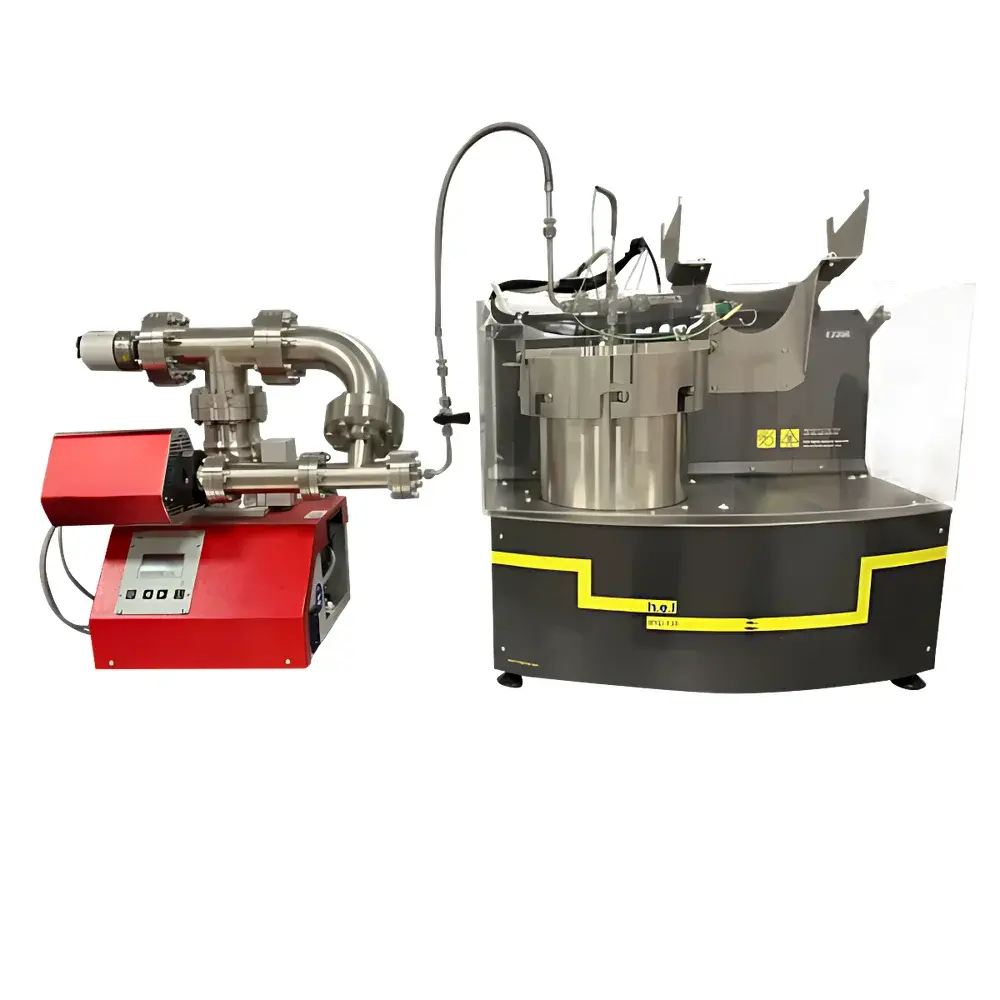
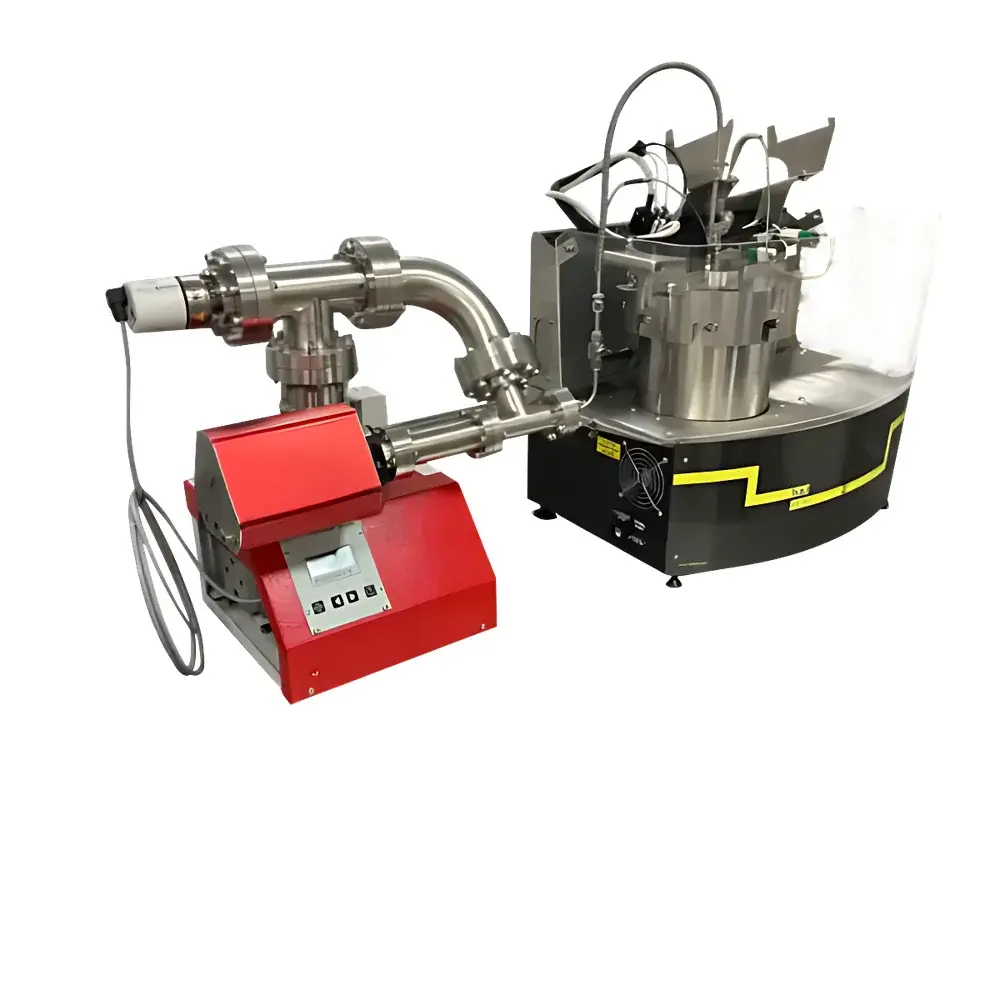
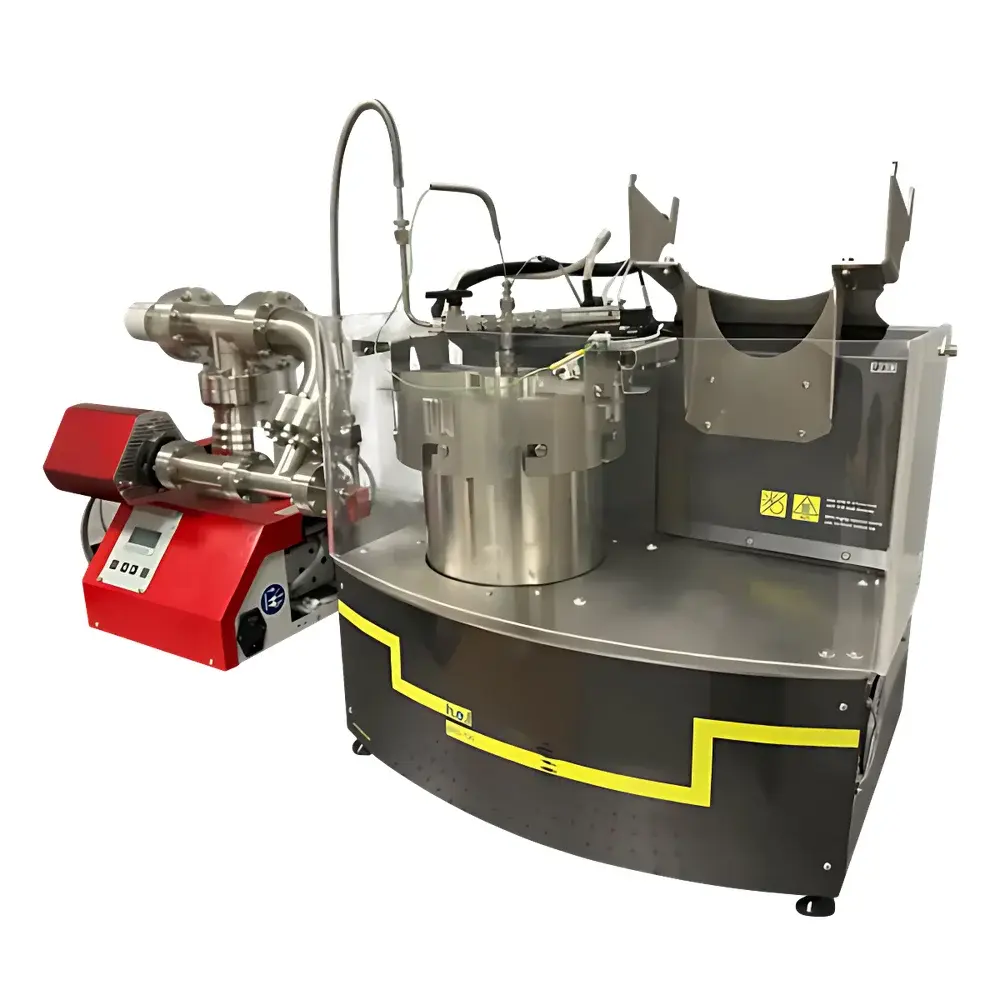
HEL BTC-MS Battery Adiabatic Calorimetry–High-Pressure Mass Spectrometry Coupling System
| Brand | HEL (UK) |
|---|---|
| Origin | United Kingdom |
| Model | BTC-MS |
| Principle | Direct in situ coupling of HEL’s BTC-series adiabatic calorimeters (BTC-130, BTC-500, Phi-TEC II, etc.) to high-pressure mass spectrometer via factory-integrated vacuum-tight, heated transfer line and pressure-matched sampling interface |
| Response Time | 3000 s |
| Maximum Inlet Pressure | 15 bar (1.5 MPa |
| Sampling Interface Material | Stainless steel / PEEK / borosilicate glass with integrated high-temp particulate filter |
| Operating Temperature Range (Interface) | >500 °C (stainless steel) |
| Mass Range | 1–200 amu |
| Detector | Dual-mode C-SEM/Faraday |
| LOD (C-SEM) | <1 ppm |
| LOD (Faraday) | <20–100 ppm (dependent on ion species) |
| Resolution | 0.5–2.5 amu |
| Sample Chamber Dimensions (BTC-130) | Ø ≥130 mm × H ≥200 mm |
| BTC-500 Chamber | Ø 500 mm × H 500 mm, max operating temp 450 °C, low-temp capability down to −15 °C |
| Compliance | Designed for GLP/GMP-aligned thermal safety testing per ASTM E1981, ISO/IEC 17025, and UN GHS Test Series 3 & 4 |
Overview
The HEL BTC-MS is an engineered integration platform that couples adiabatic calorimetry with real-time high-pressure mass spectrometry for thermally driven reaction analysis under rigorously controlled conditions. Unlike conventional off-gas venting approaches—which introduce pressure transients, thermal gradients, and secondary reaction pathways—the BTC-MS maintains true constant-volume, adiabatic operation while enabling direct, pressure-matched gas-phase sampling from the calorimeter test cell into the mass spectrometer ion source. This architecture preserves reaction fidelity by eliminating gas expansion cooling, condensation artifacts, and wall-catalyzed decomposition during transit. The system operates on the principle of adiabatic acceleration (using heat-flow compensation or power-compensation modes), where exothermic energy release is measured without heat loss to the environment, yielding fundamental kinetic parameters including onset temperature (Tonset), adiabatic temperature rise (ΔTad), maximum self-heating rate ((dT/dt)max), time-to-maximum-rate (TMRad), activation energy (Ea), pre-exponential factor (A), and reaction order (n). Simultaneously, the high-pressure MS captures evolving gas composition—CO, CO2, H2, C2H4, HF, POF3, electrolyte fragments, and other volatile species—with sub-second temporal resolution across a 1–200 amu range. This dual-data stream enables mechanistic deconvolution of complex thermal runaway pathways, particularly critical for lithium-ion battery safety assessment, energetic material characterization, and process hazard evaluation.
Key Features
- Factory-integrated, vacuum-tight, heated transfer line (≥500 °C) between BTC calorimeter and MS inlet, ensuring no condensation or adsorption losses
- Pressure-matched sampling interface rated to 15 bar standard (100 bar optional), compatible with BTC-130, BTC-500, Phi-TEC II, and SIMULAR platforms
- Dual-detector mass spectrometer (C-SEM + Faraday) for wide dynamic range detection—from trace-level decomposition markers (<1 ppm) to major gaseous products
- Modular inlet filtration (stainless steel, PEEK, or quartz) for particulate and aerosol removal without altering gas-phase chemistry
- Simultaneous acquisition of calorimetric (temperature, pressure, heat flow) and mass spectral (ion current vs. m/z, time) datasets with synchronized timestamps
- Support for low-temperature adiabatic testing (−15 °C to 450 °C) and specific heat (Cp) measurement on battery electrodes and full cells
- Integrated inert gas purging (N2, Ar, He) and optional in-situ camera monitoring (BTC-500)
Sample Compatibility & Compliance
The BTC-MS accommodates solid, liquid, slurry, and electrode-based samples—including commercial Li-ion pouch and cylindrical cells, cathode/anode slurries, electrolyte formulations, and organic peroxides. Its stainless-steel test chambers and high-temperature interfaces comply with ISO 8573-1 (compressed air purity), ASTM E1981 (thermal stability of reactive chemicals), and UN Manual of Tests and Criteria, Part III, Subsection 38.3 (battery transport safety). Data integrity meets ALCOA+ principles, with audit-trail-enabled software supporting 21 CFR Part 11 compliance for regulated environments. All hardware interfaces are designed to withstand repeated thermal cycling and overpressure events up to 4 bar (BTC-500 chamber relief setting), with pressure transients logged synchronously with mass spectra.
Software & Data Management
HEL’s proprietary iC-Cal software provides unified control of calorimeter and MS subsystems, enabling coordinated method definition (ramp rates, hold times, pressure thresholds) and real-time visualization of both thermal and compositional profiles. Raw data are stored in vendor-neutral HDF5 format, with built-in tools for peak alignment, background subtraction, and kinetic modeling (e.g., Ozawa-Flynn-Wall, Kissinger-Akahira-Sunose). Export options include CSV, MATLAB (.mat), and ChemStation-compatible formats for third-party chemometric analysis (PCA, MCR-ALS). Audit trails record user actions, parameter changes, calibration events, and instrument status—fully traceable for GLP audits or regulatory submissions.
Applications
- Lithium-ion battery thermal runaway mechanism studies: identification of early-stage gas evolution (e.g., EC/DEC decomposition → CO/CO2; SEI breakdown → C2H4; cathode oxygen release → O2)
- Safety screening of next-generation electrolytes (fluorinated carbonates, solid-state interfaces, Li-metal anode additives)
- UN Test Series 3 (thermal stability) and Series 4 (self-accelerating decomposition) validation for chemical registration
- Reaction calorimetry of catalytic hydrogenations, nitration, and polymerization under elevated pressure
- Quantitative tracking of gas stoichiometry to refine kinetic models and validate computational chemistry predictions
FAQ
What distinguishes BTC-MS from conventional off-gas GC-MS setups?
Conventional systems vent reactor headspace through cooled capillaries or cold traps, inducing non-adiabatic cooling and altering reaction kinetics. BTC-MS maintains isothermal, pressure-equilibrated transfer—preserving true adiabatic conditions and gas-phase speciation.
Can BTC-MS analyze gases at pressures above ambient?
Yes. The system supports continuous sampling up to 15 bar (standard) with optional 100 bar configurations, enabling study of pressurized battery failure modes and high-pressure catalytic reactions.
Is calibration traceable to NIST standards?
Mass axis calibration uses perfluorotributylamine (PFTBA) and argon; pressure and temperature sensors are certified to ISO/IEC 17025-accredited calibration protocols.
Does the system support automated method sequencing for unattended testing?
Yes. iC-Cal supports multi-step temperature/pressure programs with conditional triggers (e.g., initiate MS scan upon detection of ΔT > 0.1 °C/min), enabling overnight thermal stability screening.
What sample forms are compatible with the BTC-500 chamber?
Full-format pouch and cylindrical cells (up to 500 mm diameter), electrode stacks, slurry-coated foils, and bulk powder samples—mounted using HEL’s standardized battery fixture kits or custom holders.
Related Products



