
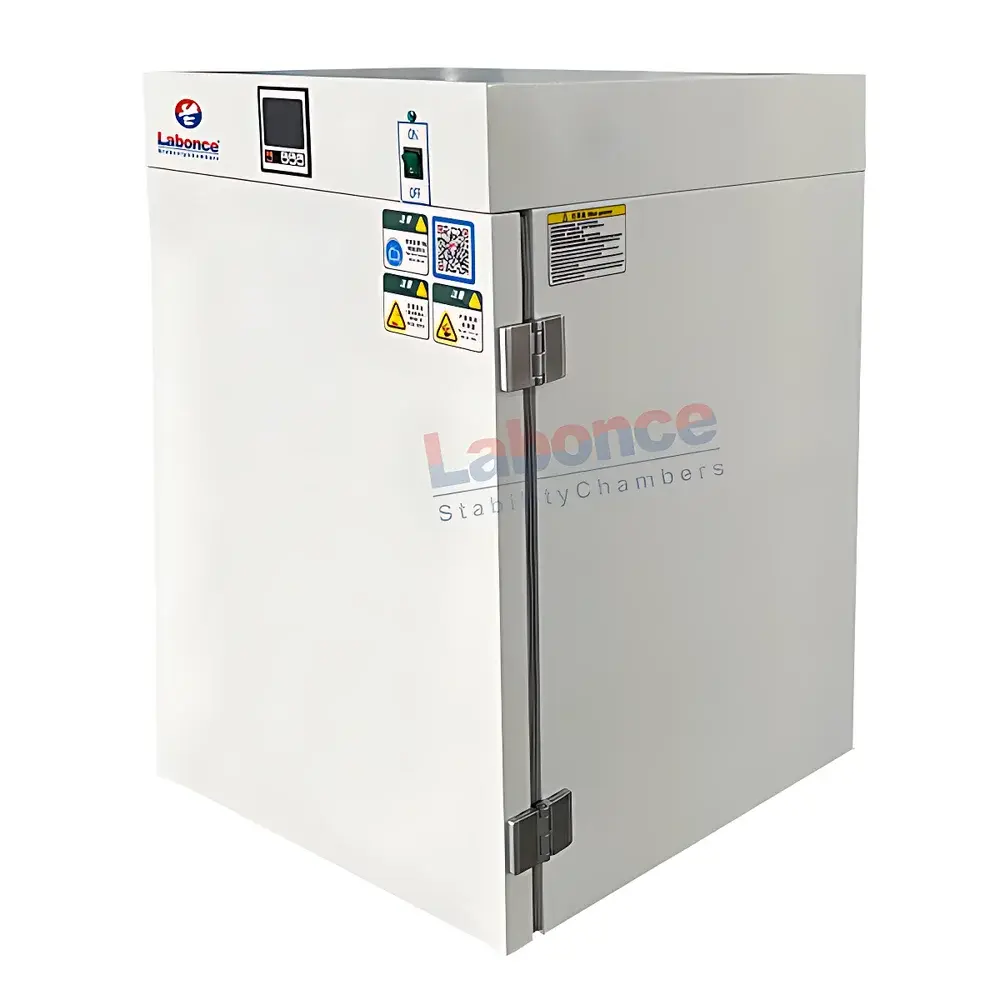
Labonce Labonce-9080GHP Water-Jacketed Constant Temperature Incubator
| Brand | Labonce |
|---|---|
| Origin | Beijing, China |
| Manufacturer Type | Direct Manufacturer |
| Country of Origin | China |
| Model | Labonce-9080GHP |
| Temperature Range | RT+5 to 65°C |
| Chamber Volume | 80 L |
| Interior Dimensions (W×D×H) | 400 × 400 × 500 mm |
| Exterior Dimensions (W×D×H) | 550 × 550 × 800 mm |
| Power Consumption | 0.6 kW |
| Standard Shelving | 2 adjustable stainless steel shelves |
| Temperature Uniformity | ±0.5°C at 37°C |
| Temperature Fluctuation | ±0.3°C |
| Operating Ambient Temperature | +5 to +35°C |
| Input Power | AC 220 V ±10%, 50 Hz |
| Optional Accessories | Thermal printer |
Overview
The Labonce Labonce-9080GHP Water-Jacketed Constant Temperature Incubator is engineered for stable, long-term microbial culture, cell line maintenance, enzyme activity assays, and strain preservation in academic laboratories, pharmaceutical QC units, and biotechnology R&D facilities. Unlike forced-air incubators, the water-jacketed design provides superior thermal inertia and spatial uniformity by surrounding the chamber with a sealed, temperature-regulated water layer—minimizing internal temperature gradients during door openings or ambient fluctuations. This architecture ensures high reproducibility in sensitive biological protocols where even transient deviations (e.g., >±0.5°C at 37°C) may compromise colony morphology, growth kinetics, or metabolic consistency. The unit operates across a calibrated range of RT+5°C to 65°C, supporting both mesophilic cultivation (e.g., E. coli at 37°C) and thermotolerant applications (e.g., Bacillus spp. at 55–60°C), while maintaining ISO 13408-1–aligned stability thresholds under continuous operation.
Key Features
- Water-jacketed thermal enclosure with integrated heating elements and precision-circulated water bath—ensuring ±0.5°C uniformity (at 37°C) and ±0.3°C fluctuation over 24 hours
- Double-door structure: outer insulated steel door with powder-coated finish and inner tempered glass door for non-invasive observation without compromising chamber integrity
- Mirror-finish 304 stainless steel interior chamber with seamless rounded corners (R ≥ 15 mm) to prevent microbial entrapment and facilitate ISO 14644-compliant cleaning
- Microprocessor-based digital controller with real-time temperature display, programmable timer (1 min–999 h), and auto-recovery function after power interruption
- Two independently adjustable, load-rated stainless steel shelves (max. 15 kg/shelf), removable without tools for flexible vessel configuration (e.g., Petri dishes, flasks, multiwell plates)
- Robust mechanical design: 50 mm thick insulation (polyurethane foam, λ ≤ 0.022 W/m·K), reinforced door gasket, and vibration-damped mounting to reduce thermal bridging
Sample Compatibility & Compliance
The Labonce-9080GHP accommodates standard microbiological and cell culture formats—including stacked Petri dishes (up to 100 mm diameter), Erlenmeyer flasks (50–500 mL), roller bottles, and 96-well plates—without airflow-induced desiccation or condensation artifacts. Its passive humidity retention (typical RH: 70–85% at 37°C, unhumidified) suits non-hygroscopic applications such as bacterial stock storage, fungal propagation, and antibody affinity maturation. The incubator complies with IEC 61010-1 safety standards for laboratory equipment and meets essential requirements of GB/T 23794–2018 (Chinese national standard for incubators). When equipped with the optional WHI touchscreen controller, it supports GLP/GMP workflows through role-based access control (administrator, supervisor, operator), electronic signature capture, and immutable audit trails compliant with FDA 21 CFR Part 11 Annex 11 expectations.
Software & Data Management
While the base model features a standalone microcontroller interface, integration with the WHI-series intelligent controller enables advanced data governance. This optional module delivers a 7-inch capacitive touchscreen with intuitive icon-driven navigation, configurable alarm thresholds (high/low/temp deviation), and real-time graphing of chamber temperature vs. time. All operational events—including setpoint changes, door openings, alarm triggers, and calibration logs—are timestamped, user-identified, and stored locally on encrypted SD card (≥1 year retention). Data export is supported via USB port in CSV format for traceability in quality documentation systems (e.g., TrackWise, LabVantage). Remote monitoring is achievable via optional RS485 Modbus RTU interface for integration into centralized BMS or LIMS platforms.
Applications
- Long-term preservation of bacterial and fungal cultures (e.g., ATCC strains, clinical isolates) at defined sub-optimal temperatures (e.g., 4°C–25°C)
- Standardized incubation of diagnostic media (e.g., MacConkey agar, blood agar) per CLSI M02-A12 guidelines
- Support of anaerobic pre-incubation steps when paired with gas-tight chamber accessories
- Thermal validation studies requiring stable, low-drift environments (e.g., Arrhenius modeling of enzyme denaturation)
- QC release testing of raw materials and intermediates in pharmaceutical manufacturing (ICH Q5C, USP )
- Teaching labs requiring rugged, serviceable instrumentation with transparent operating principles
FAQ
What is the difference between water-jacketed and air-jacketed incubators?
Water-jacketed incubators use a circulating water layer around the chamber to buffer thermal transients, offering higher stability and uniformity—especially critical for overnight or multi-day cultures. Air-jacketed units rely on convective heating and respond faster to setpoint changes but exhibit greater susceptibility to ambient variation.
Can this incubator be used for CO₂-sensitive applications?
No—the Labonce-9080GHP lacks CO₂ regulation and humidification systems. It is intended for ambient-air, non-CO₂-dependent cultures. For mammalian cell work, consider dedicated CO₂ incubators with IR sensors and steam humidification.
Is calibration documentation provided with shipment?
Yes—a factory calibration certificate (traceable to NIM, China) is included, covering temperature accuracy verification at 37°C and 55°C using NIST-traceable PRT probes per ISO/IEC 17025 procedures.
What maintenance intervals are recommended?
Annual verification of temperature uniformity and fluctuation is advised. Water jacket fluid should be replaced every 12 months with deionized water to prevent mineral deposition and corrosion.
Does the unit support external data logging?
Yes—via optional RS485 Modbus RTU interface or USB data dump from WHI controller. Analog voltage output (0–5 V) for temperature signal is available upon request for legacy SCADA integration.





