
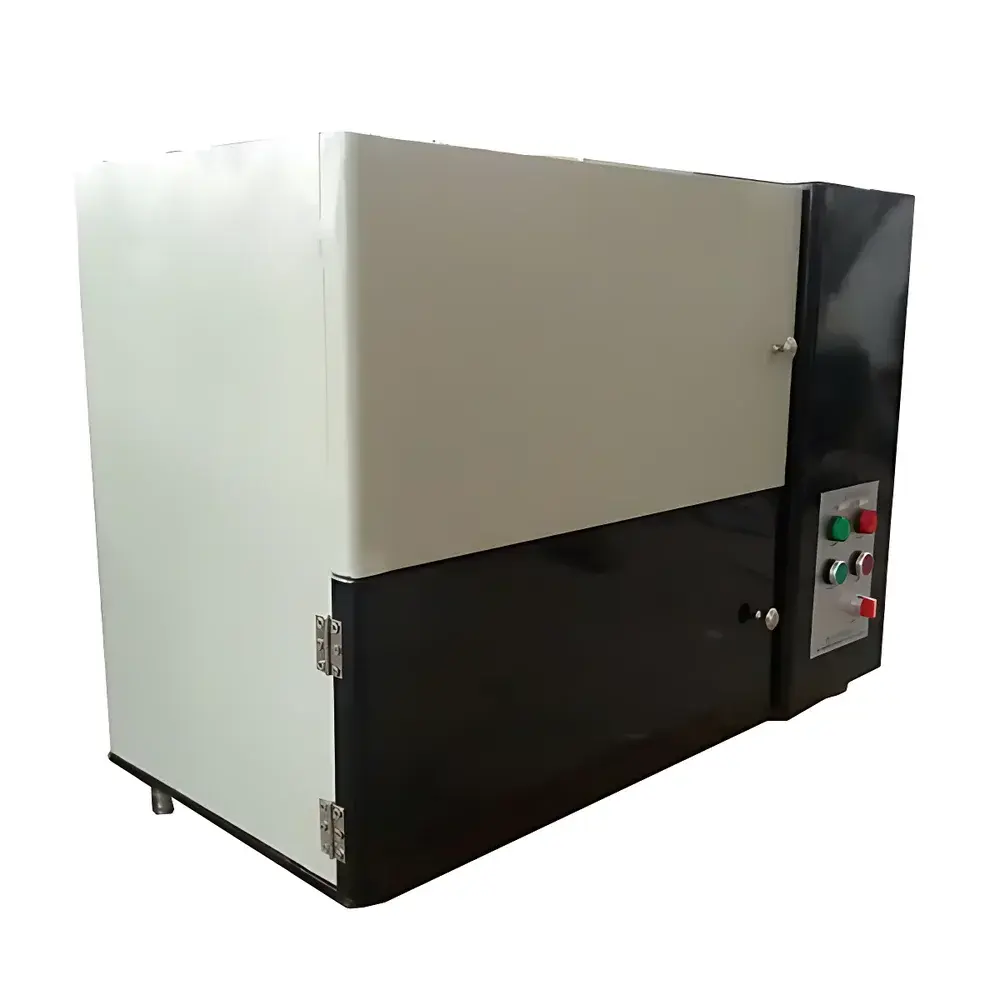
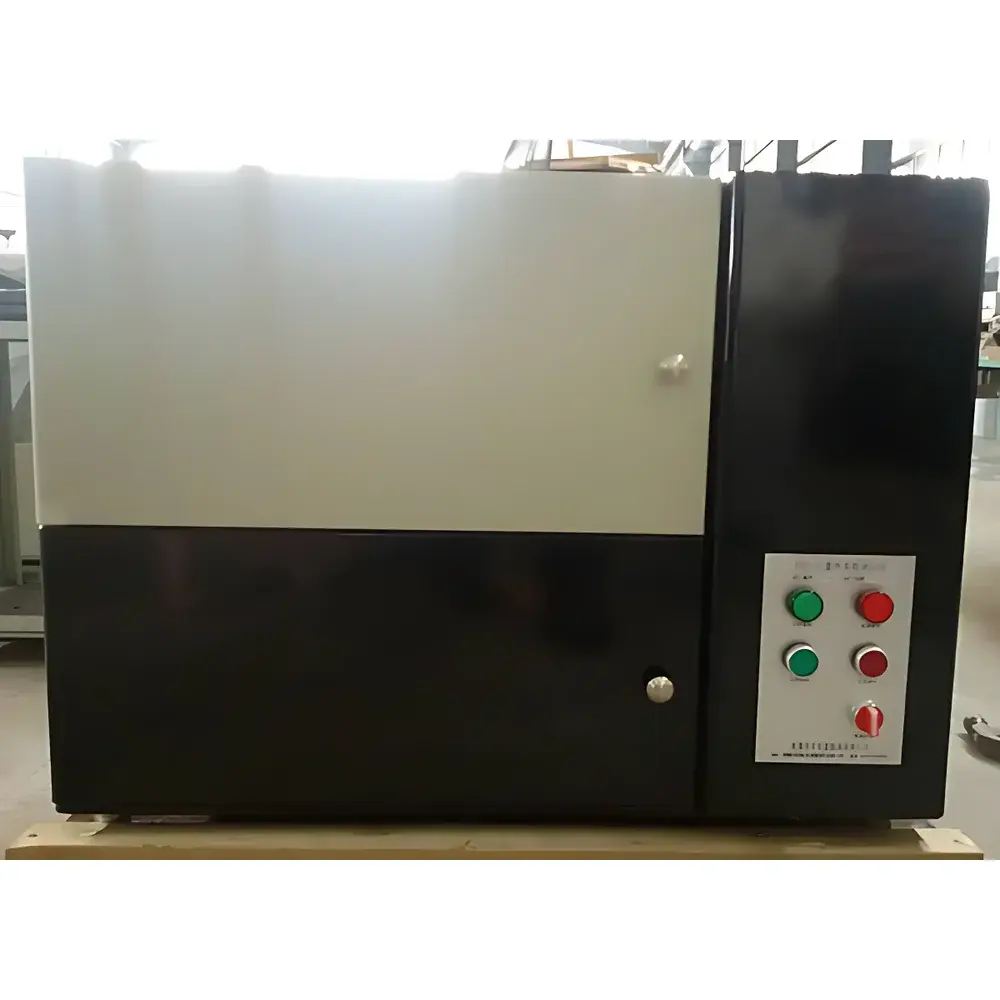
XRC-II Heat Storage Coefficient Tester
| Origin | Hunan, China |
|---|---|
| Manufacturer Type | Distributor |
| Origin Category | Domestic |
| Model | XRC-II |
| Pricing | Upon Request |
Overview
The XRC-II Heat Storage Coefficient Tester is a precision thermal property measurement instrument engineered for the simultaneous determination of four fundamental thermophysical parameters—heat storage coefficient (also known as thermal effusivity), thermal conductivity, thermal diffusivity, and specific heat capacity—under controlled non-steady-state conditions. Based on the principle of transient plane source (TPS) methodology adapted from non-steady-state conduction theory, the instrument applies a short-duration, localized thermal pulse to the sample surface and monitors the resulting temperature-time response. By solving the one-dimensional heat conduction differential equation with appropriate boundary and initial conditions, the system computes all four parameters from a single 10-minute test cycle. This approach eliminates sequential testing requirements and significantly reduces inter-test variability caused by environmental drift or sample repositioning. The device features embedded real-time control architecture and supports full integration with external PCs for automated data acquisition, curve fitting, and parameter derivation—ensuring high reproducibility and traceable measurement workflows compliant with laboratory quality management systems.
Key Features
- Single-cycle multi-parameter output: Simultaneously calculates heat storage coefficient (0.1–30 W/(m²·K)), thermal conductivity, thermal diffusivity, and specific heat capacity in ≤10 minutes per test.
- Flexible sample accommodation: Supports thin specimens (20 × 20 × 1.5–3 cm) and thick dual-layer configurations (20 × 20 × 4–10 cm each), enabling characterization of heterogeneous moisture states in building materials and insulation composites.
- Dual-control architecture: Standard RS-232/USB interface for PC-based automation; optional integrated touch-panel interface for standalone operation, real-time monitoring, and on-device data visualization.
- Environmental stability assurance: Designed for operation within 10–35 °C ambient temperature and ≤80% RH, with requirement for thermal stability ≤±1.5 °C over test duration to minimize boundary condition uncertainty.
- Measurement accuracy: Certified ±5% combined standard uncertainty across the full operational range, validated against reference materials traceable to national metrology institutes.
- Robust mechanical design: Compact footprint (600 × 440 × 720 mm) with rigid frame and shielded thermal sensors to suppress electromagnetic interference and ensure signal integrity during transient response capture.
Sample Compatibility & Compliance
The XRC-II is optimized for homogeneous or quasi-homogeneous solid-phase materials including lightweight aggregate concrete, aerated autoclaved concrete (AAC), mineral wool, expanded polystyrene (EPS), gypsum board, clay bricks, and hydrated cementitious pastes. It accommodates samples in plate, gel, powder, and granular forms—provided they maintain sufficient thermal contact with the sensor surface and exhibit negligible internal convection or phase change during the test interval. Moisture content variation is explicitly supported, allowing comparative analysis across drying/wetting cycles relevant to building envelope performance evaluation. The instrument adheres to the experimental methodology specified in GB/T 50176–2016 (Design Standard for Thermal Design of Civil Buildings) and aligns with the test principles referenced in JGJ 51–2002 (Technical Specification for Lightweight Aggregate Concrete). While not certified to ISO 22007-2 or ASTM C1113, its underlying physics conforms to the same transient conduction formalism used in those standards.
Software & Data Management
The standard PC software package provides full IEC 62443-aligned communication, automated calibration sequence execution, raw thermocouple voltage logging at ≥100 Hz sampling rate, and nonlinear least-squares fitting of the analytical solution to measured temperature transients. All data files are stored in HDF5 format with embedded metadata (timestamp, operator ID, ambient conditions, sample ID), supporting audit-ready documentation for GLP-compliant environments. Software-generated reports include uncertainty budgets calculated per GUM (JCGM 100:2008), parameter covariance matrices, and residual error plots. Optional FDA 21 CFR Part 11 compliance modules are available upon request, delivering electronic signatures, role-based access control, and immutable audit trails for regulated QA/QC laboratories.
Applications
- Building material certification: Quantifying thermal effusivity for occupant thermal comfort modeling and dynamic thermal simulation (e.g., EnergyPlus, TRNSYS inputs).
- R&D of phase-change materials (PCMs): Assessing effective heat storage capacity under varying hydration levels without destructive sample preparation.
- Quality control in precast concrete manufacturing: Rapid verification of thermal homogeneity and moisture-dependent performance prior to structural installation.
- Academic research in heat transfer: Experimental validation of numerical models for porous media conduction and moisture-coupled thermal transport.
- Green building rating systems: Generating evidence for LEED MR Credit 2 (Construction Waste Management) and BREEAM Mat 03 (Thermal Performance of Building Elements).
FAQ
What physical principle does the XRC-II rely on for measurement?
It applies the analytical solution of the one-dimensional non-steady-state heat conduction equation to transient temperature response data acquired after a controlled thermal pulse.
Can the instrument measure wet or saturated samples?
Yes—its design explicitly supports testing across variable moisture contents, provided samples remain dimensionally stable and do not exhibit evaporative cooling effects during the 10-minute test window.
Is calibration traceable to international standards?
Calibration is performed using NIST-traceable reference materials (e.g., SRM 1470a borosilicate glass) and documented per ISO/IEC 17025 requirements when requested.
Does the system support automated reporting for regulatory submissions?
With the optional 21 CFR Part 11 module, it generates compliant PDF reports containing digital signatures, revision history, and tamper-evident audit logs.
What is the minimum required sample thickness for reliable results?
For single-layer testing, 1.5 cm is the lower limit; for dual-layer configuration, each specimen must be ≥4 cm to ensure sufficient thermal penetration depth and boundary condition validity.



