
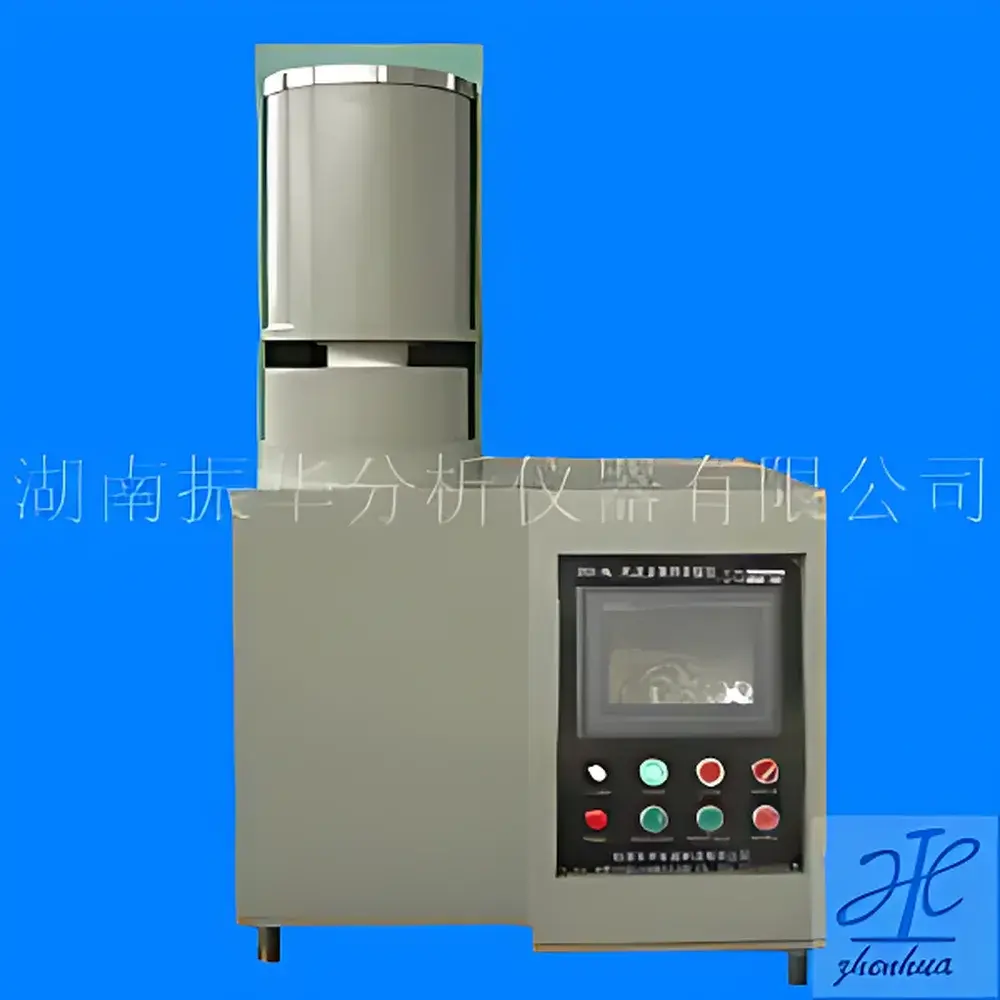
DRX-II-RL Series Thermal Conductivity Analyzer (Heat Flow Method)
| Origin | Hunan, China |
|---|---|
| Manufacturer Type | Authorized Distributor |
| Origin Category | Domestic (China) |
| Model | DRX-II-RL |
| Pricing | Available Upon Request |
| Temperature Range Options | −196 °C to RT, −30 °C to 90 °C, −20 °C to 70 °C, 0 °C to 40 °C, 0 °C to 100 °C |
| Temperature Resolution | 0.01 °C |
| Sample Diameter | Φ10–30 mm |
| Sample Thickness | 0.02–50 mm |
| Thermal Resistance Range | 0.1–8.0 m²·K/W |
| Thermal Conductivity Range | 0.015–100 W/(m·K) and 0.015–40 W/(m·K) |
| Accuracy | ≤±3% (thermal conductivity), ±5% (thermal diffusivity), ±7% (specific heat) |
| Repeatability | 0.3–0.5% |
| Cooling Options | Forced-air, External Water Bath, Liquid Nitrogen |
| Control | Motorized Plate Actuation, Programmable Temperature Ramp (1–10 setpoints), Embedded Controller + PC Interface |
| Compliance Standards | ASTM D5470-06, ASTM E1530, ASTM C518, ISO 8301, JIS A1412, DIN EN 12939, DIN EN 13163, DIN EN 12667, MIL-I-49456A |
Overview
The DRX-II-RL Series Thermal Conductivity Analyzer is a precision-engineered heat flow meter (HFM) system designed for the standardized determination of thermal conductivity (λ), thermal resistance (R), thermal diffusivity (α), and specific heat capacity (cp) of solid, semi-solid, and low-viscosity materials. Based on the steady-state heat flow method—governed by Fourier’s law—the instrument establishes a controlled, unidirectional temperature gradient across a sample sandwiched between two actively regulated, calibrated heat flux sensors. This architecture enables high reproducibility in measuring materials with thermal conductivities spanning three orders of magnitude (0.015–100 W/(m·K)), including polymers, ceramics, composites, glasses, elastomers, and select metallic foils or coatings. The system operates under rigorously defined boundary conditions compliant with international test standards, making it suitable for R&D laboratories, quality control departments, and certification bodies requiring traceable, auditable thermal property data.
Key Features
- Motor-driven, programmable upper plate actuation ensures precise, repeatable sample compression and automatic thickness measurement with micron-level positional feedback.
- Multi-range temperature control architecture supports five selectable operating zones—from cryogenic (−196 °C using liquid nitrogen) to elevated (100 °C), each with independent PID tuning and 0.01 °C thermal resolution.
- Dual active heat flux sensors (calibrated per ASTM E1530 Annex A1) provide real-time, differential thermal gradient monitoring and eliminate drift-induced bias in low-conductivity measurements.
- Modular cooling interface accommodates forced-air convection, external recirculating water baths, or direct liquid nitrogen immersion—enabling stable sub-ambient operation without condensation or thermal shock.
- Integrated calibration workflow supports both reference material validation (e.g., NIST-traceable SRMs) and in-situ sensor recalibration, ensuring long-term metrological integrity.
- Full automation includes auto-ramp temperature profiling (1–10 user-defined setpoints), real-time convergence detection, and pass/fail criteria based on thermal equilibrium thresholds (dT/dt < 0.001 K/min over 5 min).
Sample Compatibility & Compliance
The DRX-II-RL accepts disk-shaped specimens (Φ10–30 mm, thickness 0.02–50 mm), including thin films via multi-layer stacking protocols and non-homogeneous composites with embedded interfacial layers. Paste-like or low-viscosity samples are measured using sealed, thermally matched containment cells compatible with ISO 8301 Annex B procedures. All operational modes adhere to ISO/IEC 17025 requirements for testing laboratories, and software features full 21 CFR Part 11 compliance—including electronic signatures, audit trails, role-based access control, and immutable raw data archiving. Test reports embed metadata such as environmental chamber logs, calibration certificate IDs, operator credentials, and uncertainty budgets per GUM (JCGM 100:2008).
Software & Data Management
The system ships with proprietary ThermalLab™ v4.x software—a Windows-based platform supporting GLP/GMP-aligned workflows. It provides synchronized acquisition from dual thermocouple arrays, heat flux transducers, and displacement encoders. Users define test sequences via drag-and-drop protocol builders, configure statistical process control (SPC) limits, and generate PDF/CSV reports conforming to ASTM D5470 templates. Raw datasets retain full time-stamped sensor histories, enabling post-acquisition reprocessing (e.g., baseline correction, transient exclusion). Data export supports LIMS integration via ASTM E1384-compliant XML schemas and direct SQL database synchronization.
Applications
This analyzer serves critical functions across aerospace (thermal barrier coating evaluation), electronics (TIMs and substrate characterization), building science (insulation material certification per EN 12667), battery R&D (separator and cathode thermal management), and biomedical device development (polymer scaffold thermal response). Its ability to characterize anisotropic laminates—via controlled directional loading—and quantify interfacial thermal resistance (ITR) makes it indispensable for advanced packaging and heterogeneous material systems. Routine use includes QC release testing for ISO 9001-certified production lines and third-party verification for CE marking and UL 94 flame-retardant qualification.
FAQ
What standards does the DRX-II-RL comply with?
ASTM D5470-06, ASTM E1530, ASTM C518, ISO 8301, JIS A1412, DIN EN 12939, DIN EN 13163, DIN EN 12667, and MIL-I-49456A.
Can it measure liquids or gels?
Yes—using purpose-designed, thermally symmetric containment cells that minimize edge losses and ensure planar heat flow, per ISO 8301 Annex B.
Is cryogenic operation supported?
Yes—liquid nitrogen cooling enables stable operation from −196 °C to ambient, with integrated dew-point monitoring and condensation suppression.
How is traceability maintained?
Through NIST-traceable reference materials (e.g., SRM 1450c, 1470e), annual sensor recalibration certificates, and full audit trail logging per ISO/IEC 17025 Clause 7.7.
Does the software support automated report generation for regulatory submissions?
Yes—ThermalLab™ exports FDA-compliant PDF reports with electronic signatures, revision-controlled templates, and embedded uncertainty analysis per GUM guidelines.



