
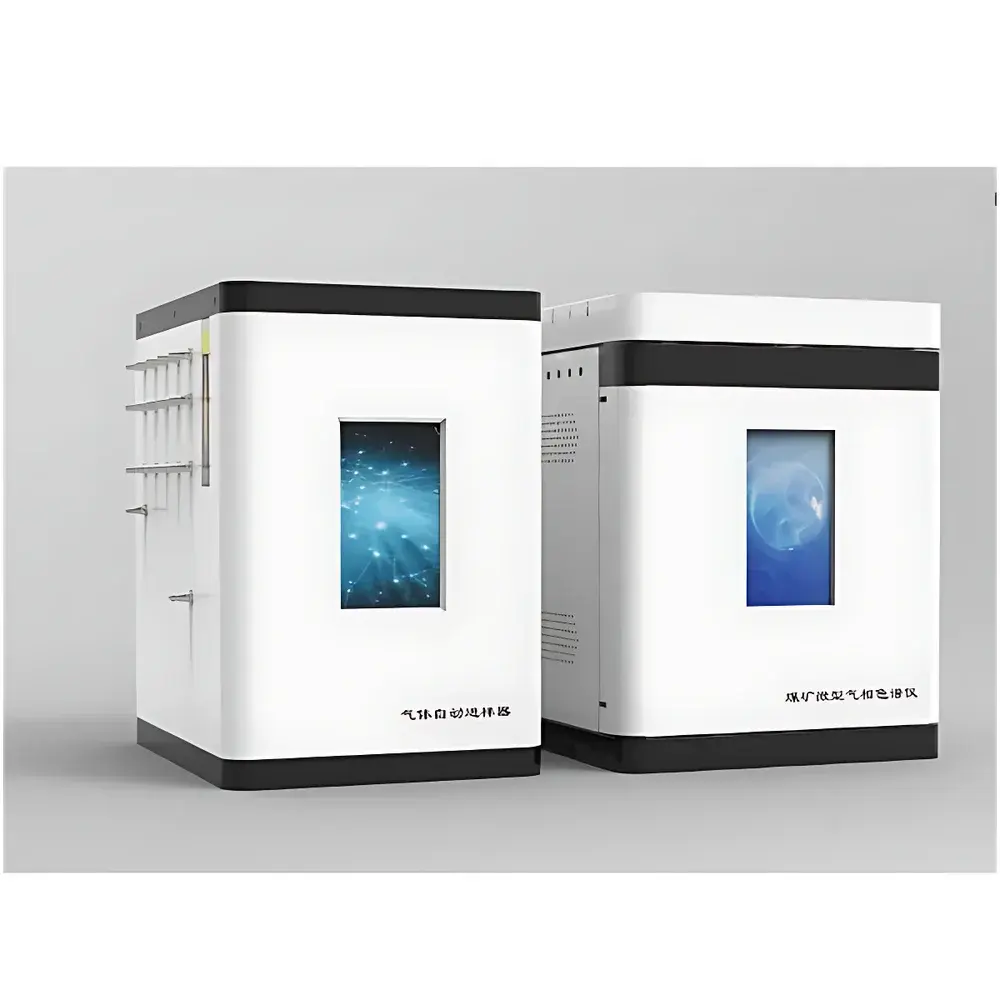
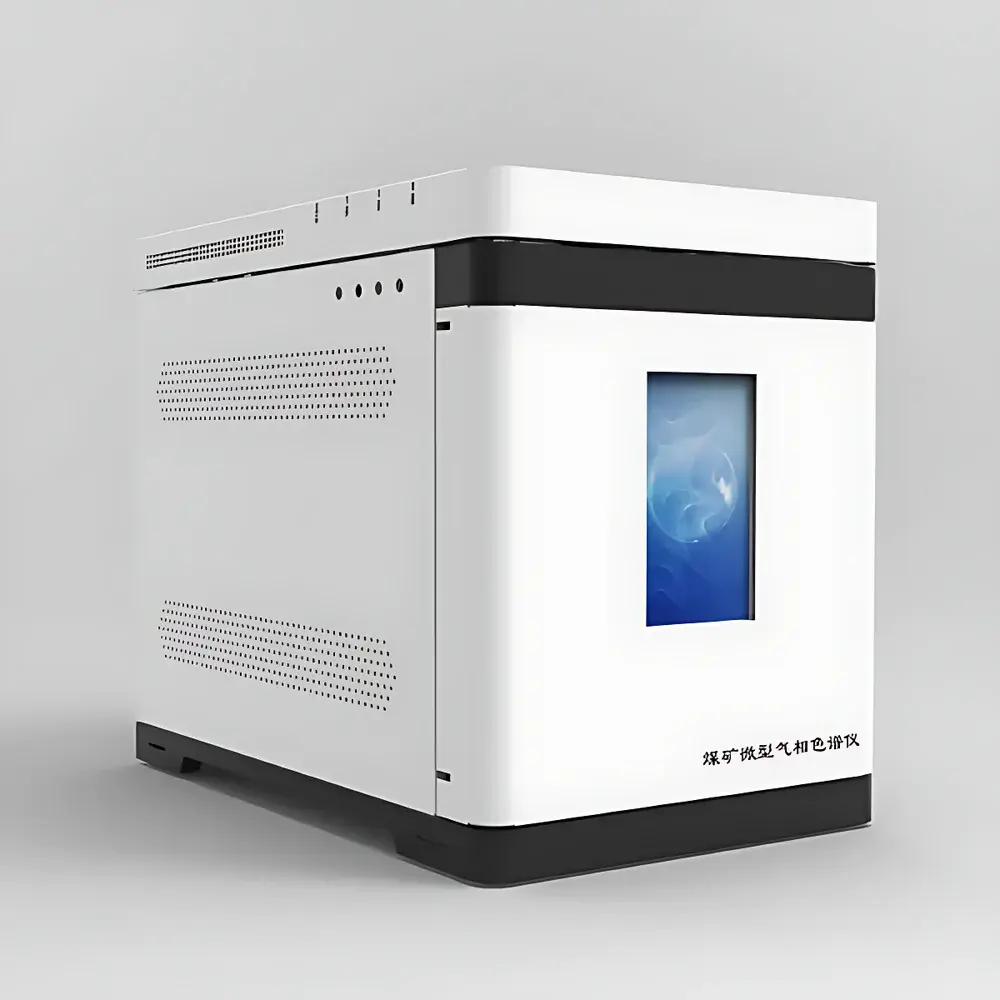
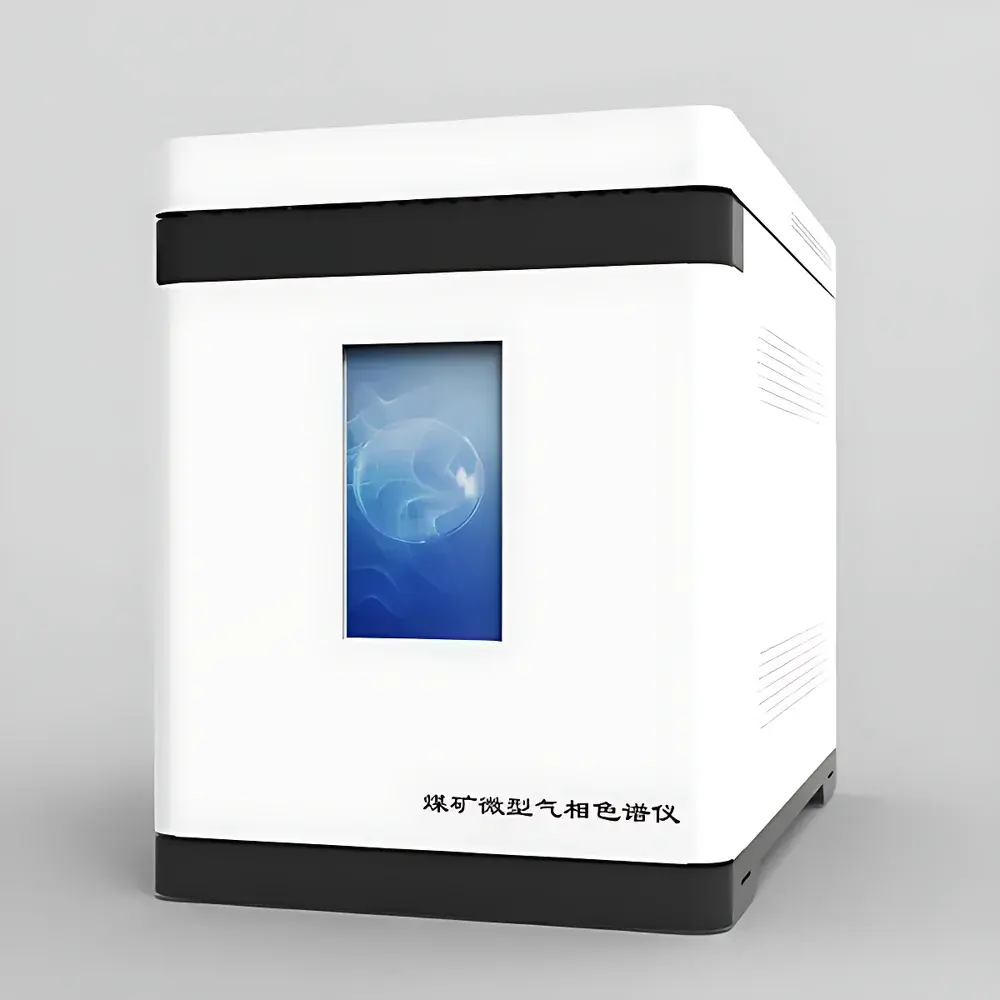
Luchuang GC-9870Pro Portable Gas Chromatograph for Mine Methane (Coal Mine Gas) Analysis
| Brand | Luchuang |
|---|---|
| Origin | Shandong, China |
| Manufacturer Type | Direct Manufacturer |
| Instrument Type | Portable Gas Chromatograph |
| Application Field | Coal Mining Industry |
| Temperature Control Range | Ambient +4°C to 450°C |
| Maximum Ramp Rate | 0–60°C/min |
| Cooling Rate | 200°C → 100°C in ~3 min |
| Carrier Gas Flow Range & Control | 0–1200 mL/min (7 programmable segments) |
| Carrier Gas Pressure Range & Control | 0–970 kPa (7 programmable segments) |
| Injector Max Operating Temperature | 450°C |
| Injector Pressure Setting Range | Up to 450°C |
| Injector Total Flow Setting Range | 0–1200 mL/min |
| Column Oven | Supports up to four packed columns |
| Detector Compatibility | FID, TCD, FPD, methanizer, optional MS interface |
Overview
The Luchuang GC-9870Pro is a purpose-built, portable gas chromatograph engineered for real-time, on-site analysis of coal mine atmospheric gases—primarily methane (CH₄), carbon monoxide (CO), carbon dioxide (CO₂), oxygen (O₂), hydrogen (H₂), ethane (C₂H₆), ethylene (C₂H₄), and trace sulfur compounds such as hydrogen sulfide (H₂S). Designed specifically for underground mining environments, it employs capillary or packed-column gas chromatography with flame ionization detection (FID), thermal conductivity detection (TCD), and flame photometric detection (FPD) to deliver quantitative, field-deployable gas profiling. Its compact footprint (400 × 300 × 400 mm), robust mechanical architecture, and intrinsic safety-oriented thermal management enable operation in confined, high-humidity, and vibration-prone shaft environments. The system operates on the principle of differential partitioning of gaseous analytes between a mobile phase (high-purity carrier gas, e.g., N₂ or He) and a stationary phase (mine-specific packed column), followed by selective detection based on ionization efficiency (FID), thermal conductivity contrast (TCD), or sulfur-specific photon emission (FPD).
Key Features
- Integrated electronic pressure control (EPC) system across all gas lines—carrier, makeup, fuel, and air—with 12-step programmable pressure/flow/linear velocity profiles and ±0.05 kPa pressure reproducibility.
- High-stability temperature control architecture: column oven, dual injectors, and up to three detectors independently regulated from ambient +4°C to 450°C, with thermal stability ≤ ±0.02°C at isothermal conditions.
- Support for up to eight independent temperature zones and 32+ programmable oven ramp stages—enabling complex multi-analyte separation protocols required for mine gas speciation (e.g., separating CH₄ from C₂H₆/C₂H₄ within <3 min).
- 10-position automated liquid/gas sampling module compatible with standard 1/8″ or 1/4″ stainless steel sample loops; optional heated transfer lines prevent condensation of moisture-sensitive components.
- Fully bidirectional PC-based control: all detector parameters—including FID ignition sequence, flame-out auto-reignition, TCD bridge current (up to 220 mA), and FPD PMT voltage—are software-configurable with audit-trail logging.
- Modular detector bay accommodates simultaneous installation of dual FID, TCD, and FPD units, plus integrated methanizer for CO/CO₂ conversion—ensuring compliance with ASTM D1945 and ISO 8573-5 for combustible gas analysis.
Sample Compatibility & Compliance
The GC-9870Pro accepts direct gas samples via loop injection or continuous flow through a calibrated sampling valve. It is validated for use with undiluted mine air, sealed borehole gas extracts, and ventilation duct stream monitoring. Sample introduction supports both manual syringe injection and automated gas sampling per ISO 10724-1 requirements. All hardware and firmware adhere to IEC 60079-0 (Explosion-Proof General Requirements) and GB 3836.1–2010 (Chinese explosion protection standards for mining equipment). Data acquisition and reporting meet GLP-compliant traceability: full electronic signatures, user access levels, and 21 CFR Part 11–ready audit trails are embedded in the native GC workstation software. Calibration verification follows USP and ASTM D1945 Annex A1 for hydrocarbon quantification accuracy.
Software & Data Management
The embedded GC workstation is a Windows-native application supporting method-driven workflows, task scheduling, and multi-user role assignment. It provides real-time chromatogram visualization, peak integration using valley-to-valley and tangent skim algorithms, retention time locking (RTL), and automated calibration curve generation (linear, quadratic, or weighted least-squares). Raw data files (.cdf) are stored with metadata including instrument state logs, EPC setpoints, temperature profiles, and detector gain settings. Export formats include CSV, PDF reports (with configurable headers, footers, and QA/QC flags), and XML for LIMS integration. Remote diagnostics and firmware updates are supported over Ethernet or USB-C, with optional TLS-encrypted data transmission for secure network deployment.
Applications
- Real-time monitoring of CH₄ concentration gradients in longwall faces and return airways to support ventilation-on-demand (VOD) systems.
- Early detection of spontaneous combustion via CO/C₂H₄ ratio trending and ethylene evolution kinetics (per ISO 11757).
- Post-blast gas analysis to verify safe re-entry thresholds (CH₄ < 1.0%, CO < 24 ppm) in accordance with MSHA 30 CFR §75.1914.
- Quantitative H₂S screening in sump areas and degasification wells using FPD with sub-ppb detection limits.
- Verification of inertization efficacy (N₂/CO₂ injection) through O₂ depletion and CO₂ enrichment profiling.
FAQ
Is the GC-9870Pro certified for use in explosive atmospheres?
Yes—the instrument housing, electrical interfaces, and gas pathways comply with Class I, Division 1, Group D (US) and Ex d IIB T4 Gb (EU) certification standards when installed with approved barriers and grounding protocols.
Can the system be operated without external PC connectivity?
Yes—onboard 4.3″ touchscreen enables standalone method execution, data review, and basic calibration; however, advanced reporting and audit trail functions require connected workstation software.
What is the typical analysis cycle time for a full mine gas panel?
Under optimized conditions (packed column, FID/TCD dual detection), total run time is 4.2–5.8 minutes, including column re-equilibration and baseline stabilization.
Does the GC-9870Pro support regulatory reporting formats for Chinese coal safety authorities?
Yes—preconfigured report templates align with AQ 1018-2006 (Mine Gas Monitoring Technical Specification) and include mandatory fields for inspector signature, shift ID, and environmental correction factors.
Is MS coupling available as a factory upgrade?
Yes—an open vacuum interface is pre-installed; GC-MS conversion requires addition of a quadrupole mass spectrometer (e.g., Agilent 5977B or Thermo ISQ LT) and corresponding software licensing.
Related Products




