
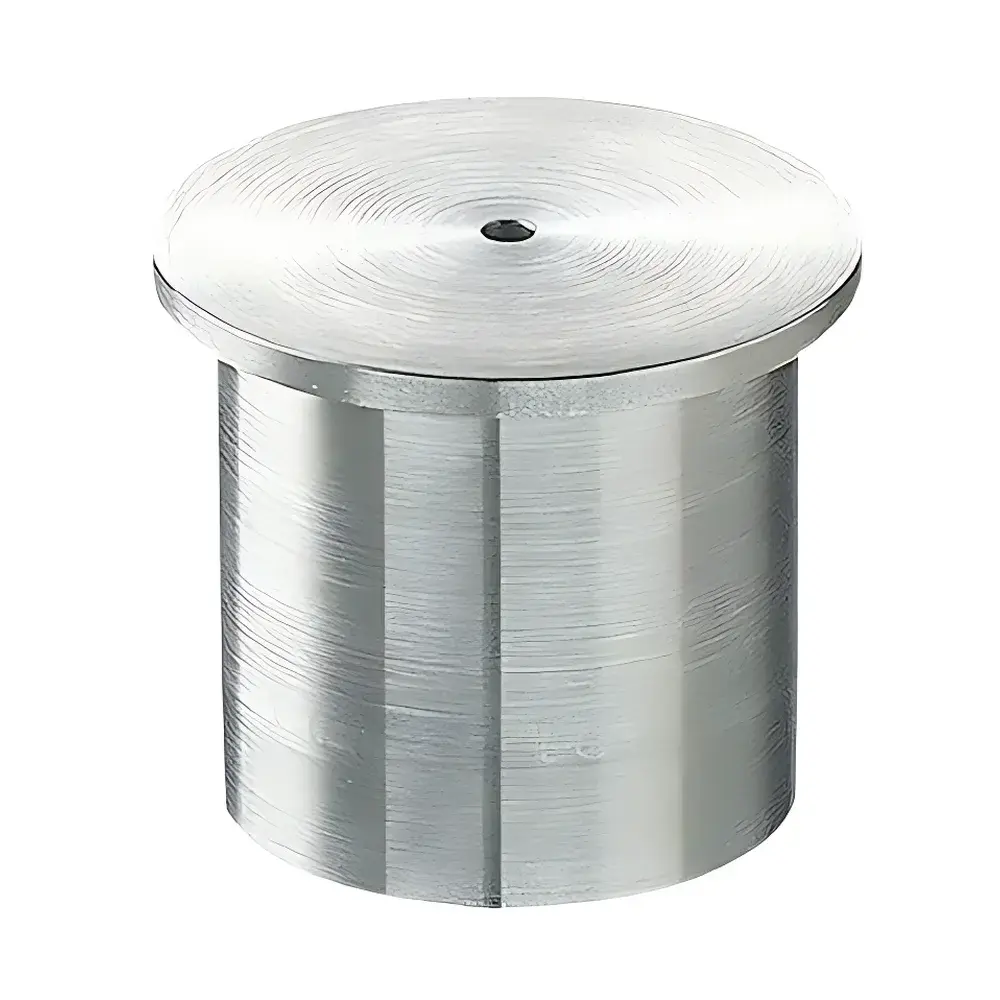
Cole-Parmer 38000-xx ASTM/DIN Standard Pycnometer Cups for Petroleum Carbon Residue Testing
| Brand | Cole-Parmer |
|---|---|
| Origin | USA |
| Model | 38000-xx |
| Capacity | 8.32 mL (38000-00) / 83.2 mL (38000-10, 38000-14) / 100 mL (38000-20, 38000-24) |
| Tolerance | ±1.2% (38000-00) / ±1.5% (38000-10/14/20/24) |
| Height | 26.5 mm (38000-00) / 63.5 mm (38000-10/14) / 78.3 mm (38000-20/24) |
| Outer Diameter | 25.4 mm (38000-00) / 44.5 mm (38000-10/14/20/24) |
| Weight | 47 g (38000-00) / 213 g (38000-10/14) / 243 g (38000-20/24) |
| Standard Compliance | ASTM D189, ASTM D524, DIN 51709, IP 14, ISO 10370 |
Overview
The Cole-Parmer 38000-xx series comprises precision-engineered pycnometer cups designed specifically for standardized carbon residue determination in petroleum products according to established gravimetric test methods. These cups serve as the primary sample containment vessels in Conradson Carbon Residue (CCR) and Ramsbottom Carbon Residue (RCR) testing procedures—critical quality control steps in refining, lubricant formulation, and fuel specification compliance. Constructed from high-purity, heat-resistant borosilicate glass, each cup is calibrated to meet stringent volumetric tolerances required by ASTM D189 (Ramsbottom), ASTM D524 (Conradson), DIN 51709, IP 14, and ISO 10370. The series includes five variants differentiated by capacity (8.32 mL, 83.2 mL, and 100 mL), dimensional specifications, and metrological certification status—enabling laboratories to select the appropriate cup based on method requirements, sample viscosity, and regulatory audit expectations.
Key Features
- Traceable volumetric calibration: Models 38000-14 and 38000-24 are supplied with individual calibration certificates confirming compliance with national metrology standards (NIST-traceable where applicable), supporting GLP/GMP documentation and internal audit readiness.
- Material integrity: Made from Type I, Class A borosilicate glass (ISO 4787, ASTM E288) with thermal shock resistance up to 160 °C, ensuring structural stability during pyrolysis cycles in muffle furnaces.
- Dimensional consistency: All cups feature precisely ground rims and uniform wall thickness to ensure repeatable sealing with standard ceramic or stainless-steel lids used in CCR/RCR test stands.
- Method-specific design: 38000-00 (8.32 mL) aligns with micro-method adaptations; 38000-10/14 (83.2 mL) conform to classical Conradson apparatus configurations; 38000-20/24 (100 mL) satisfy British Standard (BS EN ISO 10370) and IP 14 procedural volume mandates.
- Minimal thermal mass: Optimized geometry reduces heat soak time during furnace ramping, contributing to inter-laboratory reproducibility in residue yield measurement (±0.05 wt% typical under controlled conditions).
Sample Compatibility & Compliance
These pycnometer cups are validated for use with crude oils, distillates, residual fuels, lubricating base stocks, and cracked feedstocks. They accommodate samples with kinematic viscosities up to 1500 mm²/s at 40 °C without meniscus distortion or capillary error. Each cup variant maps directly to a referenced standard: 38000-00 supports ASTM D4530 (micro-CCR); 38000-10/14 support ASTM D189 and ASTM D524; 38000-20/24 support BS EN ISO 10370 and IP 14. All models are manufactured and tested in accordance with ISO/IEC 17025-accredited processes where calibration certification is provided. No modifications or aftermarket coatings are applied—preserving surface inertness critical for non-catalytic carbon deposition.
Software & Data Management
As passive, non-electronic laboratory consumables, the 38000-xx cups do not interface with software systems. However, their certified volumes and lot-specific traceability data integrate seamlessly into LIMS environments via manual entry or barcode-scanned calibration records (available for 38000-14 and 38000-24). Laboratories maintaining FDA 21 CFR Part 11 compliance may assign unique identifiers to each cup lot and retain calibration certificates in electronic archives with audit trails for instrument qualification (IQ/OQ/PQ) documentation. Digital records support full chain-of-custody tracking from receipt through final residue analysis reporting.
Applications
- Refinery QC labs performing routine carbon residue screening on vacuum gas oils and coker feedstocks per ASTM D524.
- Independent testing laboratories accredited to ISO/IEC 17025 conducting third-party verification of marine fuel compliance (ISO 8217 Annex B).
- Lubricant R&D facilities evaluating thermal stability of synthetic ester-based formulations using micro-CCR protocols.
- Regulatory agencies executing surveillance testing of heating oils under EN 590 and ASTM D396 specifications.
- Educational institutions teaching petroleum analytical chemistry with hands-on CCR methodology in accordance with API RP 2550 guidelines.
FAQ
Are these cups suitable for both Conradson and Ramsbottom methods?
Yes—38000-10 and 38000-14 are dimensionally compliant with ASTM D524 (Conradson), while 38000-00 and 38000-20/24 support ASTM D189 (Ramsbottom) and ISO 10370 variants respectively.
Do the calibration certificates include uncertainty budgets?
Certified models (38000-14 and 38000-24) provide expanded uncertainty values (k=2) derived from ISO/IEC 17025-compliant volumetric calibration against NIST SRM 2190a reference standards.
Can these cups be reused after cleaning?
Yes—provided they undergo rigorous solvent rinsing (e.g., xylene, toluene) followed by high-temperature ashing (>550 °C) and visual inspection for thermal stress cracks or rim deformation prior to reuse.
Is there a difference in thermal expansion behavior between the 8.32 mL and 100 mL variants?
All variants use identical borosilicate glass composition (linear expansion coefficient α ≈ 3.3 × 10⁻⁶ /°C), ensuring consistent dimensional stability across temperature ranges from ambient to 750 °C.
How should I document cup traceability in a GLP audit?
Retain the original calibration certificate with lot number, date of certification, accredited body seal, and assigned lab inventory ID; cross-reference this in your test report’s “Apparatus” section per OECD GLP Principles Section 1.2.13.





