
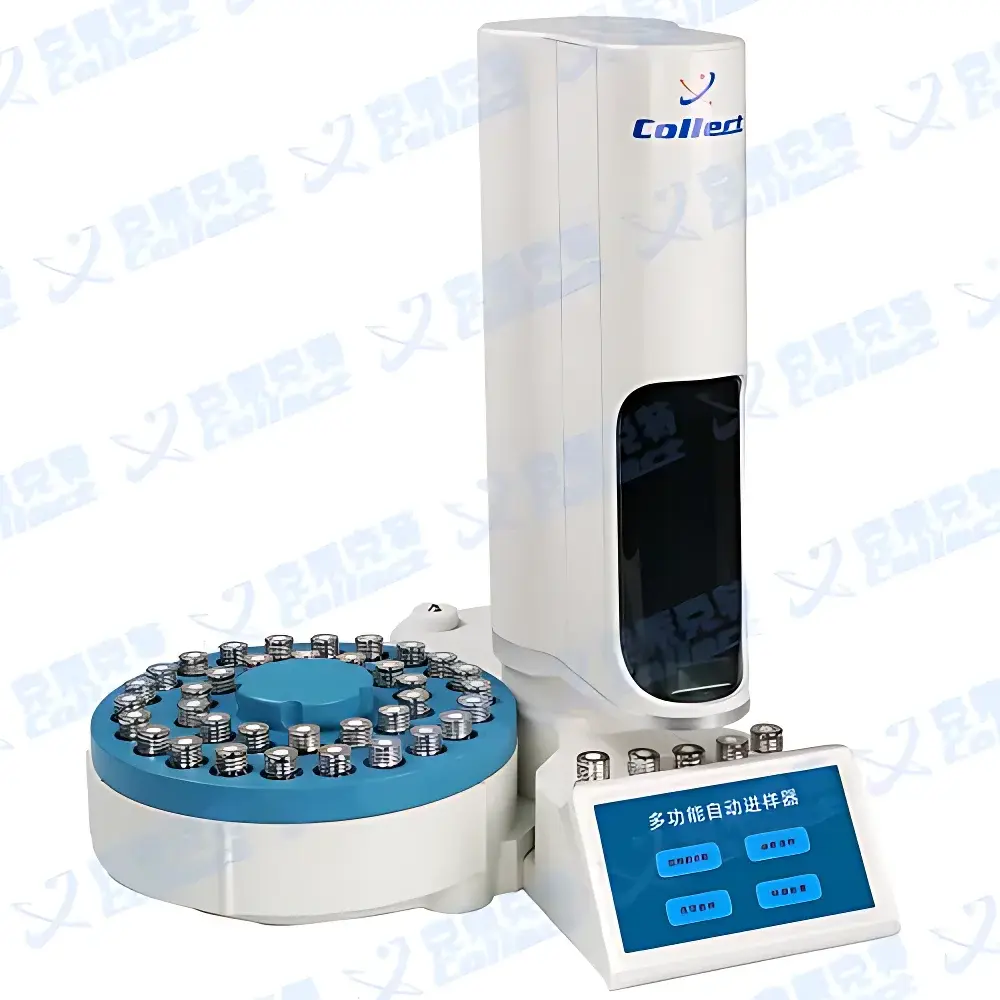
Clarete AS-3902 Fully Automated Multifunctional Autosampler for GC and GC-MS
| Brand | Clarete |
|---|---|
| Origin | Henan, China |
| Manufacturer Type | OEM Manufacturer |
| Product Category | Domestic |
| Model | AS-3902 |
| Instrument Type | Gas Chromatography Autosampler |
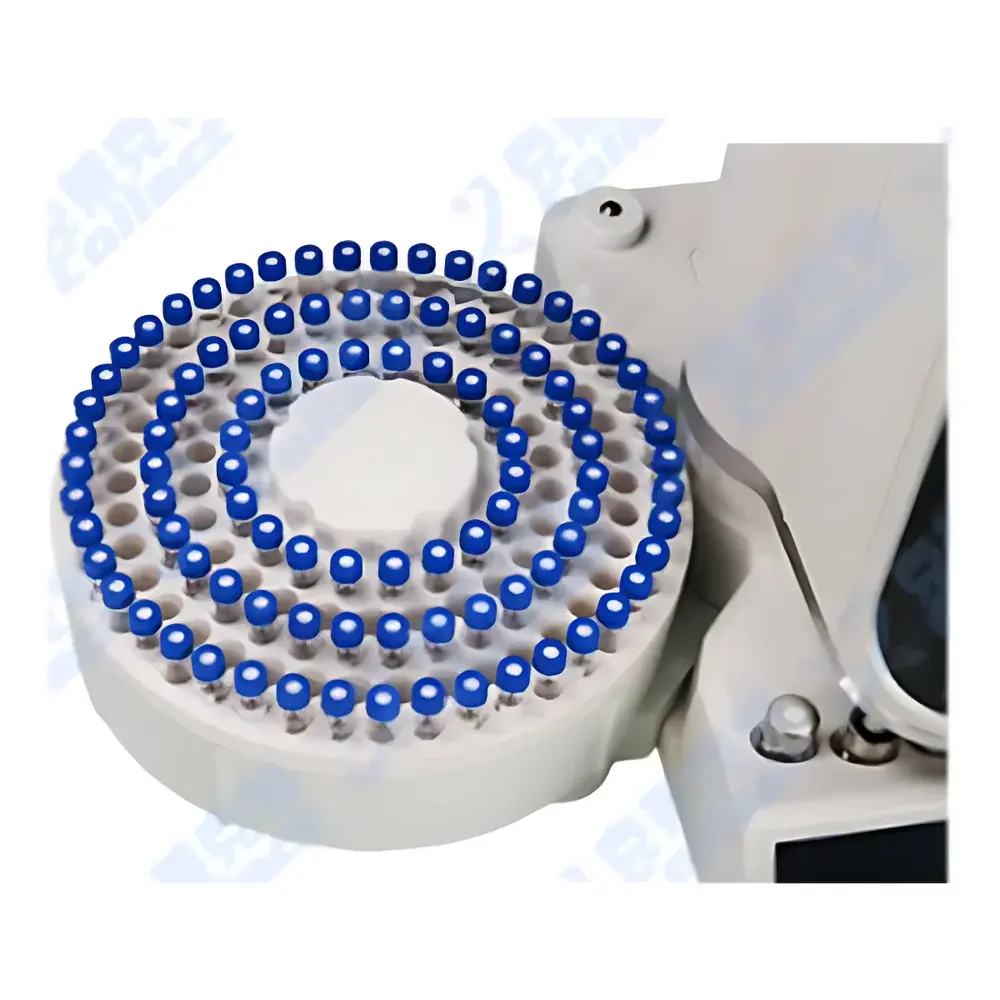
| Maximum Sample Capacity | 160 vials (2 mL) |
| Minimum Injection Volume | 0.1 µL |
| Quantitative Loop Volumes | 1, 5, 10, 25, 50, 100, 250, 500 µL (user-selectable) |
| Positioning Accuracy | 0.1 mm |
| Motion Mechanism | Rotary turret |
| Needle Wash | Internal & external wash, unlimited cycles |
| Repeat Injection Capability | Unlimited |
Overview
The Clarete AS-3902 Fully Automated Multifunctional Autosampler is an integrated sample introduction platform engineered for high-precision, reproducible operation across gas chromatography (GC) and GC-mass spectrometry (GC-MS) workflows. Based on a rotary turret architecture, the system employs microstepping motor control to achieve positional repeatability within ±0.1 mm—critical for consistent needle insertion depth, syringe actuation timing, and thermal equilibration across diverse sampling modes. Unlike conventional single-function autosamplers, the AS-3902 implements a true modular hardware architecture: functional capability is defined not by firmware alone, but by interchangeable mechanical modules mounted directly onto the turret and sample carousel. This design enables seamless transition between liquid injection, headspace analysis, solid-phase microextraction (SPME), and automated standard solution preparation—all without instrument reconfiguration or relocation. The system maintains full compatibility with third-party GC and GC-MS platforms from Agilent, Thermo Fisher, Shimadzu, PerkinElmer, and others, supporting dual-inlet configurations and independent control of inlet temperature, pressure, and flow via full bidirectional communication (GC instrument reverse control).
Key Features
- Four-in-one operational modes: Liquid injection, headspace sampling, SPME, and automated standard dilution—all supported on a single hardware platform.
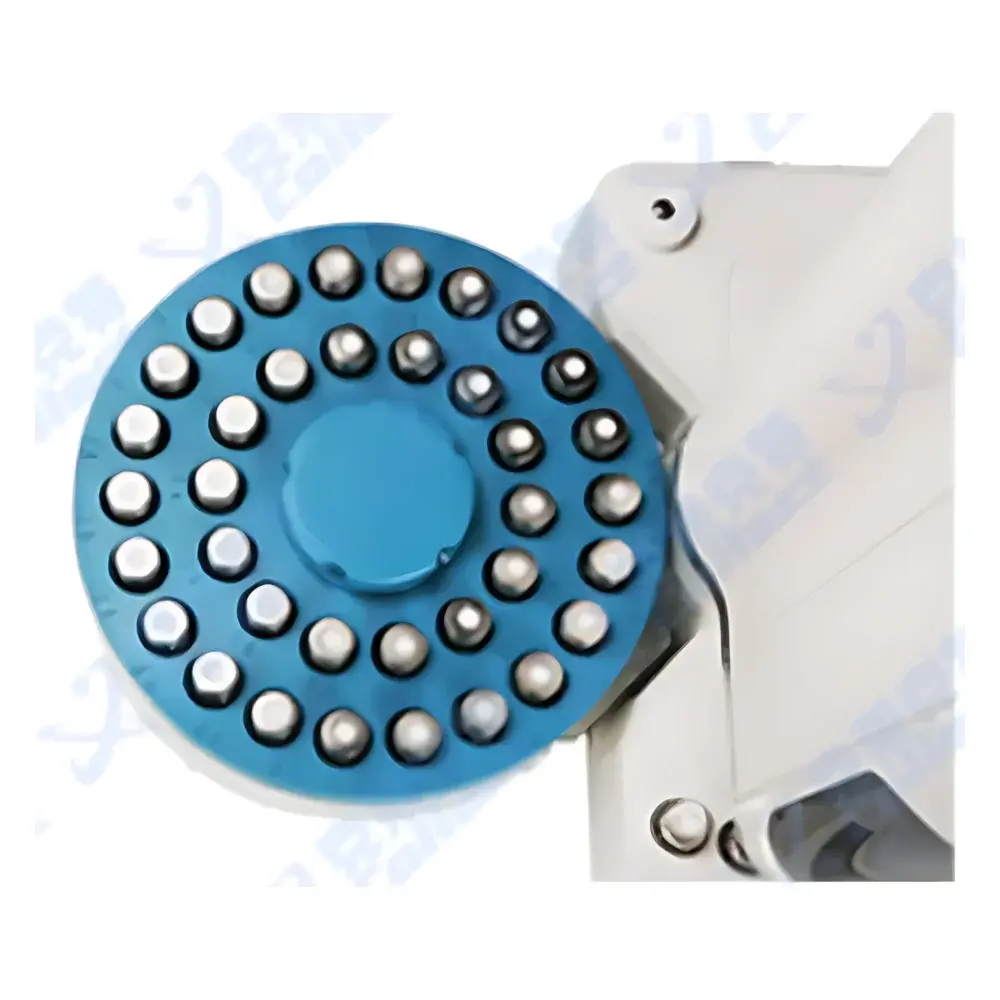
- Modular mechanical architecture: User-swappable sample trays (160-position 2 mL vial tray; 36-position 10/20 mL SPME/headspace tray) and functional needle assemblies enable rapid mode switching without tools or service intervention.
- Dual-inlet support: Simultaneous interfacing with two GC inlets, eliminating downtime during method transitions and enabling parallel analysis strategies.
- High-fidelity liquid injection: Precision gas-tight syringes with adjustable insertion depth (2–40 mm), programmable aspiration/injection speed profiles, and customizable pre-/post-injection delays and wash cycles.
- SPME automation suite: Integrated SPME fiber aging module (up to 350 °C, 0–60 min), heated sample carousel (RT–150 °C, ±1 °C), magnetic stirring (0–1500 rpm), and automatic fiber insertion into GC inlet with depth-adjustable penetration for both headspace and direct immersion extraction.
- Headspace optimization: Heated 2.5 mL gas-tight syringe (optional 5 mL), programmable equilibrium time (0–1440 min), sample heating (RT–200 °C), syringe heating (RT–200 °C), and inert gas purging (N₂ or He) to minimize carryover and baseline drift.
- Automated standard preparation: Certified volumetric accuracy for serial dilutions (up to 15-point gradients, 200× max dilution factor, 0.01 mL minimum aspirate volume); closed-system handling eliminates operator exposure and solvent waste.
Sample Compatibility & Compliance
The AS-3902 accommodates a broad range of sample formats—including aqueous, organic, viscous, and heterogeneous matrices—across all operational modes. For regulatory environments, the system supports audit-ready operation through configurable log generation, user-access-level permissions, and timestamped event tracking for all critical actions (e.g., needle wash cycles, calibration steps, method changes). While not pre-certified to 21 CFR Part 11, the platform’s deterministic motion control, traceable parameter logging, and hardware-based error detection (e.g., syringe stall detection, vial position verification) provide foundational capabilities required for GLP/GMP-compliant laboratories. Method validation data—including RSD < 0.5% for liquid injection and RSD < 2.0% for headspace ethanol/water analysis—align with ASTM D3699 and ISO 17025 documentation expectations.
Software & Data Management
Control is executed via a dedicated Windows-based application supporting method sequencing, real-time status monitoring, and remote diagnostics. All method parameters—including temperature ramps, agitation speeds, injection volumes, wash protocols, and dilution schemes—are stored as encrypted binary files with version history. Raw log files (CSV format) record every hardware event with millisecond timestamps, enabling forensic reconstruction of run conditions. The software exposes a COM interface for integration with third-party chromatography data systems (CDS), allowing synchronized method launch, data acquisition triggering, and result annotation. No cloud connectivity or telemetry is enabled by default; all data remains local unless explicitly exported by the user.
Applications
The AS-3902 serves analytical laboratories engaged in environmental testing (e.g., VOCs in water per EPA Method 502.2 and 8260), food safety (pesticide residues, flavor compounds), pharmaceutical impurity profiling, forensic toxicology, and petrochemical quality control. Its SPME module supports unattended analysis of volatile and semi-volatile organics in complex biological matrices; its headspace configuration achieves sub-ppb detection limits for benzene in aqueous standards; and its automated dilution engine ensures metrological traceability in calibration curve generation for regulated assays.
FAQ
Does the AS-3902 support dual-inlet GC configurations?
Yes—the system includes dual-port hardware and software logic to independently control and schedule injections across two GC inlets.
Can SPME fiber aging and extraction be performed sequentially in one run?
Yes—method programming allows automated aging, cooling, sample exposure, desorption, and needle wash in a single uninterrupted sequence.
Is the headspace module compatible with 10 mL vials?
The standard carousel accepts 20 mL headspace vials; 10 mL vial support requires optional adapter inserts (part number CL-AS3902-HS10).
What level of traceability does the system provide for calibration records?
All calibration events—including syringe volume verification, temperature sensor validation, and positioning accuracy checks—are logged with operator ID, timestamp, and pass/fail status.
How is cross-contamination mitigated during high-throughput runs?
Multi-stage needle wash (internal + external), programmable inert gas purge, and fiber cleaning protocols are enforced before each sample injection or extraction cycle.
Related Products




