RWD 68300 Series Stereotaxic Ear Bars for Rodent and Non-Human Primate Neurosurgery
| Origin | Guangdong, China |
|---|---|
| Manufacturer Type | Authorized Distributor |
| Origin Category | Domestic (China) |
| Model | 68300 |
| Pricing | Available Upon Request |
Overview
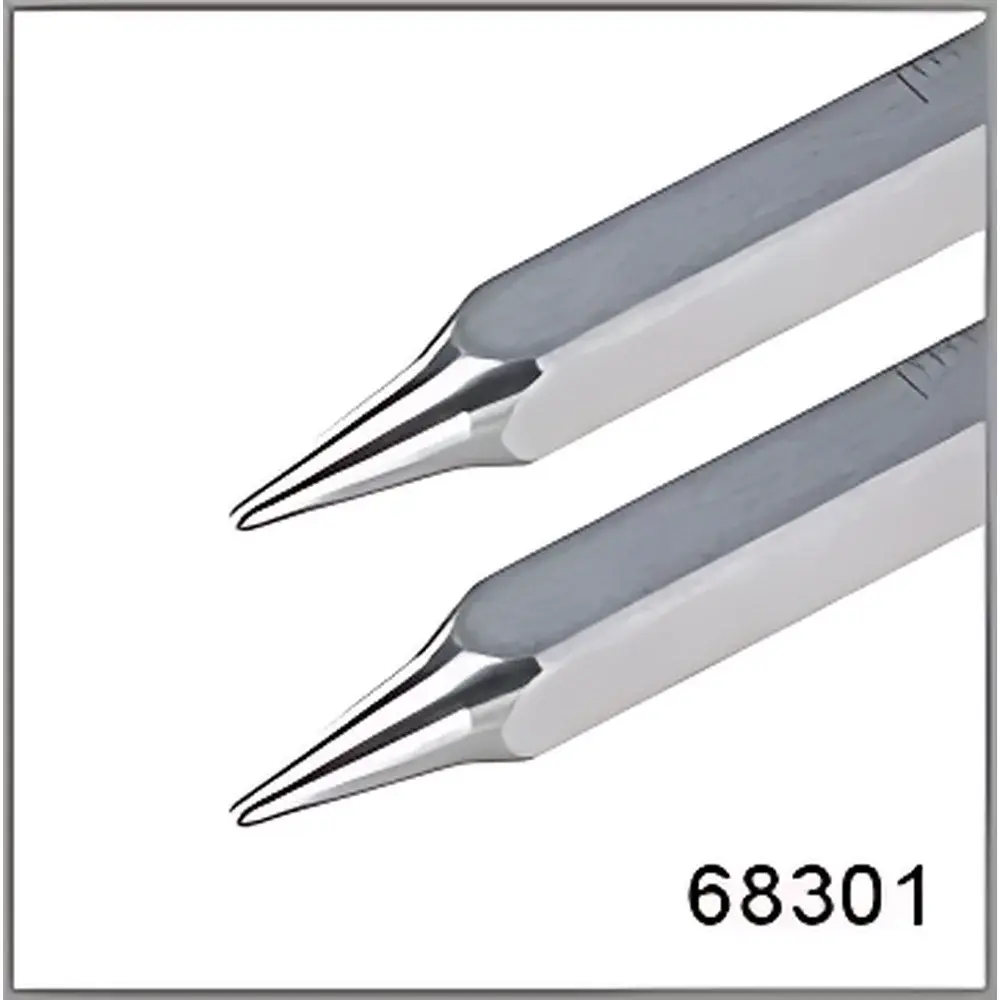
The RWD 68300 Series Stereotaxic Ear Bars are precision-engineered accessories designed for integration with standard stereotaxic frames used in preclinical neuroscience research. These ear bars serve as critical cranial fixation components that stabilize the animal’s head in three-dimensional space during intracranial procedures—including microinjection, electrophysiology, optogenetics, and targeted lesioning. Each ear bar model is calibrated to accommodate species-specific anatomical variations in external auditory canal orientation, tympanic membrane depth, and skull morphology. The series employs laser-etched scale markings on the lateral arms to ensure repeatable, traceable positioning across experimental sessions—essential for longitudinal studies requiring high inter-session reproducibility. All models comply with internationally recognized principles of humane animal handling under AAALAC-accredited facilities and align with the 3Rs framework (Replacement, Reduction, Refinement) by minimizing procedural trauma and supporting postoperative recovery.
Key Features
- Laser-etched depth and angular calibration marks for consistent, operator-independent placement
- Multiple angle configurations (18°, 30°, 45°, 60°) optimized for rat, mouse, cat, and non-human primate anatomy
- Dull-tipped designs (e.g., 45° and 60° variants) engineered to avoid tympanic membrane perforation and reduce middle ear trauma
- Hollow-bore variants (Models 68305, 68309) featuring precisely dimensioned internal lumens (front bore: 0.7–1.0 mm; rear bore: 3.0 mm) for calibrated acoustic stimulus delivery in auditory neuroscience paradigms
- Non-invasive fixation options including toothed-contact (68307) and O-ring soft-silicone interface (68308) for fragile murine skulls
- Elevated configuration (Model 68413) with 50 mm vertical lift and 1 mm graduation lines on the support rod to improve surgical ergonomics and access to ventral brain regions
Sample Compatibility & Compliance
The 68300 Series supports a broad range of laboratory animals, including Sprague-Dawley and Wistar rats (models 68301, 68302, 68303, 68304, 68305, 68309), C57BL/6 and BALB/c mice (68306, 68307, 68308), and feline and macaque subjects (68303, 68304). All ear bars are manufactured from medical-grade stainless steel (ASTM F138 compliant) and undergo passivation per ISO 10993-15 for biocompatibility. They are compatible with major stereotaxic platforms including David Kopf Instruments, Stoelting Co., and RWD Life Science’s own 68000-series frames. Use adheres to NIH Guide for the Care and Use of Laboratory Animals and EU Directive 2010/63/EU requirements for minimally invasive restraint.
Software & Data Management
While the ear bars themselves are mechanical components, their use is fully integrated into digital stereotaxic workflows. When paired with RWD’s 68000-series digital stereotaxic systems, positional data—including ear bar angle selection, depth setting, and elevation offset—is logged automatically in audit-trail-enabled software compliant with FDA 21 CFR Part 11 requirements. Timestamped metadata is exportable in CSV or XML format for GLP/GMP-aligned study documentation and regulatory submissions.
Applications
- Chronic implantation of intracranial electrodes or cannulae in longitudinal behavioral studies
- High-precision targeting of subcortical nuclei (e.g., VTA, SNc, BNST) for optogenetic manipulation
- Auditory evoked potential (AEP) experiments requiring simultaneous acoustic stimulation and neural recording
- Microdialysis probe insertion with minimal tissue displacement
- CRISPR/Cas9-mediated in vivo gene editing in defined brain regions
- Functional MRI-compatible head fixation protocols in awake or lightly sedated primates
FAQ
Which ear bar model is recommended for long-term survival studies in rats?
Model 68302 (45° blunt-tip) or 68304 (45° blunt-tip for cats/monkeys) is preferred, as the钝-angle design significantly reduces risk of tympanic membrane injury and associated otitis media.
Can the hollow-bore ear bars be sterilized using autoclaving?
Yes—models 68305 and 68309 are autoclavable at 121°C, 15 psi for 20 minutes; however, repeated cycles may affect surface finish over time.
Is the elevated ear bar (68413) compatible with standard stereotaxic frame adapters?
Yes—it features standardized M6 threading and fits all RWD 68000-series and third-party frames equipped with universal ear bar mounts.
Do these ear bars meet ISO 13485 requirements for medical device accessories?
While not classified as active medical devices, their materials and manufacturing processes conform to ISO 13485:2016 quality management system standards for Class I non-sterile accessories used in regulated preclinical research environments.