
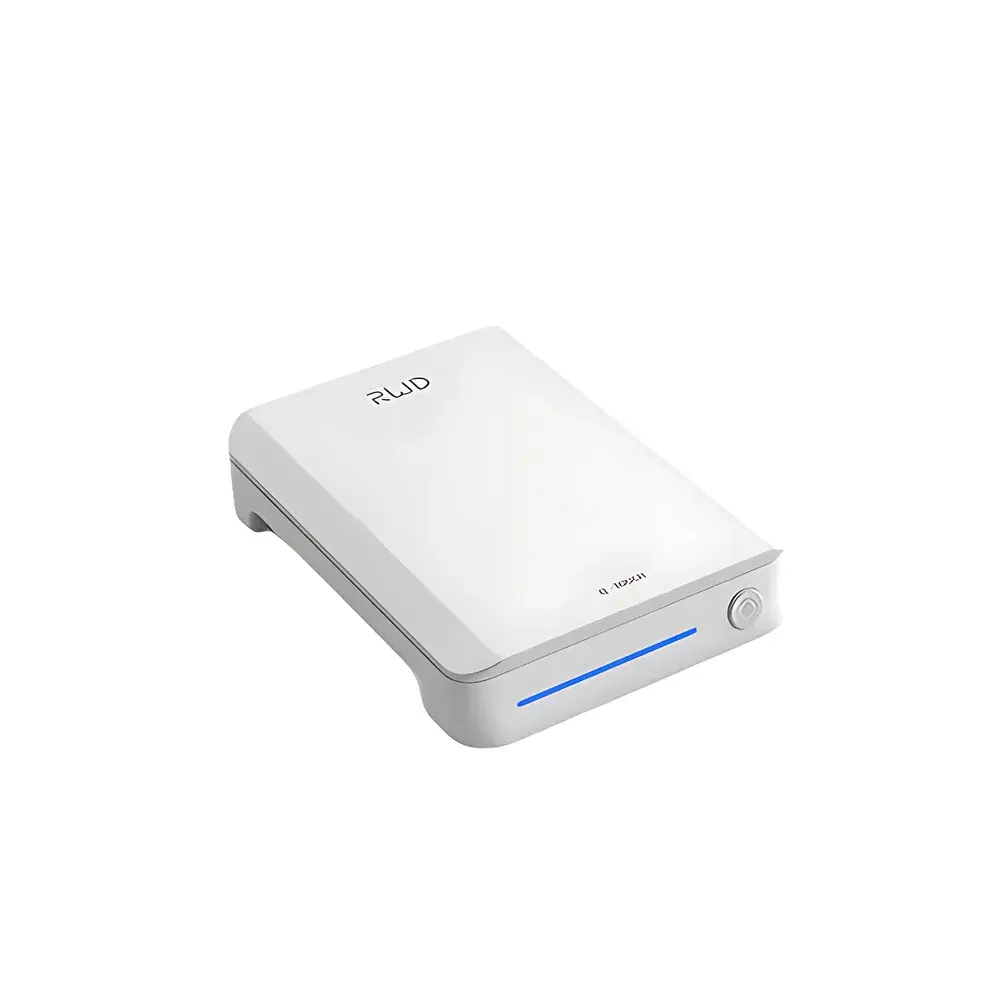
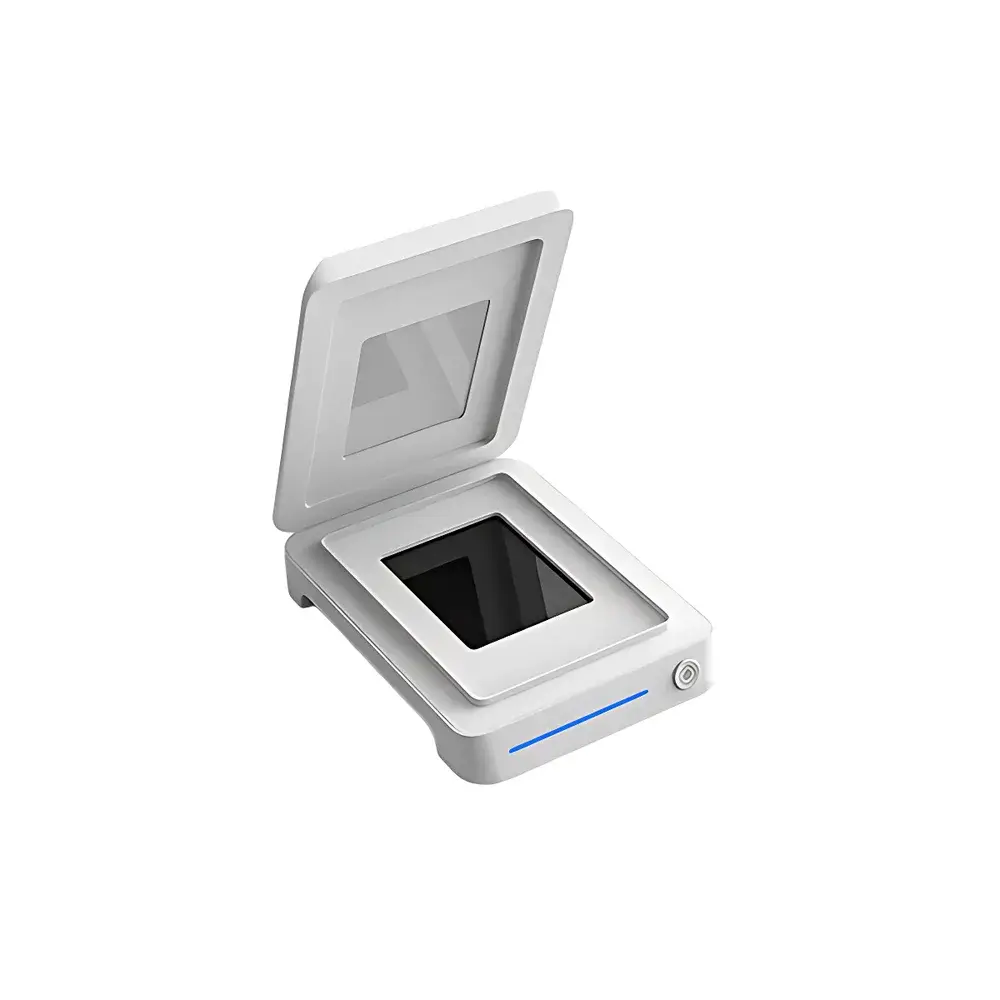
RWD qTouch Western Blot Imaging System
| Brand | RWD |
|---|---|
| Origin | Guangdong, China |
| Manufacturer Type | Original Equipment Manufacturer (OEM) |
| Regional Classification | Domestic (China) |
| Model | qTouch |
| Pricing | Available Upon Request |
| Exposure Time Range | 0.1–600 s |
Overview
The RWD qTouch Western Blot Imaging System is a high-sensitivity, contact-based digital imaging platform engineered for quantitative chemiluminescent, fluorescent, and colorimetric detection in protein and nucleic acid blotting applications. Unlike optical lens-based systems that introduce magnification distortion and light loss, the qTouch employs direct-contact CCD/CMOS sensor architecture—positioning the specimen in physical proximity to a large-format, cooled monochrome imaging sensor. This design eliminates optical path variability, maximizes photon capture efficiency, and ensures pixel-perfect spatial fidelity across the entire active imaging area. The system is optimized for reproducible quantitation of Western Blot (WB), Southern Blot, and Northern Blot membranes without signal saturation or dynamic range compression. Its core measurement principle relies on linear photon integration under controlled thermal stabilization, enabling accurate intensity-to-concentration mapping across orders of magnitude.
Key Features
- 150 cm² Active Imaging Area: Largest contact-sensor footprint in its class, accommodating full-size mini- and midi-gels (up to 20 × 25 cm) without tiling or stitching artifacts.
- Sub-Second Image Acquisition: Achieves usable chemiluminescent images in as little as 0.1 s, minimizing enzyme decay and enabling kinetic exposure optimization.
- Auto-ROI Detection & Background Subtraction: Proprietary edge-aware segmentation algorithm identifies electrophoretic lanes and bands with sub-pixel precision; applies adaptive rolling-ball background correction per image channel.
- Quantitative Linearity Range: >4.5 log units (10⁴.⁵) verified via serial dilution calibration with HRP-conjugated standards (ASTM E2913-21 compliant methodology).
- Multi-User Secure Workflow: Role-based access control (administrator, operator, viewer) with encrypted local storage, audit-trail logging, and user-specific default directories—designed to support GLP-compliant documentation practices.
- Compact Benchtop Form Factor: Dimensions: 380 × 320 × 120 mm; weight: <8.5 kg—enables deployment in biosafety cabinets, cold rooms, or shared core facilities without dedicated infrastructure.
Sample Compatibility & Compliance
The qTouch supports standard nitrocellulose (NC), polyvinylidene difluoride (PVDF), and nylon transfer membranes, as well as stained gels (Coomassie, SYPRO Ruby) and autoradiography films (digitized mode). It accommodates both wet and dry membrane formats and integrates seamlessly with common ECL reagents (e.g., Luminata Forte, SuperSignal West Femto). All firmware and software modules comply with ISO/IEC 17025:2017 requirements for analytical instrument validation. Data export formats (TIFF, PNG, CSV) meet NIH ImageJ and FIJI interoperability standards. Optional 21 CFR Part 11–compliant software package available with electronic signature, audit trail, and data integrity controls for regulated environments.
Software & Data Management
The bundled qView Analysis Suite v3.2 provides a unified interface for acquisition, quantitation, and reporting. Key capabilities include real-time histogram preview, multi-channel overlay (e.g., GFP + Cy5), batch processing of up to 40 images per session, and automated molecular weight estimation using internal ladder calibration. Raw image data are stored in non-proprietary TIFF format with embedded EXIF metadata (exposure time, gain, temperature, user ID). The software enforces write-once-read-many (WORM) file handling for raw acquisitions and maintains immutable revision history for processed results. Export options include publication-ready figures (300+ DPI, CMYK/RGB selectable), Excel-compatible quantitation tables, and PDF reports with embedded traceability metadata.
Applications
- Relative and semi-quantitative protein expression profiling in cell lysates, tissue homogenates, and serum samples.
- Validation of CRISPR/Cas9 knockout efficiency via target protein depletion assessment.
- Phospho-specific antibody validation and signaling pathway analysis under time-course or dose-response conditions.
- Nucleic acid hybridization quantitation in gene expression studies (Northern/Southern blot densitometry).
- Quality control of recombinant protein purification batches using Coomassie-stained SDS-PAGE gels.
- Teaching laboratory implementation—low operational complexity, intuitive GUI, and built-in tutorial modules aligned with ASBMB curriculum guidelines.
FAQ
Does the qTouch support near-infrared (NIR) fluorescence detection?
Yes—equipped with dual-band excitation filters (700 nm and 800 nm) and a back-illuminated sensor with quantum efficiency >85% at 750–850 nm.
Can raw image files be exported without proprietary compression?
Yes—all acquisitions save as uncompressed 16-bit TIFF with embedded metadata; no vendor lock-in or format obfuscation.
Is remote operation supported via network connection?
Standard Ethernet (10/100 Mbps) enables remote acquisition and monitoring via secure HTTP/HTTPS; optional VPN configuration for off-site core facility access.
What validation documentation is provided for regulatory submissions?
Factory-issued IQ/OQ documentation, sensor linearity certificate (NIST-traceable reference standards), and software verification report per GAMP 5 Annex 11 principles.
How is thermal noise managed during long exposures?
Active Peltier cooling maintains sensor temperature at −25 °C ± 0.5 °C; dark-frame subtraction is applied automatically for exposures >5 s.




