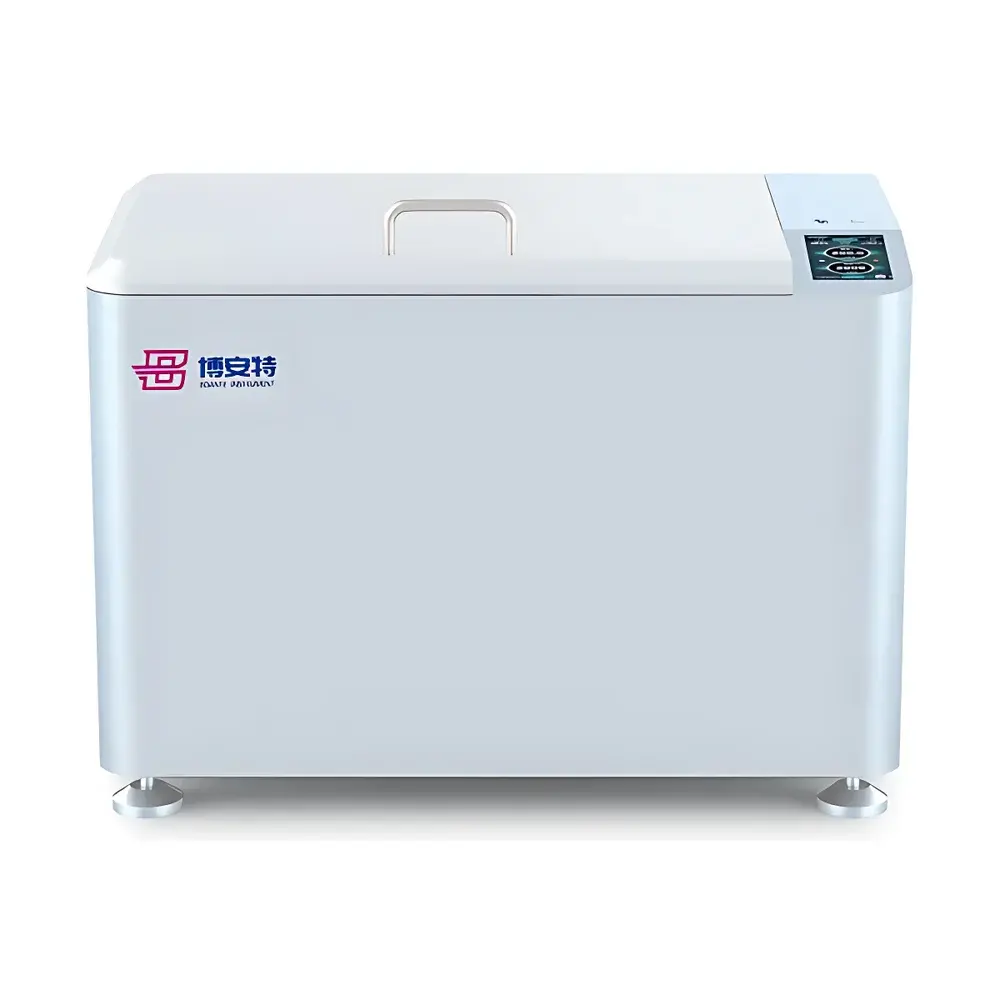
MSI DigiGait Gait Imaging Analysis System
| Origin | Imported |
|---|---|
| Manufacturer Type | Authorized Distributor |
| Model | DigiGait™ |
| Price | USD 13,800 (FOB) |
| Camera Frame Rate | ≥150 fps |
| Temporal Resolution | <10 ms |
| Treadmill Speed Range | 0–100 cm/s (1 mm/s increment) |
| Incline Adjustment | 0–60° |
| Animal Compatibility | Mice, Rats, Guinea Pigs |
| Treadmill Belt Material | Reusable High-Grip Polymer |
| Illumination | 90–250 V AC, 25 kHz, 5000 K CCT |
| Software Output Parameters | >50 spatiotemporal gait metrics including stance duration, swing duration, stride length, paw angle, inter-limb coordination indices, Sciatic Functional Index (SFI), and preconfigured Excel-compatible reports |
Overview
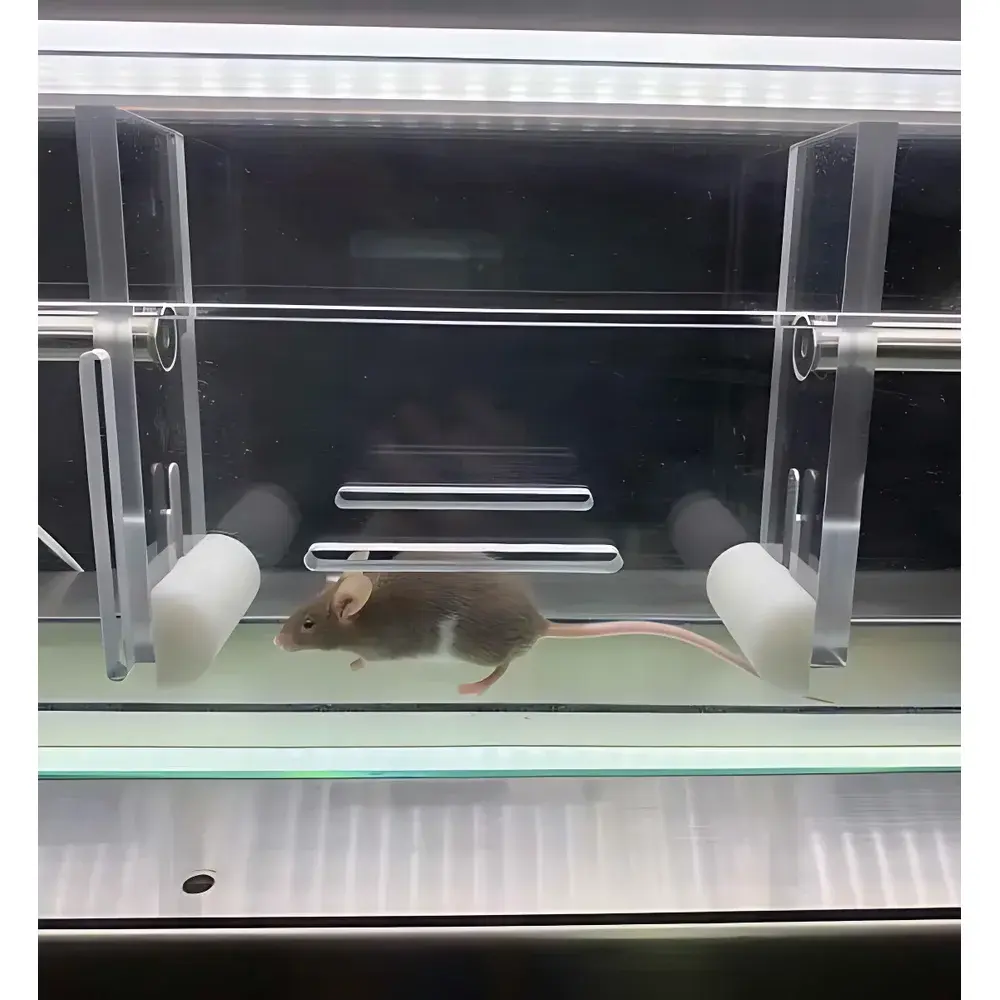
The MSI DigiGait Gait Imaging Analysis System is a patented, fully integrated, passive gait assessment platform engineered for high-fidelity quantitative locomotion analysis in rodent models. Unlike active treadmill-based systems requiring forced acceleration or aversive stimuli, DigiGait employs a transparent, motor-driven polymer belt combined with synchronized high-speed dorsal and ventral imaging to capture natural, voluntary gait dynamics under controlled biomechanical conditions. The system operates on the principle of planar kinematic mapping—using calibrated pixel-to-millimeter conversion and sub-10-ms temporal resolution to extract precise spatial and temporal gait parameters without manual ROI delineation or user-dependent tracing. It is designed for rigorous preclinical research where reproducibility, longitudinal tracking, and regulatory-compliant data integrity are essential—particularly in studies involving neurodegeneration, peripheral neuropathy, musculoskeletal disorders, spinal cord injury, aging, and pharmacological toxicity screening.
Key Features
- Patented passive gait acquisition architecture eliminates behavioral stress artifacts associated with shock-grid or air-puff motivation.
- Adjustable incline treadmill (0–60°) with high-torque DC motor enables controlled uphill/downhill locomotion testing—critical for assessing weight-bearing asymmetry and compensatory strategies.
- Modular runway design: Interchangeable acrylic walls allow rapid adaptation of track length (7.6–61 cm) and width to accommodate neonatal mice through adult guinea pigs within ≤60 seconds.
- Optically optimized dual-angle illumination (5000 K CCT, 25 kHz flicker-free) ensures consistent contrast across coat colors and skin pigments—enabling robust paw detection without grayscale thresholding or manual correction.
- High-resolution, ≥150 fps CMOS camera system with hardware-triggered synchronization guarantees phase-locked frame capture during dynamic limb cycles.
- Reinforced transparent polymer treadmill belt provides uniform traction at speeds up to 100 cm/s while supporting repeated sterilization and long-term mechanical stability.
- Real-time digital speed display with 1 mm/s resolution and closed-loop feedback control minimizes velocity drift—ensuring compliance with ASTM F2774-19 standards for instrumented treadmill calibration.
Sample Compatibility & Compliance
The DigiGait system supports longitudinal gait profiling across C57BL/6, BALB/c, CD-1, Sprague-Dawley, Wistar, and Hartley guinea pig strains. Its non-invasive, restraint-free protocol aligns with NIH Guide for the Care and Use of Laboratory Animals (8th Ed.) and EU Directive 2010/63/EU requirements for minimizing distress during behavioral phenotyping. All hardware components meet IEC 61000-6-3 EMC emission standards and UL 61010-1 safety certification. Data output formats comply with FAIR principles (Findable, Accessible, Interoperable, Reusable), and audit-trail-enabled software versions support GLP/GMP environments under FDA 21 CFR Part 11 when deployed with validated workstation configurations (e.g., Dell Precision T1800 with PCIe IEEE-1394 interface card).
Software & Data Management
DigiGait Analysis Software v5.x delivers automated, operator-independent gait parameter extraction—including stance/swing/propulsion durations, stride variability coefficients, inter-limb phase relationships, paw contact area dynamics, and validated composite indices such as Sciatic Functional Index (SFI) and Normal Step Sequence Index (NSSI). Raw video sequences are stored in lossless AVI format with embedded metadata (speed, angle, timestamp, animal ID). Processed results export directly to CSV and Excel (.xlsx) templates preformatted for ANOVA-ready statistical analysis. Software includes built-in quality-control flags for motion blur, occlusion, and belt slippage detection. Version-controlled binaries, electronic signature capability, and configurable user permissions enable deployment in regulated research settings requiring traceability per ISO/IEC 17025 and OECD GLP Principles.
Applications
The system is routinely deployed in academic neuroscience laboratories, contract research organizations (CROs), and pharmaceutical R&D departments for endpoint quantification in models of Parkinson’s disease (MPTP/6-OHDA), Huntington’s disease (R6/2, Q175), ALS (SOD1-G93A), Charcot-Marie-Tooth neuropathy, osteoarthritis (MIA-induced), chemotherapy-induced peripheral neuropathy (paclitaxel, vincristine), and lysosomal storage disorders (e.g., Niemann-Pick type C). Its capacity to resolve subtle deficits in interlimb coordination, dynamic weight distribution, and gait rhythm makes it particularly valuable for early-stage therapeutic efficacy evaluation—often detecting functional changes prior to histopathological or molecular biomarker shifts.
FAQ
What rodent species and age ranges are supported?
Mice (postnatal day 7 to adult), rats (P14 to 12 months), and guinea pigs (weaning to 24 months) are validated. Neonatal mouse testing requires the MSI-DIG-AM platform with minimum 7.6 cm track length.
Is the system compatible with existing lab infrastructure?
Yes—the DigiGait platform interfaces via IEEE-1394 (FireWire) or USB3.0 (depending on camera model) and requires no dedicated server. Minimum recommended workstation: Intel Core i3-6100, 4 GB RAM, dual-drive storage (OS + raw video), Windows 7 Professional or later.
How is data integrity ensured during long-term studies?
All acquisitions include embedded timestamps, hardware-synced frame counters, and automated checksum verification. Software enforces immutable project logs with user authentication, session-level metadata tagging, and version-stamped parameter definitions.
Can the system be used for slope-specific gait analysis?
Yes—optional MSI-DIG-IDF incline drive units enable precise 0.5° incremental adjustment from –60° to +60°, with real-time angular feedback and torque-compensated speed maintenance across gradients.
Does the software support third-party statistical packages?
Exported .csv files are natively readable by R, Python (pandas), GraphPad Prism, SAS, and SPSS. Custom API hooks are available under NDA for enterprise LIMS integration.
Related Products