RWD 68101 Micromanipulator for Stereotaxic Applications
| Brand | RWD |
|---|---|
| Origin | Shenzhen, China |
| Manufacturer Type | Direct Manufacturer |
| Region of Origin | Domestic (China) |
| Model | 68101 |
| Pricing | Upon Request |
Overview
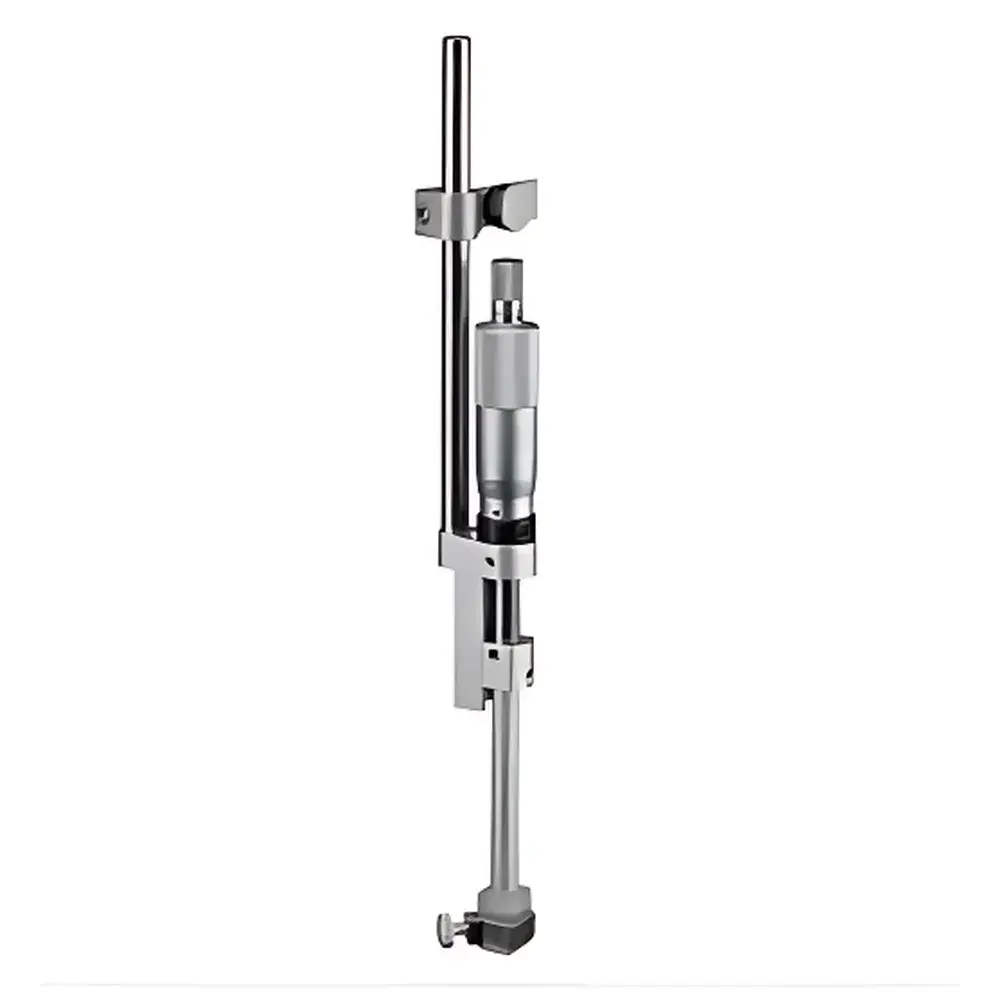
The RWD 68101 Micromanipulator is a precision mechanical positioning system engineered specifically for integration with stereotaxic frames in preclinical neuroscience research. Designed to support high-accuracy electrode advancement during in vivo electrophysiological experiments—including single-unit recording, patch-clamp, optogenetic stimulation, and microinjection—the device operates on a coarse-fine dual-stage mechanical translation principle. Its vertical axis delivers repeatable 10 µm incremental displacement per full rotation of the adjustment knob, enabling sub-cellular targeting within rodent or non-human primate brain tissue under stereotactic coordinates. The manipulator mounts directly onto standard Kopf-, Stoelting-, or RWD-compatible stereotaxic frames via universal dovetail or threaded adapter plates, ensuring mechanical stability and minimizing drift during long-duration recordings.
Key Features
- 10 µm resolution on the Z-axis (vertical), achieved through a calibrated micrometer-driven lead screw mechanism with backlash compensation
- Three-axis manual control (X, Y, Z) with independent locking levers for rapid coarse positioning and fine-tuned stabilization
- Modular headstage interface compatible with glass micropipettes, metal electrodes (e.g., tungsten, platinum-iridium), silicon probes, and optical fibers
- Customizable electrode holders available upon request—RWD provides application-specific headstage adapters for tapered, beveled, or coated electrodes
- Robust aluminum alloy housing with anodized finish for corrosion resistance and ESD-safe operation in shielded electrophysiology rigs
- No external power supply or electronics required—fully mechanical design ensures electromagnetic compatibility (EMC) in low-noise recording environments
Sample Compatibility & Compliance
The RWD 68101 is validated for use with adult and neonatal rodent models (mouse, rat, gerbil), ferrets, and non-human primates when mounted on appropriately rated stereotaxic frames. It supports standard electrode diameters ranging from 0.5 mm to 2.5 mm and accommodates both rigid and flexible shaft configurations. While the device itself does not carry CE or FDA clearance as a standalone medical device, its mechanical architecture complies with ISO 13485-aligned manufacturing practices per RWD’s internal quality management system. All materials meet RoHS Directive 2011/65/EU requirements. When used within GLP-compliant preclinical study protocols, the manipulator’s mechanical repeatability supports audit-ready documentation of positioning parameters per ICH-GCP Annex 4 guidelines.
Software & Data Management
As a purely mechanical instrument, the RWD 68101 does not incorporate embedded firmware, digital interfaces, or proprietary software. Positioning data is recorded manually in lab notebooks or integrated into third-party acquisition platforms (e.g., Spike2, Plexon MAP, OpenEphys, or Axon pCLAMP) via synchronized timestamped notes. Users may log XYZ coordinates alongside electrophysiological traces using standardized metadata schemas (e.g., NWB:N 2.0 or BIDS derivatives). For labs requiring traceability, RWD provides optional engraved serial-number plates and calibration verification certificates upon request—supporting 21 CFR Part 11–aligned recordkeeping when paired with electronic lab notebook (ELN) systems.
Applications
- In vivo extracellular single-unit and multi-unit recording in awake or anesthetized animals
- Whole-cell patch-clamp experiments in acute brain slices or in vivo thalamocortical preparations
- Stereotactic delivery of viral vectors, tracers, or pharmacological agents into discrete nuclei (e.g., hippocampus, VTA, mPFC)
- Combined optrode-based photostimulation and simultaneous electrophysiological readout
- Chronic implantation procedures requiring precise cannula or drive assembly placement
- Developmental neurophysiology studies involving delicate tissue in P0–P14 rodent pups
FAQ
Is the RWD 68101 compatible with non-RWD stereotaxic frames?
Yes—it features standardized mounting interfaces (M4 and M6 threaded holes plus 12 mm dovetail groove) compatible with Kopf Models 1900/1920, Stoelting 51700/51600, and other major OEM frames.
Does it support motorized or programmable control?
No—the 68101 is strictly manual. For automated versions, RWD offers the 68102 series with stepper-motor integration and RS-232/USB control.
What is the maximum load capacity for mounted electrodes?
Rated for static loads up to 250 g; dynamic loading during rapid advancement should remain below 150 g to maintain positional fidelity.
Can RWD provide validation reports for institutional biosafety or animal care committees?
Upon formal request, RWD supplies material declarations, mechanical tolerance specifications, and sterilization compatibility documentation (autoclave-safe up to 121°C for 20 min).
Is technical support available outside mainland China?
Yes—RWD maintains regional application engineers in the US, EU, and APAC regions, with English-language documentation, video tutorials, and remote troubleshooting support.