
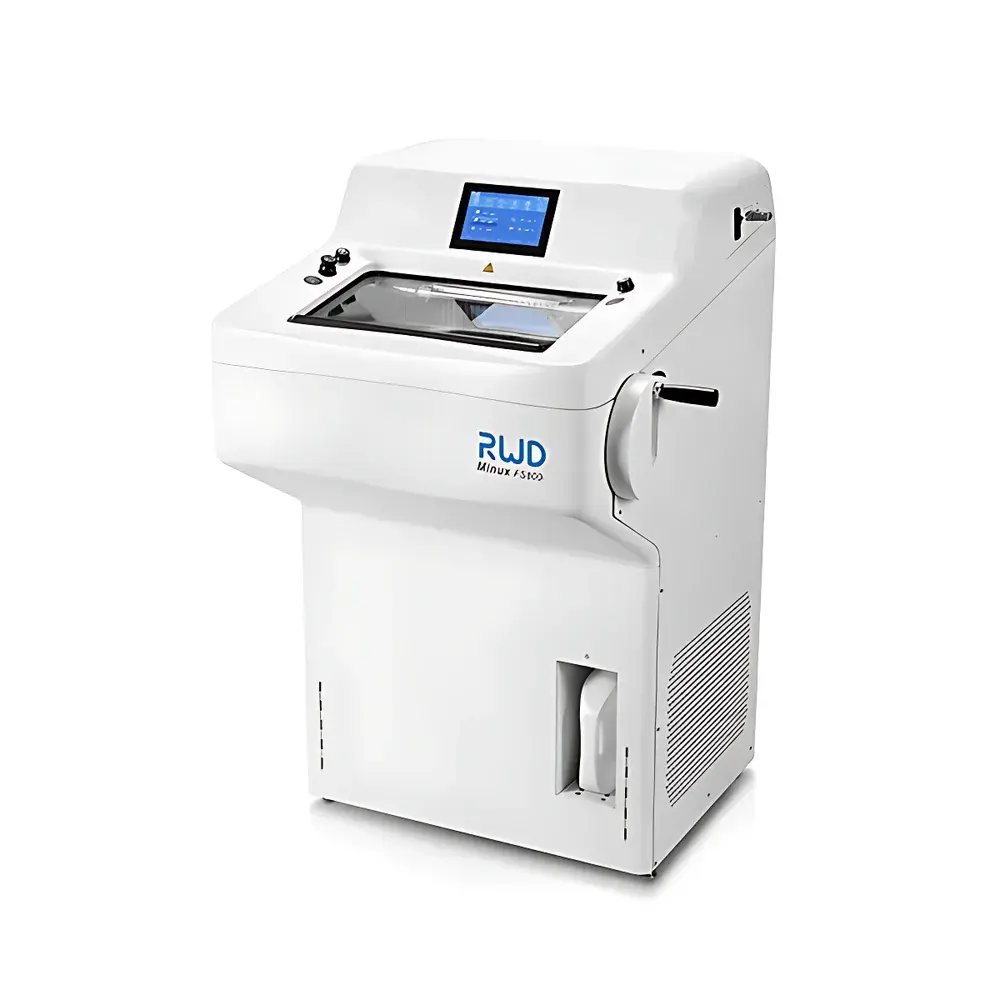
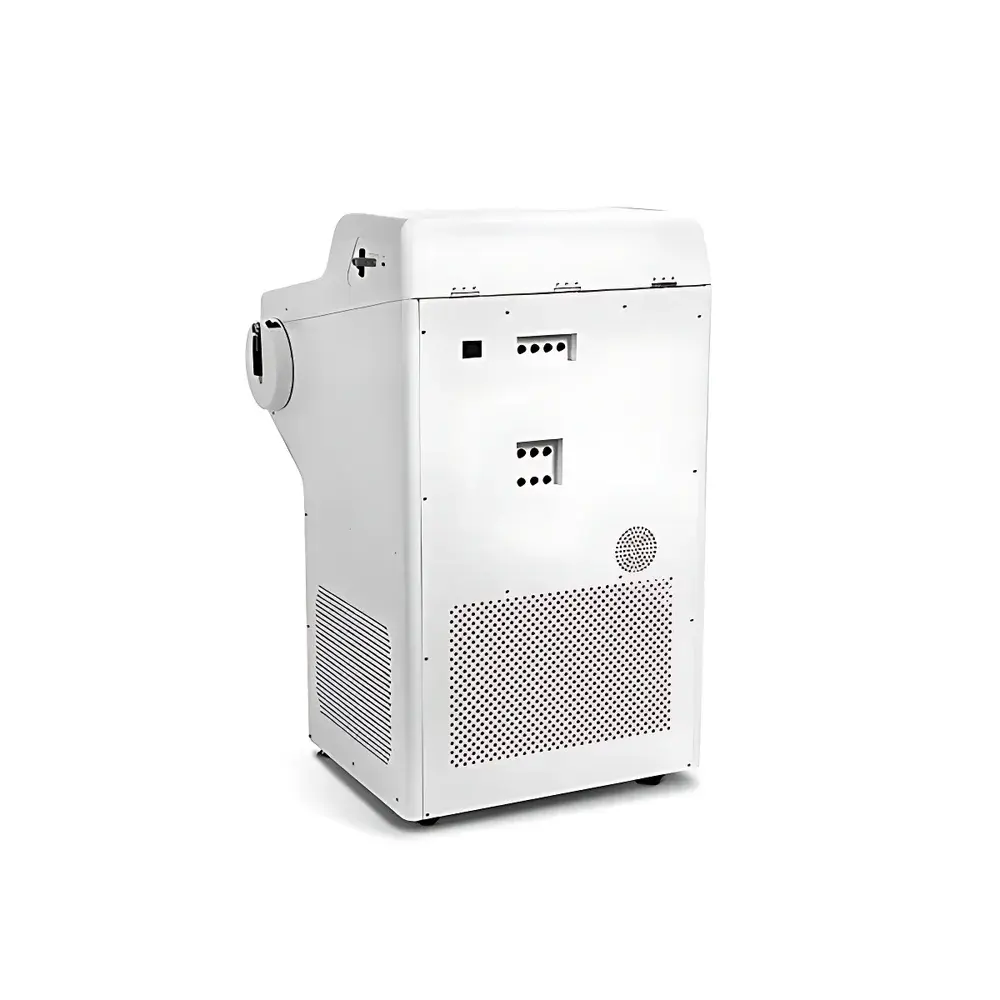
RWD FS800 Cryostat Microtome
| Brand | RWD |
|---|---|
| Origin | Guangdong, China |
| Manufacturer Type | Direct Manufacturer |
| Country of Origin | China |
| Model | FS800 |
| Quotation | Upon Request |
| Section Thickness Range | 0.5 – 100 µm |
| Horizontal Travel | 28 mm |
| Vertical Travel | 70 mm |
Overview
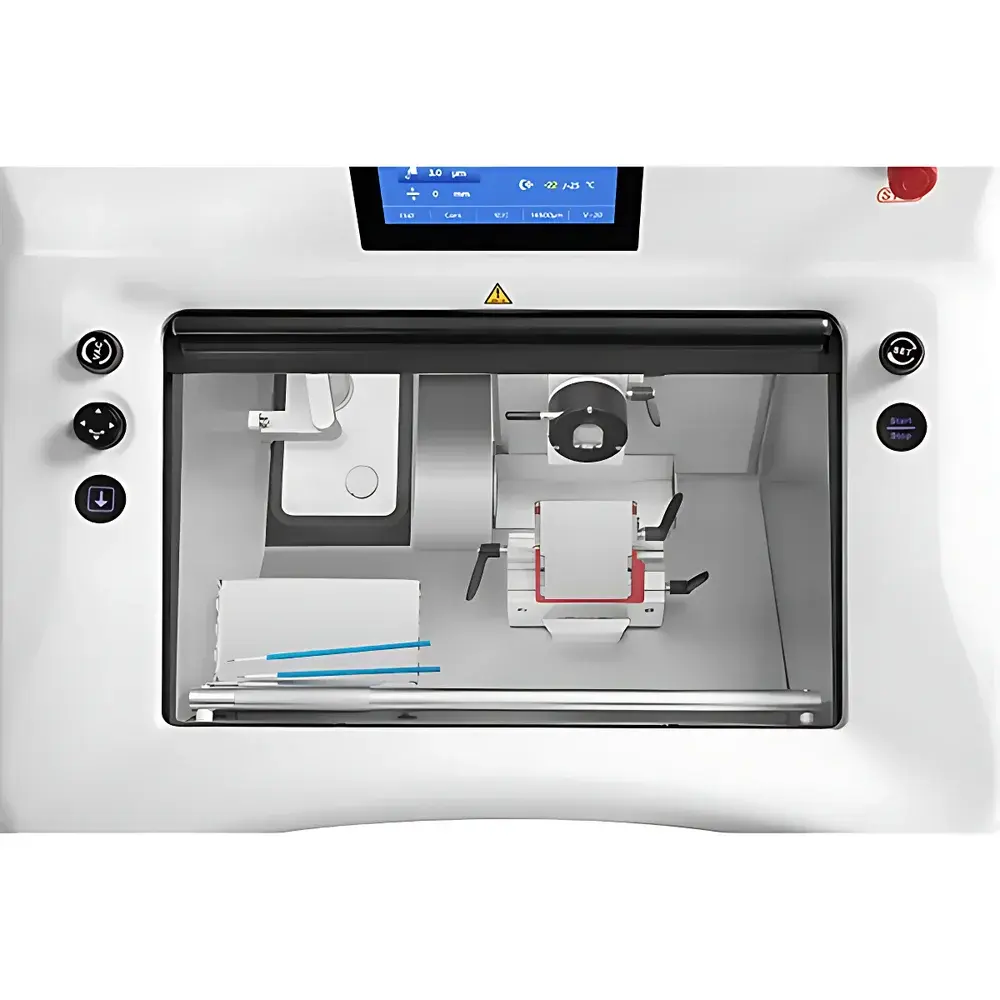
The RWD FS800 Cryostat Microtome is a semi-automatic, dual-zone refrigerated microtome engineered for high-fidelity frozen sectioning in both clinical and research settings. It operates on the principle of cryosectioning—maintaining biological specimens at sub-zero temperatures (typically −15 °C to −30 °C) to preserve structural integrity and antigenicity during thin-section preparation. Unlike single-refrigeration systems, the FS800 features independent cooling circuits for the specimen head and chamber body, enabling precise thermal decoupling to accommodate heterogeneous tissue types—from fatty breast biopsies to fibrous muscle or delicate neural tissues—without compromising section uniformity or knife-edge stability. Designed for intraoperative rapid diagnosis, it meets the temporal demands of frozen section analysis while supporting advanced downstream applications including immunohistochemistry (IHC), fluorescence in situ hybridization (FISH), and spatial transcriptomics workflows where RNA integrity and epitope preservation are critical.
Key Features
- Dual-Zone Active Refrigeration: Independent compressor-driven cooling for both specimen stage and chamber housing ensures stable thermal gradients; specimen head temperature is regulated via integrated Peltier elements and liquid-circulating coolant, minimizing ice crystal artifact formation.
- Precision Sectioning Mechanism: High-resolution 5-phase stepper motor drives horizontal advancement with micron-level repeatability; cross-roller linear guides and aerospace-grade aluminum feed slides eliminate mechanical backlash and thermal drift.
- Intelligent Thermal Management: Inverter-controlled refrigeration system maintains chamber temperature within ±0.3 °C over extended open-door operation—critical for sustained full-window cutting without condensation-induced knife frosting.
- Ozone-Free UV Decontamination: Internal UVC lamps (254 nm) operate continuously or on-demand across the full operating temperature range, validated per ISO 15858 for microbial reduction on exposed surfaces without generating hazardous ozone byproducts.
- Integrated Waste Fluid Management: Smart waste bottle detection includes real-time fill-level monitoring and overflow prevention logic; audible/visual alerts trigger when bottle is misaligned or capacity exceeds 95%, complying with CLIA and CAP biosafety requirements.
- Automated Power Cycling: Scheduled deep-sleep mode reduces energy consumption by >65% during non-operational hours; wake-on-schedule functionality enables pre-cooling activation ahead of shift start, ensuring immediate readiness without manual intervention.
Sample Compatibility & Compliance
The FS800 accommodates standard OCT-embedded tissue blocks (up to 30 × 30 × 15 mm), unmounted fresh-frozen specimens, and multi-layered composite samples used in spatial omics platforms. Its adjustable specimen orientation (±15° tilt, 360° rotation) supports oblique sectioning for anatomical alignment. The system conforms to IEC 61010-1:2010 for laboratory equipment safety and incorporates electromagnetic compatibility per EN 61326-1. For regulated environments, audit trail logging (user ID, timestamp, parameter changes) and password-protected method storage support GLP/GMP documentation requirements. While not FDA 510(k)-cleared, its design aligns with ASTM E2915-22 guidance for cryomicrotome validation in diagnostic histopathology laboratories.
Software & Data Management
The 7-inch capacitive touchscreen interface runs embedded Linux-based firmware with intuitive icon-driven navigation and multilingual support (English, Spanish, German, Simplified Chinese). All operational parameters—including section thickness, chamber temperature, specimen head temperature, cut speed, and UV cycle duration—are stored in non-volatile memory with versioned backup export via USB 2.0. Optional RS-232 and Ethernet interfaces enable integration into LIS/HIS networks using HL7 v2.5.3 messaging protocols. Firmware updates are delivered via signed .bin packages with SHA-256 verification to ensure integrity—supporting compliance with FDA 21 CFR Part 11 electronic record controls when paired with institutional identity management systems.
Applications
- Intraoperative frozen section diagnosis requiring turnaround times under 15 minutes per specimen
- Antigen-preserving sectioning for multiplex IHC and phospho-protein detection
- High-resolution serial sectioning for 3D reconstruction and digital pathology atlas generation
- Pre-analytical processing of tissues for spatially resolved RNA-seq (e.g., Visium, Xenium)
- Neuroscience studies involving myelinated axon mapping and synaptic density quantification
- Quality control of biobanked tissues prior to nucleic acid extraction
FAQ
What is the minimum achievable section thickness, and how is accuracy verified?
The FS800 achieves nominal 0.5 µm sections using calibrated micrometer adjustment; actual thickness consistency is confirmed via optical interferometry per ISO 10993-12 test protocols during factory calibration.
Does the system support third-party knife holders or disposable blades?
Yes—it accepts standard Leica-compatible cryo-knife cassettes and stainless-steel disposable blades (e.g., Feather S35, Sakura Tissue-Tek Ultra), with automatic blade alignment compensation.
Can UV decontamination be scheduled independently of refrigeration cycles?
Yes—UV exposure timing, duration, and intensity are fully programmable and decoupled from thermal control logic.
Is remote diagnostics or service access available?
Field-service engineers may initiate secure TLS-encrypted remote sessions via optional RWD Connect module, subject to customer network policy approval.
How does the FS800 manage condensation during prolonged open-chamber operation?
Active dry-air purge channels adjacent to the knife edge and specimen stage minimize moisture ingress; combined with inverter-stabilized refrigeration, this sustains dew-point suppression below −40 °C.



