
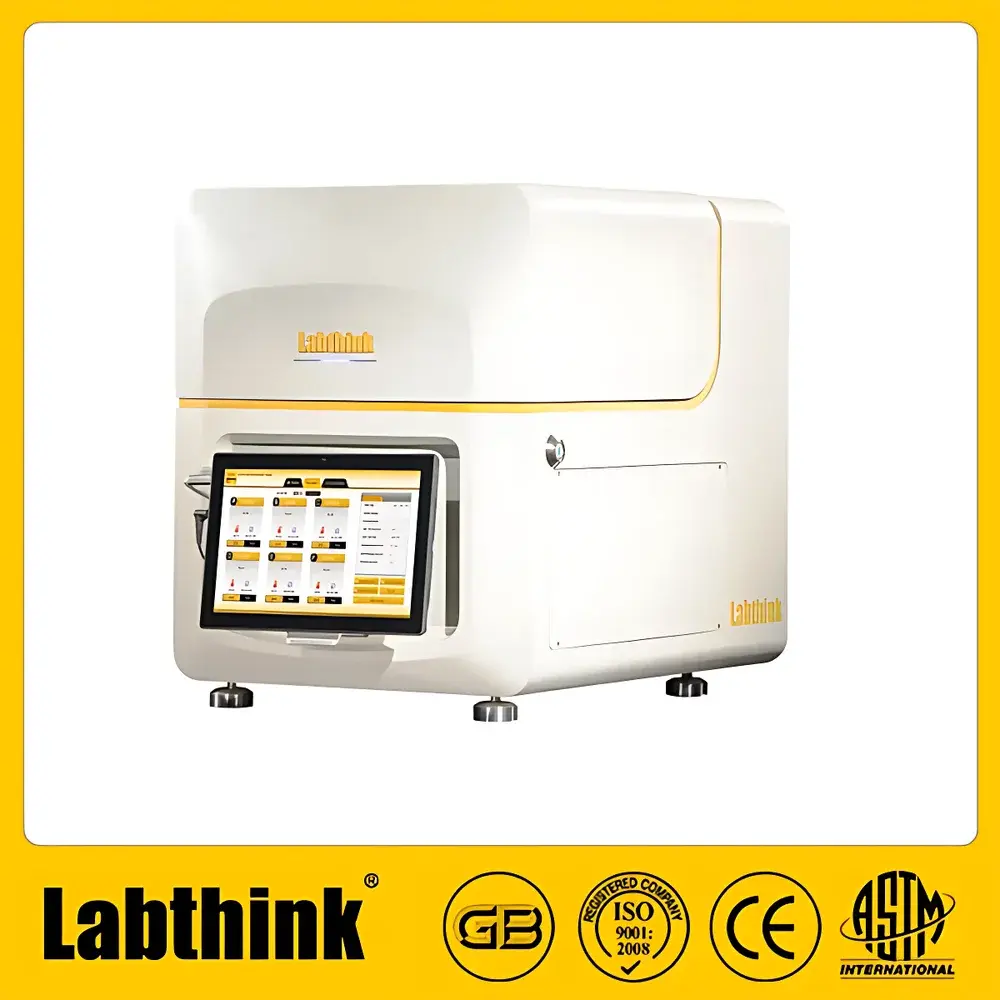
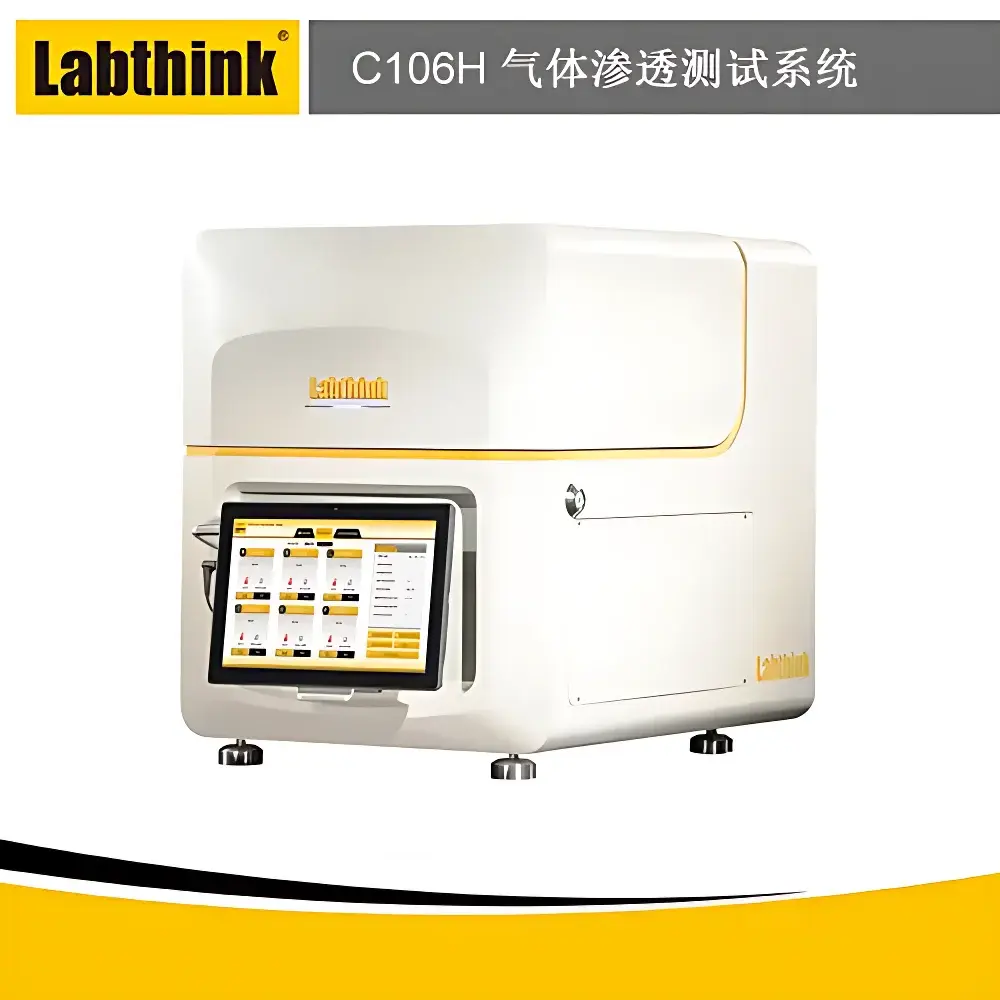
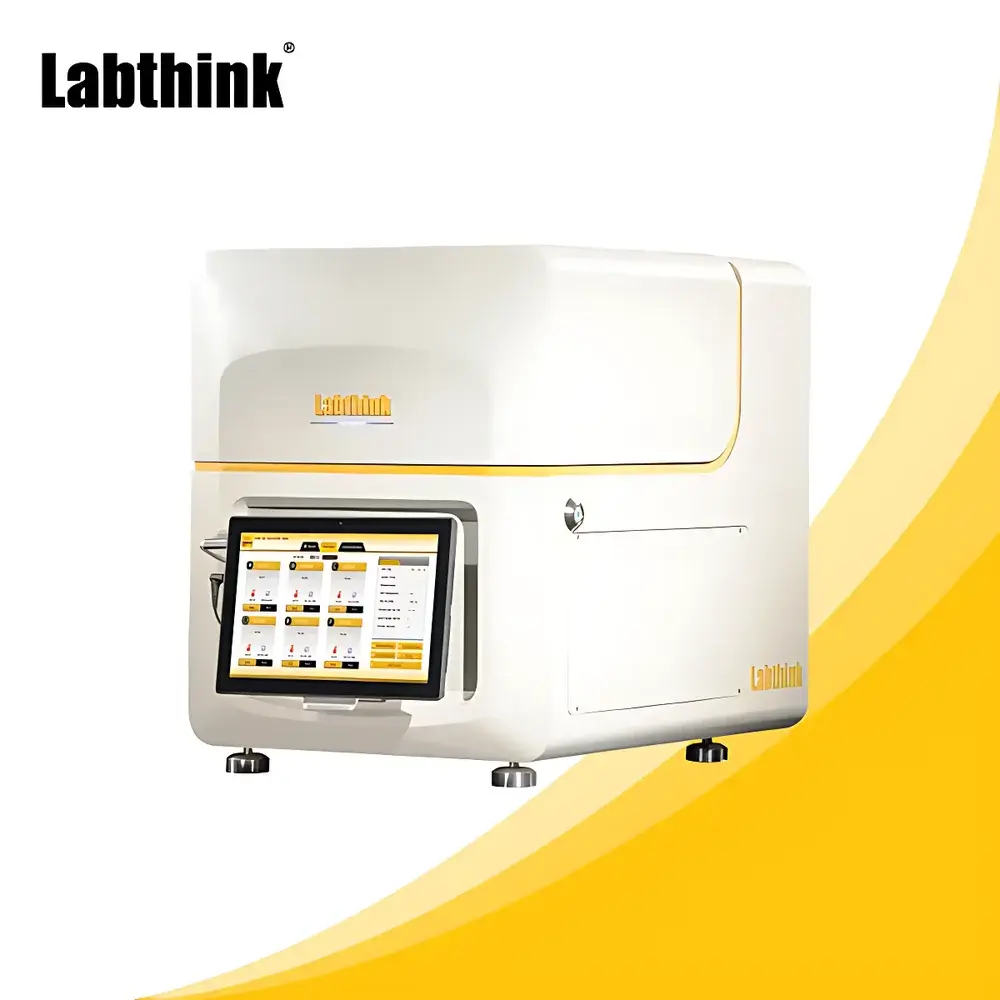
Labthink C106H Differential-Pressure Gas Permeability Analyzer for O₂ and CO₂ Transmission Rate Testing
| Brand | Labthink |
|---|---|
| Origin | Shandong, China |
| Manufacturer Type | OEM Manufacturer |
| Country of Origin | China |
| Model | C106H |
| Price Range | USD 14,000 – 98,000 |
| Test Principle | Differential-Pressure (Manometric) Method |
| Standards Compliance | ISO 15105-1, ISO 2556, ASTM D1434, GB/T 1038-2000, JIS K7126-1, YBB 00082003 |
| Test Gases | O₂, CO₂, N₂, H₂, CH₄ (customizable) |
| Temperature Range | 15–50 °C (standard) |
| Humidity Range | 0% RH (dry), or 5–90% ±2% RH (optional) |
| Vacuum Resolution | 0.01 Pa |
| Vacuum Accuracy | ±0.2% of reading (1–100% of sensor span) |
| Test Chamber Vacuum Level | ≤10 Pa |
| Test Area | 38.48 cm² (11.2 cm × 11.2 cm sample) |
| Max Sample Thickness | 3 mm |
| Pressure Control Range | 10–150 kPa (adjustable) |
| Pressure Stability | ±0.2 kPa |
| Test Range | 0.01–50,000 cm³/m²·24h·0.1MPa |
| Resolution | 0.001 cm³/m²·24h·0.1MPa |
| Temperature Resolution | 0.01 °C |
| Temperature Uniformity | ±0.15 °C |
| Chamber Count | 6 independent test chambers |
| Power Supply | 120 VAC ±10%, 60 Hz OR 220 VAC ±10%, 50 Hz |
| Net Weight | 100 kg |
| Dimensions | 600 mm × 490 mm × 660 mm |
| Gas Inlet | Φ6 mm polyurethane tubing (min. supply pressure: 550 kPa / 79.7 PSI) |
Overview
The Labthink C106H Differential-Pressure Gas Permeability Analyzer is an engineered solution for precise, high-reproducibility measurement of gas transmission rates—including oxygen (O₂), carbon dioxide (CO₂), nitrogen (N₂), hydrogen (H₂), and methane (CH₄)—through packaging materials under controlled temperature and pressure conditions. Operating on the manometric differential-pressure principle per ISO 15105-1 and ASTM D1434, the system quantifies permeation by establishing a defined pressure gradient across a sealed specimen, then monitoring the time-dependent pressure rise in the low-pressure chamber as gas molecules permeate through the material. This method enables direct calculation of oxygen transmission rate (OTR), carbon dioxide transmission rate (COTR), diffusion coefficient (D), solubility coefficient (S), and permeability coefficient (P = D × S). The C106H is designed specifically for quality control laboratories, R&D centers, and regulatory-compliant packaging development teams requiring traceable, repeatable, and auditable barrier performance data—particularly for high-barrier films, metallized laminates, pharmaceutical blister foils, and active packaging systems.
Key Features
- Six independent, parallel test chambers with standardized 38.48 cm² test area—triple the throughput of conventional single- or dual-chamber instruments.
- Rainbow Bridge™ test chamber architecture with 360° circumferential air-circulation heating, delivering ±0.15 °C temperature uniformity across all chambers and minimizing thermal drift during extended tests.
- Imported high-precision vacuum transducer (0.01 Pa resolution) enabling accurate quantification of ultra-low OTR values down to 0.01 cm³/m²·24h·0.1MPa—critical for evaluating aluminum-coated PET, SiOₓ-coated films, and multilayer barrier structures.
- Imported pneumatic actuation system with fail-safe sealing logic and <10⁻⁹ mbar·L/s leak rate certification, ensuring long-term integrity of the vacuum manifold and eliminating manual valve intervention.
- Integrated high-efficiency vacuum pump (ultimate vacuum ≤0.2 Pa) with automated start/stop sequencing and real-time vacuum status feedback—reducing operator dependency and energy consumption.
- Patented auto-compensation pressure regulation: maintains high-side chamber pressure within ±0.2 kPa deviation across the full 10–150 kPa range, supporting method flexibility for accelerated aging simulations and non-standard pressure protocols.
- 12-inch Windows-based industrial touchscreen interface with intuitive workflow navigation, one-touch auto-test initiation, and audible/visual lid-position alerts for safety and process compliance.
Sample Compatibility & Compliance
The C106H accommodates rigid and flexible planar specimens up to 3 mm thick—including monolayer plastics (PET, PP, PE), coextruded films, paper-plastic laminates, metallized foils (Al, AlOₓ), PVDC-coated substrates, rubber sheets, and silicon wafers. Its modular chamber design supports both standard and custom sample fixtures for irregular geometries or edge-sealed configurations. All hardware and firmware comply with ISO/IEC 17025 calibration traceability requirements. Optional CFR 21 Part 11-compliant software modules provide electronic signatures, audit trails, role-based access control, and data immutability—meeting FDA-regulated environments for pharmaceutical primary packaging validation. System validation documentation (IQ/OQ/PQ templates) and GMP-aligned installation support are available upon request.
Software & Data Management
Labthink’s proprietary PermeationWare™ v4.2 software delivers full lifecycle test management—from parameter definition and real-time curve visualization (gas transmission vs. time, P vs. T, Arrhenius plots) to statistical reporting and export-ready PDF/CSV outputs. Raw pressure-time datasets are stored with metadata tags (operator ID, calibration certificate ID, environmental logs). The platform supports configurable pass/fail thresholds per ASTM D3985 or USP , automatic outlier detection via Grubbs’ test, and batch-level summary reports aligned with ISO 5725 precision criteria. For enterprise integration, optional OPC UA and REST API interfaces enable bidirectional communication with LIMS and MES platforms. DataShield™ encryption ensures HIPAA- and GDPR-aligned storage of sensitive barrier performance records.
Applications
- Pharmaceutical packaging: OTR verification of cold-form blister foil, sachet laminates, and desiccant-containing pouches per USP and EP 3.2.1.
- Fresh food shelf-life modeling: CO₂ permeability profiling of modified atmosphere packaging (MAP) films used in meat, cheese, and produce applications.
- Electronics encapsulation: Barrier validation of moisture-sensitive OLED and flexible PCB packaging under accelerated temperature-humidity stress.
- Automotive interior materials: VOC-permeation screening of polymer composites exposed to cabin thermal cycling.
- Regulatory submissions: Generation of GLP-compliant barrier datasets for FDA 510(k), CE marking, and China NMPA registration dossiers.
FAQ
What gases can the C106H measure besides O₂ and CO₂?
The system is calibrated for O₂, N₂, and CO₂ as standard; H₂ and CH₄ testing is supported via optional gas-specific calibration kits and pressure-rated fittings.
Is humidity control integrated into the base model?
Relative humidity control (5–90% RH ±2%) is available as a factory-installed option; the standard configuration operates under dry (0% RH) conditions.
How does the six-chamber design impact measurement uncertainty?
Each chamber operates independently with dedicated sensors and thermal zones—eliminating cross-talk and enabling intra-batch repeatability studies per ISO 5725-2 with <2.5% RSD at 10 cm³/m²·24h·0.1MPa.
Can the C106H be validated for 21 CFR Part 11 compliance?
Yes—when equipped with the CFR21Part11 software module, it provides full electronic record integrity, audit trail generation, and user authentication per FDA guidance.
What maintenance intervals are recommended for the vacuum pump and sensors?
Vacuum pump oil change every 3,000 operating hours; transducer recalibration annually or after 10,000 test cycles—certified calibration services are available globally through Labthink’s authorized service network.






