
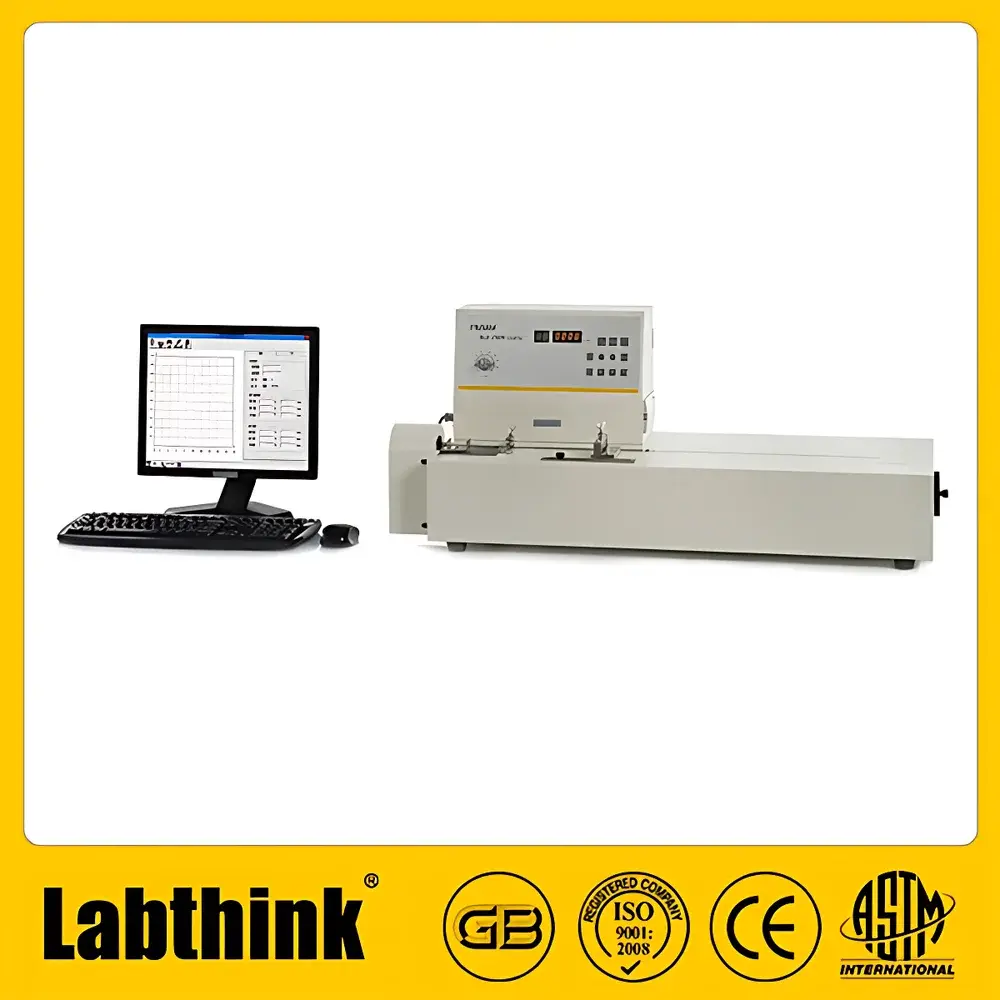
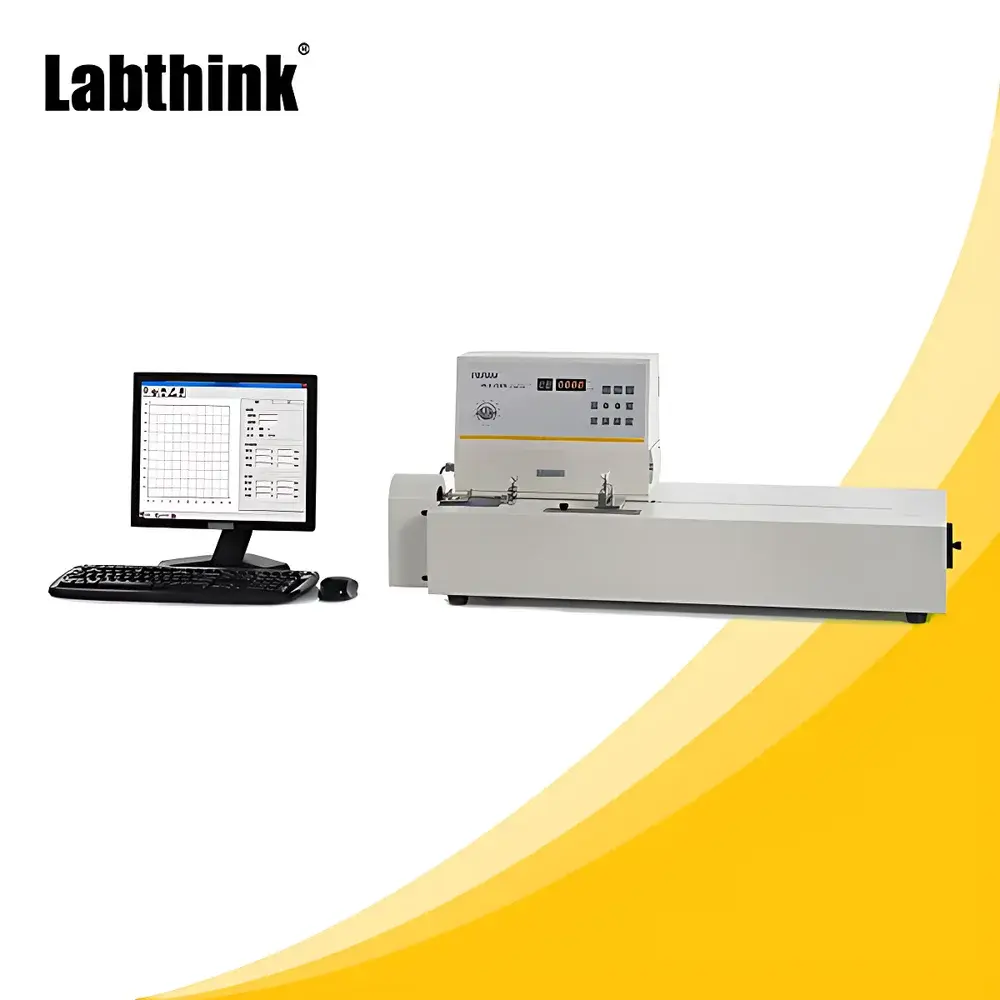
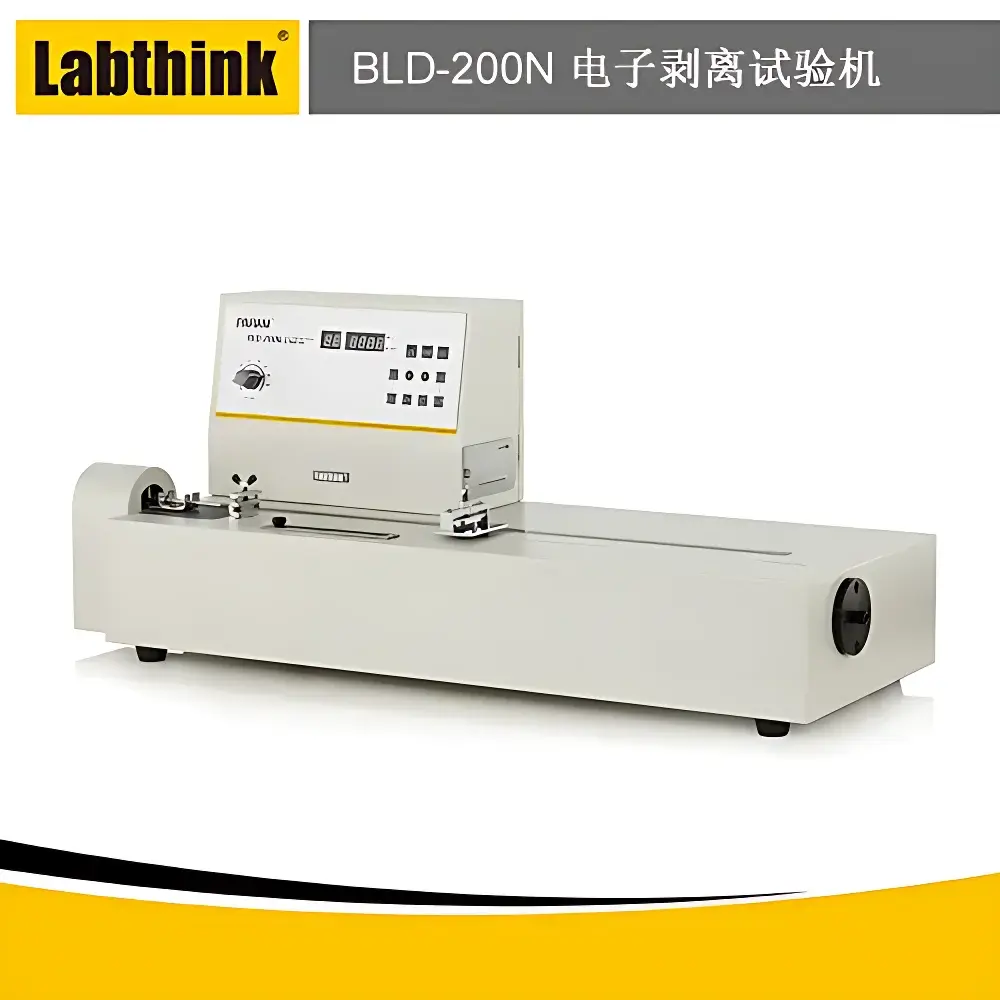
Labthink BLD-200N Digital Peel & Tensile Tester
| Brand | Labthink |
|---|---|
| Model | BLD-200N |
| Type | Electronic Peel and Tensile Testing Machine |
| Max Test Load | 0.5 kN |
| Load Accuracy Class | Class 1 |
| Travel Range | 500 mm |
| Displacement Resolution | 1 mm |
| Standard Load Cell | 200 N |
| Optional Load Cells | 10 N, 30 N, 50 N, 100 N, 500 N |
| Load Resolution | 0.01 N |
| Test Speeds | 50, 100, 150, 200, 250, 300, 500 mm/min |
| Specimen Width Capacity | ≤30 mm |
| Power Supply | 220 VAC 50 Hz / 120 VAC 60 Hz |
| Dimensions (L×W×H) | 1000 × 370 × 400 mm |
| Net Weight | 27 kg |
Overview
The Labthink BLD-200N Digital Peel & Tensile Tester is an electromechanical testing instrument engineered for precision measurement of peel adhesion, tensile strength, elongation, and related mechanical properties of pressure-sensitive adhesive tapes, labels, medical patches, protective films, release liners, laminated flexible packaging, synthetic leathers, woven bags, thin films, and paper-based substrates. It operates on the principle of controlled uniaxial force application—using a motor-driven crosshead to exert calibrated tension along a defined path—while capturing real-time load-displacement data. Designed in accordance with international standards for material characterization, the system supports both 90° and 180° peel configurations as well as tensile extension tests, enabling standardized evaluation of interfacial bond integrity, cohesive strength, and substrate deformation behavior under dynamic loading conditions.
Key Features
- Microprocessor-controlled architecture with LED digital display and intuitive PVC membrane keypad for direct parameter input and real-time result monitoring
- Dual-mode functionality: dedicated peel testing (90°/180°) and tensile testing modes, configurable via software or front-panel selection
- Seven programmable test speeds (50–500 mm/min), compliant with ASTM D3330, ISO 8510-2, and GB/T 2792-2014 requirements for controlled peel rate execution
- Class 1 load accuracy per GB/T 17200 and ISO 7500-1, with 0.01 N resolution across multiple interchangeable load cells (10 N to 500 N options)
- Integrated safety mechanisms including overload protection, mechanical limit switches, automatic zero-reset, and fault diagnostics
- High-contrast precision scale ruler mounted adjacent to the test zone for manual verification of specimen elongation
- Onboard thermal mini-printer and RS232 serial interface for immediate hardcopy output and legacy system integration
- Compatibility with Lystem™ Laboratory Data Sharing System for centralized storage, version-controlled reporting, and audit-ready traceability
Sample Compatibility & Compliance
The BLD-200N accommodates specimens up to 30 mm wide and 500 mm travel length, supporting standardized sample preparation per major regulatory and industrial protocols. It meets the mechanical and metrological requirements of GB/T 4850-2002 (low-speed unwind strength), GB/T 2792-2014 (peel strength of adhesive tapes), GB/T 2790 (180° peel of flexible-to-rigid substrates), GB/T 2791 (T-peel), GB 8808 (peel testing of soft composite plastics), GB/T 1040.3-2006 (tensile properties of plastics), QB/T 2358 (heat seal strength), and ISO 8510-2. Its rigid frame, linear guide motion system, and calibrated load train ensure high reproducibility across laboratories operating under GLP or internal quality assurance frameworks. While not inherently 21 CFR Part 11 compliant, optional software modules provide electronic signatures, audit trails, and user access control suitable for regulated environments.
Software & Data Management
Data acquisition is performed at ≥100 Hz sampling rate, recording peak load, minimum load, average load, and displacement at break. Each test generates a full stress–strain curve with exportable CSV and PDF reports. Statistical analysis includes group-wise calculation of mean, standard deviation, coefficient of variation, and confidence intervals. The Lystem™ platform enables role-based permissions, multi-user synchronization, metadata tagging (operator ID, environmental conditions, calibration date), and automated report generation aligned with ISO/IEC 17025 documentation practices. Raw data files retain original timestamps and instrument firmware version identifiers to support method validation and retrospective review.
Applications
- Core Adhesion Testing: 90° and 180° peel strength of PSAs on stainless steel, aluminum, or polymer substrates
- Tensile Characterization: Ultimate tensile strength, yield point, and elongation at break of films, foils, and laminates
- Functional Performance: Low-speed unwind force of release liners, cap removal torque simulation (via custom fixtures), and shear resistance of double-sided tapes
- Regulatory Support: Method development and routine QC for ISO 10993-5 cytotoxicity sample preparation, USP endotoxin barrier validation, and ASTM F88 seal integrity screening
- Material Development: Comparative evaluation of adhesive formulations, coating thickness effects, and surface energy modifications
FAQ
What peel angles does the BLD-200N support?
The instrument is configured for both 90° and 180° peel geometries using standardized test plates and alignment jigs per GB/T 2792-2014 and ISO 8510-2.
Can it perform shear adhesion testing?
Yes—when equipped with optional shear fixtures and appropriate mounting hardware, the system executes static and dynamic shear tests per ASTM D3654/D3654M.
Is calibration traceable to national standards?
All load cells are factory-calibrated against NIST-traceable reference standards; users receive calibration certificates with uncertainty budgets and recalibration intervals.
Does it meet FDA requirements for pharmaceutical packaging testing?
While the base hardware complies with mechanical aspects of USP and ISO 11607, full 21 CFR Part 11 compliance requires the Lystem™ software package with validated electronic signature and audit trail modules.
What maintenance is required?
Routine checks include lubrication of lead screws every 6 months, verification of crosshead alignment, and annual verification of load cell linearity and displacement encoder accuracy by authorized service personnel.



