
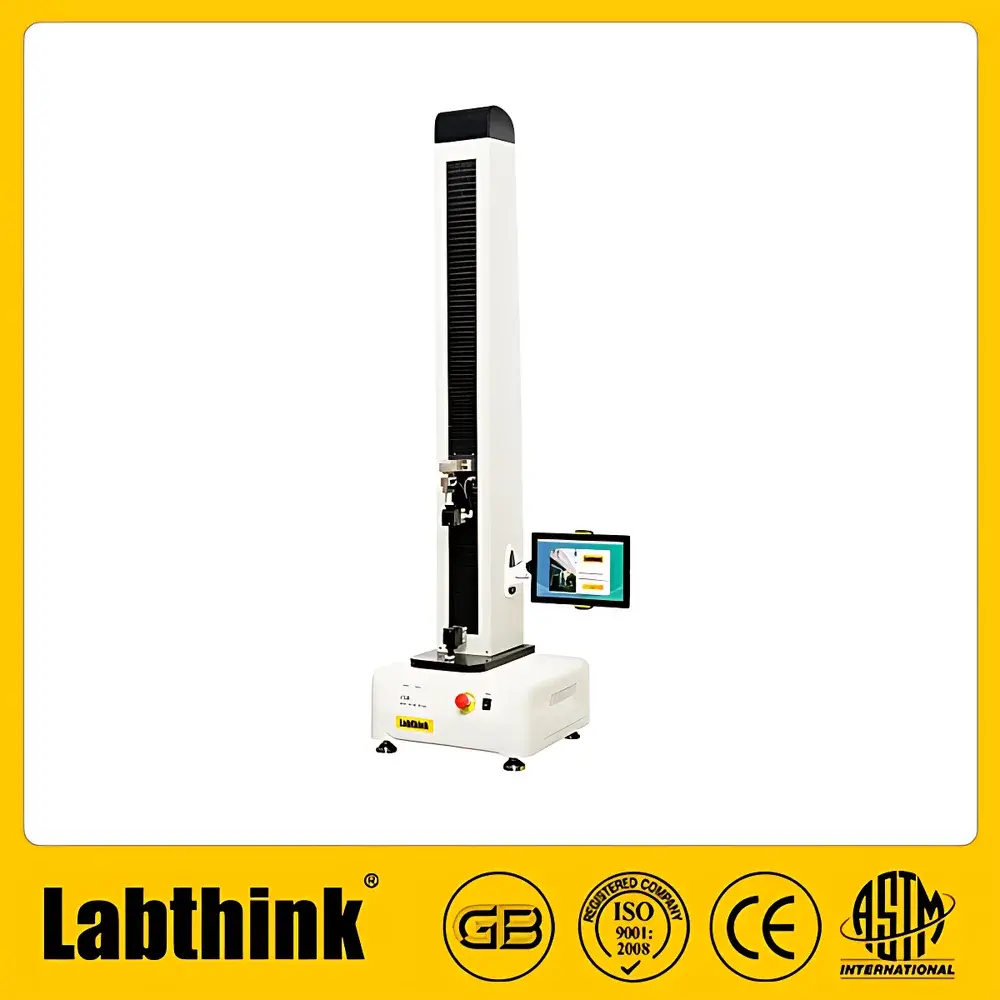
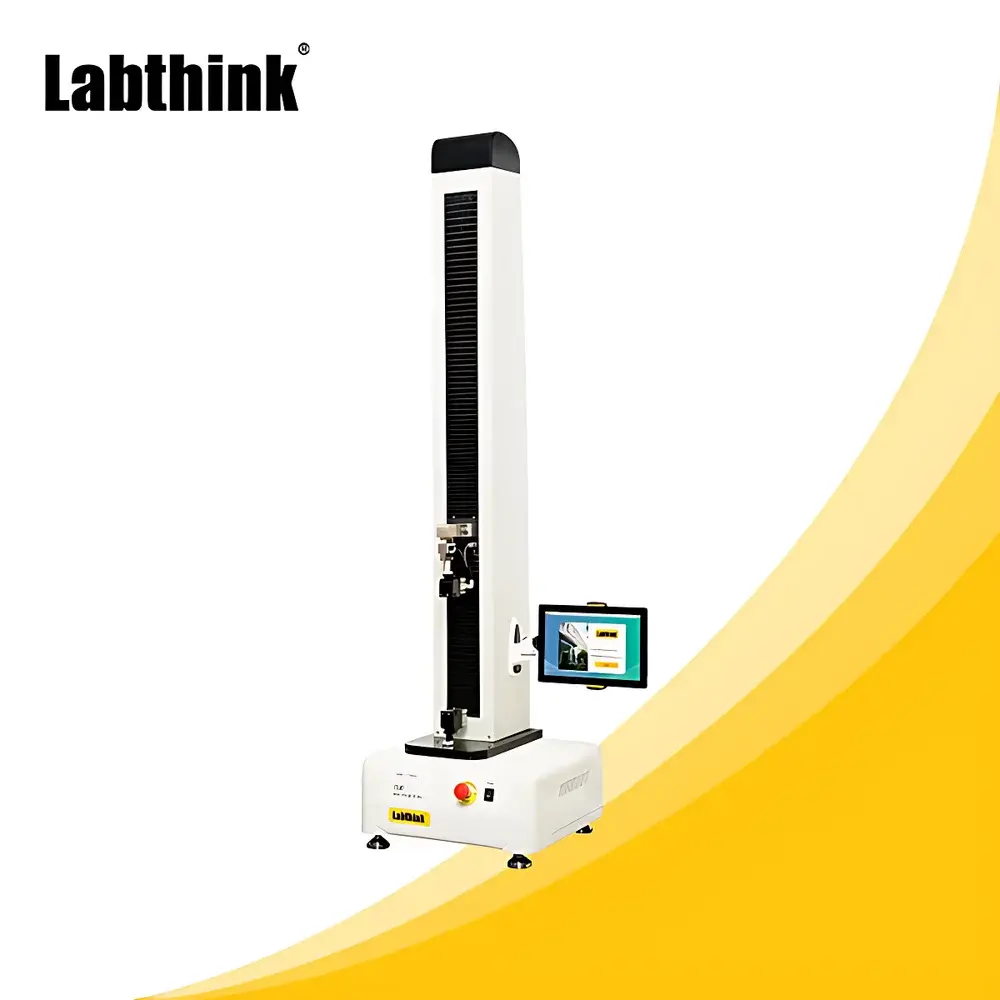
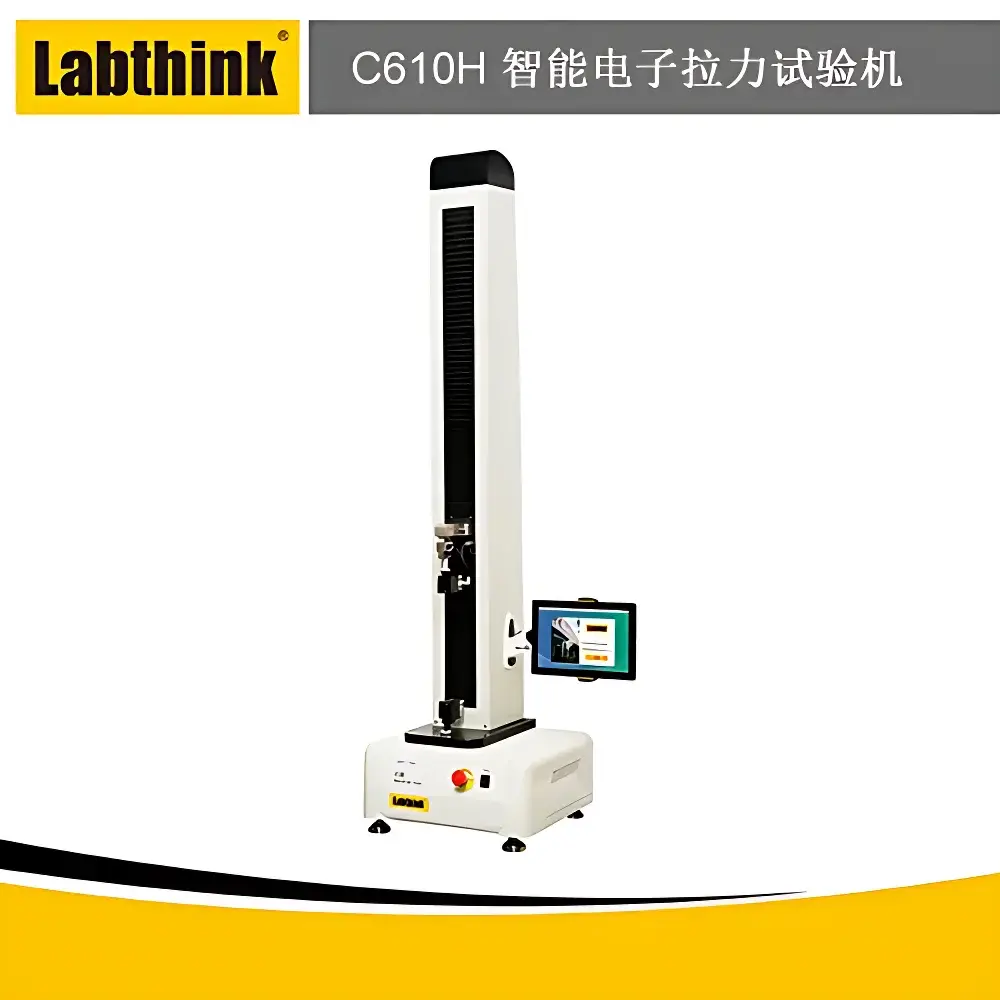
Labthink C610H Intelligent Electronic Tensile Testing Machine
| Brand | Labthink |
|---|---|
| Model | C610H |
| Type | Electromechanical Universal Tensile Tester |
| Max Load Capacity | 1 kN |
| Force Sensor Options | 10 N, 50 N, 100 N, 250 N, 500 N (standard), 1000 N |
| Force Accuracy | ±0.5% of reading (2–100% FS), ±0.01% FS (0–2% FS) |
| Displacement Resolution | 0.1 mm |
| Test Stroke | 1000 mm |
| Speed Range | 0.05–500 mm/min (±0.5% accuracy across 1–100% of set speed) |
| Clamping | Pneumatic, air-supplied (0.5–0.7 MPa) |
| Sample Width | 30 mm (standard), 50 mm (optional) |
| Compliance | ASTM D882, ASTM D1938, ASTM F88, ISO 37, GB/T 1040.1–1040.5, GB/T 2792, GB/T 4850, GB/T 12914, JIS P8113, QB/T 2358 |
Overview
The Labthink C610H Intelligent Electronic Tensile Testing Machine is a microprocessor-controlled, electromechanical universal testing system engineered for high-precision mechanical property evaluation of flexible and semi-rigid packaging and functional materials. Based on the fundamental principles of uniaxial tensile loading and controlled displacement measurement, the C610H applies calibrated axial force to standardized specimens while recording load–displacement curves in real time. Its architecture adheres to classical mechanics-based test methodologies defined in international standards including ASTM E4 (load verification), ISO 7500-1 (static calibration), and GB/T 16825.1 (verification of force-measuring systems). Designed specifically for quality control laboratories in pharmaceutical, food, medical device, and packaging manufacturing sectors, the instrument delivers traceable, repeatable, and auditable mechanical performance data required under GLP, GMP, and ISO/IEC 17025 frameworks.
Key Features
- Modular force sensing architecture with interchangeable high-stability load cells (10 N to 1000 N), enabling optimal resolution and dynamic range for diverse material stiffness profiles—from ultra-thin barrier films (<10 µm) to laminated pouches and composite backsheet materials.
- Precision servo-motor-driven crosshead with recirculating ball screw transmission and multi-axis positioning feedback, ensuring displacement linearity ≤ ±0.5% and speed stability across the full 0.05–500 mm/min range.
- Pneumatically actuated clamping system (0.5–0.7 MPa supply pressure) with adjustable jaw pressure and parallel alignment mechanism, minimizing specimen slippage and edge damage during high-strain-rate tests such as tear propagation or peel initiation.
- Embedded industrial-grade touchscreen computing platform (Android OS-based) with local data storage, eliminating dependency on external PCs and mitigating risks associated with OS-level vulnerabilities or software conflicts.
- Preloaded, standards-compliant test modules—including tensile strength & elongation at break (GB/T 1040.2), 180° peel (GB/T 2792), heat seal strength (ASTM F88), puncture resistance (GB/T 10004 Annex B), and opening force (ISO 8536-4)—each fully configurable per ISO/IEC 17025 method validation requirements.
- Hardware-level data segregation architecture: raw sensor signals are digitized and stored directly on internal flash memory prior to any software-level processing, satisfying FDA 21 CFR Part 11 audit trail and electronic signature prerequisites when paired with optional DataShield™ module.
Sample Compatibility & Compliance
The C610H accommodates specimens up to 1000 mm travel length and 50 mm width, supporting standardized geometries per ASTM D638 Type V, ISO 527-3, and GB/T 1040.3. It is routinely deployed for mechanical characterization of polymer films (PET, PE, PP, PVDC), aluminum foils, nonwovens, medical adhesives, blister lidding, IV bag membranes, and pharmaceutical closure systems (e.g., rubber stoppers, flip-off caps, and child-resistant packaging). All test routines comply with mandatory regulatory references including USP (package integrity), ISO 11607-1 (sterile barrier systems), and EU Annex 15 (validation of packaging performance). Optional GMP-compliant computer system qualification packages include IQ/OQ documentation templates aligned with PIC/S TR-13 and WHO Technical Report Series No. 961.
Software & Data Management
The embedded test software provides ISO/IEC 17025-compliant reporting with automatic calculation of tensile modulus, yield point, breaking elongation, peel adhesion energy (J/m²), and seal strength (N/15 mm). Raw data export is supported in CSV, XML, and PDF formats with embedded metadata (operator ID, timestamp, environmental conditions, calibration certificate ID). The optional DataShield™ module enables centralized data aggregation via secure HTTPS API endpoints, role-based access control (RBAC), and integration with LIMS or MES platforms using HL7 or ASTM E1384 message schemas. Audit trails record all user actions—including method edits, result overrides, and report generation—with immutable timestamps and digital signatures compliant with 21 CFR Part 11 Subpart B.
Applications
Beyond standard tensile and peel testing, the C610H supports over 100 application-specific configurations via interchangeable fixtures: puncture testing of IV bag ports (ISO 8536-4), torque-independent cap removal force (ASTM D3474), simulated skin penetration resistance (ISO 10993-5), catheter connector separation (ISO 80369-7), and controlled-angle delamination of multilayer pouch seals. Custom fixture design services are available for non-standard geometries—such as vial stopper extraction paths or syringe plunger detachment profiles—validated per ISO/IEC 17025 clause 5.4.3. Routine applications include QC release testing of primary packaging components, accelerated aging correlation studies, and formulation benchmarking across polymer grades and adhesive chemistries.
FAQ
What calibration standards does the C610H support?
The system complies with ISO 7500-1 Class 0.5 for force verification and ISO 4892-1 for displacement accuracy. Certified reference load cells traceable to NIM (China) or NIST (USA) are provided with each shipment.
Is the instrument suitable for regulated pharmaceutical environments?
Yes—when equipped with the GMP Computer System Qualification Kit and DataShield™, it meets ALCOA+ data integrity principles and supports full 21 CFR Part 11 compliance including electronic signatures, audit trails, and secure data archiving.
Can test methods be modified without requalification?
Method modifications affecting critical parameters (e.g., speed, gauge length, preload) require documented risk assessment and partial revalidation per ICH Q5E; minor parameter adjustments within validated ranges do not necessitate full requalification.
What pneumatic infrastructure is required?
A clean, oil-free compressed air source delivering 0.5–0.7 MPa (72.5–101.5 psi) through a 4 mm PU tube is required; Labthink recommends inline filtration (0.01 µm) and moisture traps for long-term valve reliability.
How is traceability maintained across multiple operators and shifts?
Each test session logs operator credentials, environmental temperature/humidity (via optional external sensor input), calibration status, and firmware version. All records are cryptographically hashed and archived with SHA-256 checksums for tamper detection.



