
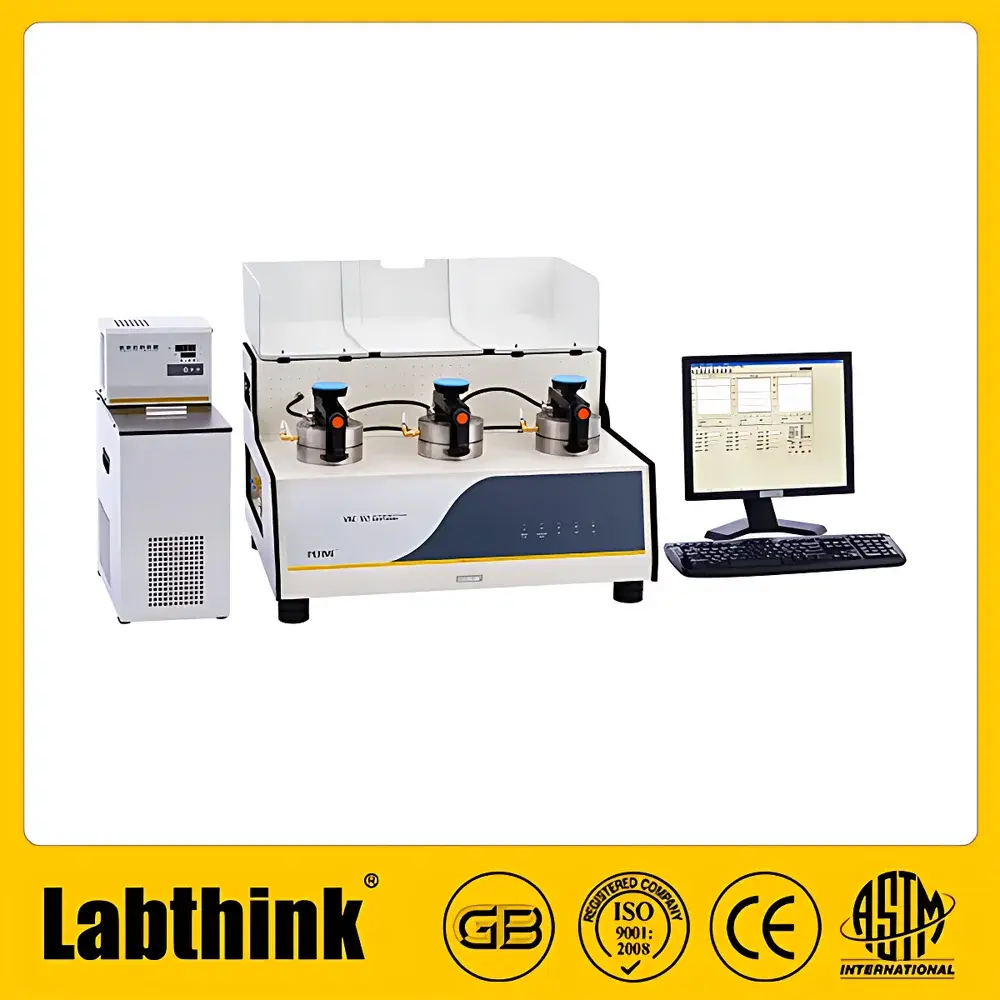
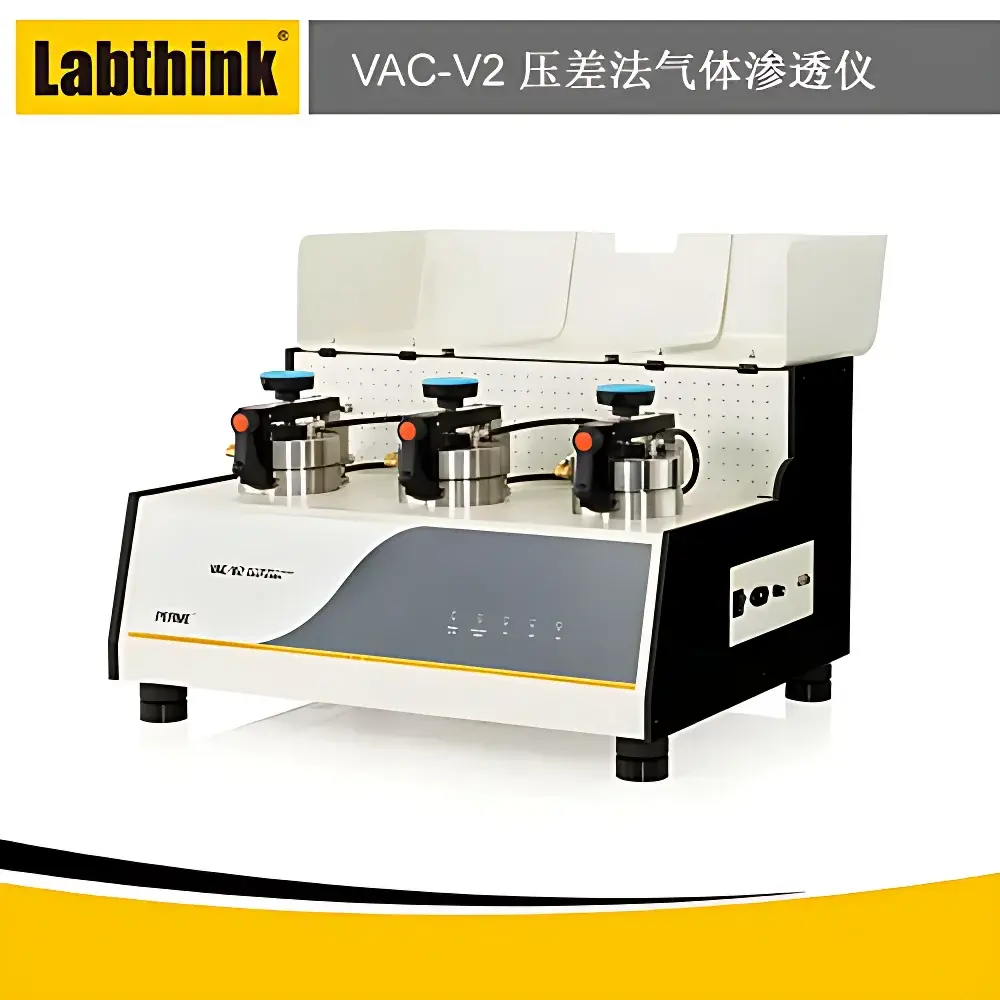
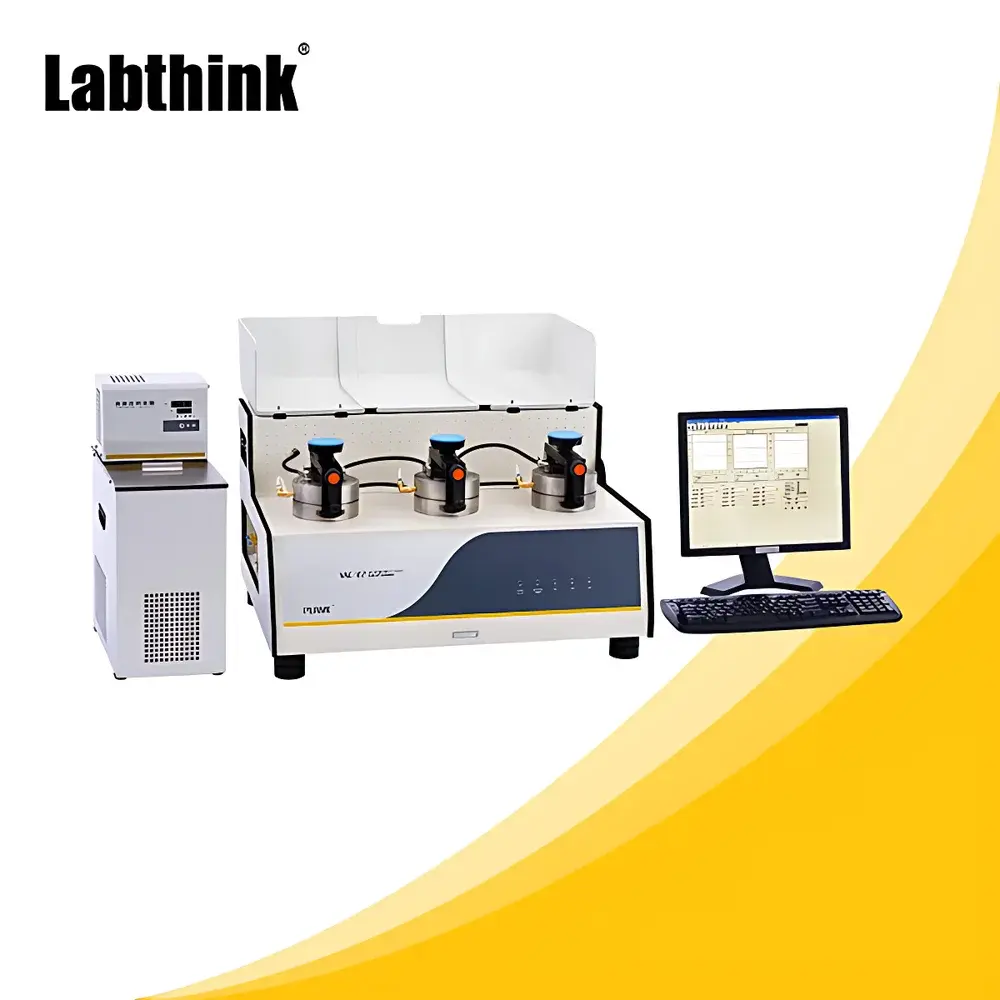
Labthink VAC-V2 Differential Pressure Gas Permeability Tester (Triple-Test-Chamber)
| Brand | Labthink |
|---|---|
| Origin | Shandong, China |
| Manufacturer Type | OEM/ODM Manufacturer |
| Country of Origin | China |
| Model | Labthink VAC-V2 |
| Price Range | USD 14,000 – 85,000 |
| Test Principle | Differential Pressure (ASTM D1434 / ISO 15105-1 / GB/T 1038-2000) |
| Test Gases | O₂, N₂, CO₂ (user-supplied) |
| Measurement Range | 0.05–50,000 cm³/m²·24h·0.1MPa (standard) |
| Chamber Count | 3 independent test chambers |
| Vacuum Resolution | 0.1 Pa |
| Minimum Test Chamber Vacuum | <20 Pa |
| Temperature Control Range | 5–95 °C |
| Temp. Accuracy | ±0.1 °C |
| Humidity Control Range | 0% RH, 2–98.5% RH, 100% RH (optional humidity generator required) |
| Humidity Accuracy | ±1% RH |
| Sample Diameter | Φ97 mm |
| Effective Test Area | 38.48 cm² |
| Test Pressure Differential | −0.1 to +0.1 MPa |
| Gas Supply Pressure | 0.4–0.6 MPa |
| Interface | Ø6 mm polyurethane tubing |
| Dimensions (L×W×H) | 760 × 575 × 450 mm |
| Weight | 88 kg |
| Power | AC 220 V, 50 Hz |
Overview
The Labthink VAC-V2 Differential Pressure Gas Permeability Tester is a precision-engineered instrument designed for quantitative determination of gas transmission rates through polymeric and laminated packaging materials under controlled temperature and pressure differentials. Operating on the fundamental principle of differential pressure (also known as the manometric or barometric method), the VAC-V2 measures the rate at which gases—primarily oxygen (O₂), nitrogen (N₂), and carbon dioxide (CO₂)—permeate across a planar specimen when subjected to a defined partial pressure gradient. This method conforms rigorously to international standards including ASTM D1434, ISO 15105-1, ISO 2556, JIS K7126-1, GB/T 1038-2000, and YBB00082003, ensuring regulatory acceptability in global pharmaceutical, food, and medical device packaging validation workflows. Unlike sensor-based methods, the differential pressure approach delivers absolute, calibration-traceable results without reliance on electrochemical or optical transducers—making it particularly suitable for high-barrier films, metallized substrates, and multilayer coextrusions where low permeation fluxes demand high signal-to-noise ratio and long-term measurement stability.
Key Features
- Triple independent test chambers enable concurrent evaluation of three identical or dissimilar specimens—significantly improving laboratory throughput while preserving data integrity per sample.
- High-resolution vacuum control (0.1 Pa resolution) and sub-20 Pa base vacuum capability ensure accurate quantification of ultra-low permeation rates, especially critical for aluminum foil-laminates and SiOₓ-coated PET.
- Precision temperature regulation (±0.1 °C over 5–95 °C range) supports Arrhenius-based diffusion modeling and accelerated aging studies per ISO 11607-1 Annex B.
- Dual algorithmic test termination logic—proportional convergence and fuzzy logic decision engines—minimizes operator-dependent variability and improves repeatability across extended-duration tests (e.g., >120 h).
- Expandable measurement range (up to 500,000 cm³/m²·24h·0.1MPa with optional volumetric extension module) accommodates both ultra-high-barrier packaging and highly permeable nonwovens or foams within a single platform.
- Configurable for hazardous gas testing—including toxic or flammable species—via factory-modified gas handling pathways compliant with IEC 60079-0 intrinsic safety guidelines (requires formal risk assessment and site-specific certification).
- Integrated RS232 serial interface and native Lystem™ Laboratory Data Management System compatibility enable audit-ready data traceability, electronic signature support, and automated report generation aligned with FDA 21 CFR Part 11 and EU Annex 11 requirements.
Sample Compatibility & Compliance
The VAC-V2 accepts rigid and flexible planar specimens up to Φ97 mm in diameter, covering standard formats used in blister foil, pouch lamination, sachet film, and sterile barrier systems. Compatible material classes include monolayer polymers (LDPE, PP, PET), coextruded structures (e.g., EVOH/PE), metallized films (AlOx, SiOx), aluminum laminates, paper-plastic composites, and pharmaceutical-grade cold-forming foils. All measurements are referenced to standardized test area (38.48 cm²) and normalized to 0.1 MPa pressure differential—enabling direct cross-comparison with literature values and supplier specifications. The system supports full compliance documentation packages for GLP, GMP, and ISO/IEC 17025-accredited laboratories, including IQ/OQ/PQ protocols, uncertainty budgets per GUM (JCGM 100:2008), and calibration certificates traceable to NIM (China) or NIST (USA).
Software & Data Management
Controlled via dedicated Windows-based software, the VAC-V2 executes fully automated test sequences—from initial vacuum conditioning and pressure equilibration to real-time permeation curve acquisition and kinetic parameter derivation. Software modules compute not only gas transmission rate (GTR), but also derived transport coefficients: diffusion coefficient (D), solubility coefficient (S), and permeability coefficient (P = D × S), all reported in SI-aligned units (e.g., m²/s, cm³(STP)/cm³·Pa, cm³/m²·day·Pa). Raw pressure-vs.-time datasets are stored in encrypted binary format with embedded metadata (operator ID, timestamp, environmental logs, calibration history). Lystem™ integration enables centralized database archiving, role-based access control, versioned report templates, and automated PDF/CSV export with digital signatures—meeting ALCOA+ (Attributable, Legible, Contemporaneous, Original, Accurate, Complete, Consistent, Enduring, Available) data integrity criteria.
Applications
- Pharmaceutical packaging qualification: Moisture and oxygen barrier validation of PTP blisters, cold-forming foils, and child-resistant pouches per USP and EP 3.2.1.
- Food packaging shelf-life modeling: Correlation of O₂ transmission rates with lipid oxidation kinetics in snack, coffee, and ready-to-eat meal packaging.
- Medical device sterile barrier system (SBS) verification: ISO 11607-1 compliance testing for Tyvek®/PET laminates, peelable pouches, and thermoformed trays.
- R&D of next-generation barrier coatings: Quantitative benchmarking of nanocomposite, plasma-deposited, and bio-based barrier layers against commercial benchmarks.
- Regulatory submission support: Generation of technical dossiers for FDA 510(k), CE Marking (MDR 2017/745), and PMDA approval requiring documented permeation performance under worst-case climatic conditions.
FAQ
What gases can be tested with the VAC-V2?
Standard configurations support O₂, N₂, and CO₂ using user-supplied gas cylinders regulated to 0.4–0.6 MPa. Custom modifications for H₂, He, or CH₄ require prior engineering review and safety validation.
Is humidity control built-in?
Relative humidity control is available as an optional add-on module; base configuration supports dry-gas testing only. Humidity generation (0–100% RH, ±1% RH accuracy) requires separate purchase and integration.
How is calibration verified?
The system includes certified reference films traceable to national metrology institutes. Daily verification uses pre-characterized standard membranes with assigned GTR uncertainties ≤2.5% (k=2). Full recalibration is recommended annually or after major maintenance.
Can test data be exported for statistical process control (SPC)?
Yes—raw time-series pressure data and final permeability outputs export directly to CSV, Excel, or LIMS-compatible XML. Statistical summaries (X̄/R charts, Cpk analysis) are auto-generated within Lystem™ or third-party SPC platforms via ODBC connectivity.
Does the VAC-V2 meet FDA 21 CFR Part 11 requirements?
When deployed with Lystem™ v3.2 or later, the system provides full electronic record and signature functionality—including audit trails, user authentication, and immutable data archiving—fully compliant with Part 11 Subpart B controls.



