
Vertical Temperature and Humidity Controlled Chamber – OEM Manufacturer Supply
No specifications available.
Overview
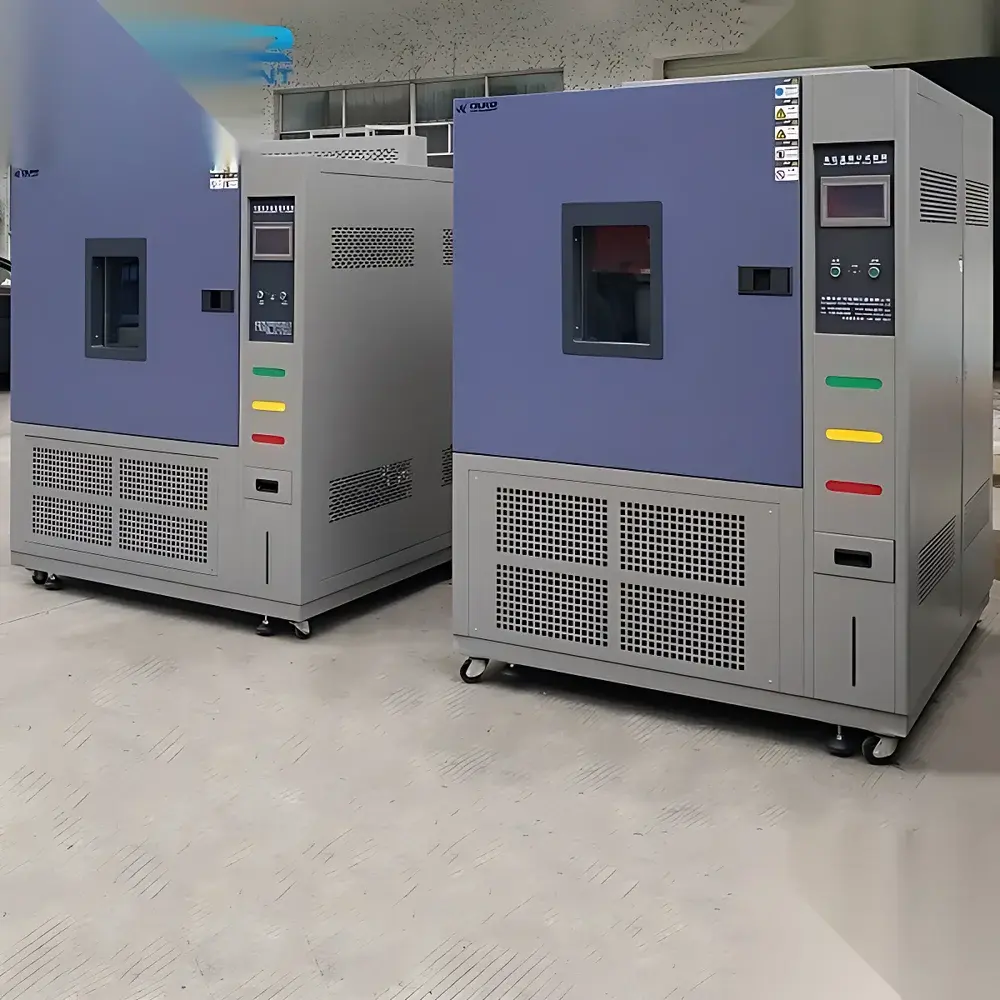
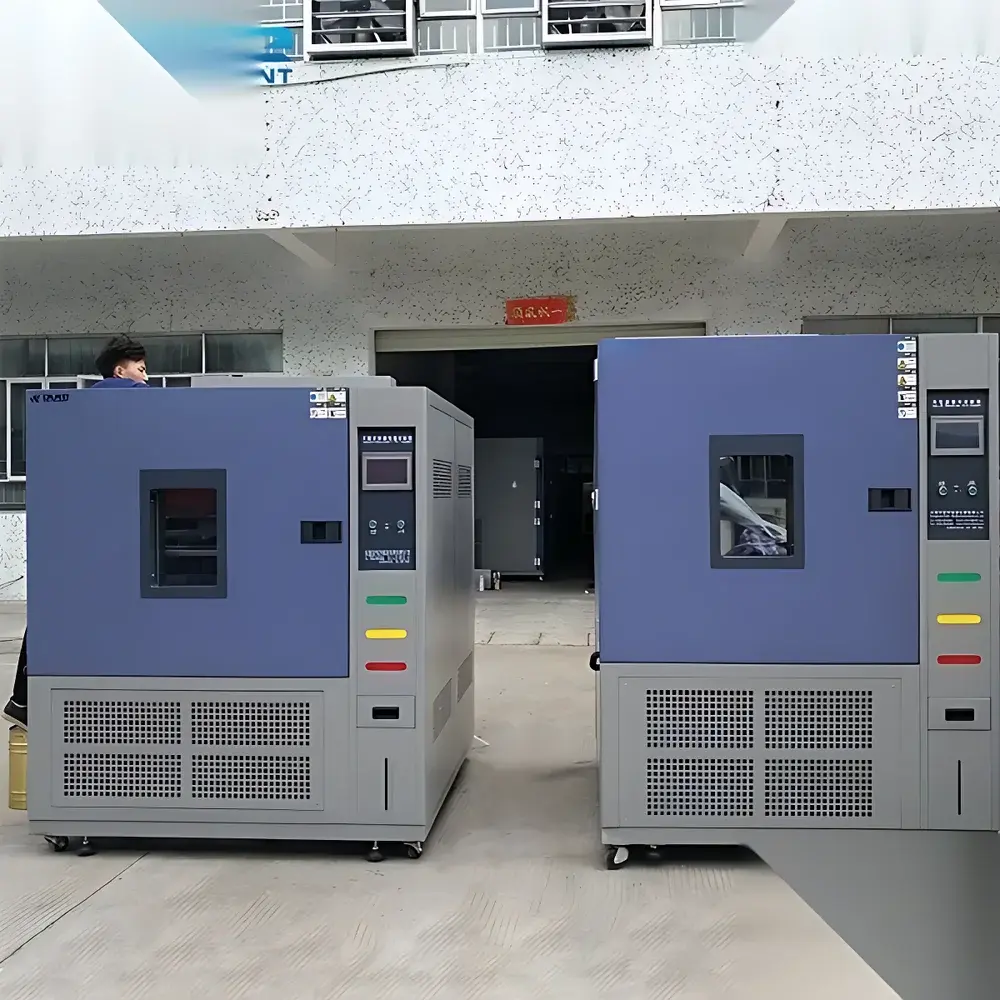
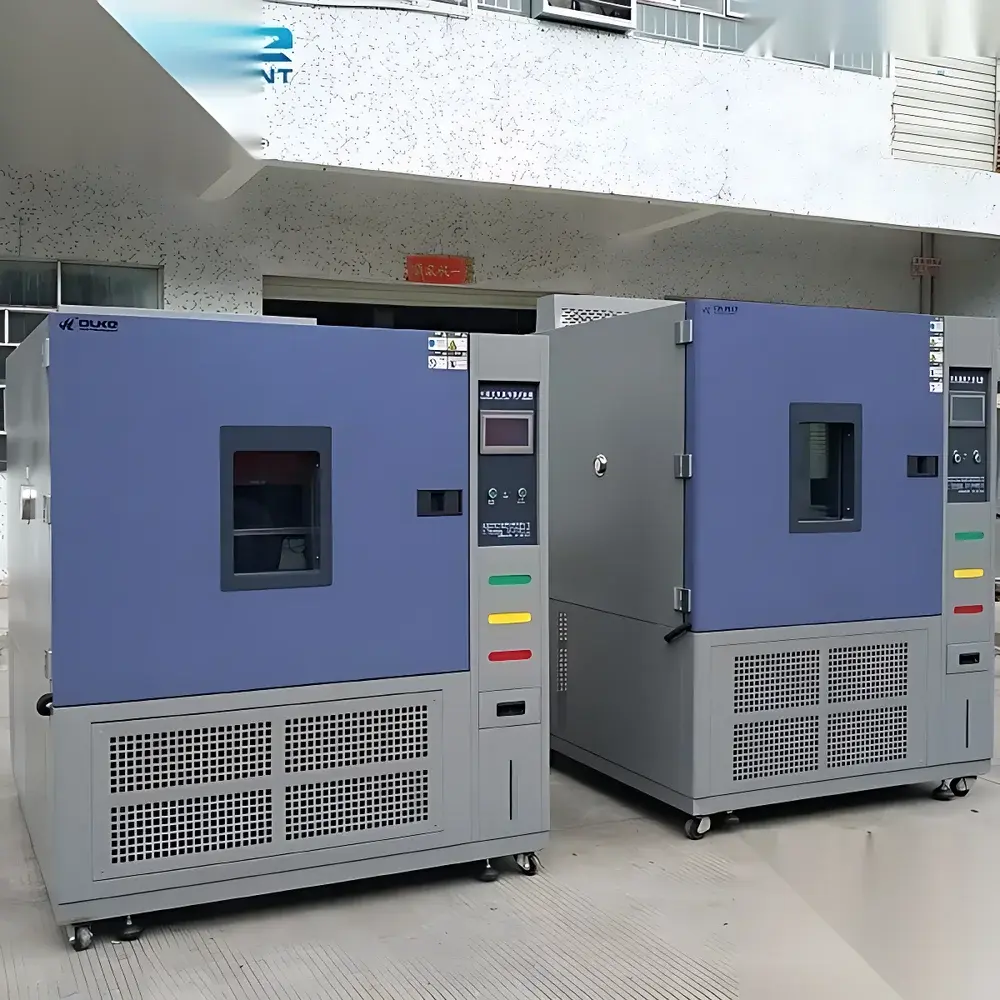
The Vertical Temperature and Humidity Controlled Chamber is an engineered environmental test system designed for precise, repeatable simulation of climatic conditions in laboratory and industrial quality assurance settings. Based on the principle of forced-air convection combined with dual-refrigeration circuitry (for extended low-temperature models) and steam-based humidification with PID-controlled dehumidification, this chamber delivers stable thermal-hygrometric profiles across wide operational ranges. It is purpose-built for compliance-driven validation workflows—supporting accelerated aging, reliability screening, material stability assessment, and pre-shipment environmental stress testing per internationally recognized standards including IEC 60068-2, ISO 16750-4, and MIL-STD-810H Method 502.4 (Temperature), Method 507.6 (Humidity), and Method 508.6 (Temperature Shock). The vertical configuration optimizes floor space utilization while maintaining uniform airflow distribution via multi-directional centrifugal fans and calibrated baffle systems.
Key Features
- Wide operational range: Standard temperature span from −40 °C to +150 °C; optional extended low-temperature models down to −120 °C using cascade refrigeration technology
- Humidity control from 30 %RH to 98 %RH (standard); optional extension to 5–98 %RH with enhanced dew-point regulation and anti-condensation pre-heating
- High-resolution digital control: 0.01 °C temperature resolution and 0.1 %RH humidity resolution
- Thermal stability: Temperature fluctuation ≤ ±0.5 °C; uniformity ≤ ±2.0 °C across working volume (per ISO 16750-4 Annex A)
- Humidity accuracy: Deviation ≤ ±2.5 %RH (measured at 25 °C/60 %RH reference point, traceable to NIST-certified hygrometers)
- Dynamic performance: Heating rate 2.0–3.0 °C/min; cooling rate 0.7–1.0 °C/min (air average, unloaded, ambient 25 °C ±6 °C)
- TEMI880 color LCD touchscreen controller with real-time graphing, multi-segment programmability (up to 99 cycles × 99 steps), USB data export, and password-protected parameter locking
- Robust construction: Interior chamber fabricated from electropolished SUS304 stainless steel; exterior options include SUS304 or A3 steel with epoxy-polyester powder coating
- Electrical interface: Standard 380 V ±5 %, 50 Hz, 3P+N+G (three-phase five-wire); custom 220 V single-phase configurations available upon request
- Cooling water interface: Required for models below −40 °C; inlet temperature 10–28 °C, pressure 0.1–0.3 MPa (recommended for consistent sub-zero ramp performance)
Sample Compatibility & Compliance
This chamber accommodates a broad spectrum of test specimens—including electronic assemblies, automotive ECUs, polymer components, pharmaceutical packaging, and aerospace composites—without compromising environmental fidelity. Internal dimensions are fully customizable, supporting walk-in configurations up to 10 m³. All units undergo factory calibration and verification per GB/T 5170.2–2017 (temperature equipment) and GB/T 5170.5–2017 (humidity equipment), with full traceability documentation provided. The system architecture supports GLP/GMP-aligned operation: audit trails, user-level access control, and event logging are enabled via optional firmware upgrade compliant with FDA 21 CFR Part 11 requirements. Validation packages—including IQ/OQ protocols and uncertainty budgets—can be supplied for regulated industries.
Software & Data Management
The TEMI880 controller integrates native data logging with timestamped storage of temperature/humidity setpoints, actual values, alarms, and system status. Export formats include CSV and Excel-compatible .xls for post-test analysis in MATLAB, JMP, or Minitab. Optional PC-based software (EcoView Suite) enables remote monitoring via Ethernet/Wi-Fi, automated report generation (PDF/HTML), and integration into enterprise LIMS or MES platforms through Modbus TCP or OPC UA interfaces. All firmware updates are digitally signed and version-controlled to ensure integrity and regulatory defensibility.
Applications
- Environmental stress screening (ESS) of printed circuit boards and microelectronic devices
- Accelerated corrosion testing under cyclic damp heat per ASTM B117 and ISO 9227
- Stability testing of active pharmaceutical ingredients (APIs) and final dosage forms per ICH Q1A(R2)
- Material coefficient of thermal expansion (CTE) characterization under controlled RH gradients
- Qualification of battery modules for EV applications under extreme cold-start and high-humidity soak conditions
- Validation of HVAC component performance in simulated tropical or arctic climates
- Calibration lab support for reference humidity generators and chilled-mirror hygrometers
FAQ
What is the difference between “air average change rate” and “load temperature change rate”?
The specified heating/cooling rates reflect air temperature evolution in the empty chamber under standardized conditions. Actual specimen temperature response depends on mass, thermal conductivity, surface area, and placement—requiring separate thermal lag compensation during test planning.
Can this chamber meet IEC 60068-2-14 (change of temperature) requirements?
Yes—when configured with appropriate ramp profiles and verified using Class 2 or Class 3 sensors per IEC 60751, the chamber satisfies Test Nb (rapid temperature change) and Test Na (gradual change) criteria.
Is third-party certification (e.g., TÜV, SGS) available for factory acceptance testing?
Yes—certified FAT reports with witnessed performance verification against ISO/IEC 17025-accredited procedures can be arranged prior to shipment.
How is humidity uniformity maintained at low temperatures (e.g., −40 °C)?
By combining frost-resistant steam injection nozzles, heated humidity ducts, and dynamic dew-point modulation—preventing condensation while sustaining RH >30 % even at cryogenic setpoints.
Do you provide installation and commissioning support overseas?
Yes—on-site mechanical/electrical commissioning, operator training, and IQ/OQ execution are available through authorized regional partners under service-level agreement (SLA).



