
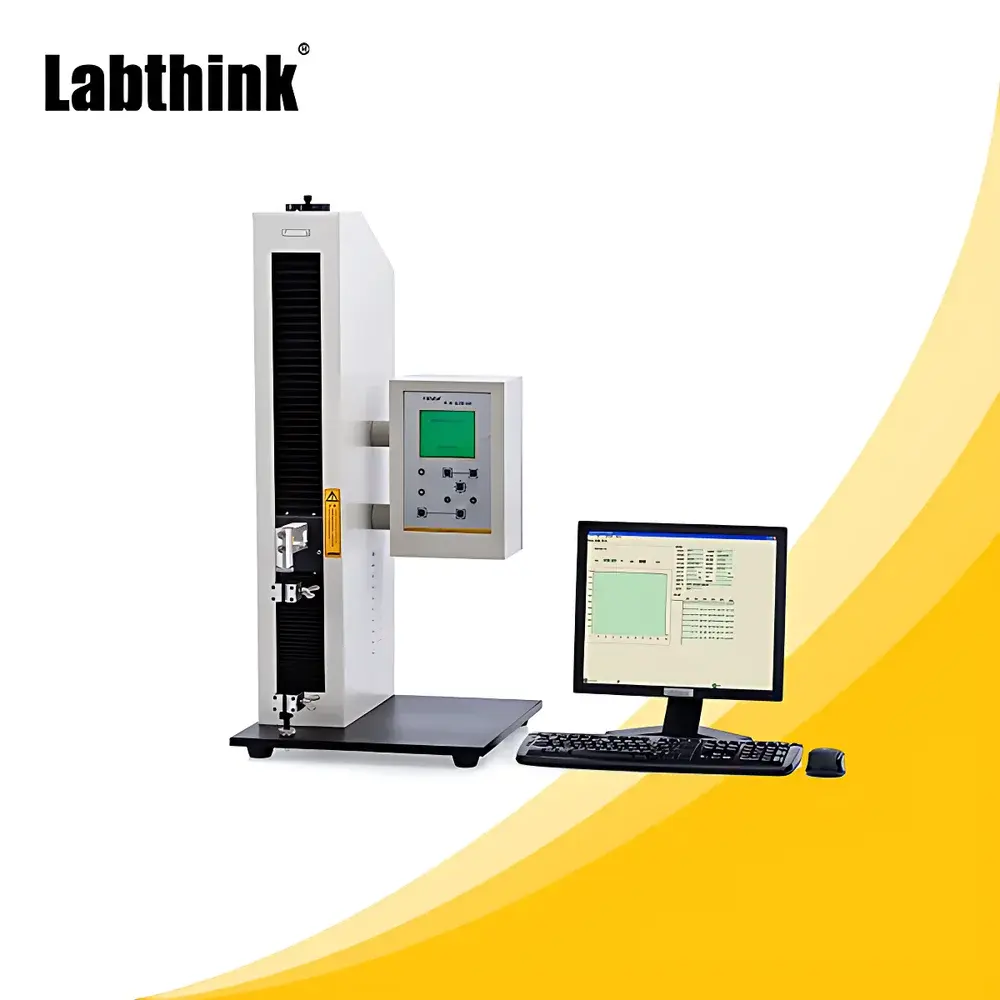
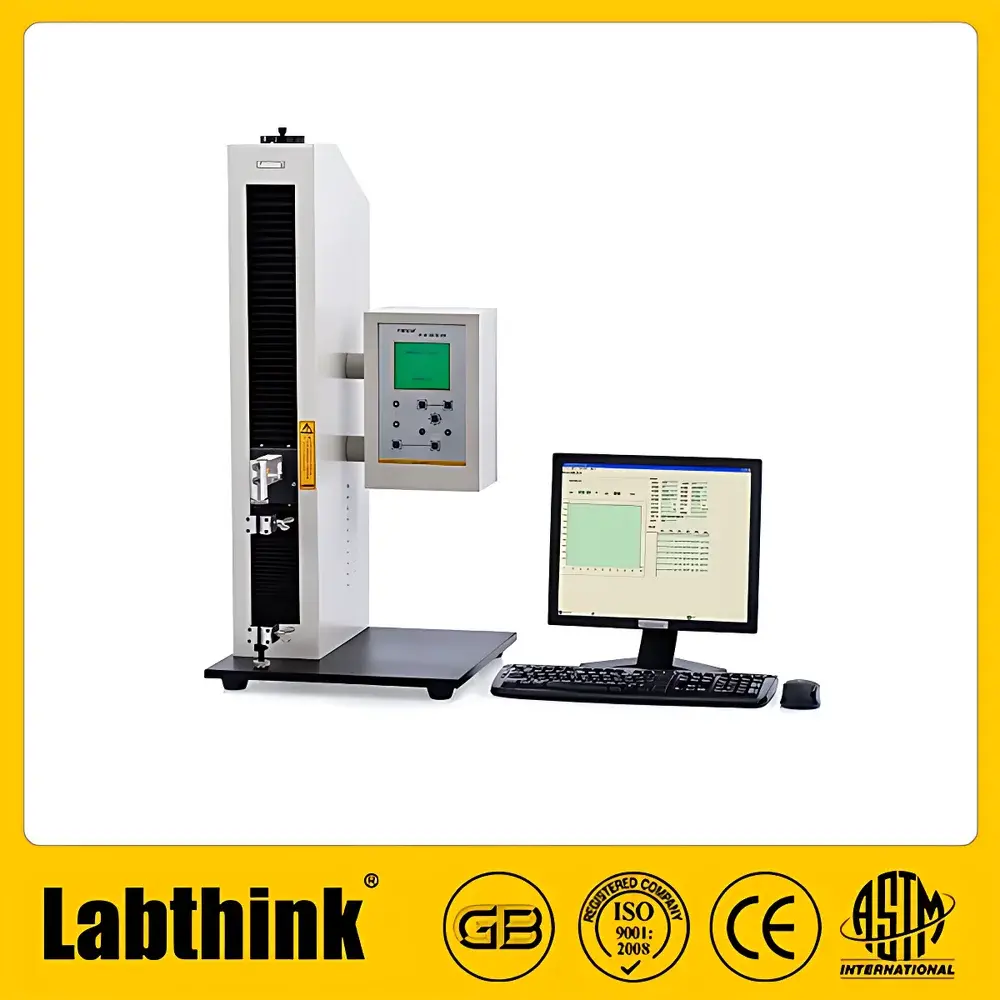
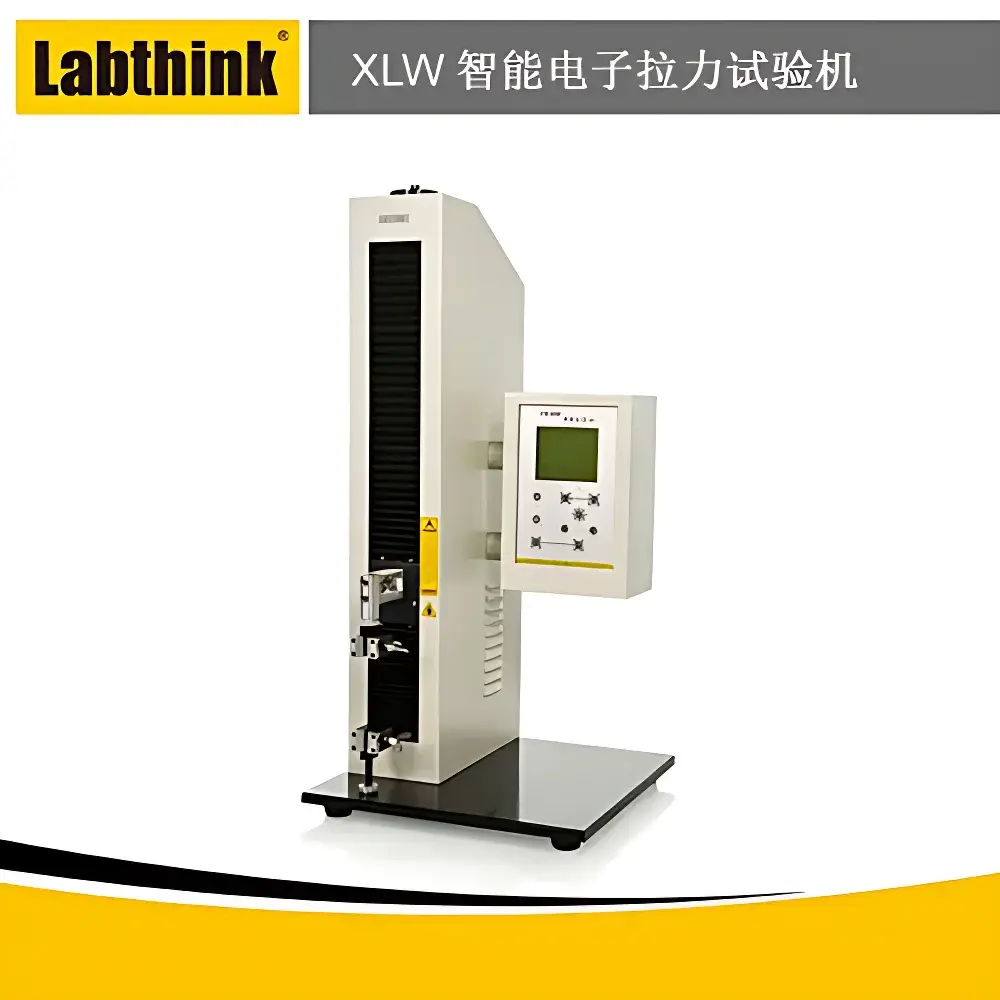
Labthink XLW Advanced Heat Seal Strength Tester & Universal Material Testing System
| Brand | Labthink |
|---|---|
| Model | XLW |
| Type | Heat Seal Strength Tester / Universal Tensile & Peel Tester |
| Capacity Options | 100 N, 200 N, 500 N |
| Accuracy Class | Class 1 (per ISO 7500-1) |
| Test Speeds | 50–500 mm/min (7 discrete settings) |
| Standard Jaw Width | 30 mm |
| Optional Jaw Width | 50 mm |
| Maximum Travel | 600 mm |
| Power Supply | AC 220 V, 50 Hz |
| Net Weight | 65 kg |
| Dimensions (L×W×H) | 450 × 450 × 980 mm |
| Compliance | ASTM F88, ASTM F904, ISO 37, GB/T 2792, GB/T 8808, QB/T 2358, and 15+ additional international and national standards |
Overview
The Labthink XLW Advanced Heat Seal Strength Tester is a microprocessor-controlled universal testing system engineered for precision evaluation of heat seal integrity and mechanical performance across flexible packaging and functional laminates. Based on the fundamental principle of controlled tensile force application under defined displacement rate, the XLW measures peel resistance at the heat-sealed interface—quantifying seal strength in accordance with standardized separation geometries (e.g., T-peel per ASTM F88 or 180° peel per ASTM F904). Beyond heat sealing validation, its modular load cell architecture and programmable motion control support standardized tensile, tear, puncture, peel, and delamination tests per ISO, ASTM, GB/T, and JIS methodologies. Designed for routine QC laboratories and R&D environments in pharmaceutical, food, medical device, and battery packaging sectors, the XLW delivers repeatable, traceable data essential for process validation, material qualification, and regulatory submissions.
Key Features
- Microcomputer-based control system with high-resolution LCD display for real-time visualization of force, displacement, time, and stress–strain curves
- Intuitive PVC membrane keypad with menu-driven navigation—no external PC required for basic operation
- Three selectable load capacities (100 N, 200 N, 500 N), each calibrated to ISO 7500-1 Class 1 accuracy
- Seven preconfigured test modes: heat seal strength, tensile strength, 180° peel, T-peel, tear resistance, puncture force, and low-speed unwind force
- Seven programmable crosshead speeds (50, 100, 150, 200, 250, 300, 500 mm/min) compliant with ASTM D882, ISO 527-3, and GB/T 1040.3
- Integrated data management functions: parameter configuration, result printing (via built-in thermal printer), statistical analysis of grouped specimens, curve overlay comparison, and fixed-strain stress calculation
- Hardware safeguards including overload protection, mechanical limit switches, automatic return-to-start positioning, and power-loss memory retention
- Standard Ethernet interface supporting LAN-based centralized data collection and remote firmware updates via TCP/IP protocol
Sample Compatibility & Compliance
The XLW accommodates a broad spectrum of thin-film and laminated substrates, including but not limited to: thermoplastic films (LDPE, PP, PET, PA), aluminum foil composites, pharmaceutical blister lidding, medical pouch seals, lithium-ion battery separator membranes, photovoltaic backsheet laminates, pressure-sensitive adhesives, nonwovens, and coated papers. Its standardized jaw geometry (30 mm width standard; 50 mm optional) ensures consistent grip area and minimizes slippage during high-speed peel or tensile events. The instrument conforms to over fifteen internationally recognized test standards—including ASTM F88 (heat seal strength of flexible barrier materials), ASTM F904 (comparative peel adhesion of packaging seals), ISO 37 (rubber tensile properties), GB/T 2792 (peel resistance of pressure-sensitive tapes), and QB/T 2358 (heat seal strength of plastic films)—enabling direct comparability of results across global supply chains and regulatory audits.
Software & Data Management
While fully operational as a standalone unit, the XLW supports optional PC-based software (Labthink TestSuite™) for advanced data handling. This validated application enables full audit trail generation per FDA 21 CFR Part 11 requirements—including electronic signatures, user access levels, change history logging, and immutable raw-data archiving. Test reports are exportable in PDF, CSV, and XML formats, and integrate seamlessly into LIMS and MES platforms. All calibration records, maintenance logs, and method templates are stored locally with timestamped metadata, supporting GLP/GMP compliance and internal quality system reviews.
Applications
- Validation of heat seal parameters (temperature, pressure, dwell time) during packaging line setup and changeovers
- Comparative assessment of seal strength between different film structures or adhesive systems
- Tensile property profiling of mono- and multilayer films per ISO 527-3 and ASTM D882
- Peel adhesion testing of medical device pouches per ISO 11607-2 and AAMI ST77
- Delamination resistance evaluation of battery electrode laminates and solar backsheet assemblies
- Quality control of protective films, release liners, and pressure-sensitive labels per PSTC-101 and FINAT FTM 1
- Research-grade mechanical characterization of novel biodegradable and barrier-coated packaging materials
FAQ
What standards does the XLW comply with for heat seal strength testing?
ASTM F88, ASTM F904, ISO 11607-2, GB/T 2792, GB/T 8808, and QB/T 2358.
Can the XLW perform both heat seal and tensile tests without hardware modification?
Yes—the same base frame, load cell, and drive system support all seven test modes via software-selectable configurations and interchangeable fixtures.
Is calibration traceable to national metrology institutes?
Yes—each unit ships with a certificate of calibration traceable to CNAS-accredited laboratories, with optional NIST-traceable certification available upon request.
Does the system meet FDA 21 CFR Part 11 requirements for electronic records?
When used with Labthink TestSuite™ software and configured with role-based user accounts and audit trail enabled, it satisfies Part 11 criteria for signature verification and data integrity.
What is the maximum specimen width supported with optional fixtures?
50 mm jaw width is available as an accessory for wider samples, maintaining uniform stress distribution per ISO 2286-2 guidelines.






