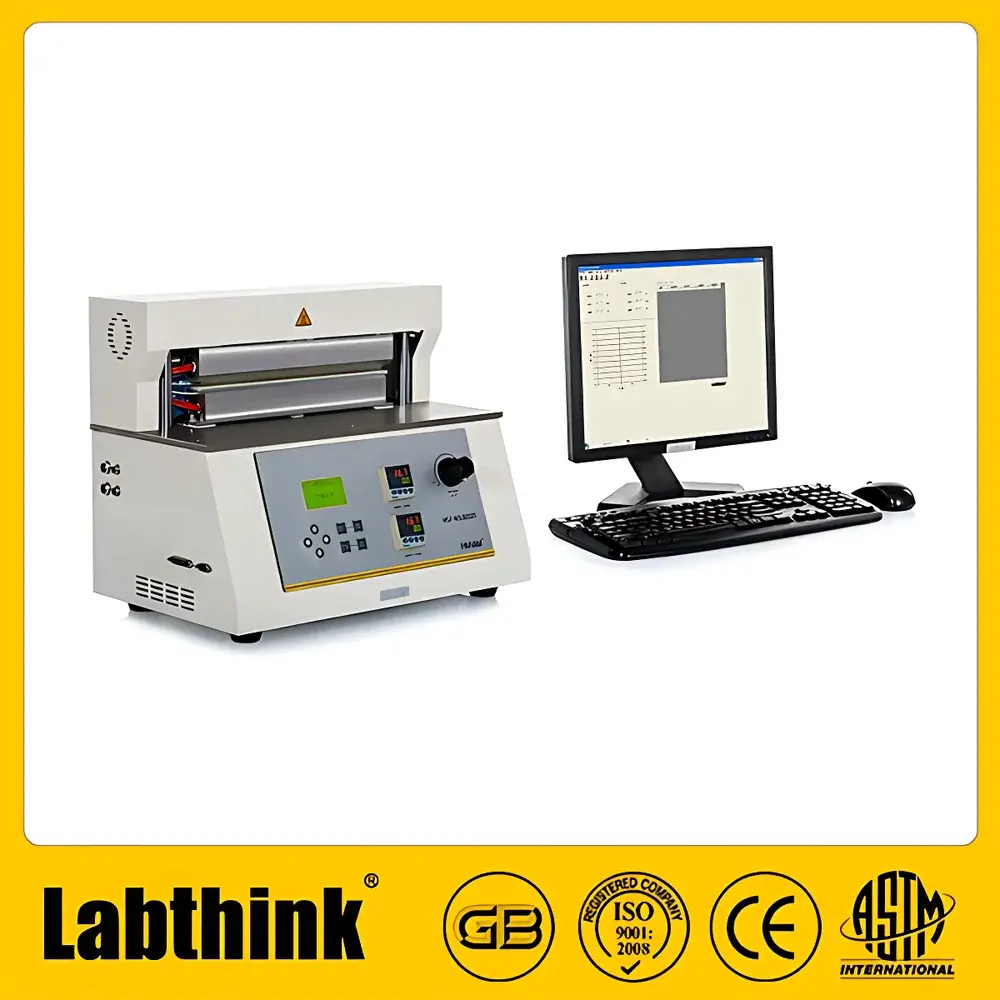
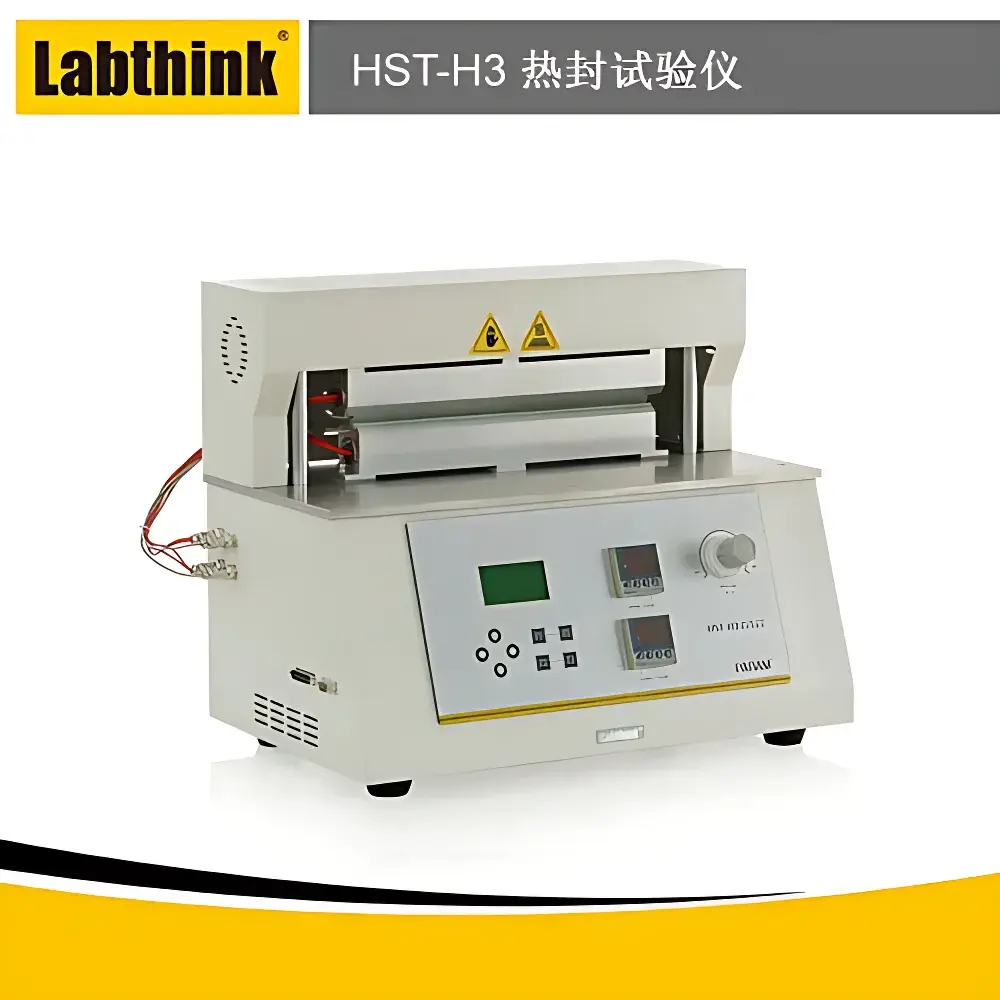
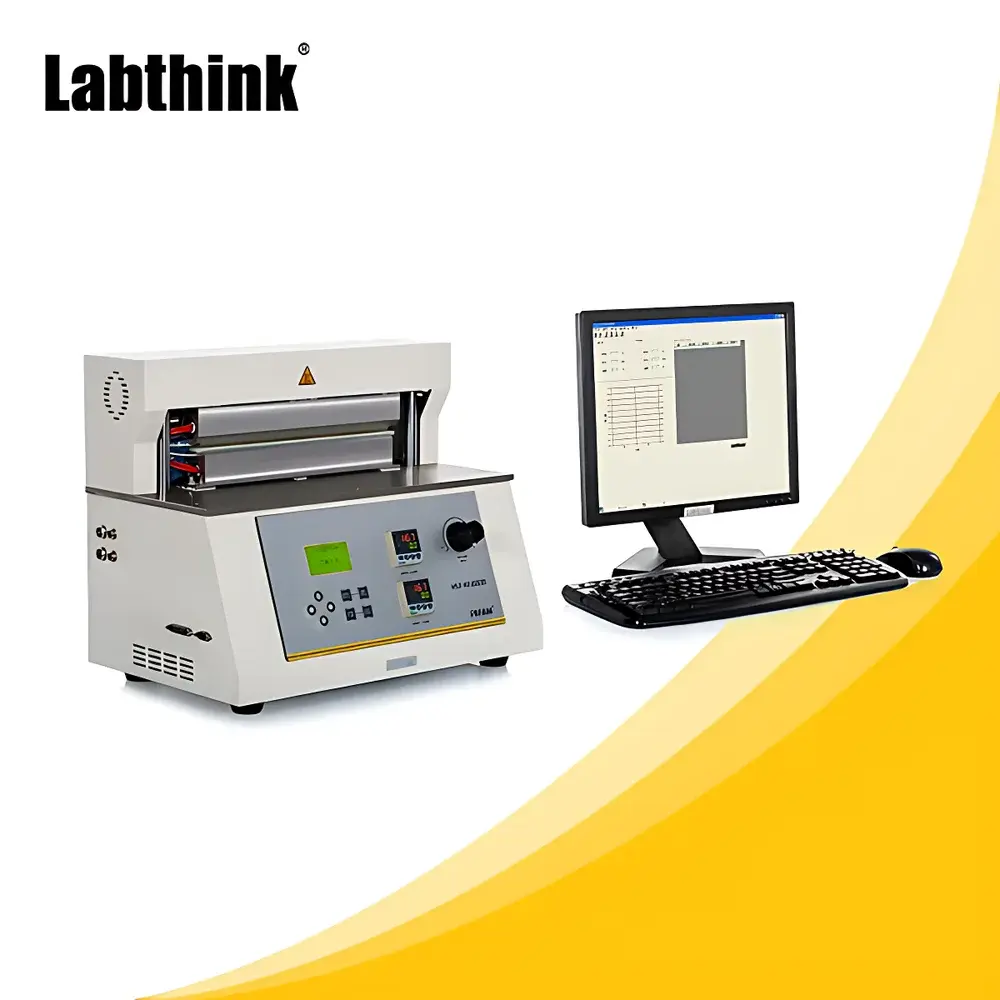
Labthink HST-H3 Soft Tube Tail Heat Sealing Tester
| Brand | Labthink |
|---|---|
| Origin | Shandong, China |
| Manufacturer Type | Direct Manufacturer |
| Product Category | Domestic |
| Model | HST-H3 Soft Tube Tail Heat Sealing Tester |
| Price Range | USD 4,200 – 8,400 |
| Heat Seal Temperature Range | Ambient to 300 °C |
| Temperature Control Accuracy | ±0.2 °C |
| Seal Time Range | 0.1–999.9 s |
| Seal Pressure Range | 0.05–0.7 MPa |
| Seal Area Dimensions | 330 mm × 10 mm (customizable) |
| Heating Mode | Single- or Dual-Zone Heating |
| Compliance Standards | QB/T 2358 (ZBY 28004), ASTM F2029, YBB 00122003 |
Overview
The Labthink HST-H3 Soft Tube Tail Heat Sealing Tester is an electromechanical, microprocessor-controlled instrument engineered for precise, repeatable thermal sealing evaluation of flexible packaging materials—particularly tubular structures with tail-end seals. It operates on the principle of controlled heat-and-pressure sealing, applying calibrated thermal energy and mechanical force to replicate industrial sealing conditions in a laboratory environment. Unlike generic heat seal testers, the HST-H3 features an extended 330 mm × 10 mm sealing jaw optimized for soft tube tail geometry, enabling uniform thermal transfer across elongated, low-profile seal zones common in cosmetic, pharmaceutical, and personal care packaging. Its design adheres to fundamental principles of polymer melt rheology and interfacial adhesion kinetics, where seal integrity depends critically on the interplay among temperature (governing polymer chain mobility), dwell time (controlling diffusion across the interface), and pressure (ensuring intimate contact and melt interpenetration). This makes the HST-H3 indispensable for R&D labs validating seal parameter windows and QC departments verifying batch-to-batch consistency under ISO 22000, ICH Q5C, and FDA-compliant packaging validation protocols.
Key Features
- Extended sealing jaw (330 mm × 10 mm) specifically configured for soft tube tail geometry—minimizes edge effects and ensures full-length seal uniformity
- High-precision temperature control system with ±0.2 °C accuracy across 0–300 °C range, utilizing platinum RTD sensors and PID-regulated heating elements
- Digitally adjustable sealing pressure (0.05–0.7 MPa) via servo-controlled pneumatic actuation; all pressure transducers and regulators sourced from globally certified suppliers
- Dual-mode heating architecture: selectable single-zone (uniform temperature) or dual-zone (independent top/bottom temperature control) operation for asymmetric material stacks
- Integrated 5.7-inch LCD display with real-time parameter monitoring, programmable multi-step seal profiles, and automatic data logging
- Compliance-ready firmware supporting audit trails, user access levels, and electronic signature capability aligned with FDA 21 CFR Part 11 requirements
Sample Compatibility & Compliance
The HST-H3 accommodates a broad spectrum of thermoplastic-based packaging substrates, including laminated aluminum foil/polyethylene composites, ethylene-vinyl acetate (EVA)-coated papers, polypropylene (PP) and polyethylene (PE) monolayers, and multilayer coextrusions used in sterile barrier systems. It is validated for use with both flat and curved tube tail specimens up to 3 mm wall thickness. Regulatory alignment includes full conformance with QB/T 2358 (Chinese national standard equivalent to ASTM F2029), ASTM F2029–22 (Standard Test Method for Making Heat-Sealed Packages for Evaluation of Heat Seal Strength), and YBB 00122003 (Chinese Pharmacopoeia packaging standard for pharmaceutical blister and tube packaging). All calibration procedures follow ISO/IEC 17025 traceable methodologies, and raw test data files retain metadata (operator ID, timestamp, environmental ambient reading) required for GLP/GMP documentation.
Software & Data Management
The HST-H3 operates via embedded firmware with optional PC-based Labthink SealSoft™ software (v3.2+), which enables advanced experimental design—including DoE-driven parameter sweeps across temperature, time, and pressure matrices. Data export supports CSV, PDF, and XML formats compatible with LIMS integration. Each test record embeds cryptographic hash verification to prevent post-acquisition tampering. Audit trail functionality logs all parameter modifications, user logins, and report generation events with immutable timestamps—fully satisfying FDA 21 CFR Part 11 Annex 11 and EU GMP Annex 11 requirements for computerized system validation. Calibration certificates include uncertainty budgets per ISO/IEC 17025 Clause 6.5.
Applications
- Defining optimal heat seal parameters (T, t, P) during formulation development of new laminates or adhesive layers
- Validating seal integrity of collapsible aluminum or plastic tubes prior to sterile filling in pharmaceutical manufacturing
- Comparative assessment of seal strength degradation after accelerated aging (ASTM F1980) or sterilization cycles (EO, gamma)
- Root cause analysis of seal failures (leak paths, delamination, cold seals) via correlation with DSC-measured polymer melting onset
- Supporting regulatory submissions (e.g., FDA 510(k), EU MDR Technical Documentation) with reproducible, standards-aligned test evidence
- Training production line technicians on parameter sensitivity using visualized seal quality gradients
FAQ
What materials can be tested on the HST-H3?
The instrument is validated for thermoplastic films, laminates, coated papers, and multilayer coextrusions—including PE, PP, PET, EVOH, metallized PET, and foil-based structures—commonly used in medical device pouches, pharmaceutical tubes, and food sachets.
Is the 330 mm sealing length fixed or adjustable?
The standard jaw is 330 mm long and 10 mm wide; custom lengths (e.g., 200 mm or 400 mm) and widths (e.g., 5 mm or 15 mm) are available upon request with revised calibration documentation.
Does the HST-H3 support automated tensile testing integration?
No—the HST-H3 performs only heat sealing. Seal strength must be evaluated separately using a universal testing machine (e.g., Labthink XLW series) per ASTM F88 or ISO 11607-2.
How is temperature uniformity verified across the 330 mm jaw?
Each unit undergoes factory verification using 9-point thermocouple mapping per ASTM E220, with ≤±1.0 °C deviation across the entire sealing surface—certified in the delivery report.
Can test methods be exported and shared between laboratories?
Yes—SealSoft™ allows saving and loading complete method templates (.ssm files), including parameter sets, pass/fail criteria, and reporting configurations, ensuring cross-site method harmonization.