
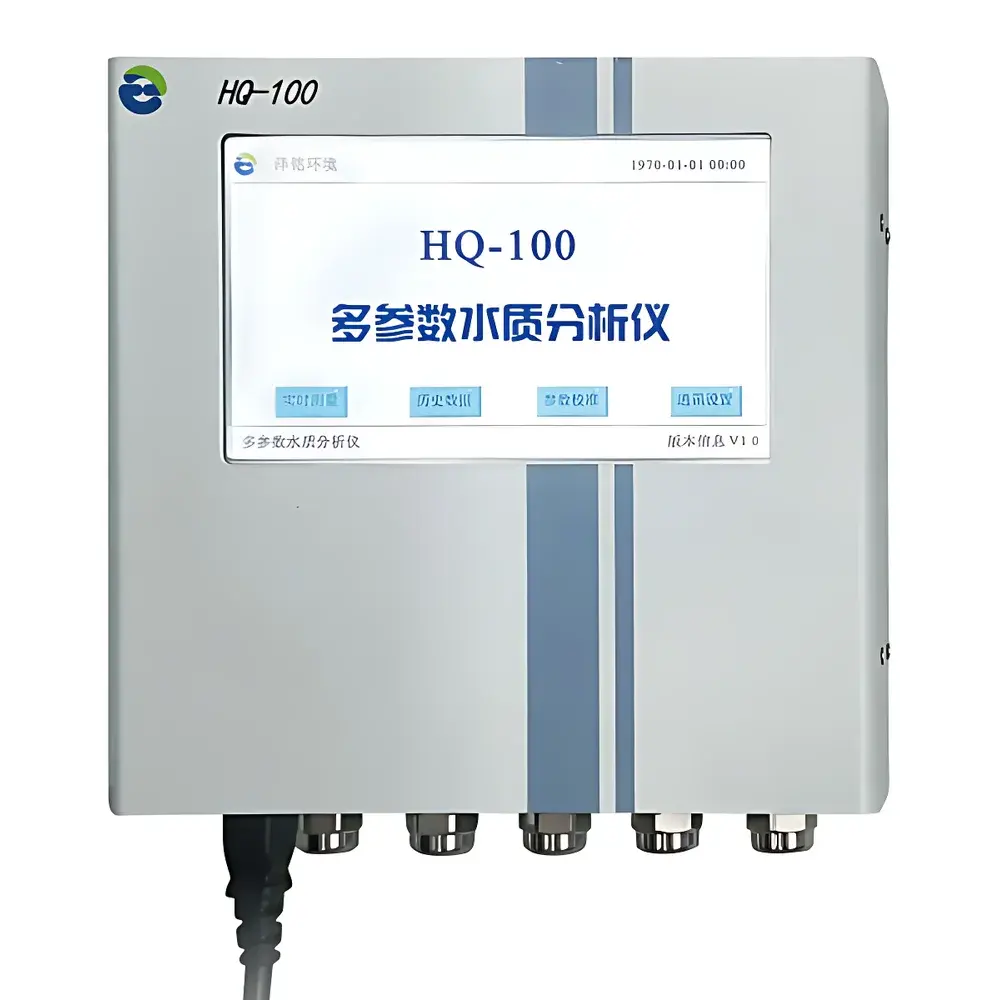
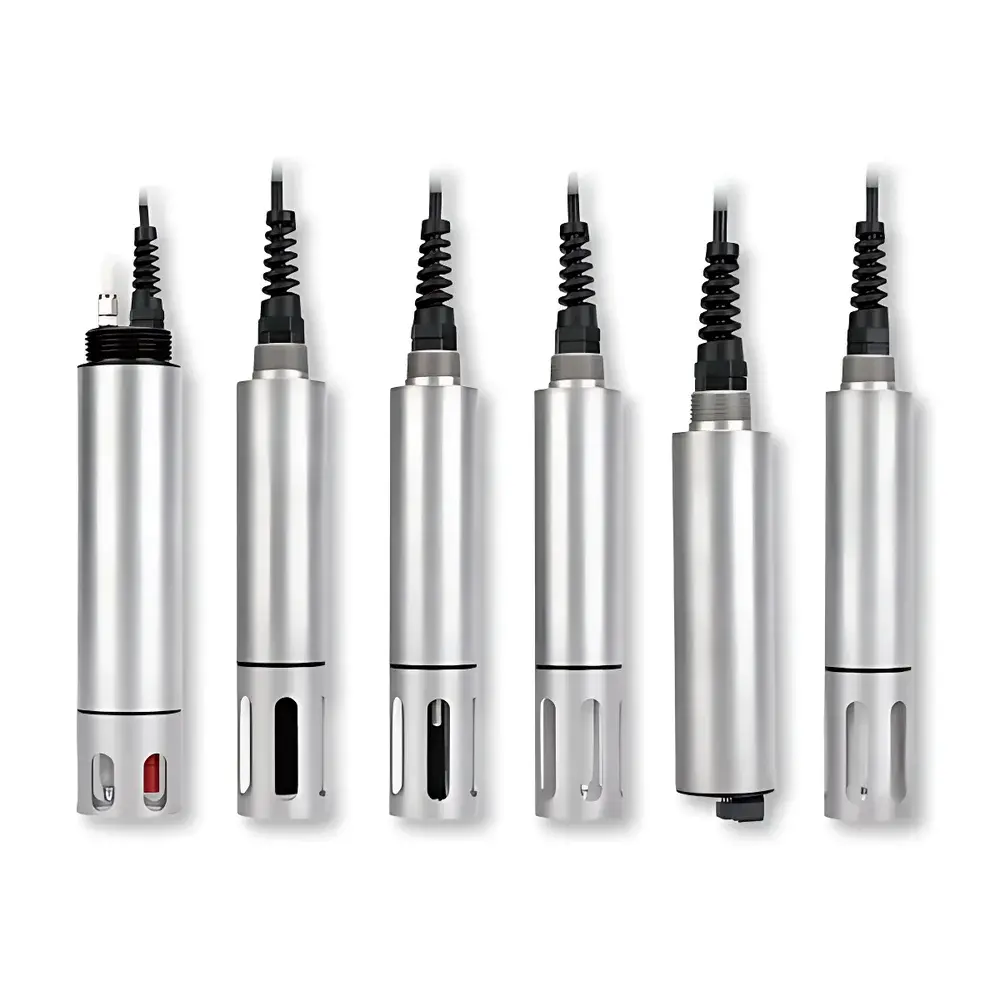
Zming Environmental Technology HQ-100 Multi-Parameter Online Water Quality Analyzer
| Brand | Zming Environmental Technology Co., Ltd. |
|---|---|
| Origin | Shanghai, China |
| Manufacturer Type | Authorized Distributor |
| Country of Origin | China |
| Model | HQ-100 |
| Instrument Type | Online Water Quality Analyzer |
| Measured Parameters | Temperature, pH, ORP, Dissolved Oxygen (DO), Conductivity / Salinity, Turbidity, Residual Chlorine, Total Chlorine, COD (UV-based estimation), Ammonia-Nitrogen (NH₃-N), Chlorophyll-a, Phycocyanin (Blue-Green Algae), Total Suspended Solids (TSS) |
| Display | 7″ TFT Color Touchscreen (800×480 resolution) |
| Enclosure Rating | IP68 for All Probes |
| Power Input | 88–245 VAC or 24 VDC (customizable) |
| Power Consumption | 5 W (low-power mode), 7 W (standard operation) |
| Dimensions (Analyzer Unit) | 219 × 76 × 232 mm |
| Communication | RS485 Modbus RTU/ASCII |
| Data Export | USB flash drive support |
| Sensor Interface | Digital auto-identification, plug-and-play |
| Built-in Temp Compensation | 0–60 °C |
| Probe Cleaning | Integrated motorized brush for autonomous fouling mitigation |
Overview
The Zming Environmental Technology HQ-100 Multi-Parameter Online Water Quality Analyzer is an integrated, field-deployable monitoring platform engineered for continuous, real-time assessment of critical physicochemical and biological water quality indicators. Based on multi-sensor fusion architecture, the system employs standardized electrochemical, optical, and spectrophotometric measurement principles—including amperometric DO sensing, glass-electrode pH/ORP detection, inductive conductivity cells, 860 nm NIR turbidity measurement via ISO 7027-compliant optical path, UV-Vis absorbance at 254 nm for COD estimation, and dual-wavelength fluorescence excitation (470/520 nm and 590/680 nm) for Chlorophyll-a and Phycocyanin quantification. Designed for unattended operation in variable environmental conditions, the HQ-100 meets the functional requirements of long-term aquatic monitoring networks where data continuity, sensor stability, and minimal intervention are operational imperatives.
Key Features
- Digital smart probe interface with embedded memory storing calibration coefficients, serial number, sensor type, and manufacturing traceability—enabling true plug-and-play replacement without manual recalibration.
- IP68-rated submersible probes featuring integrated motor-driven cleaning brushes to suppress biofouling on optical windows and electrode surfaces, extending maintenance intervals by up to 3× compared to static sensors.
- 7-inch high-resolution TFT touchscreen (800×480) with intuitive HMI optimized for glove-compatible operation and multilingual UI support (English, Spanish, French configurable).
- Onboard temperature compensation across full operating range (0–60 °C) using NTC thermistors co-located with each active sensing element.
- Dual power input flexibility: universal AC input (88–245 VAC, 50/60 Hz) or low-voltage DC (24 VDC), supporting solar-battery hybrid deployments in remote locations.
- Modbus RTU/ASCII over RS485 enables seamless integration into SCADA, DCS, or cloud-based IoT platforms compliant with IEC 61131-3 and ISA-95 standards.
Sample Compatibility & Compliance
The HQ-100 is validated for use in natural surface waters (rivers, lakes, reservoirs), wastewater influent/effluent streams, drinking water distribution systems, aquaculture ponds, and industrial process water circuits. Its sensor suite conforms to fundamental metrological references: pH and ORP measurements align with ISO 10523 and ASTM D1293; conductivity adheres to ISO 7888; turbidity follows ISO 7027-1; dissolved oxygen complies with ISO 5814; and residual chlorine detection satisfies EPA Method 334.1 and ISO 7393-2. While not certified as a Class I medical device, the analyzer supports GLP-aligned data integrity through audit-trail-enabled logging and time-stamped calibration records—facilitating regulatory readiness for municipal utilities subject to national discharge permits or WHO Guideline compliance frameworks.
Software & Data Management
The embedded firmware supports scheduled automatic calibration verification, drift monitoring, and diagnostic flagging (e.g., signal saturation, temperature out-of-range, probe contamination warning). Raw and processed data—including timestamps, sensor health status, and environmental metadata—are stored locally in non-volatile memory with configurable retention (up to 12 months at 15-minute intervals). Data export is performed directly to FAT32-formatted USB drives in CSV format, preserving column headers compatible with LIMS, Excel, or Python/Pandas workflows. Remote firmware updates are supported via secure HTTP(S) endpoint with SHA-256 signature validation, ensuring version control traceability per ISO/IEC 17025 Clause 5.9.1.
Applications
- Real-time early-warning monitoring at drinking water intake points and treatment plant process stages (coagulation, filtration, disinfection).
- Regulatory compliance reporting for effluent discharge from municipal wastewater treatment plants (WWTPs) and industrial facilities under local environmental protection bureau mandates.
- Ecological health assessment of eutrophic lakes and slow-moving rivers via synchronized Chlorophyll-a and Phycocyanin trends, enabling cyanobacterial bloom forecasting.
- Process optimization in recirculating aquaculture systems (RAS), where DO, NH₃-N, and pH dynamics directly impact fish metabolism and biofilter efficiency.
- Long-term trend analysis in urban landscape canals and stormwater retention basins to evaluate sediment resuspension events and organic load fluctuations.
FAQ
Does the HQ-100 support third-party sensor integration?
Yes—the RS485 Modbus interface allows read-only polling of external analyzers (e.g., nitrate, phosphate, or flow meters) provided they implement standard function codes 03h or 04h.
What is the recommended calibration frequency for field-deployed units?
For regulatory-grade applications, weekly verification against NIST-traceable standards is advised; for trend monitoring only, biweekly checks suffice when combined with automated drift alerts.
Can the system operate autonomously during grid outages?
When configured with 24 VDC input and paired with a battery backup (e.g., 24 V, 20 Ah sealed lead-acid), the HQ-100 maintains full functionality for ≥72 hours without AC supply.
Is raw spectral data accessible for advanced modeling?
No—only calibrated parameter values and diagnostic flags are exposed via USB or Modbus; UV-Vis and fluorescence spectra are processed internally and not exported.
How does the brush-based cleaning mechanism affect measurement accuracy during actuation?
Cleaning occurs during scheduled idle periods (configurable interval); all measurements are suspended for <1.2 seconds during brush rotation, with no interpolation applied—ensuring temporal fidelity of recorded data points.
Related Products







