
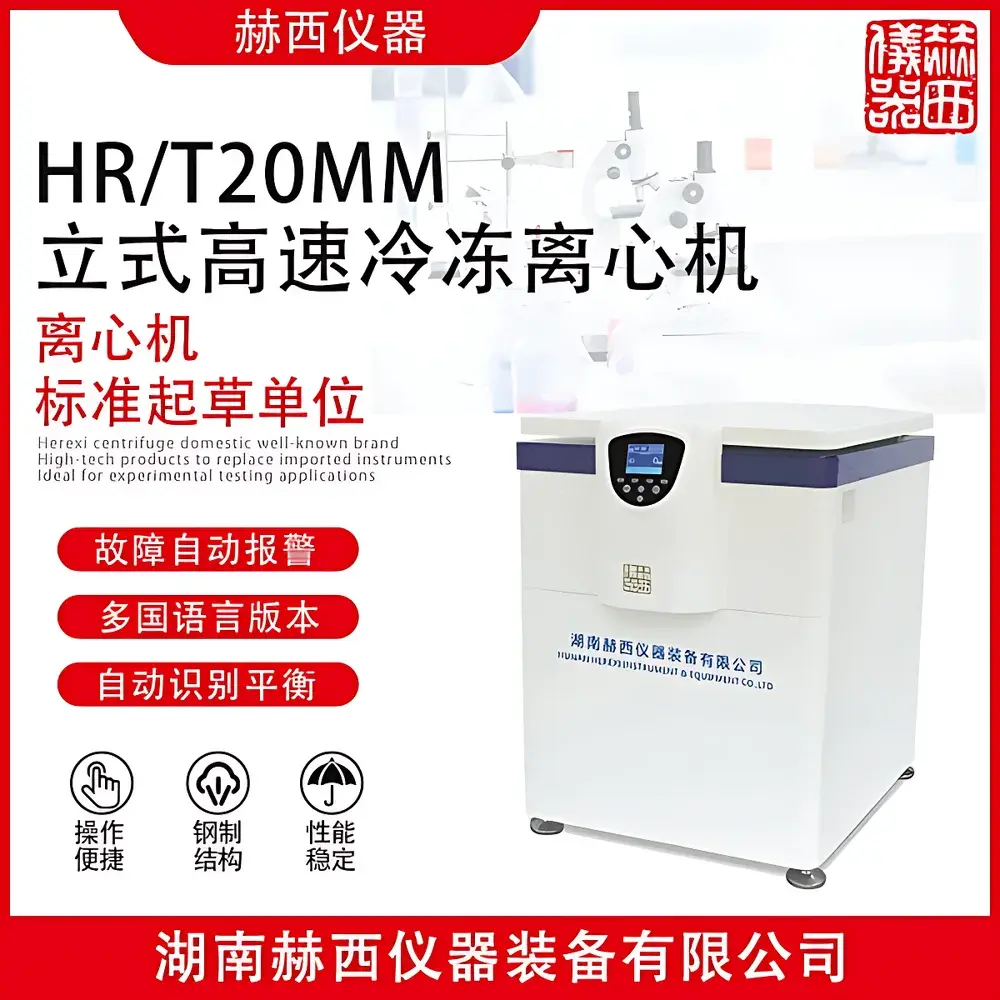
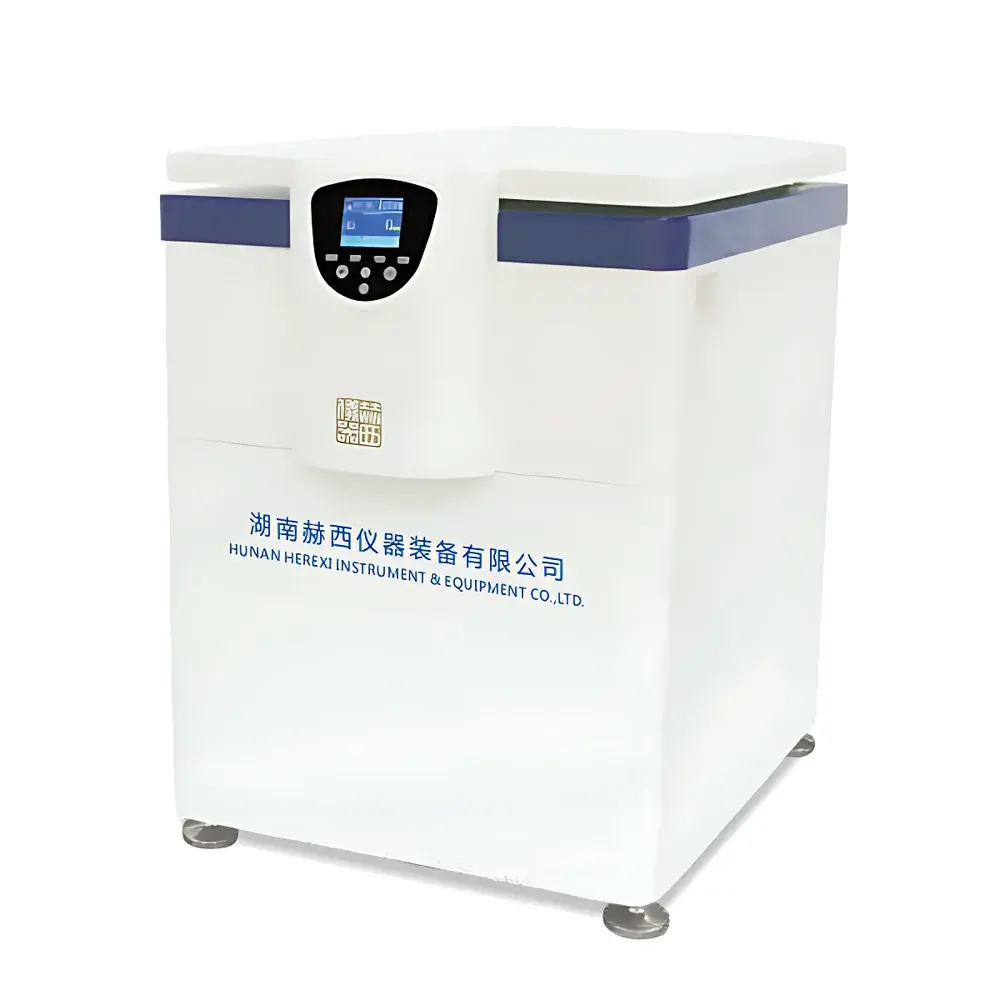
Hettich HR/T20MM High-Speed Refrigerated Floor-Standing Centrifuge
| Brand | Hettich |
|---|---|
| Origin | Hunan, China |
| Manufacturer Type | Authorized Distributor |
| Regional Classification | Domestic (PRC) |
| Model | HR/T20MM |
| Instrument Type | Floor-Standing Centrifuge |
| Speed Range | 10,000–30,000 rpm |
| Function | Refrigerated Centrifuge |
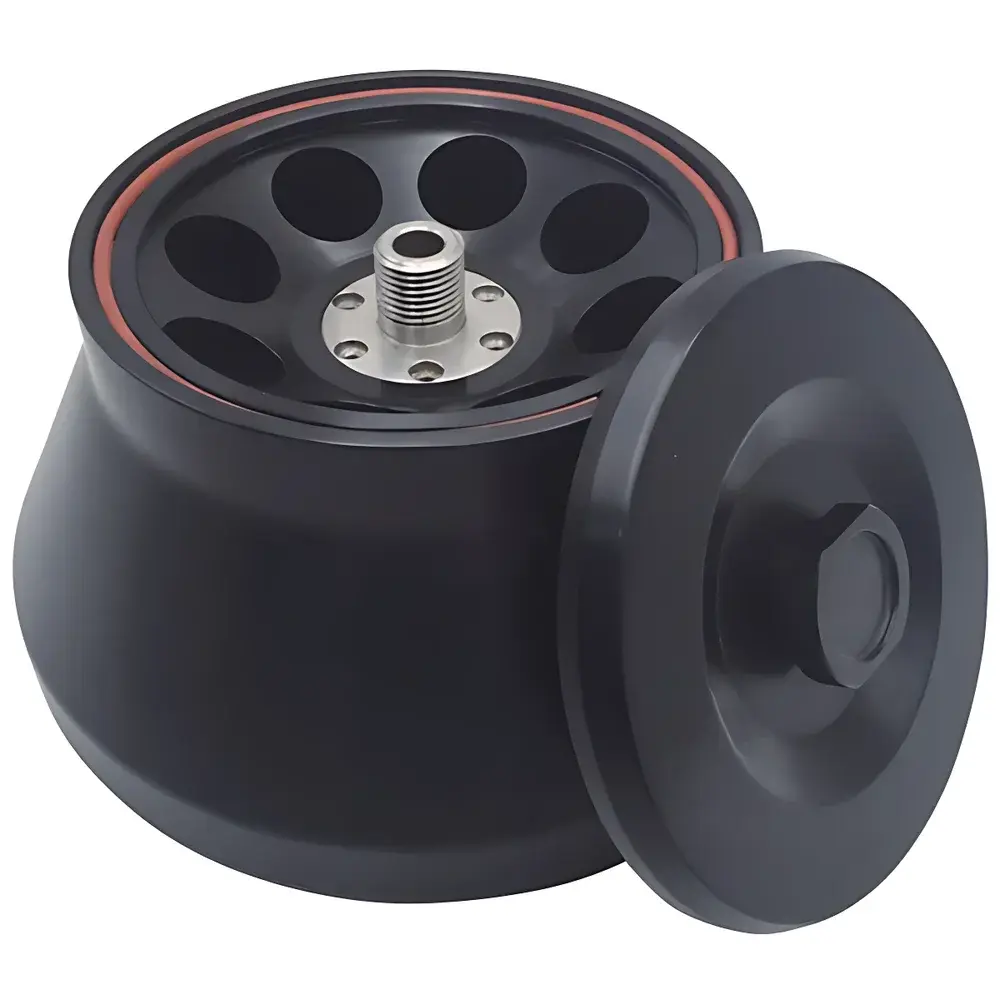
| Configuration | Fixed-Angle Rotor System |
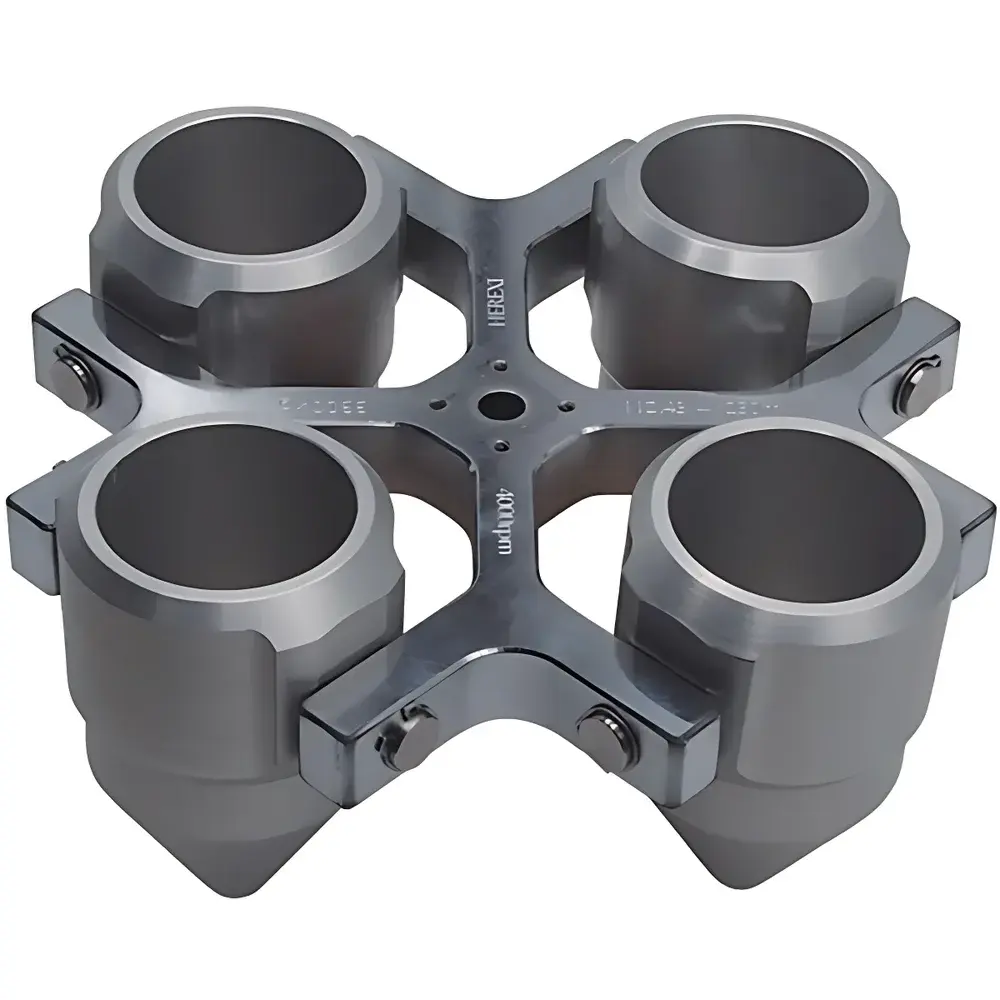
| Maximum Capacity | 4 × 750 mL |
| Maximum Speed | 21,000 rpm |
| Maximum RCF | 31,750 × g |
| Dimensions (L×W×H) | 710 × 560 × 770 mm |
| Temperature Range | −20 °C to +40 °C |
| Temperature Accuracy | ±1 °C |
| Acceleration/Deceleration Rates | 10 programmable profiles |
| Preset Programs | 35 user-definable protocols |
| Rotor Autoidentification | Yes |
| Noise Level | ≤65 dB(A) |
| Power Supply | 2.0 kW |
| Timer Range | 0–99 h 59 min |
| Rotor Sterilization | Autoclavable at 121 °C (20 min) |
| Certifications | CE, ISO 13485, ISO 9001, IEC 61010-2-020 |
Overview
The Hettich HR/T20MM is a high-speed refrigerated floor-standing centrifuge engineered for precision separation of biological and clinical samples under controlled thermal conditions. Designed according to the principles of rotor dynamics and thermally stabilized sedimentation, it delivers reproducible high-RCF performance up to 31,750 × g—enabling rapid pelleting of subcellular organelles, viral particles, macromolecular complexes, and precipitated nucleic acids. Its robust architecture supports continuous operation in demanding environments including clinical diagnostics laboratories, biopharmaceutical QC facilities, blood banks, and agricultural research centers. The system integrates advanced refrigeration management with mechanical stability features that meet international safety and performance benchmarks for Class II laboratory centrifugation equipment.
Key Features
- High-torque brushless frequency-controlled motor with direct drive architecture, ensuring minimal energy loss and long-term rotational stability.
- Microcontroller-based control system (Microchip dsPIC30F series) paired with FAIRCHILD FSBB30CH intelligent gate driver modules for precise speed regulation and fault-tolerant operation.
- Electromechanical door lock mechanism with acoustic and visual imbalance detection; automatic shutdown triggered by rotor imbalance exceeding ISO 21501-2 thresholds.
- 4.3-inch TFT color touchscreen with dual-input (touch + physical button) interface; real-time display of setpoint vs. actual values for speed, RCF, radius correction, and temperature.
- Programmable acceleration/deceleration profiles (10 levels) and 35 preconfigured or user-defined run protocols—including soft-brake modes optimized for fragile pelleted fractions.
- Rapid thermal stabilization: maintains sample chamber temperature ≤4 °C even at maximum speed (21,000 rpm); cooling active during both spin-up and post-run phases.
- Comprehensive rotor sterilization compatibility: all rotors and lids rated for standard autoclaving (121 °C, 20 min) and extended prion decontamination cycles (140 °C, 2 h).
Sample Compatibility & Compliance
The HR/T20MM accommodates a broad range of sample formats via interchangeable fixed-angle rotors, including but not limited to 1.5–2.0 mL microtubes, 15–50 mL conical tubes, and 750 mL bottles (4-position horizontal rotor). Its design complies with ISO 13485:2016 for medical device quality management systems and conforms to IEC 61010-2-020 for safety requirements of centrifuges used in laboratory settings. CE marking verifies compliance with EU Machinery Directive 2006/42/EC and Electromagnetic Compatibility Directive 2014/30/EU. All operational logs—including speed, temperature, time, rotor ID, and error codes—are timestamped and retained for audit-ready documentation in GLP/GMP-aligned workflows.
Software & Data Management
While the HR/T20MM operates as a standalone instrument with embedded firmware, its parameter logging system supports traceability requirements under FDA 21 CFR Part 11 when integrated into validated LIMS or ELN platforms via RS-232 or optional Ethernet interface. Each run generates a non-editable metadata record containing rotor serial number, calibration status flag, ambient temperature, and deviation alerts. Firmware updates are delivered through secure USB-based deployment, with version history maintained internally for regulatory review. No cloud connectivity or proprietary software installation is required for routine operation.
Applications
- Isolation of mitochondria, lysosomes, and peroxisomes from tissue homogenates using differential centrifugation protocols.
- Concentration and purification of lentiviral and AAV vectors in gene therapy process development.
- Routine plasma/serum separation in blood bank operations with strict temperature control to preserve coagulation factor integrity.
- Processing of foodborne pathogen enrichment cultures (e.g., Salmonella, Listeria) prior to PCR or immunoassay analysis.
- Preparative isolation of exosomes and extracellular vesicles from cell culture supernatants and biofluids.
- High-throughput sample preparation for proteomics and metabolomics pipelines requiring consistent RCF delivery across multi-batch runs.
FAQ
What is the maximum allowable rotor radius for full RCF rating?
The 31,750 × g specification is validated for the standard 4 × 750 mL horizontal rotor (rmax = 225 mm) operating at 21,000 rpm.
Does the system support rotor-specific calibration offsets?
Yes—automatic rotor identification enables firmware-level compensation for radius variance and mass distribution differences between certified rotors.
Can the unit operate continuously at −20 °C ambient temperature?
No—the specified operating ambient range is +10 °C to +32 °C; external environmental control is required for stable low-temperature chamber performance.
Is remote monitoring supported out-of-the-box?
Basic status polling is possible via RS-232; full SCADA integration requires third-party middleware compliant with Modbus RTU protocol.
Are rotor certificates provided with each unit?
Yes—each rotor ships with individual test certification documenting burst speed validation, dynamic balancing results, and autoclave cycle verification.



