
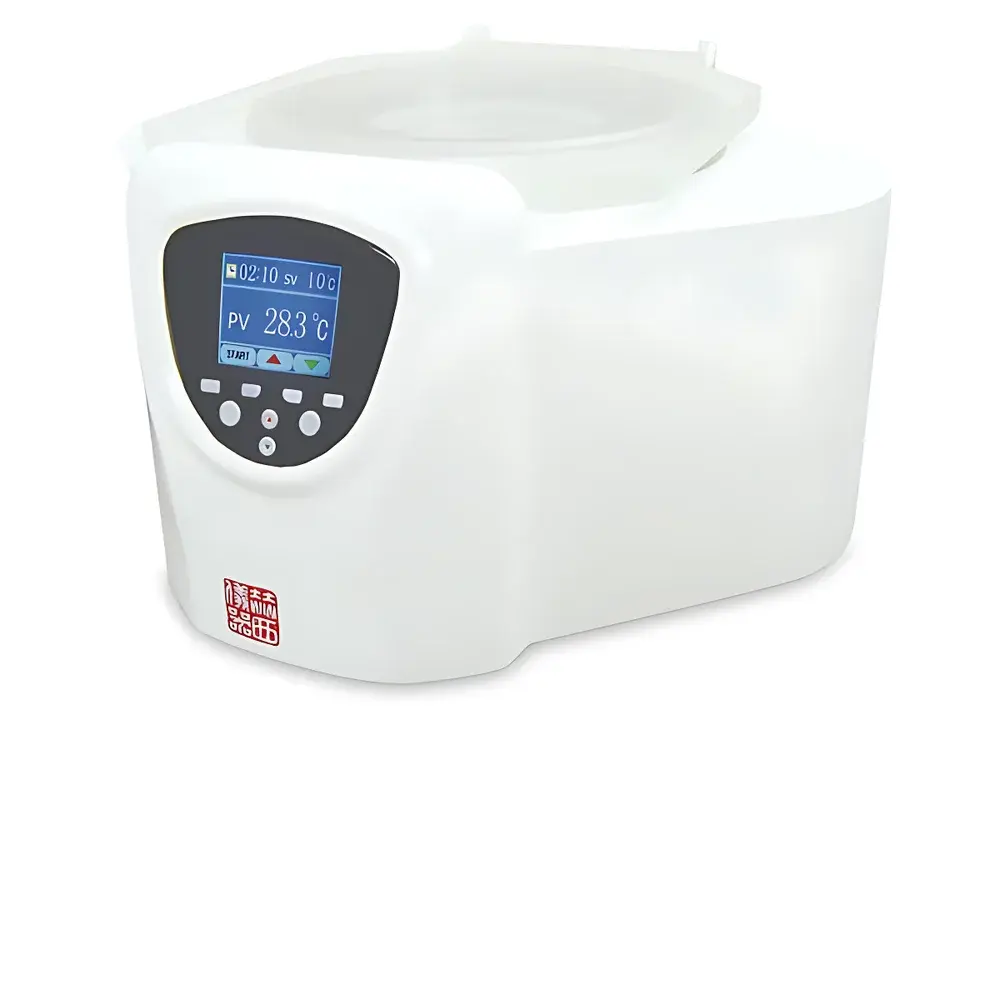
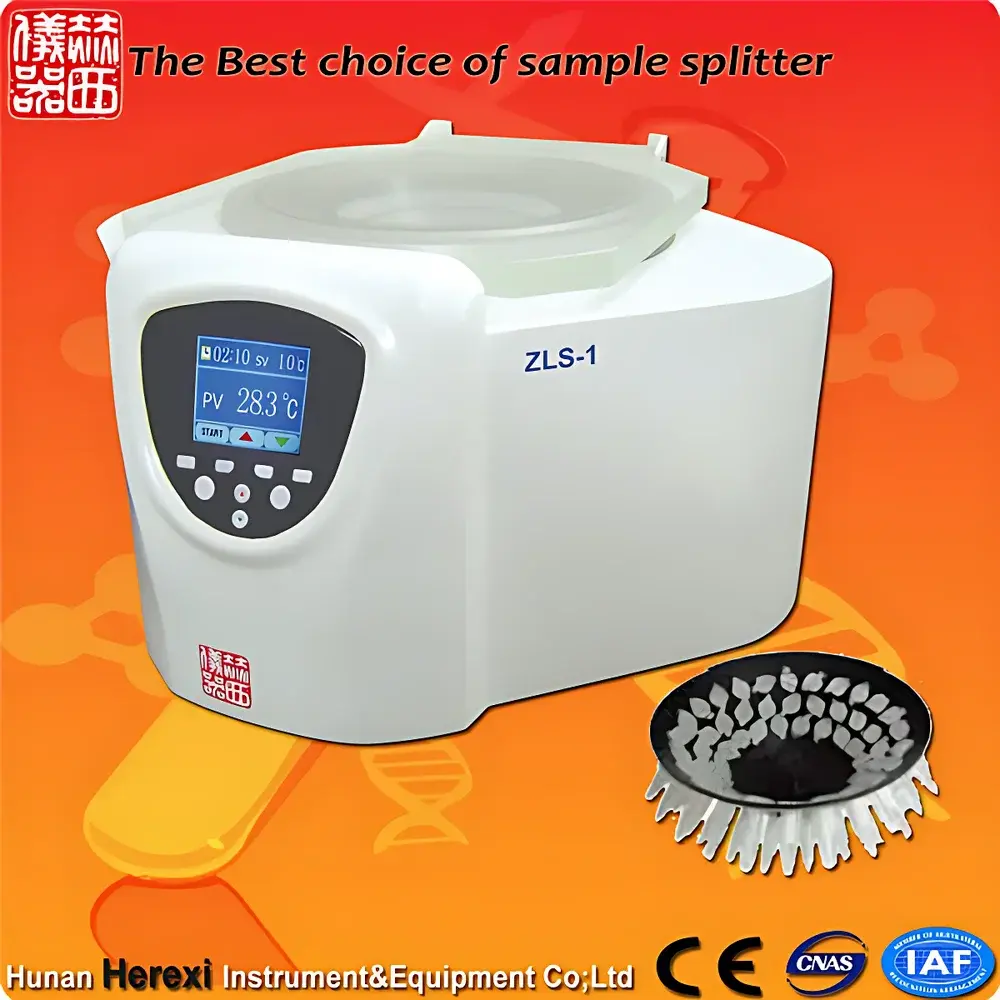
Herxi ZLS-1 Vacuum Centrifugal Concentrator
| Brand | Herxi |
|---|---|
| Model | ZLS-1 |
| Instrument Type | Vacuum Centrifugal Concentrator |
| Temperature Range | Ambient to 60 °C |
| Temperature Control Accuracy | ±1 °C |
| Rotor Capacity | 62 × 1.5 mL tubes |
| Maximum Rotational Speed | 1500 rpm |
| Timer Range | 0–99 h 59 min |
| Chamber Material | Anodized Aluminum with Corrosion-Resistant Coating |
| Drive System | Maintenance-Free Electromagnetic Drive |
| Display | 4.3″ TFT True-Color Touchscreen Interface |
| Dimensions (W×D×H) | 500 × 490 × 280 mm |
| Compatibility | Optional Cold Trap and Vacuum Pump (not included) |
Overview
The Herxi ZLS-1 Vacuum Centrifugal Concentrator is an engineered solution for gentle, efficient removal of volatile solvents from biological and chemical samples under reduced pressure and controlled thermal conditions. It operates on the principle of simultaneous centrifugation, vacuum application, and regulated conductive heating—enabling solvent evaporation while minimizing sample loss, denaturation, or oxidation. Unlike conventional drying methods, centrifugal concentration maintains sample integrity by preventing bumping, foaming, or splashing through continuous rotational force that keeps liquid surfaces stable during evaporation. This system is especially suited for nucleic acid recovery (e.g., DNA/RNA pellets post-ethanol precipitation), synthetic oligonucleotides, peptide fractions, metabolite extracts, and small-molecule pharmaceutical intermediates where thermal sensitivity and reproducibility are critical.
Key Features
- Maintenance-free electromagnetic drive ensures silent, vibration-free rotation at up to 1500 rpm—eliminating mechanical wear and reducing maintenance intervals.
- 4.3-inch TFT true-color touchscreen interface with intuitive dual-control (touch + physical buttons) enables precise parameter setting, real-time monitoring, and programmable run profiles.
- Anodized aluminum chamber with corrosion-resistant internal coating resists aggressive solvents including ethanol, methanol, acetonitrile, and aqueous-acidic mixtures commonly used in molecular biology workflows.
- Heated rotor design (30–60 °C range, ±1 °C accuracy) incorporates black-anodized surfaces to enhance infrared absorption and improve heat transfer efficiency to tube walls—accelerating evaporation without overheating sample cores.
- Transparent polycarbonate lid allows unobstructed visual monitoring of sample status throughout the concentration process—critical for optimizing endpoint detection in variable-volume or heterogeneous samples.
- Programmable timer supports durations from 1 minute to 99 hours and 59 minutes, accommodating both rapid desalting steps and overnight lyophilization-like protocols.
- Modular architecture permits seamless integration with optional accessories: cold trap (−40 °C or lower), diaphragm vacuum pump (<5 mbar ultimate vacuum), and condensate collection flasks compliant with ISO 8573-1 Class 4 purity standards.
Sample Compatibility & Compliance
The ZLS-1 accommodates standard 1.5 mL microcentrifuge tubes (62 positions) and is compatible with a broad spectrum of solvents used in life science laboratories—including ethanol/water, methanol/water, chloroform/methanol, and volatile organic solvents with boiling points below 80 °C. Its operational envelope aligns with common SOP requirements in GLP- and GMP-regulated environments, particularly when paired with validated vacuum pumps and cold traps meeting ISO 27427 (vacuum system performance) and ASTM E2654 (laboratory equipment qualification) guidelines. While the instrument itself does not include built-in audit trail or electronic signature capabilities, its programmable parameters and repeatable thermal/rotational profiles support traceability when integrated into LIMS or ELN platforms compliant with FDA 21 CFR Part 11.
Software & Data Management
The embedded microprocessor supports non-volatile memory storage for up to 20 user-defined protocols, each preserving temperature setpoint, rotational speed, vacuum level (when sensor-equipped), and duration. All runtime data—including actual chamber temperature, elapsed time, and error logs—are timestamped and viewable on-screen or exportable via USB port (device class: HID-compliant mass storage). No proprietary software installation is required; exported .csv files are compatible with Microsoft Excel, GraphPad Prism, and laboratory informatics systems. For facilities requiring full digital record retention, external logging via RS-232 or optional Ethernet module (firmware v2.1+) enables connection to centralized SCADA or MES infrastructure.
Applications
- Concentration and desalting of nucleic acids following phenol-chloroform extraction or solid-phase purification.
- Drying of synthetic oligonucleotides dissolved in ammonia or methylamine solutions prior to HPLC analysis or enzymatic assays.
- Removal of residual solvents from natural product extracts prior to NMR or LC-MS characterization.
- Preparative-scale concentration of enzyme digests, immunoaffinity eluates, and affinity-purified proteins without aggregation.
- Stabilization of labile metabolites (e.g., acyl-CoA derivatives, phosphorylated intermediates) under inert gas purging (N₂ or Ar)—achievable via optional inlet valve kit.
FAQ
Is a vacuum pump included with the ZLS-1?
No—the ZLS-1 is supplied without a vacuum pump or cold trap. These components must be selected and configured separately based on solvent type, throughput requirements, and local safety regulations.
Can the ZLS-1 handle 2.0 mL tubes or PCR strips?
The standard rotor is designed exclusively for 1.5 mL conical-bottom microcentrifuge tubes. Adapters for alternative formats are not supported in this model.
What is the minimum vacuum level required for optimal performance?
For most aqueous-organic mixtures, operation below 10 mbar ensures efficient solvent removal. A two-stage diaphragm pump achieving ≤3 mbar is recommended for consistent results across batch sizes.
Does the instrument support remote monitoring or network connectivity?
Native Ethernet or Wi-Fi is not integrated; however, RS-232 serial output allows integration with building management systems or third-party control software using Modbus RTU protocol.
How often should the chamber seal be inspected or replaced?
Under normal use (≤5 cycles/day), the silicone O-ring seal requires visual inspection every 6 months and replacement every 24 months—or immediately if cracking, compression set, or vacuum leakage (>0.5 mbar/min decay) is observed.



