
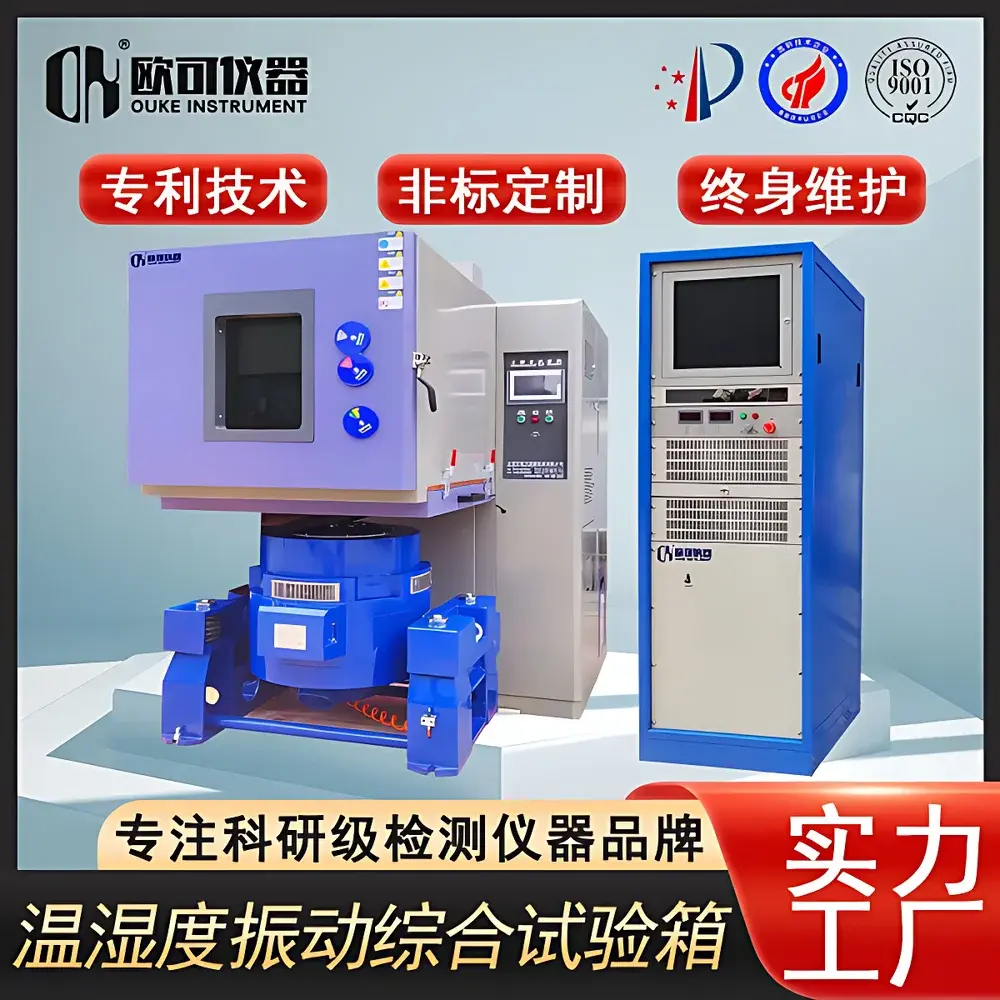
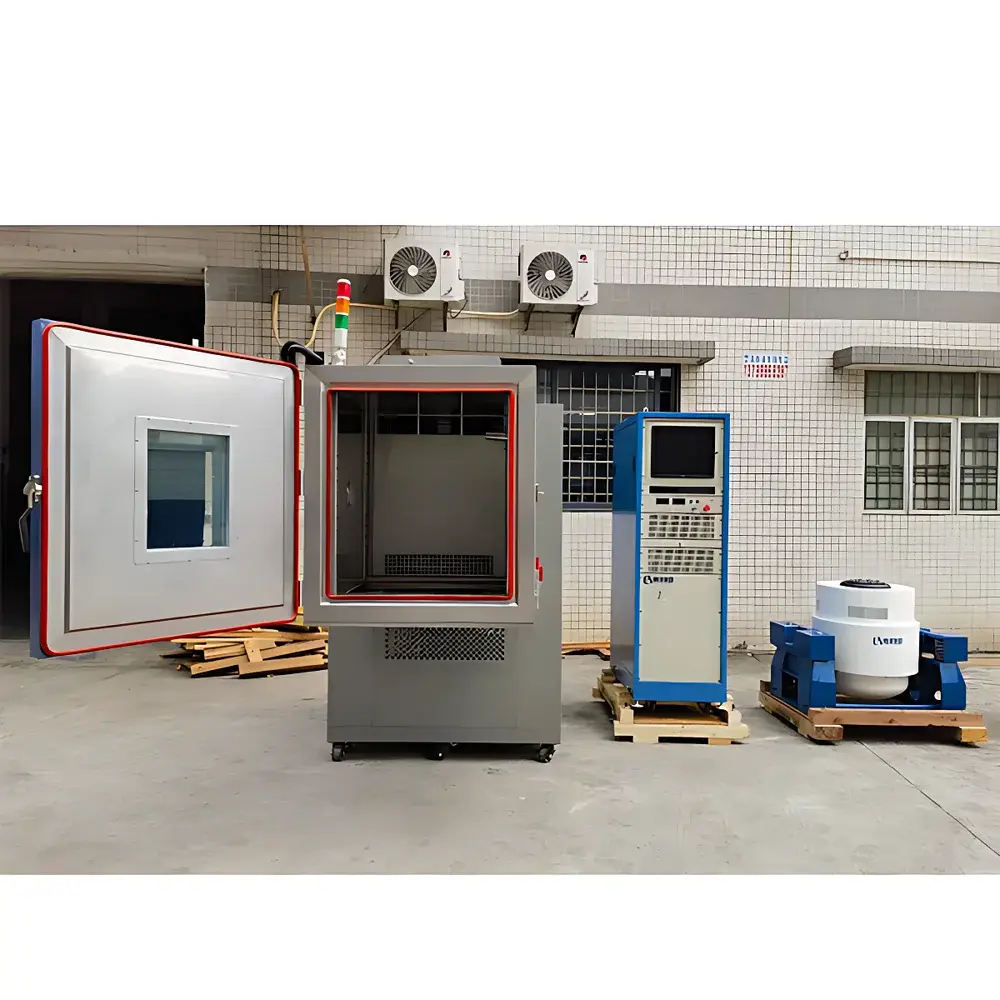
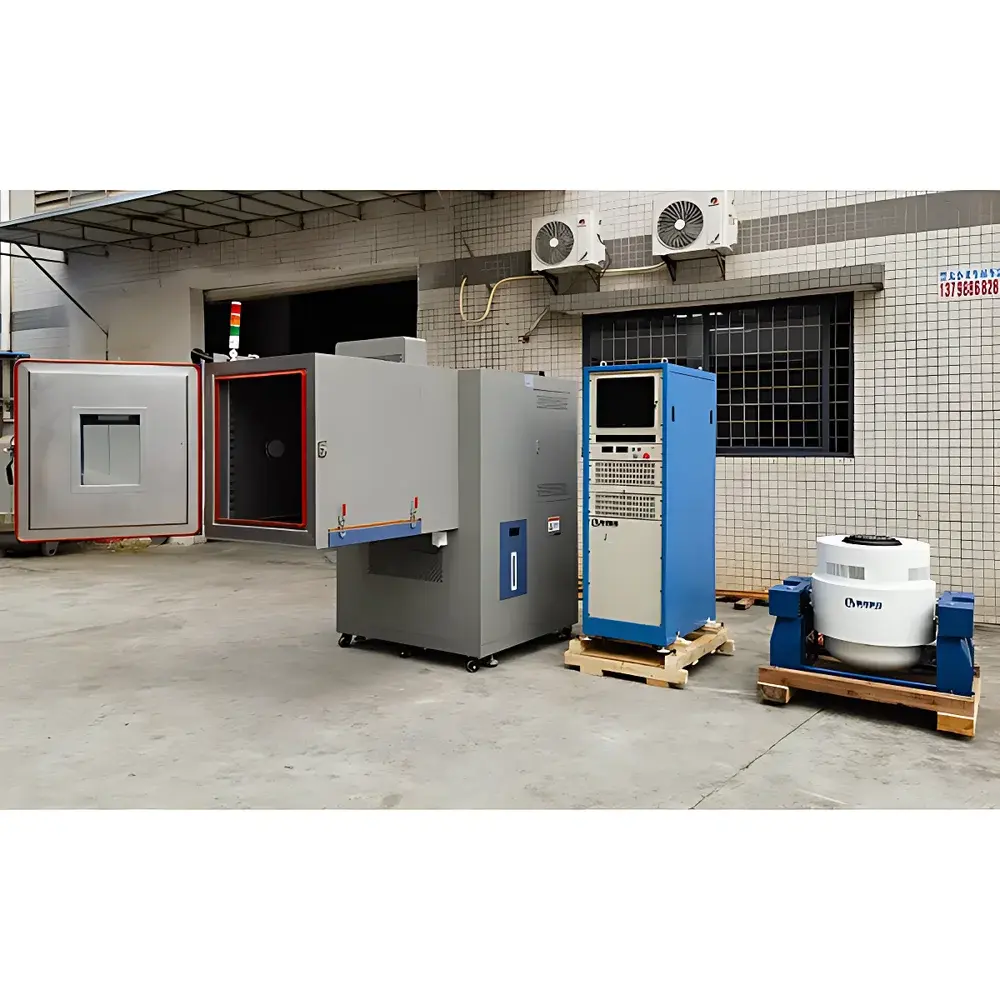
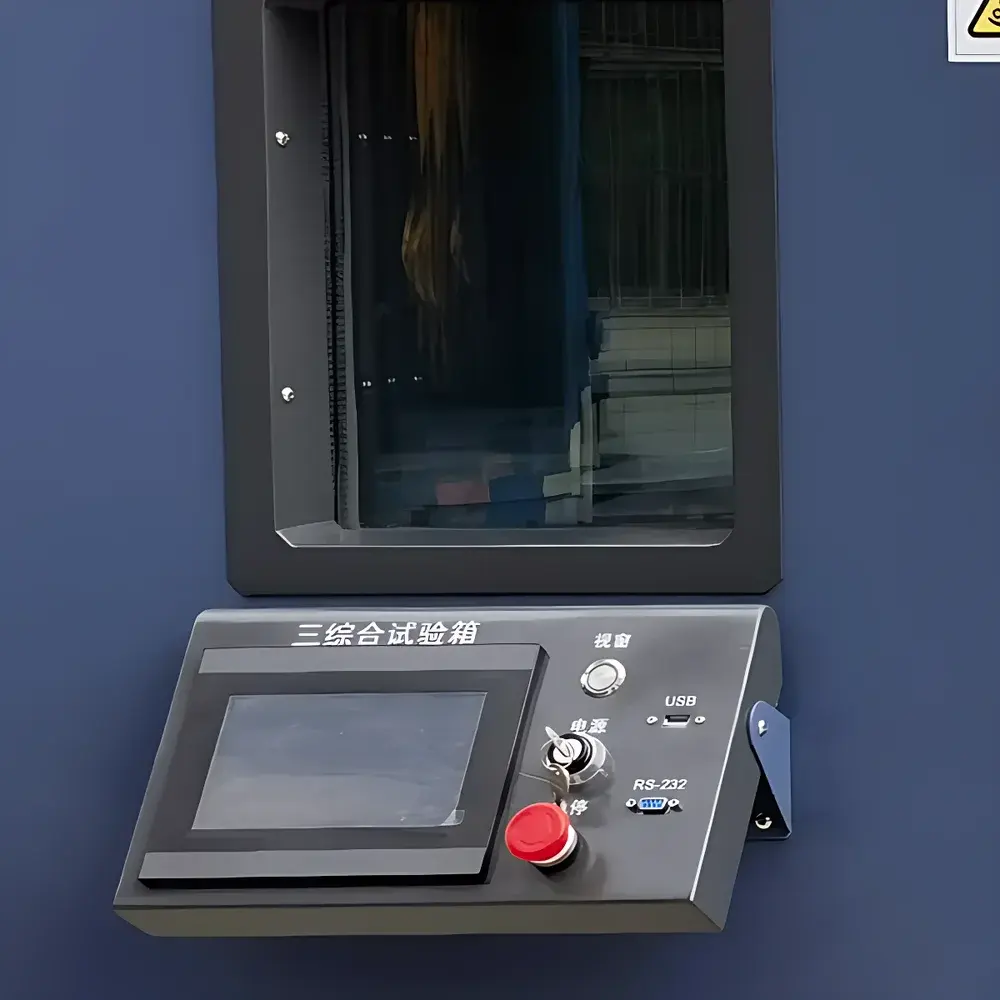
OK Instruments OK-ZTH-390 Combined Temperature-Humidity-Vibration Environmental Test Chamber
| Brand | OK Instruments |
|---|---|
| Origin | Guangdong, China |
| Manufacturer Type | Direct Manufacturer |
| Product Category | Domestic |
| Model | OK-ZTH-390.1688 |
| Temperature Range | −70 °C to +150 °C |
| Humidity Range | 20–98 %RH (at 20–85 °C) |
| Temperature Ramp Rate | 5 / 10 / 15 °C/min |
| Temperature Uniformity | ≤ ±0.5 °C |
| Standard Load Capacity | 15 kg aluminum mass, 350 W internal heat dissipation |
Overview
The OK Instruments OK-ZTH-390 Combined Temperature-Humidity-Vibration Environmental Test Chamber is an integrated reliability validation platform engineered for multi-stress environmental simulation under controlled laboratory conditions. It simultaneously or sequentially applies thermal cycling, humidity conditioning, and mechanical vibration—enabling accelerated life testing, failure mode identification, and conformance verification per international environmental stress screening (ESS) and qualification test standards. The system operates on a triaxial stress coupling principle: temperature is regulated via a dual-stage cascade refrigeration system with electric heating; humidity is generated and controlled by steam injection and solid desiccant drying; and vibration is delivered through a high-fidelity electromagnetic shaker integrated into the chamber baseplate. This architecture supports real-time correlation of thermomechanical and hygrothermal stresses—critical for evaluating solder joint fatigue, polymer creep, condensation-induced corrosion, and interfacial delamination in mission-critical electronics and structural assemblies.
Key Features
- Triple-stress integration: Independent yet synchronized control of temperature (−70 °C to +150 °C), relative humidity (20–98 %RH, constrained within 20–85 °C operational envelope), and vibration (configurable single-axis vertical or optional triaxial capability)
- Programmable ramp profiles: Selectable temperature transition rates of 5, 10, or 15 °C/min with overshoot suppression algorithms ensuring thermal stability during dynamic transitions
- High-fidelity vibration interface: Electromagnetic shaker with sealed dynamic feedthroughs, rated for continuous operation at 350 W thermal load and 15 kg inertial mass
- Active decoupling design: Vibration isolation mounts and reinforced structural framing minimize cross-coupling between shaker motion and climate control subsystems (e.g., compressor vibration transmission, sensor microphonics)
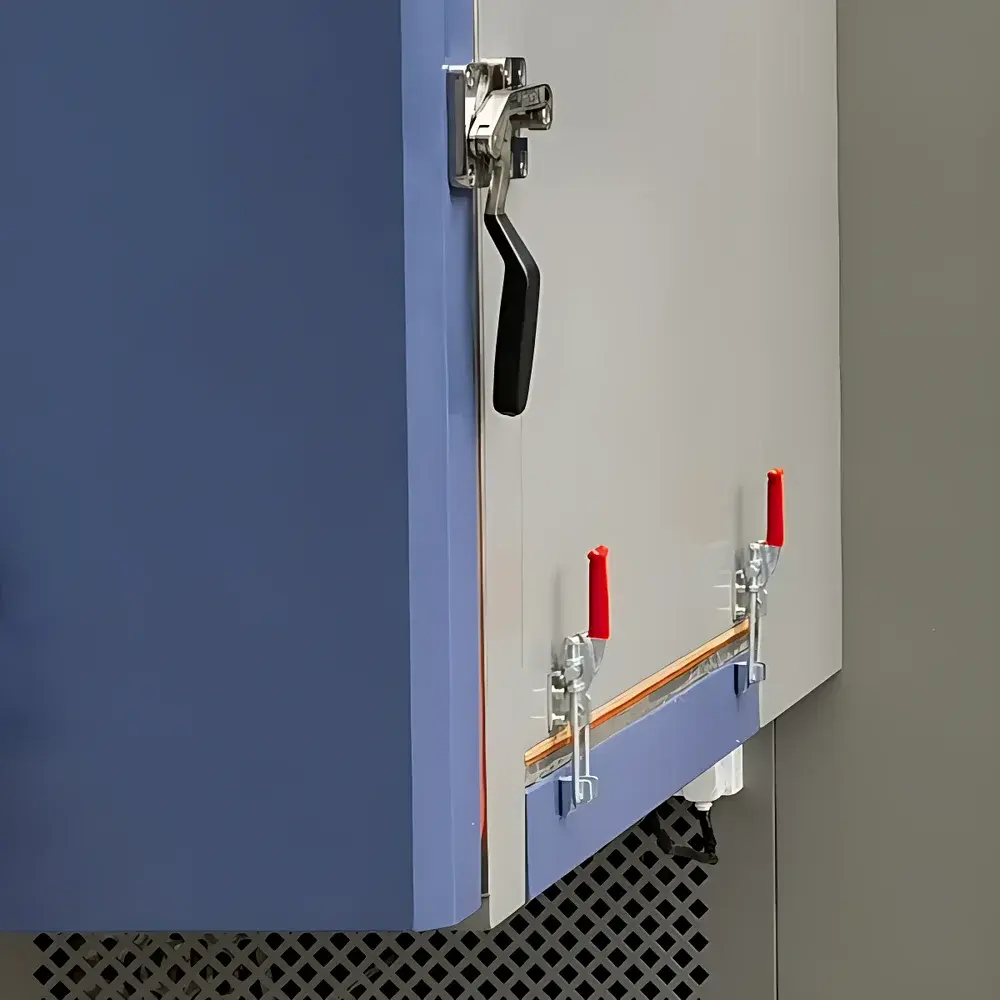
- Dynamic sealing solution: Patented bellows-style moving seal between shaker armature and chamber floor maintains humidity integrity and thermal boundary continuity during motion
- Uniformity assurance: Dual-airflow plenum design with adjustable vane diffusers sustains ≤ ±0.5 °C temperature deviation and ±3 %RH spatial variation across working volume under static and vibratory conditions
Sample Compatibility & Compliance
The OK-ZTH-390 accommodates DUTs requiring electrical feedthroughs (via hermetically sealed SMA/BNC/thermocouple connectors), optical access (optional quartz viewport), and real-time signal monitoring during stress application. It supports standard mounting configurations including fixture plates, slip tables, and custom adapter interfaces. The system complies with core environmental test standards including IEC 60068-2-1 (cold), IEC 60068-2-2 (dry heat), IEC 60068-2-30 (damp heat cyclic), ISO 16750-4 (road vehicle environmental conditions), and MIL-STD-810H Method 514.7 (vibration) and Method 502.7 (temperature/humidity). Its control architecture supports audit-ready data logging aligned with GLP/GMP requirements, including user-access level management, electronic signature support, and configurable alarm thresholds with event-triggered data capture.
Software & Data Management
The chamber is operated via OK-TestSuite™ — a Windows-based control and analysis platform featuring ISO/IEC 17025-aligned calibration traceability, real-time multi-parameter trending (temperature, RH, acceleration, displacement), and synchronized waveform acquisition (up to 50 kHz sampling). All test sequences are defined using hierarchical script logic compatible with ASTM E2717-20-defined test plan structures. Data export conforms to CSV, MATLAB (.mat), and UFF58 formats. Full audit trail functionality includes operator ID stamping, parameter change logs, and automatic backup to network-attached storage. Optional FDA 21 CFR Part 11 compliance package provides electronic record integrity controls, including role-based permissions, biometric login, and immutable archive generation.
Applications
- Aerospace: Qualification testing of avionics enclosures, satellite power converters, and MEMS inertial sensors under launch vibration + upper-atmosphere thermal vacuum surrogates
- Automotive: Validation of EV battery modules, ADAS ECUs, and powertrain control units per ISO 16750-4 and LV-124 specifications
- Defense electronics: GJB 150A-compliant testing of radar transceivers, encrypted comms hardware, and electro-optical targeting systems
- Medical devices: IEC 60601-1 environmental stress screening of implantable pulse generators and diagnostic imaging subsystems
- Advanced materials R&D: Correlation of hygrothermal aging kinetics with mechanical resonance shifts in CFRP laminates and piezoelectric ceramics
FAQ
What standards does the OK-ZTH-390 support for combined environment testing?
It natively supports test profiles defined in MIL-STD-810H Methods 502.7, 514.7, and 520.5, as well as IEC 60068-2 series, ISO 16750-4, and GB/T 2423 equivalents.
Can the vibration system operate independently while maintaining stable temperature and humidity?
Yes—the chamber’s active decoupling architecture enables full-rated shaker operation (up to 15 kg mass, 350 W load) without compromising temperature uniformity (≤ ±0.5 °C) or humidity setpoint accuracy (±2 %RH).
Is remote monitoring and control supported?
Standard Ethernet/IP connectivity enables secure remote supervision via OK-TestSuite™ Web Client, including live parameter visualization, alarm push notifications, and emergency stop initiation.
What maintenance intervals are recommended for long-term reliability?
Compressor oil and filter replacement every 2,000 operating hours; shaker armature alignment verification annually; humidity sensor recalibration every 6 months; full system performance validation per ISO/IEC 17025 every 12 months.
Does the system support third-party data acquisition hardware integration?
Yes—IEEE 488 (GPIB), USB-TMC, and Modbus TCP interfaces allow synchronization with external DAQ systems, oscilloscopes, and power analyzers for multi-instrument correlated analysis.



