
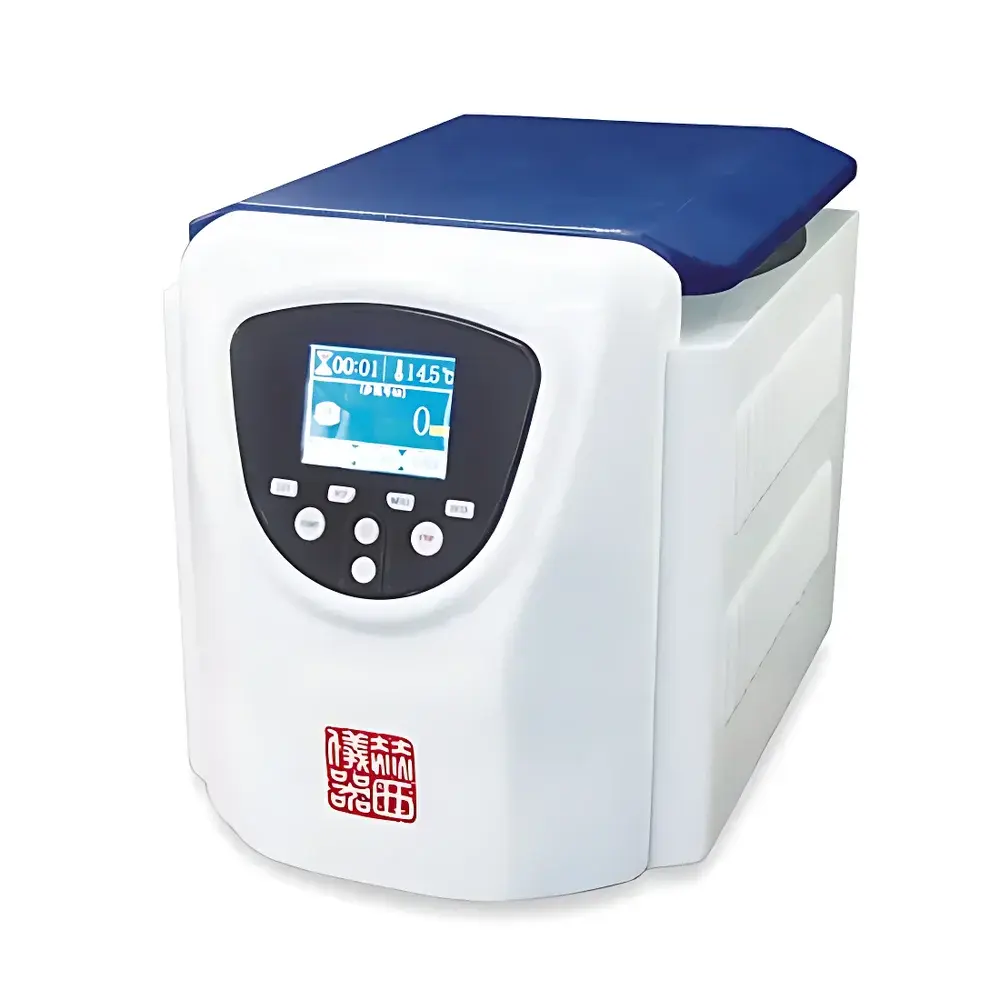
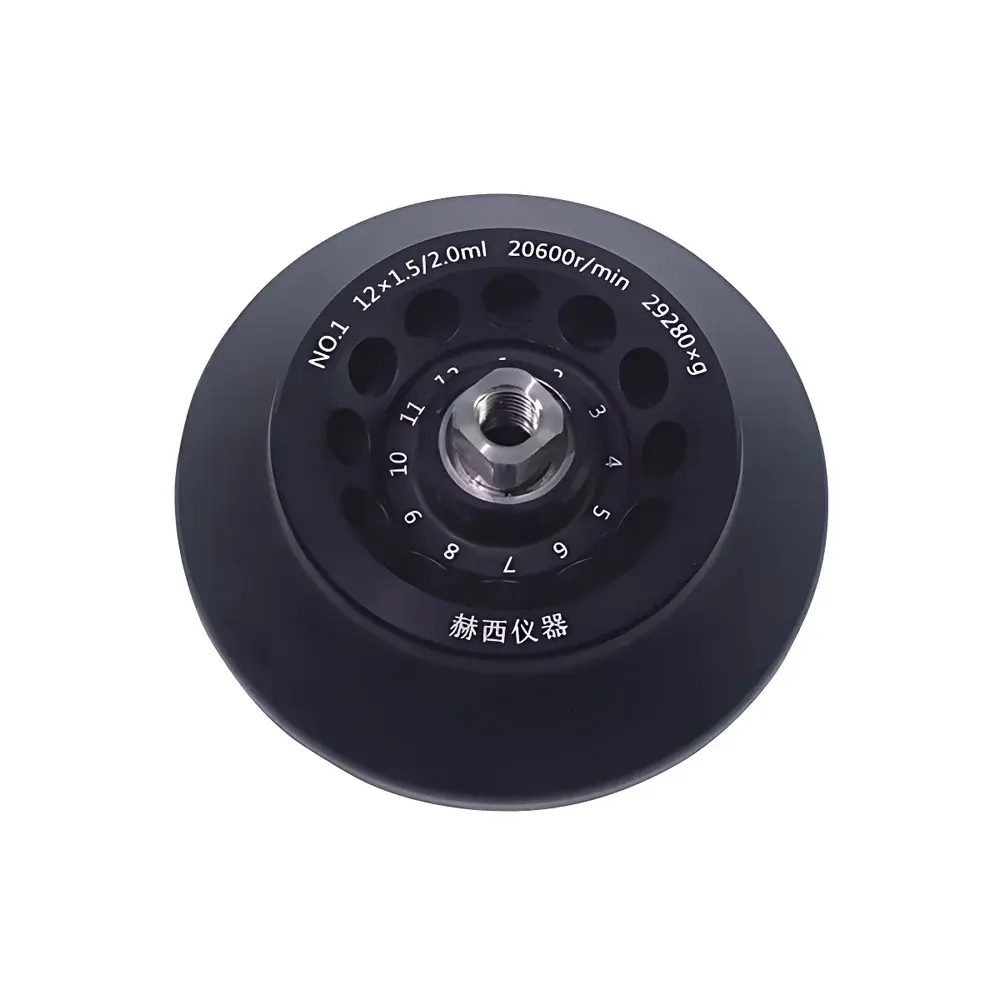
Herxi TG16MW Benchtop High-Speed Centrifuge
| Brand | Herxi |
|---|---|
| Model | TG16MW |
| Type | Benchtop High-Speed Centrifuge |
| Max Speed | 16500 rpm |
| Max RCF | 19600 ×g |
| Max Capacity | 12 × 10 mL |
| Acceleration/Deceleration | 10-step adjustable |
| Noise Level | ≤60 dB(A) |
| Power Supply | AC 220 V, 50 Hz |
| Dimensions | 380 × 260 × 310 mm |
| Weight | 17 kg |
| Certifications | ISO 9001:2015, ISO 13485:2016, CFDA Registered |
| Rotor Material | Forged Aluminum Alloy |
| Chamber Material | Austenitic 304 Stainless Steel |
| Safety Features | Bio-sealed rotor with RoHS-compliant silicone gasket, triple-damping suspension, automatic door lock, real-time imbalance detection, over-speed/over-temperature/under-voltage/over-voltage protection |
Overview
The Herxi TG16MW is a compact, high-performance benchtop centrifuge engineered for precision separation in resource-constrained laboratory environments. Designed around a brushless DC motor coupled with an advanced microprocessor control system and Infineon power driver modules, it delivers stable rotational dynamics at speeds up to 16,500 rpm—generating a maximum relative centrifugal force (RCF) of 19,600 ×g. Its core operating principle relies on radial acceleration to separate suspended particles based on sedimentation velocity, governed by particle mass, density differential, and medium viscosity. The TG16MW is optimized for applications requiring rapid pelleting of cellular components—including bacteria, yeast, subcellular organelles, and nucleic acid complexes—without refrigeration, making it ideal for routine workflows in molecular biology, clinical diagnostics, agricultural biotechnology, and food safety testing where temperature-sensitive protocols are not required.
Key Features
- Ultra-compact footprint (380 × 260 × 310 mm) — among the smallest high-speed benchtop centrifuges available globally, maximizing limited bench space without compromising capacity or performance.
- True-color TFT-LCD touchscreen interface with dual input mode (touch + physical keys), supporting multilingual UI (English, Chinese, Russian, Portuguese) and real-time display of both setpoints and actual running parameters.
- Intelligent acceleration/deceleration profiling: 10 programmable ramp rates enable gentle deceleration for sensitive samples and rapid spin-down for high-throughput processing.
- Biocontainment-certified angular rotor with integrated RoHS 2015/863-compliant silicone sealing gasket, preventing aerosol leakage during high-speed operation and meeting biosafety level 2 (BSL-2) containment expectations.
- Triple-stage damping system combined with precision-balanced forged aluminum rotors ensures mechanical stability, low vibration (<60 dB[A]), and minimal sample resuspension risk—even under partial loading conditions.
- Comprehensive safety architecture: real-time imbalance detection, overspeed cutoff, thermal monitoring, voltage fluctuation compensation (100–230 V AC auto-sensing), and electromagnetic door interlock with soft-catch latching mechanism.
- 20 user-programmable methods stored in non-volatile memory; last-run protocol auto-recall on startup improves workflow continuity and reduces operator error.
Sample Compatibility & Compliance
The TG16MW accommodates standard conical-bottom tubes ranging from 1.5 mL to 10 mL using interchangeable angular rotors fabricated from aerospace-grade forged aluminum. It supports common polypropylene and polycarbonate centrifuge tubes compliant with IEC 61010-1 and ISO/IEC 17025 requirements for laboratory equipment validation. All structural components—including the rotor chamber (AISI 304 stainless steel), front panel (cold-rolled steel with epoxy-polyester coating), and outer housing—meet EN 61000-6-3 (EMC) and EN 61000-6-2 (immunity) standards. Regulatory documentation includes CFDA registration (Class II medical device), ISO 9001:2015 quality management certification, and ISO 13485:2016 certification for medical device manufacturing processes—ensuring traceability, design control, and production consistency aligned with GLP and GMP-aligned laboratory practices.
Software & Data Management
While the TG16MW operates as a standalone instrument without external PC connectivity, its embedded firmware provides full audit-trail capability for critical operational events—including run start/stop timestamps, parameter changes, fault logs, and safety interventions. All settings and execution records are retained across power cycles. The control system complies with FDA 21 CFR Part 11 principles for electronic records through secure parameter locking, unique operator ID assignment (via optional password-enabled access levels), and immutable event logging. Firmware updates are performed via USB port using signed binaries, maintaining integrity and version control per ISO/IEC 17025 clause 5.9.
Applications
The TG16MW serves as a primary separation tool in non-refrigerated workflows involving nucleic acid purification (e.g., plasmid prep, PCR cleanup), protein precipitation, cell harvesting (E. coli, mammalian suspension cultures), viral pellet concentration, serum/plasma separation, and environmental microbiology (waterborne pathogen isolation). Its high RCF output enables efficient clarification of viscous lysates and dense particulate suspensions commonly encountered in agricultural seed extract analysis or fermented food matrix processing. It is routinely deployed in teaching laboratories, field-deployable diagnostic units, QC labs in contract research organizations (CROs), and regional hospital core facilities where space efficiency, energy economy, and regulatory readiness are prioritized over cryogenic functionality.
FAQ
Is the TG16MW suitable for use with infectious biological agents?
Yes—when equipped with the bio-sealed angular rotor and operated within BSL-2 containment guidelines, it meets aerosol containment requirements for moderate-risk pathogens per WHO Laboratory Biosafety Manual (4th ed.).
Does the centrifuge support rotor calibration verification?
Yes—rotor identification is encoded into each aluminum rotor; the system validates compatibility and displays nominal k-factor and Rmax values upon insertion.
Can I export run logs for regulatory submission?
Run metadata (time, speed, RCF, duration, rotor ID, error flags) can be manually transcribed or captured via screen photo; future firmware versions may include CSV export via USB.
What maintenance intervals are recommended?
Visual inspection and cleaning every 6 months; rotor lifetime is tracked by cumulative run hours and logged automatically; replacement advised after 10,000 cycles or per manufacturer’s fatigue curve data.
Is third-party rotor compatibility supported?
No—only Herxi-certified rotors are recognized by the safety interlock; unauthorized rotors will not initiate operation.
Related Products



