
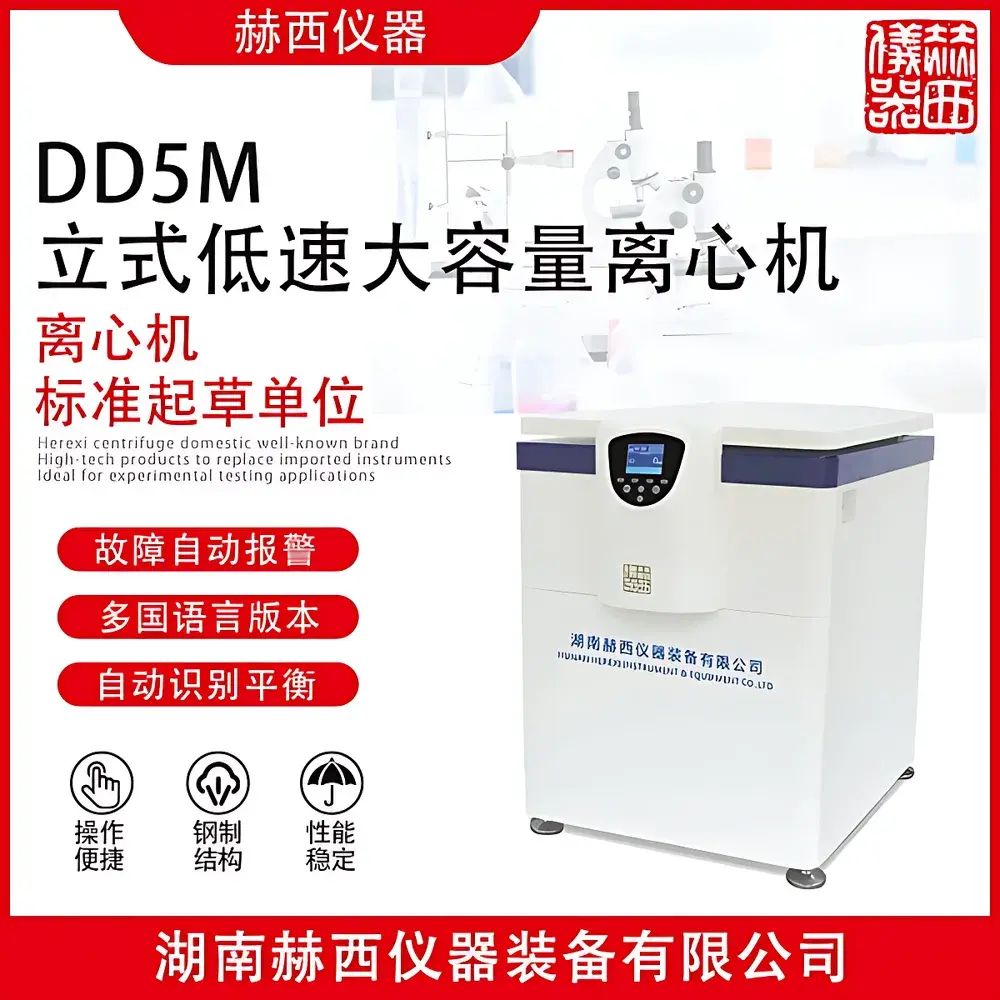
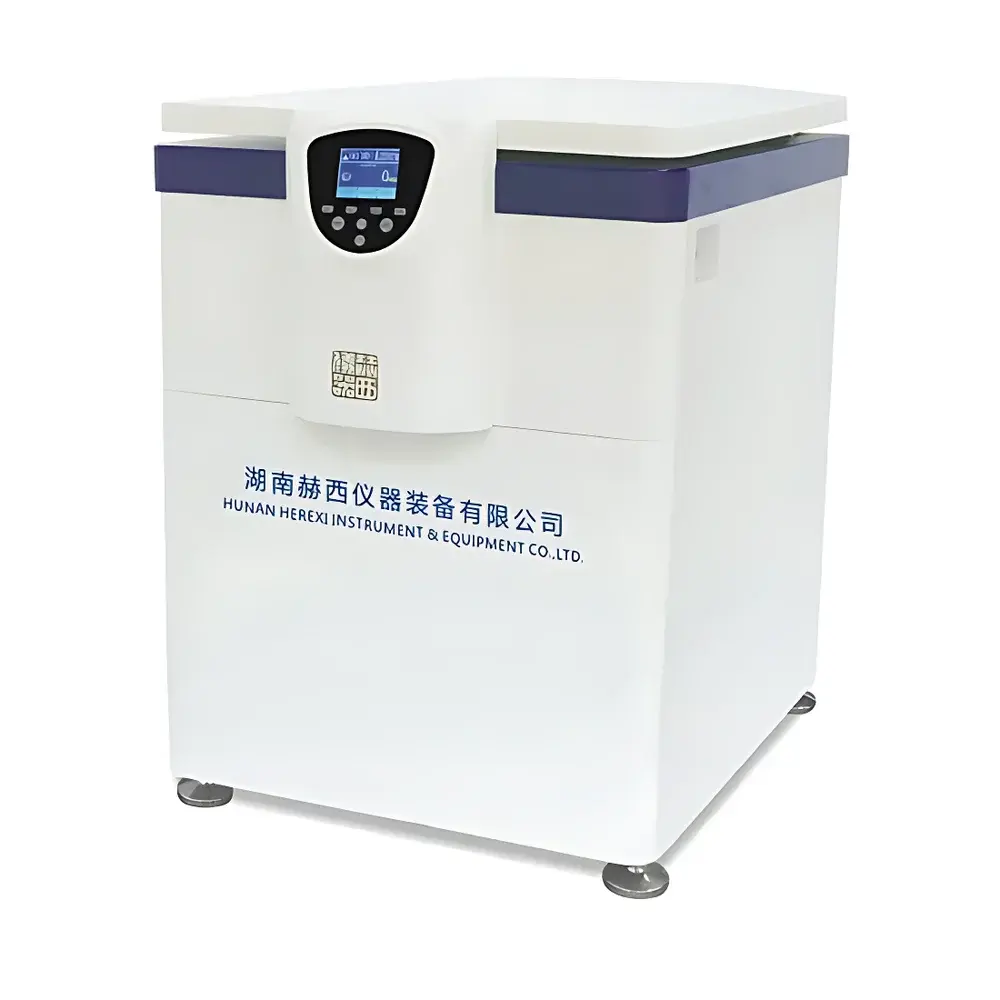
Hesix DD5M Floor-Standing Low-Speed High-Capacity Centrifuge
| Brand | Hesix |
|---|---|
| Model | DD5M |
| Type | Floor-standing centrifuge |
| Maximum capacity | 6 × 500 mL |
| Maximum speed | 5000 rpm |
| Maximum RCF | 4800 × g |
| Temperature range | Not refrigerated (optional refrigeration available) |
| Dimensions (L×W×H) | 740 × 620 × 900 mm |
| Weight | 85 kg (non-refrigerated) / 180 kg (refrigerated) |
| Power supply | AC 220 V, 50 Hz |
| Noise level | ≤65 dB(A) |
| Acceleration/deceleration | 10-step control |
| Programmable methods | 20 user-defined protocols |
| Certifications | CFDA registered, ISO 9001:2015 & ISO 13485:2016 compliant |
Overview
The Hesix DD5M is a floor-standing, low-speed high-capacity centrifuge engineered for routine separation tasks in clinical diagnostics, blood banking, bioprocessing, and academic laboratories. Designed around a robust交流变频 (AC variable-frequency) motor architecture and microprocessor-based control system, the DD5M delivers stable rotational performance at speeds up to 5000 rpm with a maximum relative centrifugal force (RCF) of 4800 × g. Its primary operational domain lies within the low-speed centrifugation regime—optimized for pelleting whole cells, platelets, erythrocytes, and large particulates without inducing shear-induced damage. Unlike ultra-high-speed or ultracentrifuge systems, the DD5M prioritizes volumetric throughput, mechanical reliability, and operator safety over extreme g-force generation, making it especially suited for batch processing of large-volume samples such as plasma separation, serum harvesting, and cell culture supernatant clarification.
Key Features
- High-torque AC variable-frequency motor with intelligent drive module (Infineon-based), ensuring smooth acceleration/deceleration and minimal vibration across all operating conditions.
- TFT-LCD true-color touchscreen display with dual-input interface (touch + physical keys); real-time simultaneous display of setpoints and actual values (speed, time, RCF, temperature if equipped).
- 10-step programmable acceleration and deceleration profiles—critical for preventing sample resuspension during braking, particularly with delicate sediment layers.
- 20 stored user protocols with editable parameters; runtime modifications permitted without halting operation.
- Triple-stage damping system including composite rubber mounts and asymmetric counterbalance design, reducing operational noise to ≤65 dB(A) and enhancing rotor stability under load imbalance.
- Electromechanical door lock with auto-engagement mechanism: secure latching triggered by gentle lid closure, eliminating manual locking steps and improving workflow continuity.
- Full stainless-steel (AISI 304) centrifuge chamber and reinforced steel housing with triple-layer protective casing—designed for long-term corrosion resistance and structural integrity in high-humidity or saline-rich environments.
- Optional refrigeration module available (R404a refrigerant, compliant with EU F-Gas Regulation), supporting temperature-controlled separations between –20 °C and +40 °C with pre-cooling, standby cooling, and auto-defrost functions.
Sample Compatibility & Compliance
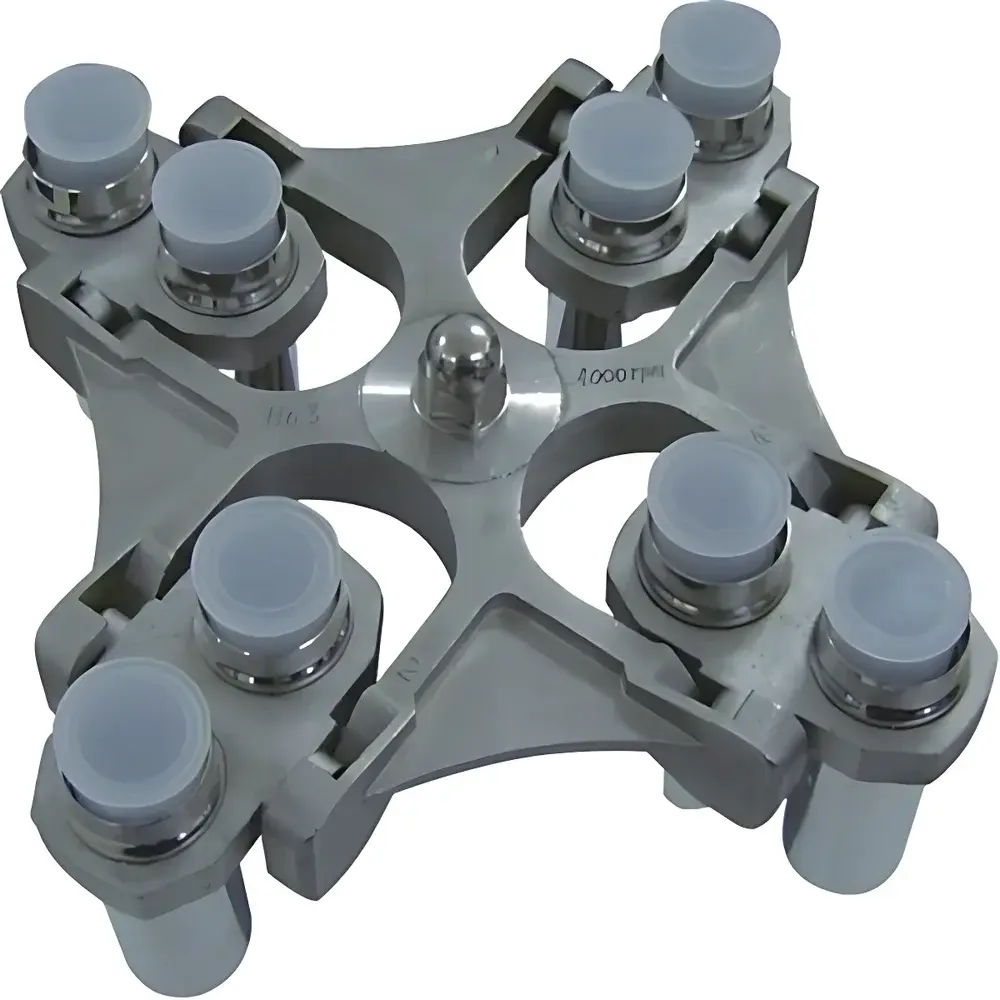
The DD5M accommodates a broad spectrum of tube formats via interchangeable swing-out rotors—including 6 × 500 mL conical tubes, 48 × 5 mL/2 mL vacuum blood collection tubes, 148 × 5 mL/2 mL vacuum tubes, and 2 × 96-well microplate carriers. All biocontainment rotors feature integrated silicone O-rings certified to EU RoHS Directive 2015/863, minimizing aerosol leakage during high-volume spinning. The instrument meets essential regulatory benchmarks for medical device manufacturing and laboratory use: registered with China’s National Medical Products Administration (NMPA, formerly CFDA), certified to ISO 9001:2015 (Quality Management Systems) and ISO 13485:2016 (Medical Devices), and designed to support GLP-compliant workflows through traceable parameter logging and audit-ready operational records.
Software & Data Management
While the DD5M operates via embedded firmware rather than PC-dependent software, its control architecture supports full parameter logging—including start/stop timestamps, rotor ID recognition (where applicable), speed deviation history, and fault-event codes. All data are retained in non-volatile memory and can be exported via USB interface for integration into LIMS or QA documentation systems. Optional firmware upgrades may introduce enhanced data export formats (CSV, XML) and timestamped audit trails aligned with FDA 21 CFR Part 11 requirements for electronic records and signatures—facilitating compliance in regulated diagnostic or pharmaceutical QC labs.
Applications
- Clinical hematology: separation of whole blood into plasma, buffy coat, and packed red cells using standardized vacuum tube protocols.
- Blood bank operations: large-batch processing of donor units prior to component fractionation (e.g., platelet-rich plasma preparation).
- Cell culture facilities: harvesting adherent or suspension cells from bioreactors or roller bottles at scalable volumes (up to 3 L per run).
- Food and environmental testing labs: sedimentation of suspended solids in water, milk, or fermentation broths prior to turbidity or microbial analysis.
- Vaccines and biologics manufacturing: clarifying harvest streams before depth filtration or chromatographic purification steps.
FAQ
Is the DD5M suitable for GMP-regulated environments?
Yes—the unit’s ISO 13485:2016 certification, NMPA registration, and configurable data logging capabilities support validation under GMP Annex 11 and WHO TRS 986 requirements.
Can I retrofit refrigeration onto a non-refrigerated DD5M unit?
No—refrigeration must be specified at time of order; the thermal management system requires dedicated compressor mounting, condenser routing, and chamber insulation not present in standard configurations.
What safety certifications does the DD5M carry beyond ISO standards?
The device complies with IEC 61010-1:2010 (Safety Requirements for Electrical Equipment for Measurement, Control, and Laboratory Use) and features mechanical interlocks, rotor imbalance detection, and automatic shutdown on critical fault detection.
Does the DD5M support rotor auto-identification?
Basic rotor ID recognition is implemented for selected swing-bucket assemblies; however, full auto-ID with torque compensation requires optional firmware and rotor-specific RFID tags (not included in base configuration).
How often should preventive maintenance be performed?
Hesix recommends quarterly inspection of drive belts, door latch mechanisms, and refrigeration system (if equipped), plus annual calibration of speed and timer accuracy per ISO/IEC 17025 guidelines.



