
Regent WinSEEDLE Seed and Needle Morphometric Analysis System
| Origin | Canada |
|---|---|
| Manufacturer Type | Authorized Distributor |
| Origin Category | Imported |
| Model | WinSEEDLE Seed and Needle Morphometric Analysis System |
| Pricing | Upon Request |
Overview
The Regent WinSEEDLE Seed and Needle Morphometric Analysis System is a high-precision, scanner-based image analysis platform engineered for quantitative morphological characterization of conifer needles and botanical seeds. Unlike conventional camera-based or conveyor-style leaf area meters—whose measurements are highly sensitive to ambient lighting, shadow artifacts, and operator-dependent positioning—WinSEEDLE employs calibrated flatbed optical scanning with integrated diffuse illumination to acquire distortion-free, sub-millimeter-resolution digital images. The system operates on the principle of binary segmentation and geometric feature extraction from high-fidelity grayscale or color scans, enabling robust, repeatable quantification of 2D projection metrics and derived 3D structural estimates (e.g., volume, surface area) without physical contact or destructive sampling. Designed specifically for plant physiology, forest ecology, and seed quality laboratories, WinSEEDLE supports both research-grade phenotyping and routine QC workflows under GLP-aligned documentation practices.
Key Features
- Two-tier software architecture: Standard Edition (core morphometrics) and Professional Edition (enhanced disease quantification via spectral colorimetry)
- Dual-scan hardware compatibility: Supports LC4800-II (4800 dpi, 22 × 30 cm scan area) and LA2400 (2400 dpi, 31 × 43 cm scan area), both factory-calibrated for metrological traceability
- Automated object detection and classification: Robust segmentation algorithms distinguish intact needles/seeds from debris, fragments, or overlapping objects using adaptive thresholding and shape filtering
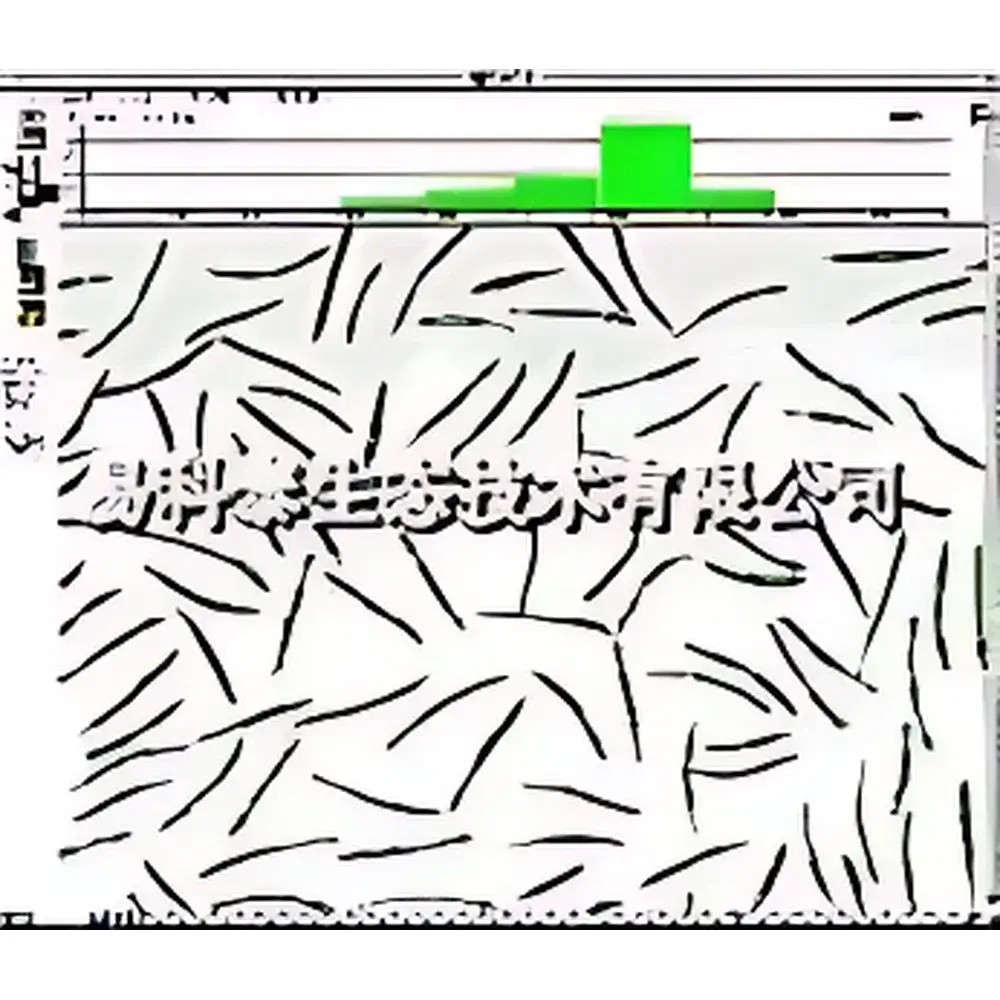
- Interactive image editing suite: Real-time correction of segmentation errors prior to data export; visual overlay of measurement annotations (e.g., length vectors, curvature arcs, width profiles)
- Dynamic histogram visualization: On-screen bar charts update in real time during batch analysis, displaying distributions of length, width, area, or count per sample set
- Non-contact constraint compliance: Enforces strict spatial separation between specimens during scanning—no touching or stacking—to ensure geometric fidelity and algorithmic reliability
- Optimized computational efficiency: CPU utilization remains stable during idle periods; memory management prevents crashes even with images containing >5,000 individual projections
Sample Compatibility & Compliance
WinSEEDLE accommodates a broad range of botanical specimens including but not limited to pine, spruce, fir, and cedar needles (lengths 1–30 cm; widths 0.2–3 mm), as well as dicot and monocot seeds (0.5–20 mm diameter). All analyses comply with ISO 5725 (accuracy and precision of measurement methods) and align with ASTM D6988 (standard guide for image analysis of particulate materials) for reproducible reporting. The Professional Edition’s color-based disease scoring module supports quantification of chlorosis, necrosis, and fungal hyphal coverage per ISO 11540 (plant health assessment protocols). Data files include embedded metadata—scan resolution, calibration timestamp, user ID, and analysis parameters—ensuring audit readiness for FDA 21 CFR Part 11–compliant environments when deployed with validated IT infrastructure.
Software & Data Management
WinSEEDLE software stores results in plain-text ASCII format (.csv/.txt), ensuring seamless integration with R, Python (Pandas, scikit-image), MATLAB, or commercial statistical packages (SAS, JMP, SPSS). Each exported dataset includes full provenance: original image filename, pixel-to-mm conversion factor, segmentation settings, and rejection rationale codes (e.g., “touching_edge”, “low_contrast”). The Professional Edition adds spectral channel analysis (RGB, HSV, CIELAB) for lesion quantification, with user-definable color thresholds saved as reusable presets. All versions support JPEG and Windows BMP import; post-analysis images are auto-renamed with suffixes indicating processing status (e.g., “_analyzed”, “_rejected”). Documentation follows ICH E6(R3) principles for electronic records, and software version history is logged within each output file header.
Applications
- Conifer needle aging studies: Tracking longitudinal changes in curvature, width taper, and projected area loss under drought or ozone exposure
- Seed viability screening: Correlating 2D morphology (aspect ratio, convexity, solidity) with germination success rates
- Phytopathology diagnostics: Quantifying percent lesion area on infected needles using hue-saturation-value masking
- Ecophysiological modeling: Generating input parameters (surface-area-to-volume ratios, cross-sectional geometry) for gas exchange simulations
- Seed bank quality control: Batch-wise validation of size uniformity, shape consistency, and contamination levels per ISO 11268
- Herbarium digitization: High-resolution archival scanning with embedded scale bars and EXIF metadata preservation
FAQ
What minimum computer specifications are required to run WinSEEDLE?
A Pentium III-class processor (or equivalent), 64 MB RAM, and a 17-inch display are the historical baseline; modern deployments recommend ≥2 GHz dual-core CPU, 4 GB RAM, and Windows 10/11 (64-bit) for optimal performance with large-batch analysis.
Can WinSEEDLE analyze overlapping or partially touching seeds?
No—accurate morphometric extraction requires complete spatial isolation of specimens on the scanner bed. Overlapping objects trigger automatic rejection with diagnostic feedback visible in the interface.
How does WinSEEDLE estimate volume and surface area from 2D projections?
Using two empirically validated cross-section models: (1) a generalized irregular-shape model applicable to non-circular needles, and (2) a rectangular model for aspect-ratio-sensitive calculations. Both derive 3D proxies from pixel-based width profiles and projection area.
Is third-party scanner hardware supported?
Only Regent-certified LC4800-II and LA2400 scanners are fully integrated; generic USB scanners lack the photometric calibration and illumination uniformity required for metrological validity.
Does WinSEEDLE support automated batch processing?
Yes—scanned images can be queued for unattended analysis, with progress logging, error flagging, and summary reports generated per batch folder.
Related Products



