
SPECIM SisuRock Hyperspectral Core Scanning Platform
| Brand | SPECIM |
|---|---|
| Origin | Finland |
| Manufacturer Type | Authorized Distributor |
| Origin Category | Imported |
| Model | SisuRock |
| Pricing | Available Upon Request |
| Spectral Ranges (Configurable) | 400–1000 nm (VNIR) |
| Pixel Resolution | 0.2 mm |
| Scan Speed | 20 mm/s |
| Maximum Sample Dimensions | 150 cm (L) × 65 cm (W) × 20 cm (H) |
| Max Sample Weight | 50 kg |
| System Mass | ~500 kg |
Overview
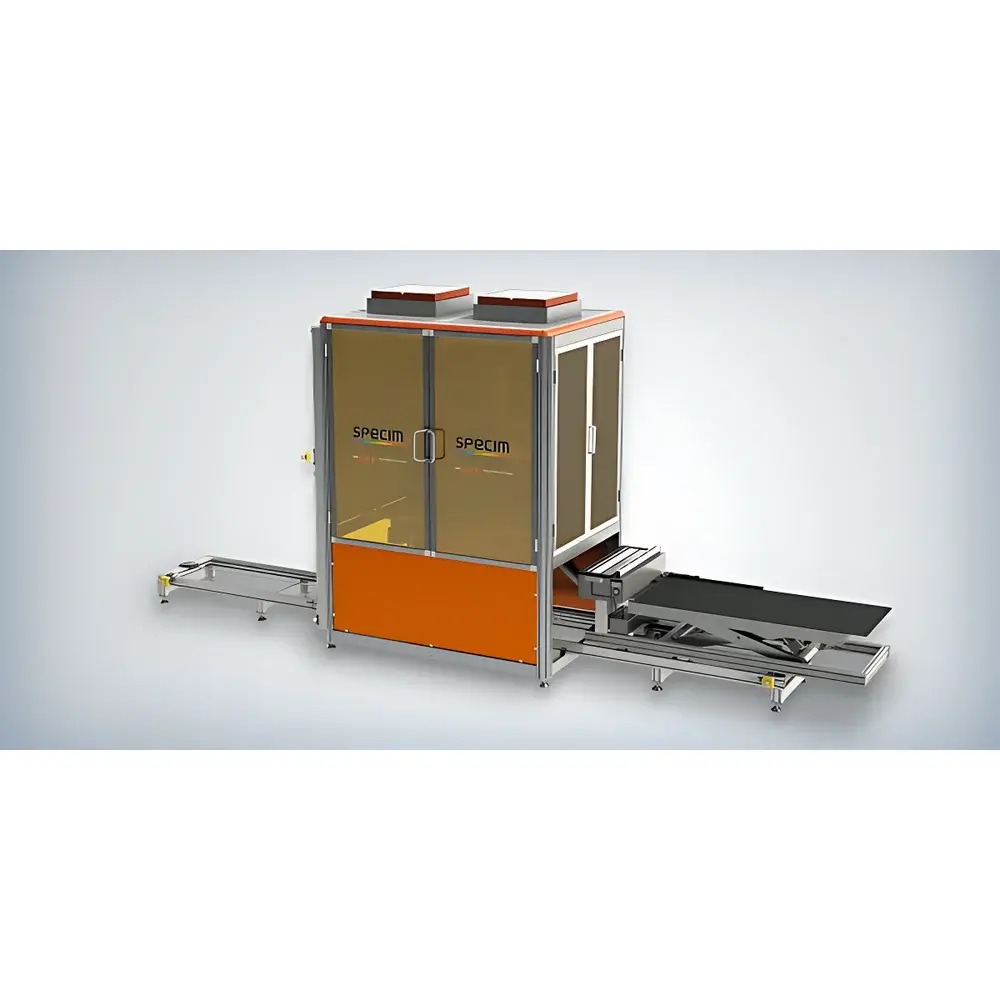
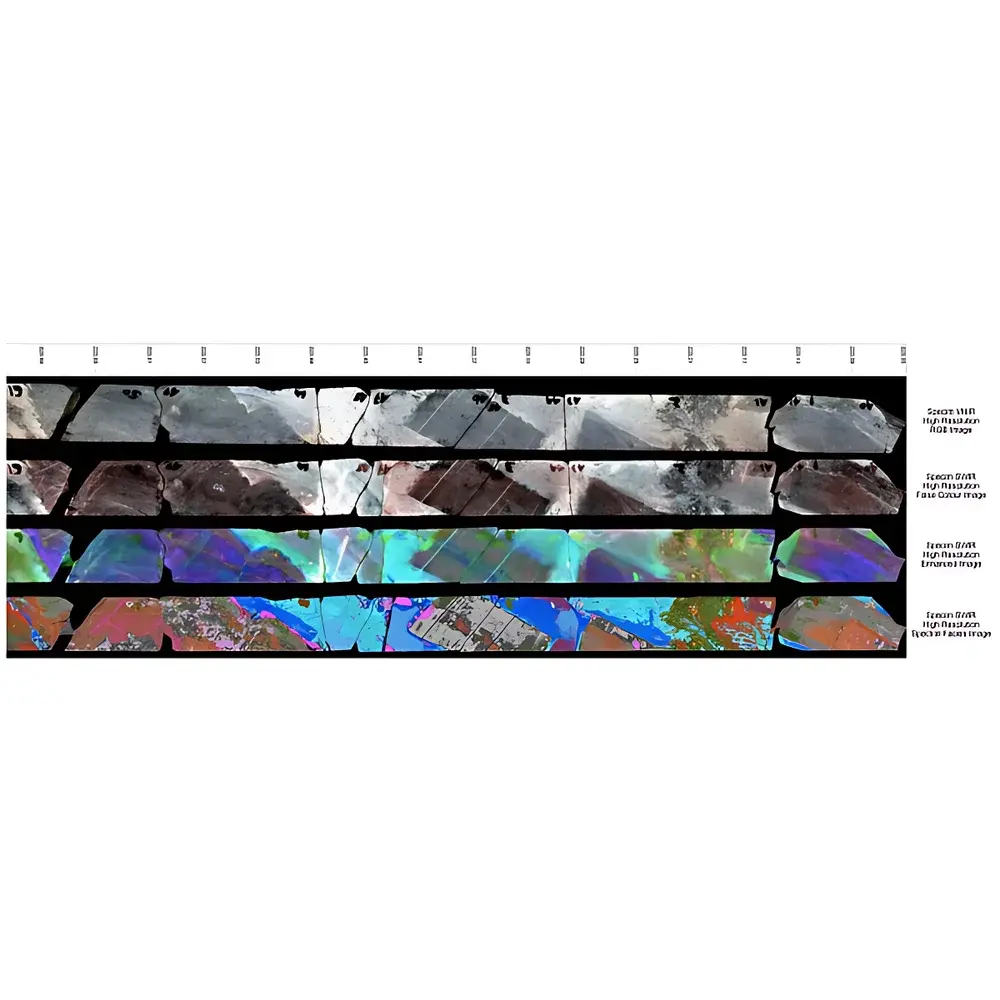
The SPECIM SisuRock Hyperspectral Core Scanning Platform is an industrial-grade, laboratory- and field-deployable imaging system engineered for high-throughput, non-destructive spectral characterization of geological core samples, drill cuttings, soil columns, and sediment slabs. Based on push-broom hyperspectral imaging architecture, the SisuRock acquires contiguous spectral data cubes (x, y, λ) across user-selectable wavelength domains—enabling quantitative mineralogical mapping, lithological differentiation, and geochemical proxy estimation without sample preparation or physical contact. Its optical design integrates precision motion control with calibrated line-scan cameras and stabilized illumination to ensure spatial and radiometric fidelity across multi-meter sample lengths. Designed for integration into core logging facilities, geoanalytical laboratories, and resource evaluation centers, the platform supports traceable, repeatable spectral acquisition under controlled ambient conditions, fulfilling foundational requirements for spectral library development and automated ore-waste classification workflows.
Key Features
- Modular sensor architecture supporting interchangeable VNIR (400–1000 nm), SWIR (970–2500 nm), and LWIR thermal (8–12 µm) imaging modules—each factory-calibrated for radiometric accuracy and geometric stability.
- Sub-millimeter spatial resolution: 0.2 mm pixel ground sampling distance (GSD) at nominal working distance, enabling detection of fine-grained mineral assemblages and textural boundaries in intact core sections.
- High-speed linear scanning at 20 mm/s, scalable to >200 m of core per 24-hour operational cycle—optimized for batch processing in commercial core sheds and national geological survey repositories.
- Robust mechanical frame with vibration-damped granite base and motorized XYZ sample positioning stage, accommodating irregular core geometries up to 150 cm × 65 cm × 20 cm and 50 kg mass.
- Integrated LED-based uniform illumination system with spectral output matched to sensor bandpass, minimizing specular reflection artifacts and ensuring consistent signal-to-noise ratio across heterogeneous surfaces.
- Onboard real-time preview and metadata tagging (sample ID, orientation, timestamp, sensor configuration) compliant with IGSN (International Geo Sample Number) and OGC SensorML conventions.
Sample Compatibility & Compliance
The SisuRock accommodates standard NQ, HQ, BQ, and PQ-sized drill cores, split-half sections, slabbed rock specimens, unconsolidated soil monoliths, and sediment cores mounted on rigid carriers. Surface preparation is not required; however, optimal results are achieved with cleaned, dried, and uniformly oriented samples. The platform conforms to ISO 18400-101 (soil investigation — Part 101: General principles) for representative sampling documentation and supports audit-ready data generation aligned with GLP (Good Laboratory Practice) frameworks. All spectral data products include embedded calibration metadata traceable to NIST-traceable reference standards, satisfying requirements for regulatory reporting under USGS, CSIRO, and Geological Survey of Canada core logging protocols.
Software & Data Management
Acquisition and preprocessing are managed via SPECIM’s proprietary INSIGHT software suite, which provides live spectral preview, auto-exposure optimization, dark/white reference correction, and georeferenced orthomosaic stitching. Export formats include ENVI-compatible .hdr/.bil, GeoTIFF with embedded spectral metadata, and HDF5 for large-scale spectral database ingestion. The platform supports integration with third-party analytical environments—including Python-based spectral libraries (scikit-learn, Spectral Python), ENVI Classic, and QGIS—with optional API access for custom ML pipeline deployment. Audit trails, user authentication logs, and version-controlled processing scripts comply with FDA 21 CFR Part 11 requirements when deployed in regulated QA/QC environments.
Applications
- Automated mineral identification and abundance quantification (e.g., clays, carbonates, sulfides, oxides) using spectral unmixing and spectral angle mapper (SAM) algorithms.
- Ore-waste discrimination in epithermal and porphyry systems via NIR-SWIR absorption feature analysis (e.g., Al-OH, Mg-OH, Fe-OH overtones and combinations).
- Lithological boundary detection and stratigraphic correlation across continuous core runs using supervised classification (e.g., Random Forest, SVM).
- Hydrothermal alteration zoning mapping (propylitic, argillic, phyllic) for vectoring toward mineralization.
- Soil organic matter estimation and contaminant screening (e.g., hydrocarbons, heavy metal proxies) in environmental site assessments.
- Support for spectral library curation (e.g., USGS, ECOSTRESS, SPECIM’s own mineral reference set) and transfer learning model training.
FAQ
What spectral calibration standards are included with the SisuRock?
Each system ships with NIST-traceable white reference tile (Spectralon®), dark current reference, and optional mineral standard panels (e.g., kaolinite, montmorillonite, quartz) for in-situ validation.
Can the SisuRock be integrated into existing core logging workflows?
Yes—the platform supports industry-standard data exchange formats (CSV, GeoTIFF, ENVI) and offers RESTful API endpoints for synchronization with LIMS, GIS, and core database platforms such as Geosoft Oasis montaj and Leapfrog Geo.
Is remote operation supported?
Full remote acquisition, monitoring, and diagnostic capability is available via secure TLS-encrypted VNC or SSH tunneling, enabling off-site supervision and troubleshooting without on-site presence.
What maintenance intervals are recommended?
Annual radiometric recalibration and biannual mechanical alignment verification are advised; all procedures follow SPECIM’s documented service protocol and generate ISO/IEC 17025-compliant calibration certificates.
Does the system support real-time spectral classification during scanning?
Yes—INSIGHT software includes configurable real-time classification modules with user-defined endmembers and thresholding logic, enabling immediate visual feedback and adaptive sampling decisions.



