
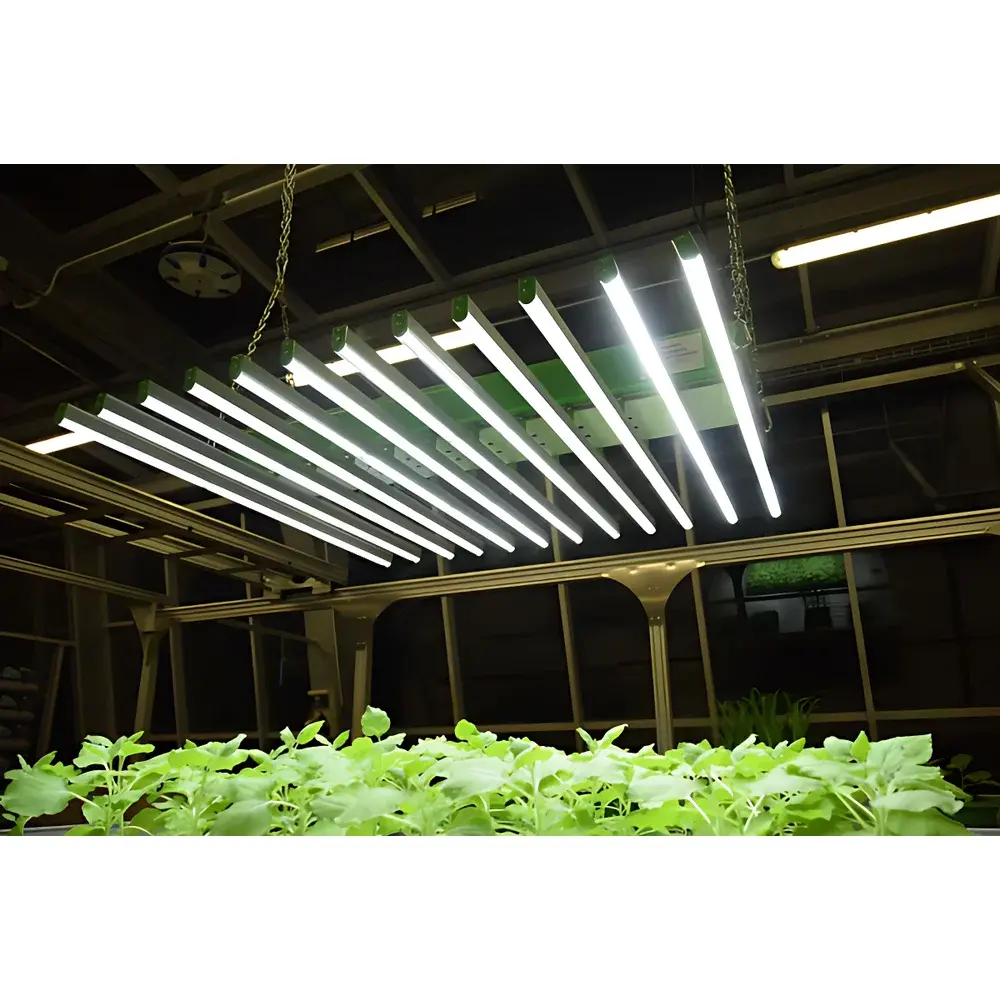
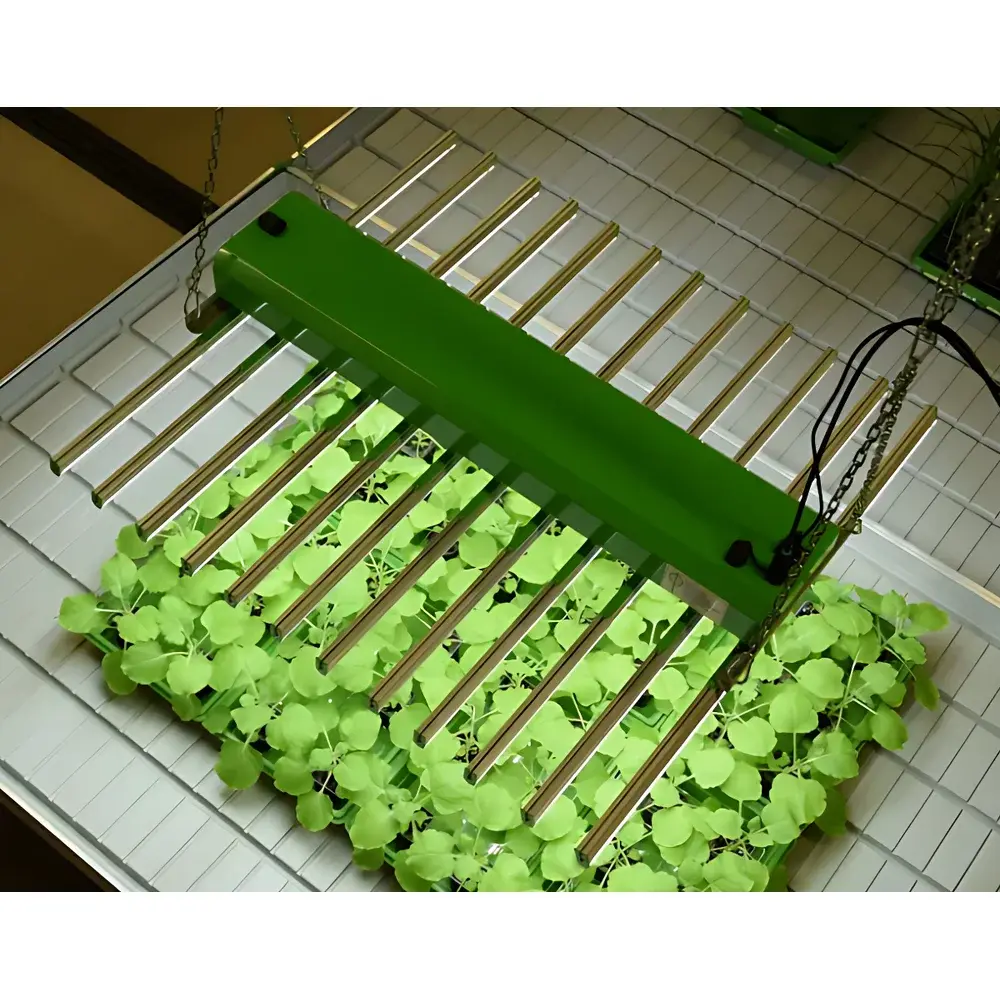
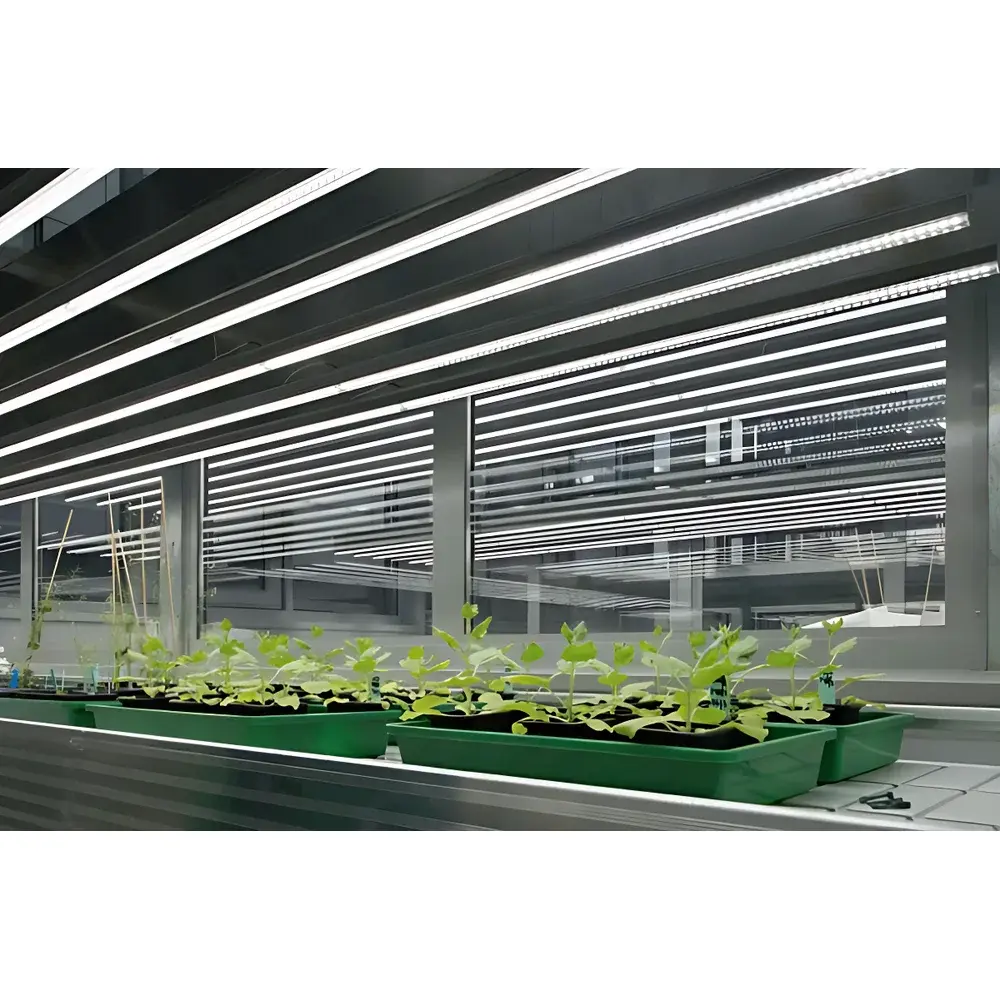
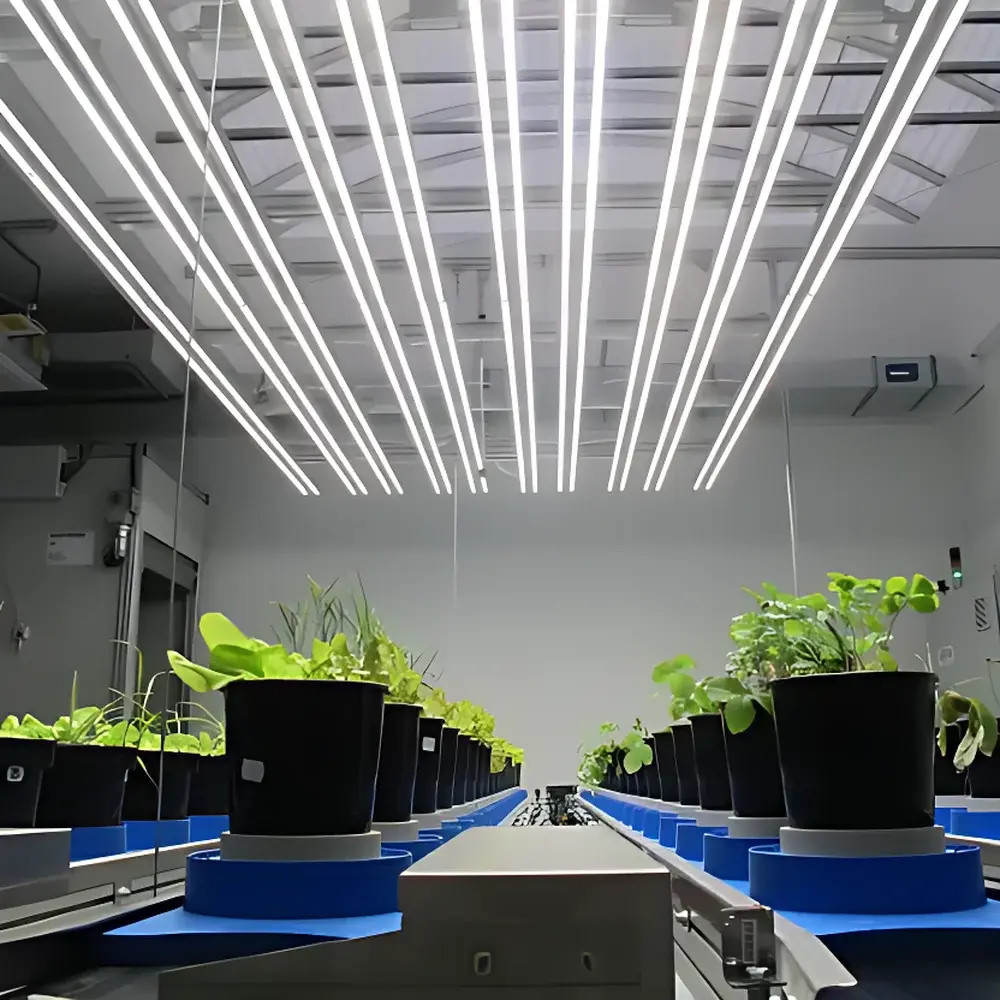
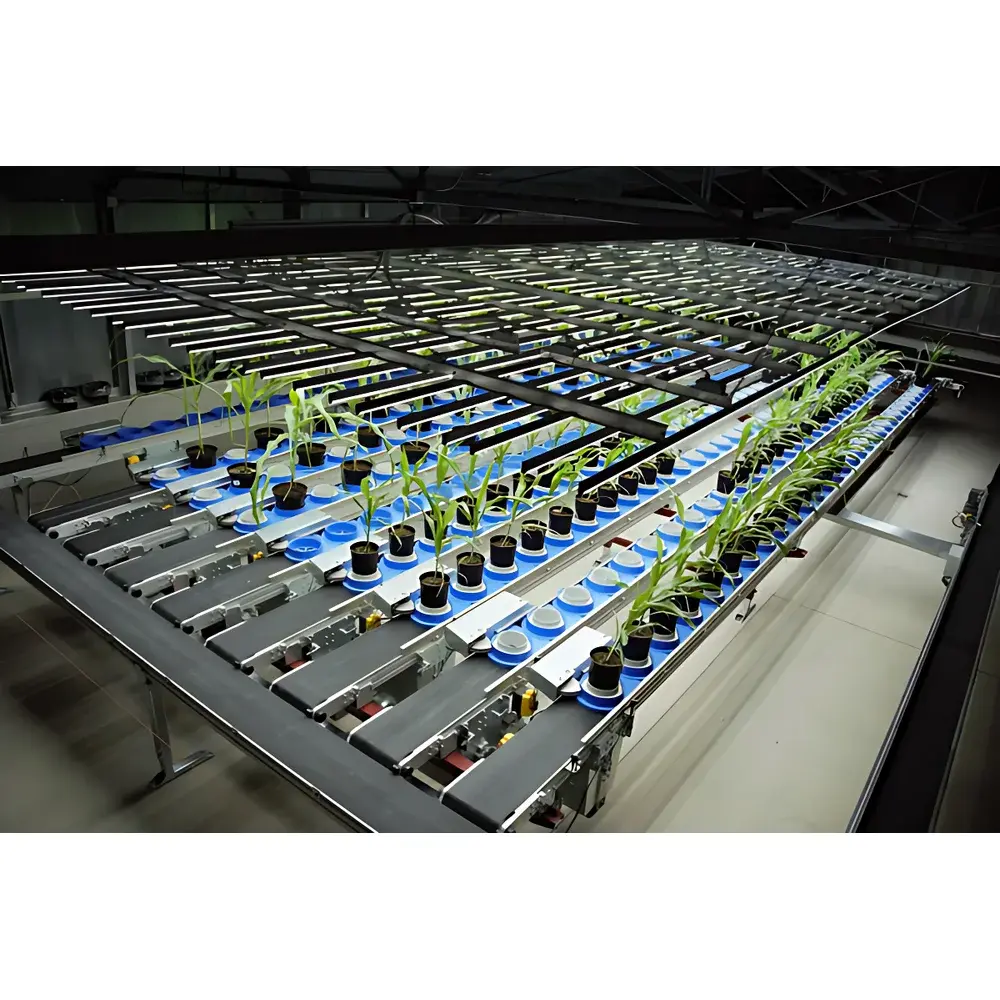
PSI Rod-Type Smart LED Light Source for Plant Phenotyping
| Brand | PSI (Czech Republic) |
|---|---|
| Origin | Czech Republic |
| Model | Rod-Type Smart LED Light Source |
| Light Output Range | 0–2000 µmol(photon)·m⁻²·s⁻¹ (at 50 cm, customizable) |
| Spectral Options | Standard 5700 K Cool White + Optional Blue, Red, Far-Red LEDs |
| Dimming Control | 5–100% continuous, channel-specific |
| IP Rating | IP65 |
| Cooling | Passive (LED bars), Active (control cabinet, optional) |
| Power Supply | AC 90–305 V, 50/60 Hz |
| Dimensions (Std.) | 998 × 160 × 965 mm |
| Weight (Std.) | 24 kg |
| Operating Temperature | −20 to +40 °C |
| Interface | 1× Power Input, 2× RS485 ports |
| Optional Sensors | Quantum Sensor (PAR), Temperature Probe |
| Software | Light Studio 485, Light Manager (LAN/internet-enabled) |
| Max. Stages per Program | 224 (optional) |
| Compliance | CE, RoHS, IEC 60529 (IP65), IEC 61000-6-3 (EMC) |
Overview
The PSI Rod-Type Smart LED Light Source is a precision-engineered illumination system designed specifically for controlled-environment plant science applications—including high-throughput phenotyping platforms, growth chambers, greenhouses, and climate-controlled phyto-tron facilities. Built upon a modular rod architecture, it delivers spatially uniform, spectrally tunable, and temporally programmable photosynthetic photon flux density (PPFD) across defined plant canopies. Its core measurement principle relies on calibrated solid-state LED emitters coupled with real-time feedback loops—enabling reproducible light delivery aligned with photobiological requirements of model species (e.g., Arabidopsis thaliana, maize, tomato) and crop varieties under experimental or breeding conditions. Unlike conventional broad-spectrum lamps, this system provides discrete spectral control at the channel level, supporting research into photomorphogenesis, circadian entrainment, stress response kinetics, and spectral quality effects on biomass allocation and secondary metabolite synthesis.
Key Features
- Modular rod-based design allows flexible configuration: height, width, and inter-rod spacing are adjustable to optimize irradiance uniformity over target growth areas (CV ≤ 12% across 80% of measurement plane).
- Standard configuration uses 12 × 126 high-efficiency 5700 K cool-white LEDs (L70 > 50,000 h); optional spectral modules include narrow-band 450 nm (blue), 660 nm (red), and 730 nm (far-red) diodes—individually addressable per rod segment.
- Precise dimming from 5% to 100% of maximum output per channel, with ≤ ±1.5% linearity deviation across full range; calibrated against NIST-traceable quantum sensors.
- IP65-rated enclosure ensures operational reliability in humid, dust-prone environments typical of growth rooms and greenhouse integration scenarios.
- Dual cooling strategy: passive heatsinking for LED rods; optional forced-air active cooling integrated into the control cabinet for high-power custom configurations (>1.5 kW total load).
- RS485 communication interface supports daisy-chained deployment of up to 32 rods per controller, enabling synchronized or independent modulation across large-scale installations.
Sample Compatibility & Compliance
The system is compatible with standard plant growth vessels (e.g., multi-well plates, pots, hydroponic trays) and integrates seamlessly with commercial phenotyping platforms (e.g., LemnaTec, PhenoVation, WIWAM). It meets ISO 17025-aligned calibration traceability requirements when used with optional PAR sensors. Electrical safety conforms to EN 61000-6-3 (EMC) and EN 62471 (photobiological safety). Mechanical design adheres to IEC 60529 for ingress protection (IP65), permitting safe operation in non-classified indoor agricultural settings. For GLP-compliant studies, audit trails and user access logs are supported via Light Manager software under FDA 21 CFR Part 11–ready configuration (electronic signatures, change control, data integrity safeguards).
Software & Data Management
Two complementary software suites are available: Light Studio 485 (PC-based, RS485-connected) and Light Manager (embedded touchscreen workstation with LAN/Wi-Fi connectivity). Both support graphical programming of dynamic light regimes—including stepwise intensity ramps, sinusoidal diurnal cycles, stochastic cloud-cover simulations, and pulse-width modulated (PWM) treatments. Each program accommodates up to 224 sequential stages with time resolution down to 1 second. Per-channel calibration files (stored onboard) correct for LED aging and thermal drift. Export formats include CSV and HDF5 for downstream analysis in MATLAB, Python (NumPy/Pandas), or R. Remote monitoring and firmware updates are enabled via secure HTTPS API endpoints.
Applications
- High-resolution temporal phenotyping: tracking growth dynamics under controlled photoperiods, spectral shifts, or light-stress gradients.
- Functional genomics: screening mutant libraries under wavelength-specific illumination to dissect photoreceptor signaling pathways (e.g., phyA, cry1, phot1).
- Crop improvement programs: evaluating yield-related traits under simulated regional light climates (e.g., latitude-dependent day length, seasonal spectral composition).
- Controlled abiotic stress assays: combining light modulation with temperature/humidity control to study synergistic stress responses.
- Pre-acclimation protocols: priming seedlings with specific light spectra prior to field transfer to enhance resilience.
FAQ
What is the maximum PPFD achievable at 50 cm distance?
Standard compact version delivers up to 920 µmol·m⁻²·s⁻¹; custom configurations reach 2000 µmol·m⁻²·s⁻¹, verified using calibrated quantum sensors traceable to NIST standards.
Can individual LED rods operate independently within one system?
Yes—each rod functions as an autonomous channel with independent intensity, timing, and spectral profile control via RS485 addressing.
Is remote access supported for long-term experiments?
Light Manager enables secure web-based access (HTTPS) for real-time monitoring, parameter adjustment, and log retrieval without local PC dependency.
How is spectral stability maintained over extended operation?
Onboard thermal sensors feed back to the controller; combined with factory-applied aging compensation curves, spectral output remains within ±3% deviation over 10,000 hours.
Does the system support compliance with regulatory documentation requirements?
When deployed with Light Manager in audit mode, it generates electronic records compliant with 21 CFR Part 11, including user authentication, immutable event logs, and electronic signature validation.




