
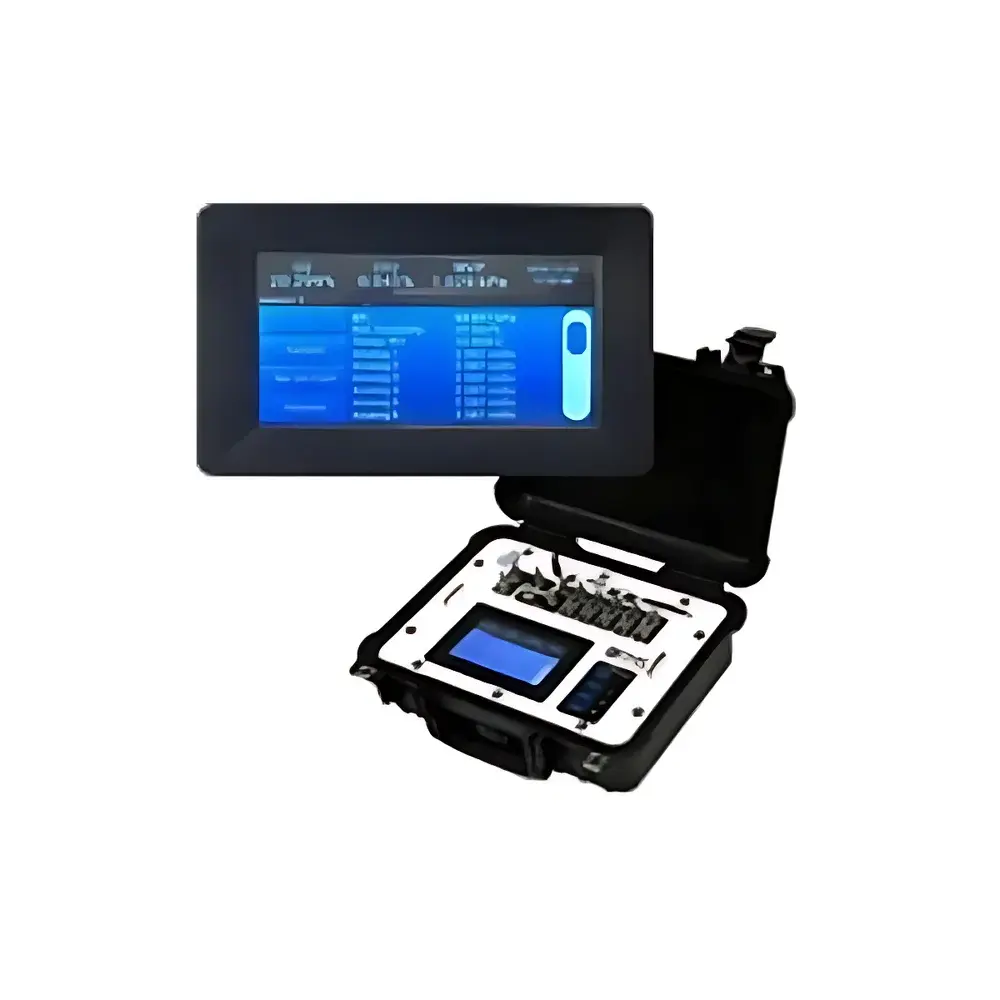
Sable FMS Portable Animal Exercise-Induced Metabolic Measurement System
| Brand | Sable |
|---|---|
| Origin | USA |
| Manufacturer Type | Authorized Distributor |
| Import Status | Imported |
| Model | FMS Portable |
| Pricing | Available Upon Request |
Overview
The Sable FMS Portable Animal Exercise-Induced Metabolic Measurement System is a rigorously engineered indirect calorimetry platform designed for precise, real-time quantification of whole-animal energy metabolism during controlled physical activity. Built upon Sable Systems International’s validated fuel-cell O2 and dual-wavelength non-dispersive infrared (NDIR) CO2 sensing architecture, the system applies the stoichiometric principles of respiratory gas exchange to calculate oxygen consumption (VO2), carbon dioxide production (VCO2), respiratory exchange ratio (RER), energy expenditure (EE), and metabolic substrate utilization. Its modular, portable form factor enables deployment in vivariums, field laboratories, or multi-site collaborative studies—without compromising analytical fidelity. The system supports graded exercise protocols analogous to human cardiopulmonary stress testing, including incremental treadmill tests, glucose tolerance–linked exertion paradigms, and fatigue-threshold assessments—delivering physiologically relevant endpoints such as VO2max, anaerobic threshold, metabolic crossover point, time-to-exhaustion, and post-exercise recovery kinetics.
Key Features
- Integrated portable indirect calorimeter with factory-calibrated O2, CO2, and H2O vapor analyzers—engineered for long-term stability and traceable accuracy
- Full compatibility with third-party exercise chambers: motorized treadmills (mouse, bat, avian), running wheels, open-field respirometry enclosures, and behavioral phenotyping rigs
- Precise, programmable exercise control: speed (0–100 m/min), incline (−20° to +40°), acceleration (0–100 m/min² in 0.1 m/min² increments), and stimulus delivery (electrical grid, auditory tone, blue-light flash)
- Eight bipolar analog voltage inputs and four temperature channels for synchronized acquisition of physiological or environmental signals
- Real-time digital outputs via USB-to-RS-232 bridge and proprietary SableBus interface—enabling low-latency synchronization with high-speed video tracking, EMG, or ECG systems
- Expedata software suite with FDA 21 CFR Part 11–compliant audit trail, GLP/GMP-ready data logging, and customizable analysis modules for RER kinetics, VO2 kinetics modeling, and fatigue detection algorithms
Sample Compatibility & Compliance
The FMS system accommodates a broad phylogenetic and ontogenetic range: from Drosophila and Tribolium (via micro-chamber adapters) to murine models (C57BL/6J, db/db), chiropterans (e.g., Desmodus rotundus), gallinaceous birds, ruminants, and human subjects using face-mask interfaces. All hardware components comply with IEC 61000-6-3 (EMC emission standards) and UL 61010-1 (laboratory equipment safety). Gas analyzers are calibrated per ASTM D6866–22 (biogenic CO2 quantification) and ISO 8573-1:2010 (compressed air purity for metabolic airflow circuits). Data integrity meets NIH NOT-OD-15-102 and OECD TG 443 requirements for longitudinal metabolic phenotyping studies.
Software & Data Management
Expedata v5.3 provides end-to-end workflow control—from protocol definition and real-time signal visualization to batch processing and statistical export. Raw analog waveforms (O2, CO2, flow, temperature) are recorded at 100 Hz with 24-bit resolution and embedded time-stamped metadata. The software supports automated detection of steady-state VO2 windows, RER inflection points, and ventilatory thresholds using derivative-based algorithms validated against consensus guidelines (ACSM, ERS). Export formats include CSV, HDF5, and MATLAB .mat—ensuring interoperability with Python-based analysis pipelines (e.g., SciPy, Pandas) and institutional LIMS platforms. Audit trails log user actions, calibration events, and parameter modifications in accordance with 21 CFR Part 11 Subpart B.
Applications
- Exercise physiology: Quantifying aerobic capacity (VO2max), substrate switching dynamics, and mitochondrial efficiency in genetically modified murine models
- Metabolic disease research: Evaluating interventions for obesity, insulin resistance, and NAFLD using treadmill-based glucose challenge protocols
- Comparative bioenergetics: Resolving protein catabolism as an energy source in obligate hematophagous species (e.g., Desmodus rotundus) under controlled locomotion
- Translational sports science: Validating non-invasive biomarkers of training adaptation across species—including avian endurance flight and bovine locomotor energetics
- Preclinical toxicology: Assessing drug-induced alterations in cardiac output coupling and thermoregulatory cost during submaximal exercise
FAQ
What is the typical service life of the O2 fuel cell sensor?
The electrochemical O2 sensor has a nominal operational lifespan of 24–36 months under continuous use; replacement cartridges are field-swappable without recalibration.
Can the system be used for simultaneous video-based behavior scoring and metabolic measurement?
Yes—Expedata supports hardware-triggered frame synchronization with commercial high-speed cameras (e.g., Basler, FLIR) via TTL pulse output, enabling pixel-accurate alignment of locomotor metrics with gas exchange kinetics.
Is the FMS compatible with existing Sable metabolic chambers or only portable configurations?
It operates natively with all Sable Systems’ modular components—including the TR2, Oxymax, and Promethion platforms—allowing seamless upgrade paths from static to exercise-integrated respirometry.
How is humidity compensation handled during long-duration protocols?
The capacitive H2O sensor provides continuous dew-point referenced correction; raw gas values are automatically adjusted using the Haldane transformation and water-vapor partial pressure equations per ISO 9300:2005.
Does the system support GLP-compliant reporting for regulatory submissions?
Yes—Expedata includes electronic signature capability, immutable audit logs, and 21 CFR Part 11–validated report generation templates aligned with FDA guidance for nonclinical laboratory studies.




