
EcoTron EcoTron Nitrogen Deposition Online Monitoring System
| Origin | Beijing, China |
|---|---|
| Manufacturer Type | Authorized Distributor |
| Regional Origin | Domestic (China) |
| Model | EcoTron |
| Pricing | Upon Request |
Overview
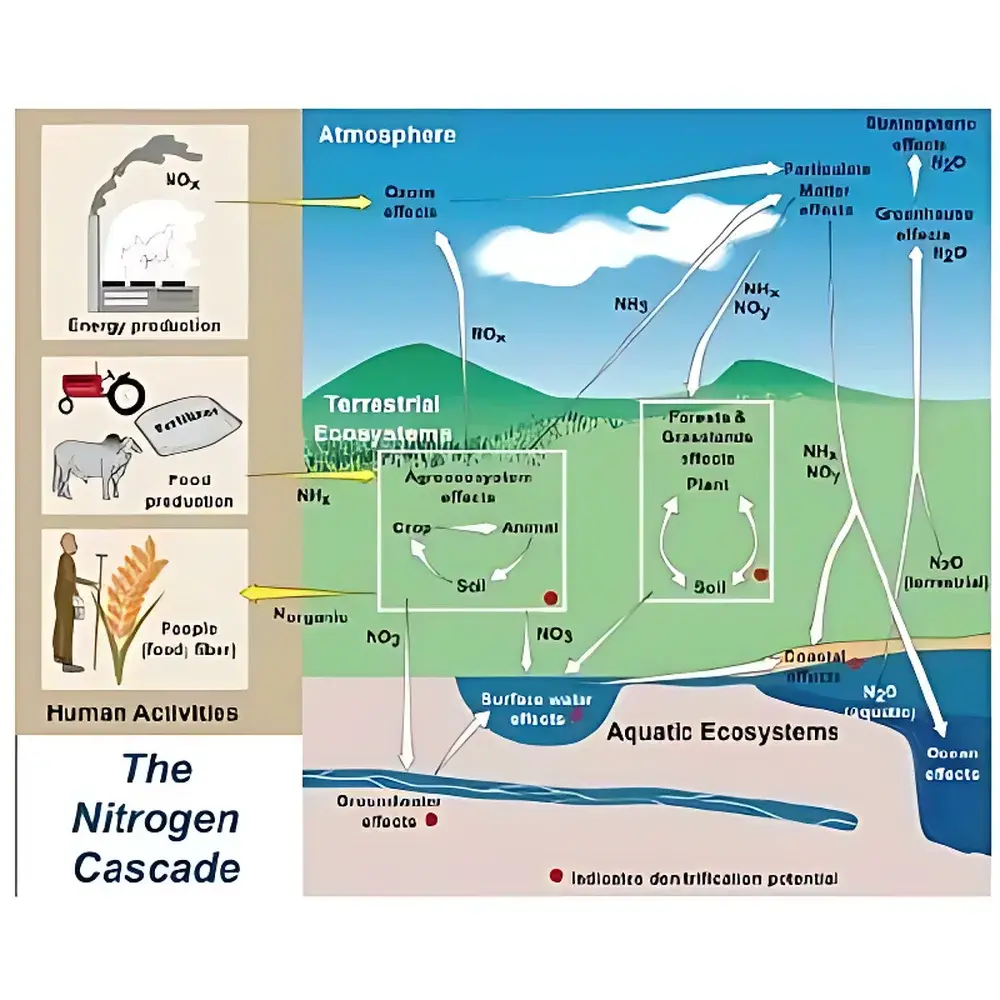
The EcoTron Nitrogen Deposition Online Monitoring System is an integrated, field-deployable environmental instrumentation platform engineered for continuous, in-situ quantification of atmospheric nitrogen (N) and acid deposition fluxes—alongside concurrent water-column nutrient dynamics—in terrestrial and aquatic ecosystems. It operates on the principle of automated sequential wet-chemical analysis following standardized laboratory methodologies (e.g., ISO 11908:2015 for total nitrogen in water; ASTM D1426–22 for ammonia-nitrogen; EPA Method 353.2 for nitrate + nitrite), adapted for unattended field operation. The system captures both dry and wet deposition fractions using calibrated passive and wet-only collectors, followed by precision filtration, timed reagent addition, colorimetric detection, and stoichiometric flux calculation based on collector geometry, exposure duration, and meteorological inputs. Designed to address critical knowledge gaps in biogeochemical nitrogen cycling under anthropogenic pressure, it supports long-term monitoring aligned with international frameworks including the ICP-Water (UN ECE), EMEP (European Monitoring and Evaluation Programme), and the US NADP (National Atmospheric Deposition Program) protocols.
Key Features
- Simultaneous dual-pathway monitoring: atmospheric N deposition (wet + dry) and in-situ aquatic nutrient status (rivers, lakes, reservoirs)
- Automated sequential analysis of total nitrogen (TN), ammonium-nitrogen (NH₄⁺-N), nitrate-nitrogen (NO₃⁻-N), nitrite-nitrogen (NO₂⁻-N), sulfate (SO₄²⁻), and orthophosphate (PO₄³⁻)
- Integrated precipitation gauge with ±0.1 mm resolution and mass accumulation sensor (±0.01 g) for deposition weight calibration
- Solar-compatible power architecture: 12 V DC input, 20 W photovoltaic module support with battery backup for extended off-grid deployment
- Modular design enabling optional SO₄²⁻ analysis extension to quantify sulfuric acid contribution to acid deposition
- Self-contained data acquisition unit with real-time clock, local LCD display, and non-volatile memory (≥1 year at 1-hr sampling interval)
- Remote data access via GPRS-enabled EnviData telemetry module compliant with TCP/IP and MQTT protocols
Sample Compatibility & Compliance
The system accommodates natural atmospheric deposition matrices—including rainwater, fog droplets, aerosol-bound particulates, and dry-deposited gases (NH₃, HNO₃)—collected via standardized bulk and throughfall samplers. Aqueous samples from freshwater bodies are analyzed directly via submersible optical/electrochemical probes or pumped through the central analyzer. All wet-chemical assays conform to internationally recognized analytical standards: TN determination via alkaline persulfate digestion and UV spectrophotometry; NH₄⁺-N via indophenol blue method; NO₃⁻-N and NO₂⁻-N via cadmium reduction and diazotization; SO₄²⁻ via turbidimetric barium chloride assay. Hardware and firmware architecture supports audit-ready data logging per GLP principles, with timestamped metadata, operator ID tagging, and configurable calibration history retention—facilitating alignment with ISO/IEC 17025 laboratory accreditation requirements and supporting traceability for regulatory reporting.
Software & Data Management
The EnviData software suite provides configuration, visualization, and export functionality across Windows and Linux environments. It supports scheduled calibration routines, dynamic method switching (e.g., toggling between TN-only and full N-speciation mode), and QC flagging based on blank thresholds, spike recoveries, and drift limits. Raw absorbance values, reaction kinetics curves, and calculated concentrations are stored with full metadata (collector ID, exposure period, temperature, humidity, wind speed). Export formats include CSV, NetCDF, and XML compliant with OGC SensorML and TIMESeriesML schemas. Remote firmware updates and parameter reconfiguration are supported over secure TLS-encrypted GPRS sessions. Audit logs record all user actions, instrument state changes, and alarm events—meeting minimum requirements for FDA 21 CFR Part 11 electronic record integrity where applicable in research-contracted settings.
Applications
- Long-term ecological research on N saturation thresholds in sensitive forests and alpine catchments (e.g., evaluating exceedance of 10 kg N·ha⁻¹·yr⁻¹ critical load)
- Source apportionment studies linking regional agricultural NH₃ emissions, fossil fuel NOₓ, and observed deposition gradients
- Validation of regional chemical transport models (CTMs) such as CMAQ or LOTOS-EUROS against high-temporal-resolution field observations
- Assessment of atmospheric N deposition impacts on eutrophication dynamics in shallow lakes and estuaries
- Supporting national-scale environmental monitoring networks (e.g., China’s National Ecological Observation Network—CNEN) requiring harmonized, protocol-driven data streams
- Field calibration of passive samplers (e.g., ALPHA, DELTA) and remote sensing-based N deposition estimates
FAQ
What is the recommended maintenance interval for unattended operation?
Routine maintenance—including filter replacement, reagent replenishment, tubing inspection, and collector cleaning—is advised every 14 days under typical temperate-climate conditions. Extended intervals may be feasible in low-dust, low-biomass environments with validated performance verification.
Can the system operate without grid electricity?
Yes. The system is designed for solar autonomy: the 12 V / 20 W PV module charges a sealed lead-acid or LiFePO₄ battery bank, sustaining continuous operation—including pumping, heating (if ambient <5°C), and telemetry—for ≥72 hours during overcast periods.
Is calibration traceable to national metrology institutes?
Primary calibrations use NIST-traceable certified reference materials (CRMs) for NH₄⁺, NO₃⁻, and PO₄³⁻. Field calibration verification is performed using matrix-matched standard additions and procedural blanks at each deployment cycle.
How does the system differentiate dry vs. wet nitrogen deposition?
Wet deposition is quantified via wet-only collectors (with funnel-and-bottle assembly and anti-evaporation seal); dry deposition is estimated by subtracting wet deposition mass from bulk collector totals, corrected for wind-induced turbulence effects using empirical deposition velocity models embedded in post-processing algorithms.
Does the system comply with EU LRTAP or UNECE reporting formats?
Yes. Data output structures align with EMEP’s Level 2 submission templates, including mandatory fields for collector type, exposure dates, analytical methods, uncertainty estimates, and QA/QC flags—enabling direct ingestion into the EMEP Central Data Archive.
Related Products







