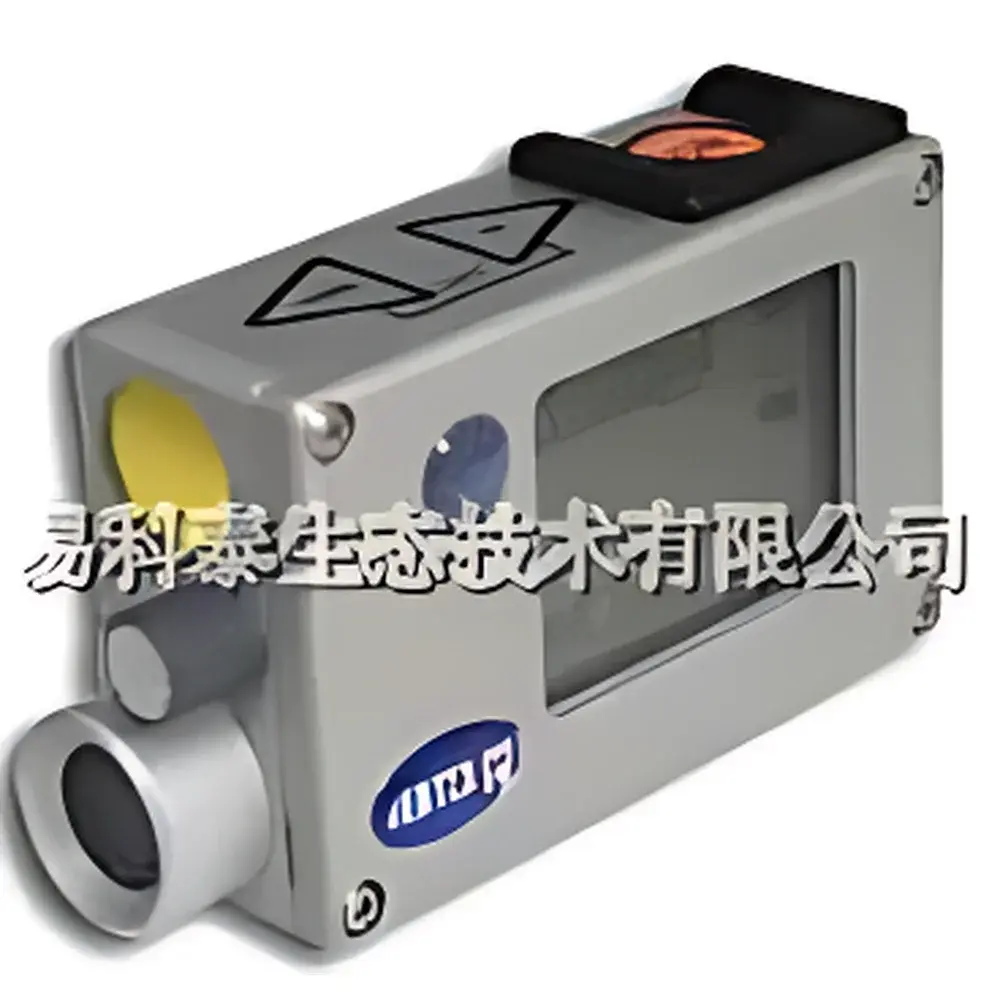
Haglöfs Vertex IV Ultrasonic Height and Distance Meter
| Origin | Sweden |
|---|---|
| Manufacturer Type | Distributor |
| Origin Category | Imported |
| Model | Vertex IV Ultrasonic Height and Distance Meter |
| Price | Upon Request |
| Dimensions | 80 × 50 × 30 mm |
| Weight | 160 g |
| Power Supply | 1 × 1.5 V AA alkaline battery |
| Current Consumption | 20 mA (standby), 150 mA (Bluetooth active) |
| Ultrasonic Frequency | 25 kHz |
| Operating Temperature | −15 °C to +45 °C |
| Wireless Communication | Bluetooth or IR |
| Distance Resolution | 0.01 m |
| Distance Accuracy | ±1% or better |
| Angular Range | −55° to +85° |
| Angular Resolution | 0.1° |
| Height Measurement Range | 0–999 m |
| Height Resolution | 0.1 m |
| 60° Transceiver Max Range | 30 m (100 ft) |
| 360° Transceiver Max Range | 20 m (60 ft) |
| Housing Material | Anodized aluminum |
| Unit System | Metric/Imperial selectable |
Overview
The Haglöfs Vertex IV Ultrasonic Height and Distance Meter is a field-deployable, handheld precision instrument engineered for rapid, non-contact measurement of vertical height, horizontal distance, and slope angle in complex natural environments—particularly dense forest canopies, uneven terrain, and obstructed survey sites. It operates on the principle of time-of-flight ultrasonic pulse emission and reception at 25 kHz, combined with integrated inclinometry and triangulation algorithms. Unlike optical rangefinders, the Vertex IV’s low-frequency ultrasonic beam exhibits superior penetration through foliage, mist, and light vegetation, enabling reliable single-target height acquisition up to 30 m with a 60° transceiver or omnidirectional 20 m coverage using the optional 360° adapter. The device calculates derived parameters—including true vertical height, horizontal distance, and tilt-compensated elevation—in real time, eliminating manual trigonometric computation and reducing operator-induced error. Its compact form factor (80 × 50 × 30 mm), lightweight construction (160 g), and sealed anodized aluminum housing meet IP54-level environmental resistance requirements for outdoor durability under demanding forestry and ecological field conditions.
Key Features
- Real-time simultaneous display of height, slant distance, horizontal distance, and inclination angle (−55° to +85°) with 0.1° angular resolution
- Two transceiver configurations: Vertex IV-60 (60° beam width, 30 m range) and Vertex IV-360 (360° horizontal scan, 20 m range with included adapter and positioning pole)
- High-resolution measurement output: 0.01 m distance resolution, 0.1 m height resolution, ±1% distance accuracy across full operational range
- Low-power architecture optimized for extended field use—20 mA typical current draw; Bluetooth activation increases consumption to 150 mA without compromising battery life beyond 8+ hours per AA cell
- Multi-protocol wireless interface supporting both Bluetooth v4.0 (for direct pairing with iOS/Android tablets and Windows PCs) and infrared (IR) for legacy data transfer to compatible field computers
- Dual-unit system with seamless metric/imperial switching—configured via onboard menu without software dependency
- Rugged, anodized aluminum enclosure rated for operation between −15 °C and +45 °C, resistant to abrasion, UV exposure, and incidental moisture ingress
Sample Compatibility & Compliance
The Vertex IV is designed for non-destructive, contactless measurement of biological and geological targets including standing trees, canopy layers, cliff faces, utility poles, and structural elements in silvicultural, ecological, and topographic applications. It does not require retroreflective targets or line-of-sight continuity, making it uniquely suited for multi-layer forest inventory where traditional laser-based tools fail due to signal attenuation. While not classified as a medical or industrial safety device, its electromagnetic emissions comply with EU Directive 2014/53/EU (Radio Equipment Directive) and IEC 61000-6-3:2019 for residential and light-industrial electromagnetic compatibility. The instrument supports GLP-aligned field documentation workflows when paired with certified third-party data logging software, and raw measurement logs retain timestamp, GPS metadata (when connected to external GNSS), and sensor status flags for auditability in regulatory reporting contexts such as national forest inventories governed by FAO FRA standards or ISO 14064-2 greenhouse gas monitoring protocols.
Software & Data Management
Data capture and export are managed via the proprietary VertexLink desktop application (Windows/macOS) and companion mobile app (iOS/Android), both supporting Bluetooth 4.0 LE communication. Measurements—including up to six discrete height points per target—are stored internally with automatic geotagging when synchronized with external GNSS receivers. Export formats include CSV (with column headers for height, distance, angle, date/time, and unit configuration), KML for GIS integration, and XML for interoperability with forestry management platforms such as ArcGIS Field Maps or ForestrySA. All firmware updates are delivered via signed OTA packages compliant with NIST SP 800-193 guidelines for secure device integrity verification. Audit trails—including user ID, session start/end timestamps, and calibration event logs—are retained locally and exportable to support ISO/IEC 17025 laboratory accreditation requirements where field instruments contribute to accredited test reports.
Applications
- Forest inventory and growth monitoring: precise stem height, crown base height, and total tree height acquisition without climbing or destructive sampling
- Tree selection and breeding programs: identification and georeferenced cataloging of elite phenotypes based on morphometric criteria
- Canopy structure analysis: stratified height profiling for LiDAR validation, biodiversity modeling, and carbon stock estimation
- Topographic reconnaissance in inaccessible terrain: rapid slope assessment, ravine depth estimation, and trail corridor planning
- Urban forestry and arboriculture: clearance verification for power lines, infrastructure conflict analysis, and hazard tree evaluation
- Ecological restoration monitoring: longitudinal tracking of sapling establishment success and vertical development in reforestation plots
FAQ
Does the Vertex IV require reflective tape or a prism for accurate height measurement?
No. The ultrasonic transducer emits a directional 25 kHz pressure wave that reflects off natural surfaces—including bark, leaves, soil, and rock—eliminating the need for artificial targets.
Can the Vertex IV measure height through dense understory or multi-layered canopy?
Yes. Its 25 kHz frequency provides superior acoustic coupling and reduced scattering compared to optical or higher-frequency ultrasonic systems, enabling consistent first-return detection even in cluttered vegetation.
Is firmware update capability available in the field without returning the unit to service centers?
Yes. Over-the-air (OTA) firmware updates are supported via Bluetooth connection to the VertexLink mobile app, with cryptographic signature validation to ensure integrity.
What level of traceability does the Vertex IV support for metrological audits?
Each unit ships with a factory calibration certificate traceable to Swedish National Metrology Institute (RISE) standards. Internal calibration constants are write-protected and logged with version stamps during any authorized recalibration event.
How does the 360° transceiver improve workflow efficiency in forest surveys?
The 360° adapter enables continuous horizontal scanning without manual rotation, allowing rapid assessment of multiple stems within a plot circle—reducing measurement time per sample by approximately 40% compared to sequential single-point acquisition.