
Loligo Systems Zebrafish Respirometry & Metabolic Measurement System
| Brand | Loligo Systems |
|---|---|
| Origin | Denmark |
| Model | Loligo Zebrafish Respirometry System |
| Oxygen Measurement Principle | Fluorescence-based Optical Fiber Sensing |
| Oxygen Range | 0–100% (0–45 ppm) |
| Detection Limit | 15 ppb |
| Temp. Compensation | Real-time Pt1000 (−50 °C to +180 °C, ±0.15 °C) |
| Salinity & Pressure Compensation | Yes |
| Measurement Modes | Intermittent-flow respirometry |
| Channel Configurations | 4-, 8-, and up to 240-channel scalable systems |
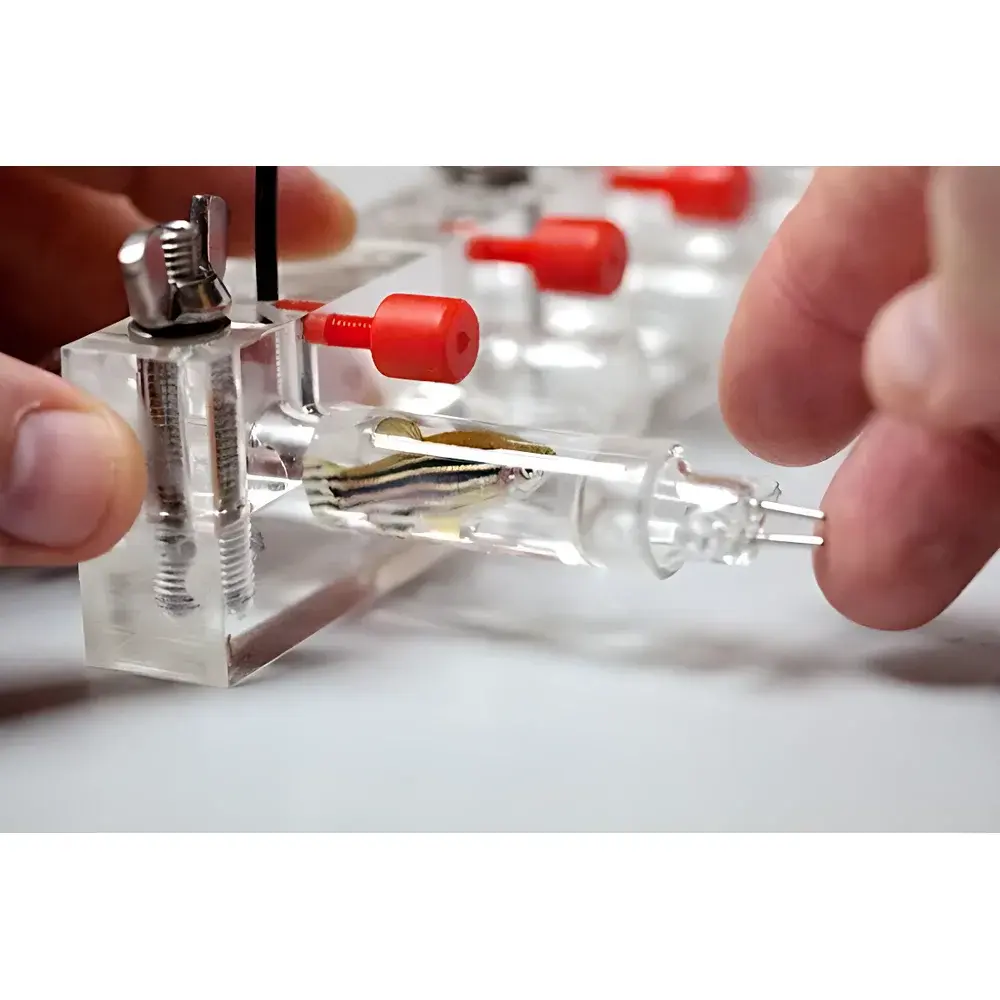
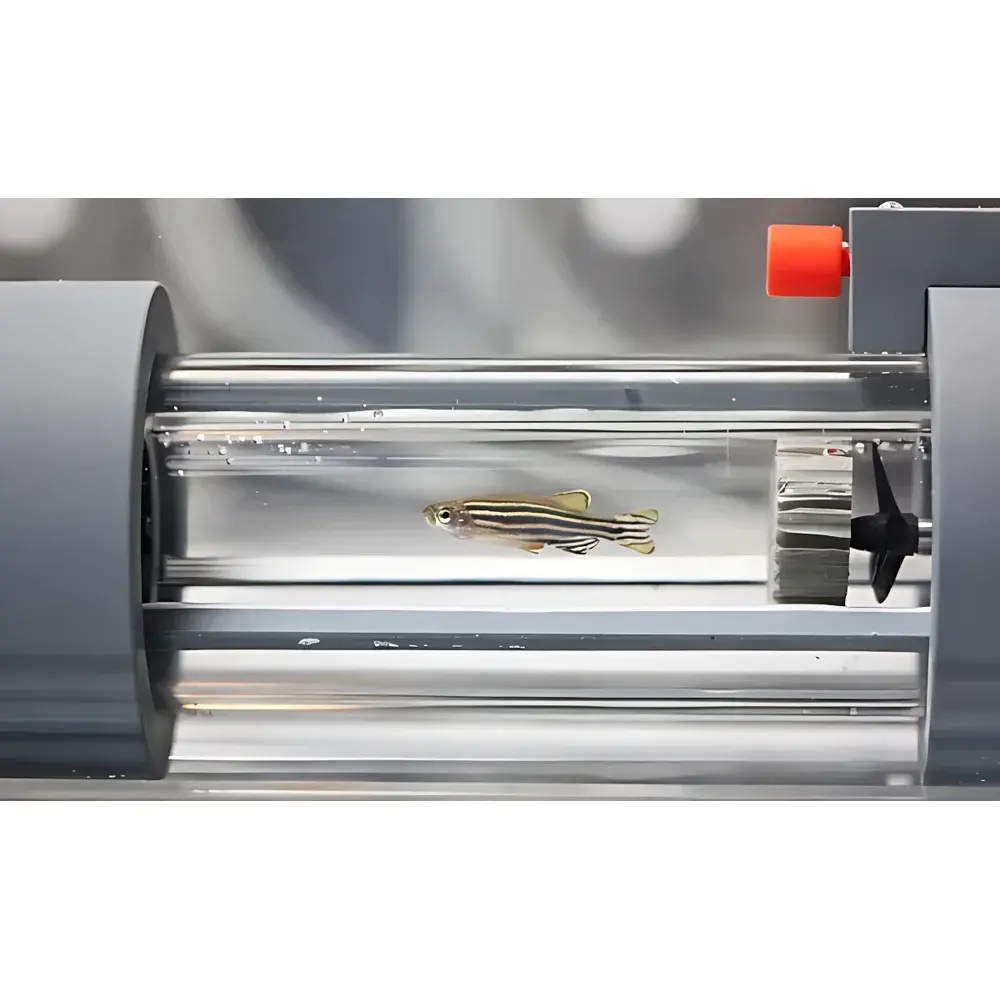
| Respiration Chambers | Borosilicate static chambers (ID: 9–45 mm), Mini swim tunnels (170 mL, flow: 0.7–50 cm/s), 24-well high-throughput plates (well volumes: 80–1700 µL) |
| Software | AutoResp v5.x with SMR/Pcrit calculation, Excel/TXT export, GLP-compliant audit trail |
| Compliance | ASTM E1527-23 (respirometric bioassay), ISO 8692 (freshwater algal growth inhibition – adapted for fish respirometry), USP <1058> (analytical instrument qualification), FDA 21 CFR Part 11 (electronic records/signatures – optional configuration) |
Overview
The Loligo Systems Zebrafish Respirometry & Metabolic Measurement System is an engineered platform for high-precision, non-invasive quantification of oxygen consumption rate (ṀO₂) in small aquatic organisms—including zebrafish (Danio rerio) embryos, larvae, juveniles, adults, and invertebrates such as Daphnia, coral planulae, and marine/freshwater benthic larvae. Built upon the intermittent-flow respirometry principle, the system combines the temporal resolution of closed-chamber methods with the metabolic stability and extended measurement duration of open-system designs. Unlike conventional constant-flow or static respirometers, this architecture alternates between measurement (closed) and flush (open) phases—minimizing O₂ depletion artifacts while preserving physiological relevance across hours to days. All oxygen sensing is performed via solid-state fluorescence-quenching optical fiber probes, eliminating electrode drift, membrane fouling, and electrochemical oxygen consumption—critical for low-biomass, long-duration assays where signal-to-noise ratio and baseline stability are paramount.
Key Features
- Intermittent-flow respirometry architecture with user-definable flush and measurement intervals (1 s to 24 h), enabling adaptive experimental protocols for both standard metabolic rate (SMR) and active metabolic rate (AMR) assessment.
- Fluorescence-based optical fiber oxygen sensors with zero oxygen consumption, sub-ppb detection limit (15 ppb), and real-time compensation for temperature, salinity, and barometric pressure—ensuring metrological traceability across diverse aquatic media (freshwater, brackish, seawater).
- Modular chamber design: borosilicate glass static respirometers (ID 9–45 mm), calibrated Mini swim tunnels (170 mL volume, laminar flow control 0.7–50 cm/s), and 24-well high-throughput plates with integrated adhesive O₂ sensors—supporting parallelized studies from single-organism physiology to population-level screening.
- AutoResp software v5.x provides automated calculation of ṀO₂, SMR, Pcrit, factorial scope, and respiratory quotient (RQ); includes built-in statistical validation (R² ≥ 0.98 threshold), time-series visualization, and batch processing of multi-channel datasets.
- Scalable hardware architecture: 4-channel base systems expand seamlessly to 8-, 24-, or 240-channel configurations via daisy-chained optical sensor hubs—enabling throughput-aligned deployment from academic labs to regulatory toxicity testing facilities.
- Optional environmental control modules: temperature-regulated water baths (±0.1 °C stability), dissolved oxygen modulation units (N₂/O₂ gas mixing with solenoid valves), and synchronized behavioral tracking via high-speed camera integration (2D/3D kinematic analysis).
Sample Compatibility & Compliance
The system accommodates a broad taxonomic range of aquatic model organisms: zebrafish embryos (24–120 hpf), larvae (1–14 dpf), juveniles (< 20 mm), adults (up to 45 mm), and invertebrate life stages including Artemia nauplii, Daphnia magna neonates, coral recruits, and bivalve veligers. Chamber geometries and flow calibrations are validated per ASTM E1527-23 Annex A3 (respirometric bioassay guidance) and aligned with OECD Test No. 210 (Fish, Early-Life Stage Toxicity Test) requirements for oxygen monitoring precision. Data acquisition meets USP analytical instrument qualification (AIQ) standards, and optional 21 CFR Part 11–compliant configurations include electronic signatures, audit trails, and role-based access control—suitable for GLP/GMP-regulated ecotoxicology and pharmaceutical developmental biology workflows.
Software & Data Management
AutoResp software operates on Windows OS and supports fully automated experiment initiation, sensor calibration (two-point O₂ standardization), real-time data streaming, and post-hoc analysis without manual curve fitting. Raw sensor signals (fluorescence lifetime decay vs. time) and derived ṀO₂ values are stored in timestamped .txt files; processed metrics (SMR, Pcrit, AMR) export directly to .xlsx with embedded metadata (chamber ID, temperature, salinity, protocol parameters). The software includes preconfigured templates for common assays—e.g., “Zebrafish Embryo Hypoxia Response”, “Swim Tunnel Fatigue Protocol”, and “Toxicant LC₅₀ Respirometric Screening”—reducing setup time and inter-user variability. Audit logs record all parameter changes, calibration events, and file exports—fully compliant with ALCOA+ (Attributable, Legible, Contemporaneous, Original, Accurate) data integrity principles.
Applications
This system serves core applications in aquatic toxicology, evolutionary physiology, aquaculture optimization, and environmental risk assessment. Peer-reviewed use cases include: (1) maternal selenomethionine exposure studies quantifying persistent metabolic dysfunction in F1 zebrafish (Environ. Sci. Technol. 2015); (2) comparative nanocopper toxicity mechanisms in Amazonian ornamental fish species (Sci. Total Environ. 2018); and (3) cardio-respirometric disruption profiling in zebrafish embryos exposed to hydraulic fracturing flowback water (Environ. Pollut. 2017). Additional validated applications span thermal performance curves (CTmax determination), hypoxia tolerance thresholds (Pcrit), swimming energetics (Ucrit), embryonic metabolic allometry, and pharmacokinetic-pharmacodynamic modeling of neuroactive compounds.
FAQ
What is the minimum measurable oxygen consumption rate for a single zebrafish embryo?
The system achieves reliable ṀO₂ detection down to 0.05 nmol O₂·h⁻¹ using 80-µL wells and 4.5-mm sensors—validated against gravimetrically calibrated microrespirometers per ISO/IEC 17025 reference methods.
Can the system be used for saltwater species?
Yes—salinity compensation is embedded in firmware; sensor calibration includes NaCl matrix-matched standards (0–40 ppt), and chambers are chemically resistant to full-strength seawater (35 ppt) over 72-h continuous operation.
Is temperature control integrated or external?
Both options exist: standalone Pt1000 temperature probes feed real-time compensation into AutoResp, while optional closed-loop water bath modules provide active ±0.1 °C regulation across 5–35 °C ranges.
How is data integrity ensured during long-term experiments?
All measurements include hardware timestamps synchronized to GPS-disciplined oscillators; power-fail recovery preserves buffer memory; and raw fluorescence decay waveforms are archived alongside derived metrics—enabling full reprocessing if algorithms are updated.
Are there application notes or SOPs available for regulatory submissions?
Loligo Systems provides GLP-aligned SOP templates (including instrument qualification, sensor verification, and assay validation protocols) and collaborates with contract research organizations to support OECD, EPA, and EFSA dossier preparation.



