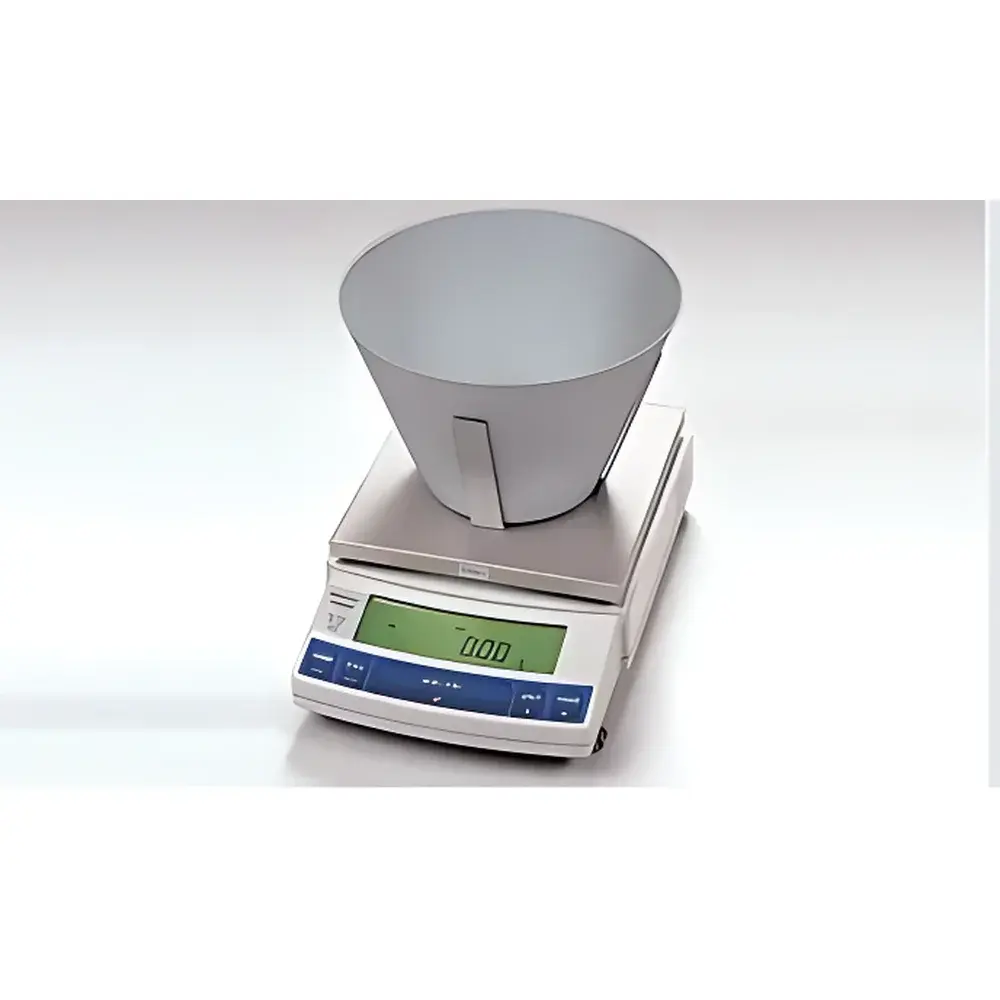
Shimadzu UX/UW Series Animal Weighing Balances for Small Laboratory Animals
| Brand | Shimadzu |
|---|---|
| Origin | Japan |
| Product Type | Import |
| Model Series | UX/UW Series Animal Weighing Balances |
| Calibration | Internal (UW) / External (UX) |
| Display Resolution | 0.01 g or 0.1 g |
| Max Capacity | 2,200 g to 8,200 g |
| Power Consumption | ≤12 VA |
| Animal Pan Dimensions | Circular, Bottom Ø110 mm / Top Ø200 mm / Height 130 mm |
| Connectivity | RS-232C to PC (Windows 95–XP compatible), Optional Printer EP-80/EP-50WIN |
| Compliance | GLP/GMP-ready, ISO-compliant calibration record generation, FDA 21 CFR Part 11–compatible data traceability (with audit trail enabled via software/printing) |
Overview
The Shimadzu UX/UW Series Animal Weighing Balances are precision laboratory instruments engineered specifically for reliable, repeatable mass measurement of conscious, unrestrained small laboratory animals—including mice, rats, and other rodents—during routine pharmacological, toxicological, metabolic, and behavioral studies. Unlike conventional analytical or top-loading balances, these systems integrate purpose-built mechanical design and proprietary animal weighing firmware to suppress motion-induced instability. The balance employs electromagnetic force compensation (EMFC) transduction technology, delivering high linearity, minimal drift, and rapid settling time (<2 seconds typical for stable reading acquisition). The ergonomic cylindrical animal pan—tapered from Ø110 mm base to Ø200 mm opening and 130 mm tall—provides secure containment while minimizing stress-induced locomotion. Built-in real-time zero-tracking compensates for excreta or bedding residue upon animal removal, eliminating manual tare operations and enabling sequential weighing without workflow interruption.
Key Features
- Animal-specific firmware with dynamic filtering algorithms that suppress transient load fluctuations caused by respiration, limb movement, or tail flicking—ensuring stable weight capture within 1–3 seconds.
- Auto-zero compensation upon animal removal: residual mass (e.g., urine, feces, bedding fragments) is subtracted automatically; display returns to zero without pressing the TARE key.
- Integrated real-time clock (RTC) stamps every weight reading and calibration event with date and time (YYYY-MM-DD HH:MM:SS), supporting full chronological traceability.
- UW-series models feature built-in motorized calibration weights and “Scheduled Auto-Calibration” — users define intervals (e.g., every 4 or 12 hours); system executes full sensitivity verification unattended.
- One-touch manual calibration: press CAL button to initiate immediate internal or external calibration (UX models require optional external weight).
- RS-232C interface enables direct data streaming to Windows-based applications (Microsoft Excel, LabArchives, ELN platforms) using standard ASCII protocol—no proprietary drivers required.
- Optional EP-80 or EP-50WIN thermal printers generate hardcopy records compliant with ISO/IEC 17025 documentation requirements: each printout includes operator ID (if logged), balance serial number, timestamp, calibration status, and measured value.
Sample Compatibility & Compliance
These balances accommodate live, non-sedated small mammals up to 8.2 kg (UW8200S), with optimized pan geometry reducing escape risk and minimizing restraint-related physiological artifacts. All models meet Japanese Industrial Standards (JIS B 7720-1) for non-automatic weighing instruments and conform to OIML R76-1 Class II accuracy requirements for laboratory use. Data integrity functions—including immutable timestamping, operator-identifiable calibration logs, and printer-generated audit trails—align with Good Laboratory Practice (GLP) and Good Manufacturing Practice (GMP) frameworks. When integrated with validated LIMS or electronic lab notebook (ELN) systems, the balances support compliance with FDA 21 CFR Part 11 (electronic records and signatures) through configurable user access control and event logging.
Software & Data Management
No dedicated software installation is required for basic operation or data export. The balance operates as a virtual COM port device: ASCII-formatted weight values (e.g., “+427.32 g”) transmit in real time upon stabilization, fully compatible with Excel’s “Get External Data” or VBA automation. For regulated environments, third-party middleware (e.g., LabWare LIMS, Thermo Fisher SampleManager) can parse timestamps and metadata via RS-232 parsing scripts. Calibration reports—generated on demand or automatically after each calibration—include instrument ID, calibration weight nominal value, deviation, pass/fail status, and technician identifier (if entered via keypad). All records adhere to ISO/IEC 17025 clause 7.7 (Control of Records) and support retrospective review during regulatory inspections.
Applications
- Longitudinal body weight monitoring in preclinical efficacy and safety studies (ICH S5-R3, OECD 407/408)
- Dosing regimen verification via weight-based drug administration (mg/kg)
- Metabolic cage integration for food/water intake correlation
- Behavioral assay baseline weighting (e.g., before open-field or forced swim tests)
- Quality control of breeding colonies (weight consistency across litters)
- Regulatory submission packages requiring auditable, timestamped raw weight data
FAQ
Does the balance require special training to operate in animal mode?
No. Animal mode activates automatically upon power-on; no menu navigation or mode switching is needed. The firmware applies motion compensation continuously.
Can the internal calibration weight in UW models be recalibrated or replaced?
Yes. Shimadzu-certified service technicians perform periodic verification and replacement per JIS Z 8001 and manufacturer-recommended 12-month intervals.
Is the RS-232 output compatible with modern Windows 10/11 systems?
Yes—via USB-to-RS-232 adapters with FTDI or Prolific chipsets; virtual COM port drivers enable seamless integration with current OS versions.
How is operator identity captured in printed calibration records?
A 4-digit operator code is manually entered via keypad prior to calibration; this ID is embedded in all subsequent printed or transmitted calibration logs.
Are the animal pans autoclavable?
No. The polycarbonate pan (P/N 321-62150) is cleaned with 70% ethanol or approved disinfectants; autoclaving will deform its geometry and compromise weighing accuracy.