
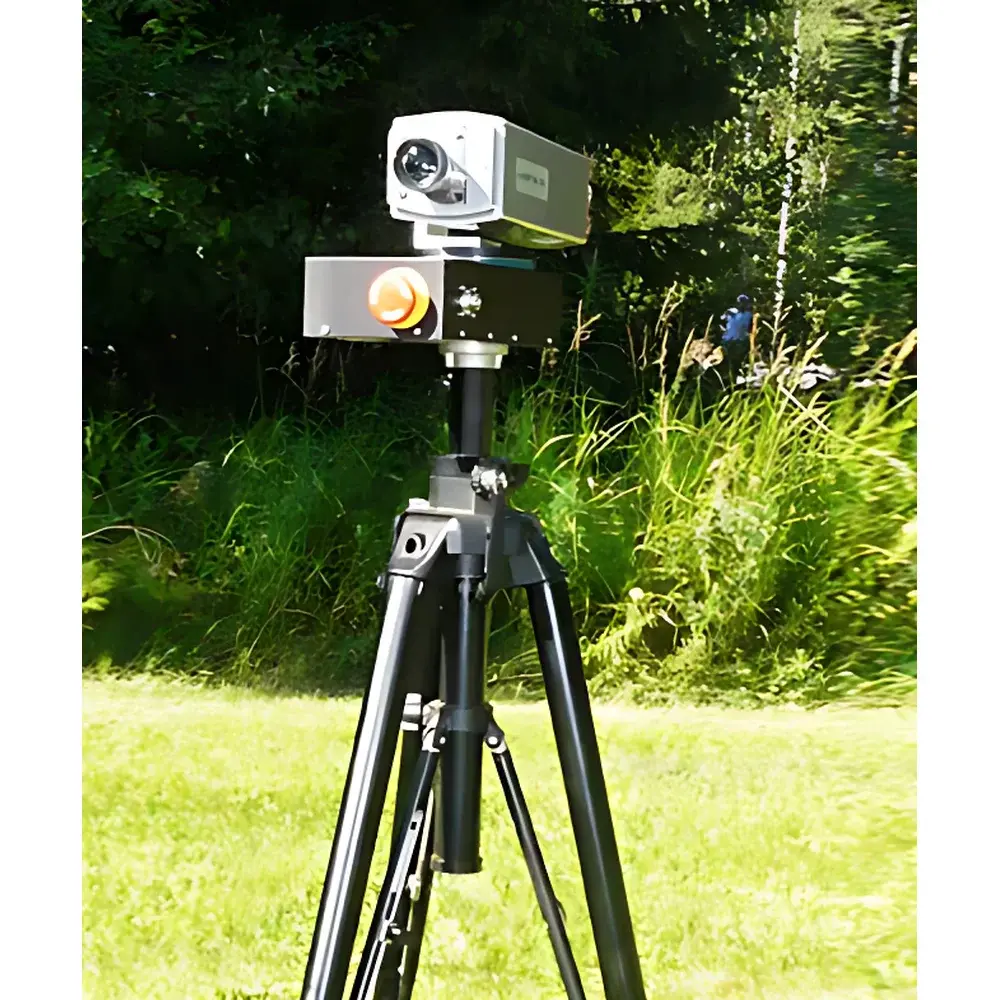
SpectraScan High-Spectral Imaging Analysis System by Specim
| Brand | Specim |
|---|---|
| Origin | Finland |
| Model | SpectraScan |
| Spectral Range Options | 400–1000 nm (VIS-NIR), 950–1700 nm (SWIR), 1000–2500 nm (SWIR) |
| Spectral Resolution (FWHM) | 2.9–12 nm |
| Spatial Resolution | 512–2184 pixels |
| Optical Aperture | f/1.7–f/2.4 |
| SNR | >400:1 to >1050:1 |
| Frame Rate | 45–670 fps |
| Weight | 1.26–>14 kg |
| Optional Modules | MWIR/LWIR imaging, Thermal IR integration, Solar-Induced Chlorophyll Fluorescence (SIF) imaging |
Overview
The SpectraScan High-Spectral Imaging Analysis System is a turnkey laboratory and field-deployable platform engineered for quantitative, spatially resolved spectral characterization of biological and material samples. Built upon Specim’s industry-proven push-broom hyperspectral imaging architecture, the system integrates a calibrated hyperspectral camera, precision motorized scanning stage, and modular optical interface—enabling consistent radiometric and geometric measurement across diverse sample geometries. Unlike snapshot or tunable-filter systems, the push-broom design ensures high spectral fidelity through line-scan acquisition synchronized with precise sample translation, minimizing motion-induced spectral distortion and preserving pixel-level spectral integrity. The system operates on fundamental principles of spectral reflectance, transmittance, and fluorescence spectroscopy, delivering contiguous spectral datacubes (x, y, λ) with full wavelength coverage at user-selectable spectral and spatial sampling densities. It is designed for rigorous scientific use in controlled environments (e.g., growth chambers, phenotyping labs) as well as mobile applications (e.g., greenhouse carts, field spectroradiometric surveys), supporting traceable, repeatable measurements compliant with ISO 17025-aligned calibration workflows.
Key Features
- Modular camera selection: Interchangeable VIS-NIR (400–1000 nm), SWIR-I (950–1700 nm), and SWIR-II (1000–2500 nm) sensors—each factory-calibrated for radiometric accuracy and spectral response uniformity.
- Precision scanning stage: Motorized XYZ stage with sub-micron positioning repeatability and programmable scan velocity, enabling reproducible macro-scale imaging of leaves, seeds, tissue sections, or food products.
- High-fidelity optics: Fast f/1.7–f/2.4 lenses optimized for minimal vignetting and chromatic aberration across operational bands; optional telecentric and macro configurations available.
- Real-time acquisition engine: Onboard FPGA-based preprocessing supports dark current subtraction, non-uniformity correction (NUC), and spectral binning—reducing raw data volume without compromising analytical resolution.
- Thermal stability management: Active temperature stabilization for SWIR cameras ensures long-term spectral calibration retention (<±0.2 nm drift over 8 h at 25°C ambient).
- Expandable architecture: Native support for co-registration with thermal infrared (LWIR/MWIR) modules and solar-induced chlorophyll fluorescence (SIF) excitation units via synchronized trigger I/O and shared coordinate referencing.
Sample Compatibility & Compliance
The SpectraScan system accommodates flat, semi-rigid, and gently curved samples up to 30 × 30 cm (standard stage) or scalable to 1 m² (custom gantry). Compatible specimens include intact plant canopies, detached leaves, seed lots, herbal powder pellets, meat/fish fillets, pharmaceutical tablets, and polymer films. All core components comply with CE marking requirements (EMC Directive 2014/30/EU, RoHS 2011/65/EU). Radiometric calibration certificates are traceable to NIST-traceable standards (e.g., SIRCUS, PTB reference lamps). Data acquisition protocols support audit-ready metadata embedding per ISO/IEC 17025:2017 Annex A.2 and align with FDA 21 CFR Part 11 requirements when deployed with validated software modules (electronic signatures, audit trails, role-based access control).
Software & Data Management
Acquisition and analysis are managed via Specim’s proprietary Spectral Studio software suite (v4.3+), which provides intuitive workflow scripting, batch processing, and export to HDF5, ENVI, or MATLAB-compatible formats. Key capabilities include spectral library matching (e.g., USP Herbal Reference Standards), multivariate regression (PLS-R, PCA), vegetation index mapping (NDVI, PRI, MCARI), and fluorescence yield quantification (ΦPSII, Fv/Fm). Raw data is stored with embedded EXIF-like metadata (wavelength grid, exposure time, lens ID, calibration timestamp). For regulated environments, optional IQ/OQ/PQ documentation packages and 21 CFR Part 11-compliant validation kits are available. All software updates undergo GLP-aligned regression testing and version-controlled release notes.
Applications
- Plant Phenotyping: Non-destructive monitoring of chlorophyll content, water stress indices, nitrogen status, and senescence progression across genotypes under controlled or field conditions.
- Seed & Grain Quality Control: Detection of fungal contamination, viability assessment, varietal purity verification, and moisture distribution mapping using SWIR absorption features.
- Herbal Medicine Authentication: Discrimination of adulterants and substitution species (e.g., Angelica sinensis vs. Angelica dahurica) via spectral fingerprinting in 1000–2500 nm range.
- Food Safety & Authenticity: Identification of mycotoxin-infected cereals, olive oil adulteration, and meat species mislabeling using chemometric models trained on reference libraries.
- Animal Phenotyping: Skin lesion classification, wound healing tracking, and coat pigment analysis in preclinical and agricultural models.
- Materials Characterization: Polymer degradation assessment, coating thickness estimation, and contaminant identification on industrial surfaces.
FAQ
What spectral calibration standards are included with the system?
Each camera module ships with a NIST-traceable reflectance standard (e.g., Spectralon® 99% white) and a dark reference cap. Annual recalibration services are available through Specim’s EU-accredited metrology lab.
Can SpectraScan be integrated into an existing LIMS or ELN infrastructure?
Yes—via RESTful API and configurable metadata export (JSON/XML), enabling bidirectional data exchange with LabVantage, Benchling, or Thermo Fisher SampleManager.
Is real-time spectral classification supported during acquisition?
Spectral Studio supports GPU-accelerated inference for pre-trained models (e.g., SVM, Random Forest); latency is typically <150 ms per frame at 512 × 512 spatial resolution.
How is spatial registration handled when combining VIS-NIR and SWIR data?
A multi-sensor alignment routine uses fiducial markers and sub-pixel cross-correlation to achieve ≤0.3-pixel geometric registration RMS error across modalities.
Does the system meet requirements for GLP or GMP-regulated studies?
When deployed with validated software, documented SOPs, and periodic performance qualification (PQ), the SpectraScan platform meets core technical requirements for GLP-compliant spectral phenotyping studies per OECD 111 and ICH M10 guidelines.






