
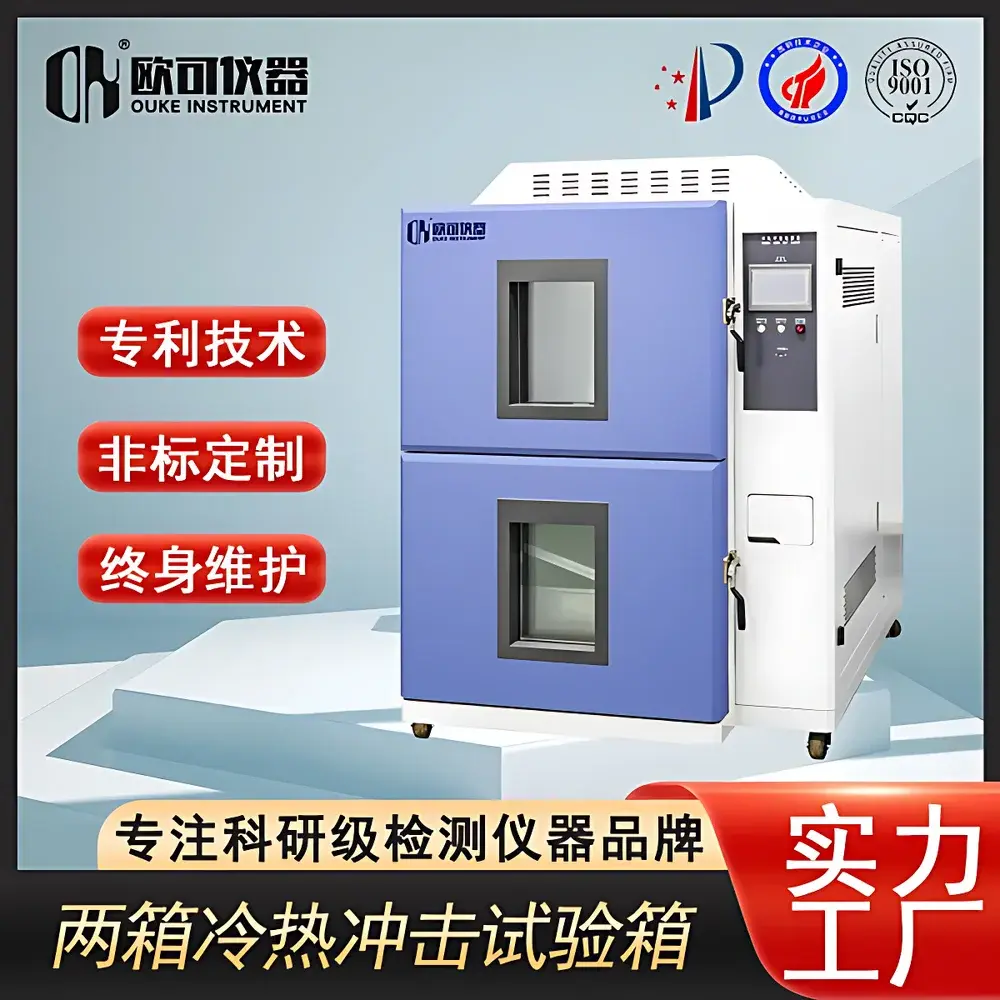
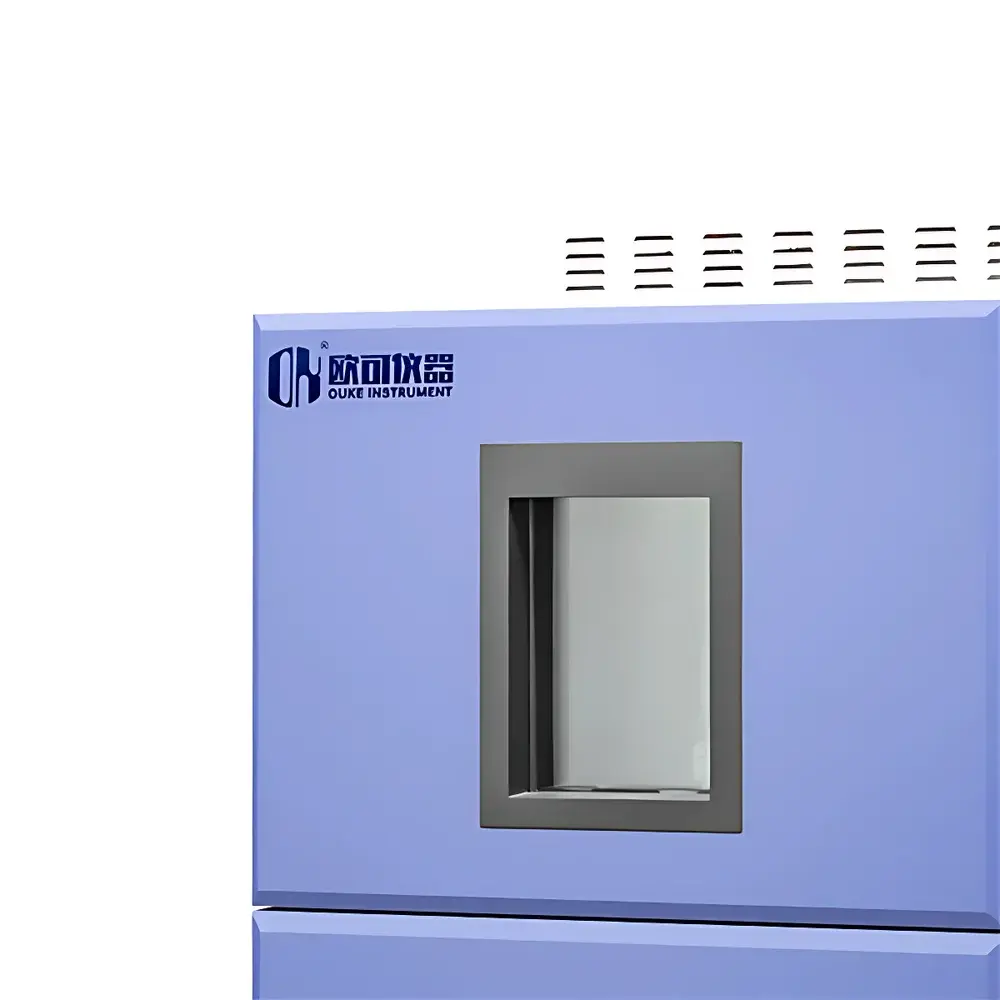
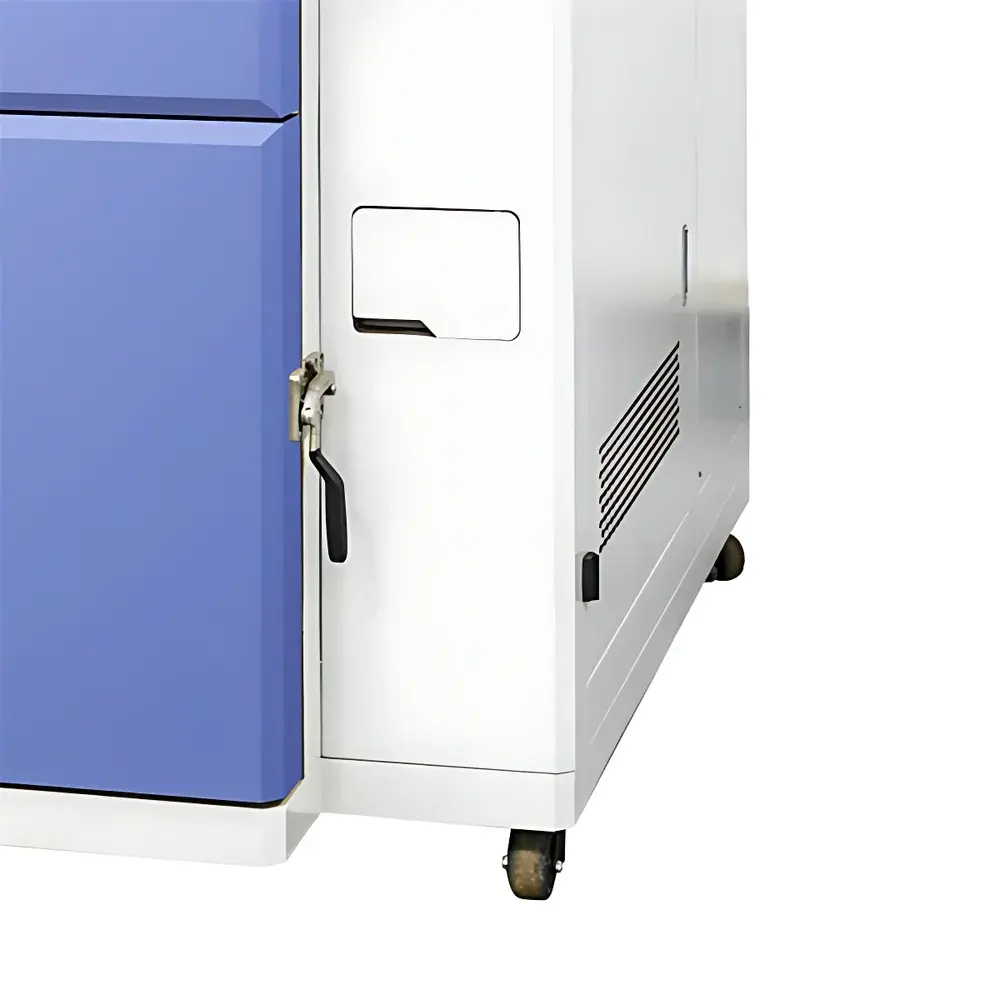
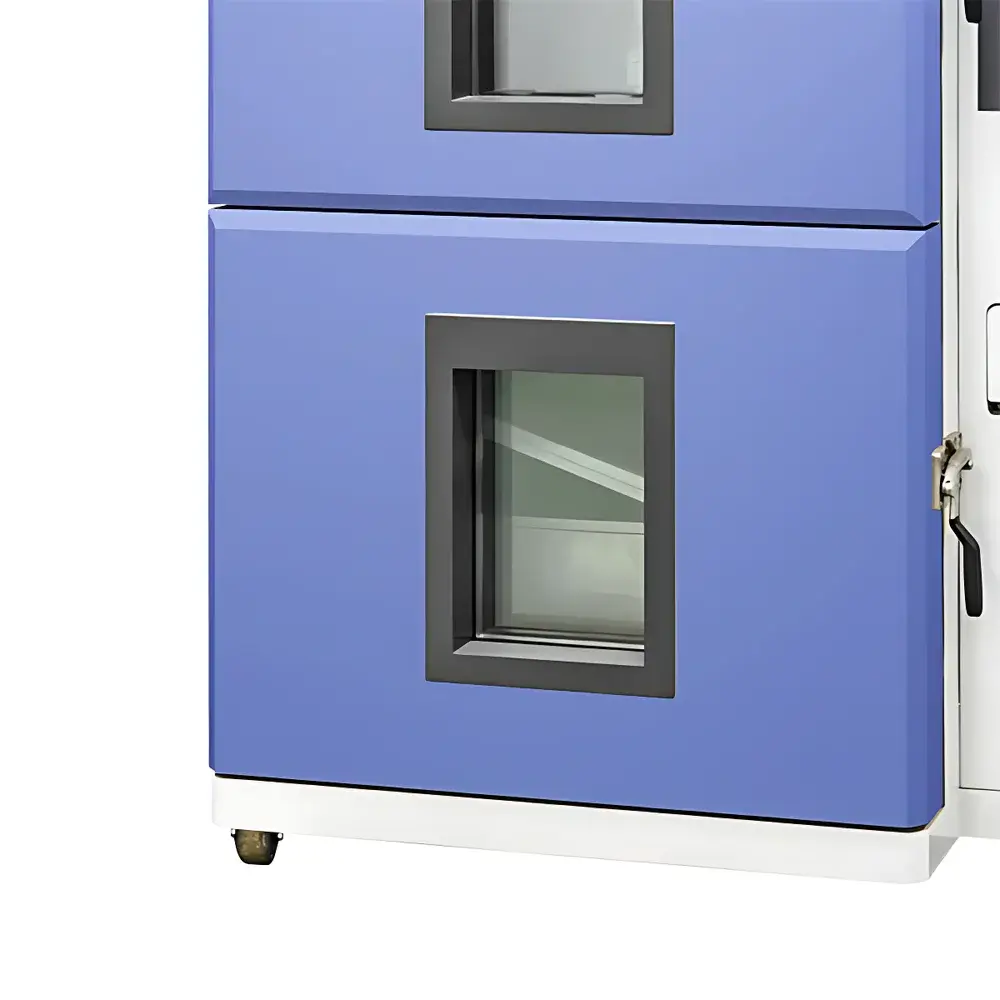
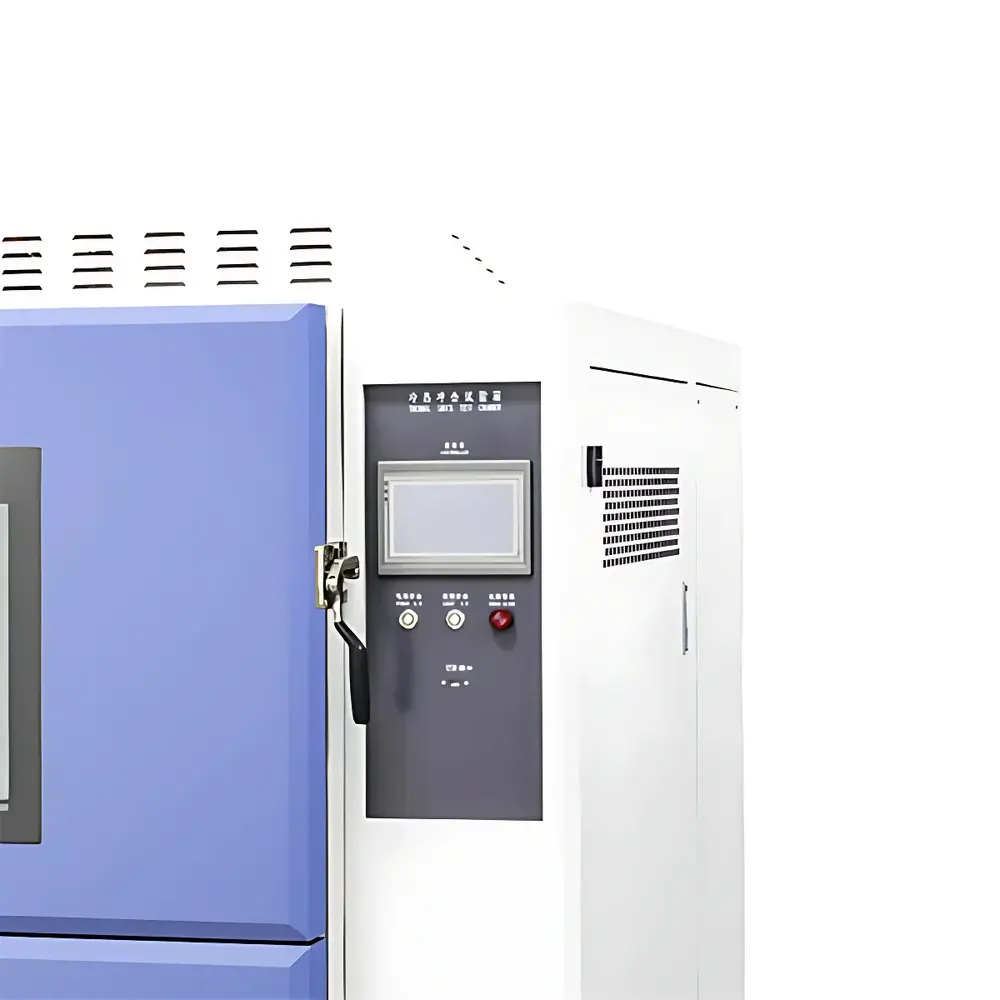
OK 0K-TS-49.555 Dual-Zone Thermal Shock Test Chamber
| Brand | OK |
|---|---|
| Origin | Guangdong, China |
| Manufacturer Type | Direct Manufacturer |
| Model | 0K-TS-49.555 |
| Temperature Range | -45 °C to +150 °C |
| Temperature Transition Time | ≤10 s (typical) |
| Temperature Stability | ±2 °C |
| Ramp Rate (Heating/Cooling) | ≥20 °C/s (chamber air transition, not sample-based) |
| Chamber Architecture | Dual-zone (lift-basket type) |
Overview
The OK 0K-TS-49.555 Dual-Zone Thermal Shock Test Chamber is an engineering-grade environmental test system designed to perform accelerated thermal shock testing in strict compliance with international reliability standards—including MIL-STD-883 Method 1010, IEC 60068-2-14 (equivalent to GB/T 2423.22), and JEDEC JESD22-A104. Unlike temperature cycling or rapid temperature change (RTC) chambers—which impose gradual, linear thermal gradients—this dual-zone chamber subjects specimens to abrupt, step-function temperature transitions between two independently stabilized thermal zones. Its core operational principle relies on mechanical transfer: a pneumatically actuated lift basket rapidly transports the test specimen from the hot zone (up to +150 °C) to the cold zone (down to −45 °C), or vice versa, achieving zone-to-zone transition times of ≤10 seconds. This replicates real-world stress events such as sudden immersion into extreme ambient conditions (e.g., aerospace components moving from cryogenic ground storage into heated avionics bays) and induces thermomechanical failure modes including interfacial delamination, solder joint fracture, encapsulant cracking, and contact resistance drift.
Key Features
- Dual-zone architecture with independent high-temperature (+150 °C) and low-temperature (−45 °C) chambers, each equipped with dedicated heating/cooling circuits and PID-controlled air circulation
- Pneumatic lift-basket mechanism with position-synchronized safety interlocks and <10-second nominal transition time (validated per IEC 60068-2-14 Annex A)
- Thermal stability maintained at ±2 °C across both zones during dwell periods, ensuring reproducible dwell-phase conditioning prior to transfer
- Stainless-steel interior construction with insulated double-wall panels and non-condensing airflow design for long-term corrosion resistance and minimal frost accumulation
- Integrated over-temperature, over-pressure, and door-interlock safeguards compliant with IEC 61000-6-2/6-4 EMC and UL 61010-1 safety requirements
- Modular refrigeration system utilizing environmentally compliant R-404A/R-23 cascade cooling, optimized for rapid thermal recovery post-transfer
Sample Compatibility & Compliance
The 0K-TS-49.555 accommodates specimens up to 49.5 L total volume (W × D × H: 450 × 450 × 245 mm) with maximum load capacity of 25 kg on the lift basket. Its mechanical transfer design is optimized for rigid, self-contained units—such as PCB assemblies, automotive ECUs, military-grade connectors, and hermetically sealed sensors—that can withstand brief inertial loading (<5 g peak) during basket motion. The chamber meets full traceability requirements for GLP and GMP-regulated environments: all temperature setpoints, dwell durations, transition timestamps, and alarm logs are timestamped and stored with audit trail capability. Calibration procedures follow ISO/IEC 17025-compliant protocols, and optional NIST-traceable sensor validation kits are available for IQ/OQ/PQ documentation.
Software & Data Management
Control is executed via the OK-TCM v3.2 embedded controller running on a real-time Linux kernel, featuring a 10.1″ capacitive touchscreen interface with multi-user role-based access (Operator, Engineer, Administrator). Test programs support up to 999 cycles with nested dwell/transfer sequences, conditional branching, and real-time deviation alerts. All thermal data—including chamber zone temperatures, basket position status, and system fault codes—are logged at 1 Hz resolution and exportable in CSV or XML format. Optional software modules enable 21 CFR Part 11 compliance with electronic signatures, audit trail encryption, and secure remote monitoring via TLS 1.2–encrypted Ethernet or Wi-Fi (IEEE 802.11ac). Data archives are compatible with LabArchives, Benchling, and internal LIMS integration via RESTful API.
Applications
- Qualification testing of electronic packages per JEDEC JESD22-A104 (Temperature Cycling) and MIL-STD-883 Method 1010 (Thermal Shock)
- Failure analysis root-cause investigation of thermally induced defects in MEMS devices, power modules, and optoelectronic housings
- Reliability screening for automotive ADAS components subjected to under-hood thermal transients
- Validation of conformal coating integrity and adhesive bond strength in hybrid microcircuits
- Pre-conditioning of materials prior to mechanical or electrical functional testing in aerospace and defense supply chains
FAQ
What distinguishes thermal shock testing from temperature cycling or rapid temperature change (RTC) testing?
Thermal shock applies instantaneous, discontinuous temperature steps between two stable extremes—emphasizing mechanical stress from differential expansion. Temperature cycling imposes continuous, linear ramps (e.g., 10 °C/min), inducing cumulative fatigue. RTC systems operate within a single chamber; shock chambers require physically separate thermal reservoirs.
Is this unit suitable for powered-in testing (e.g., live bias during transition)?
No—due to basket motion and potential EMI from pneumatic actuators, the 0K-TS-49.555 is intended for unpowered, static evaluation. For powered thermal shock, consider OK’s tri-zone air-switching configuration (model 0K-TS-49.555-TF), where the specimen remains stationary.
Does the stated ramp rate of ≥20 °C/s refer to sample temperature or chamber air temperature?
It refers to chamber air temperature transition between zones—not sample surface or core temperature. Actual specimen thermal response depends on mass, geometry, and thermal diffusivity, and must be characterized separately per ASTM E2251.
Can the system be integrated into an automated test cell with PLC-level control?
Yes—digital I/O ports (24 VDC, opto-isolated) support start/stop, cycle completion, and fault signaling. Modbus TCP and EtherNet/IP drivers are included for seamless SCADA or MES integration.
What calibration and maintenance intervals are recommended?
Chamber zone sensors require annual NIST-traceable calibration. Pneumatic system filters should be replaced every 6 months; refrigerant charge and oil levels inspected annually per OEM service bulletin SB-0K-TS-2023-01.



