
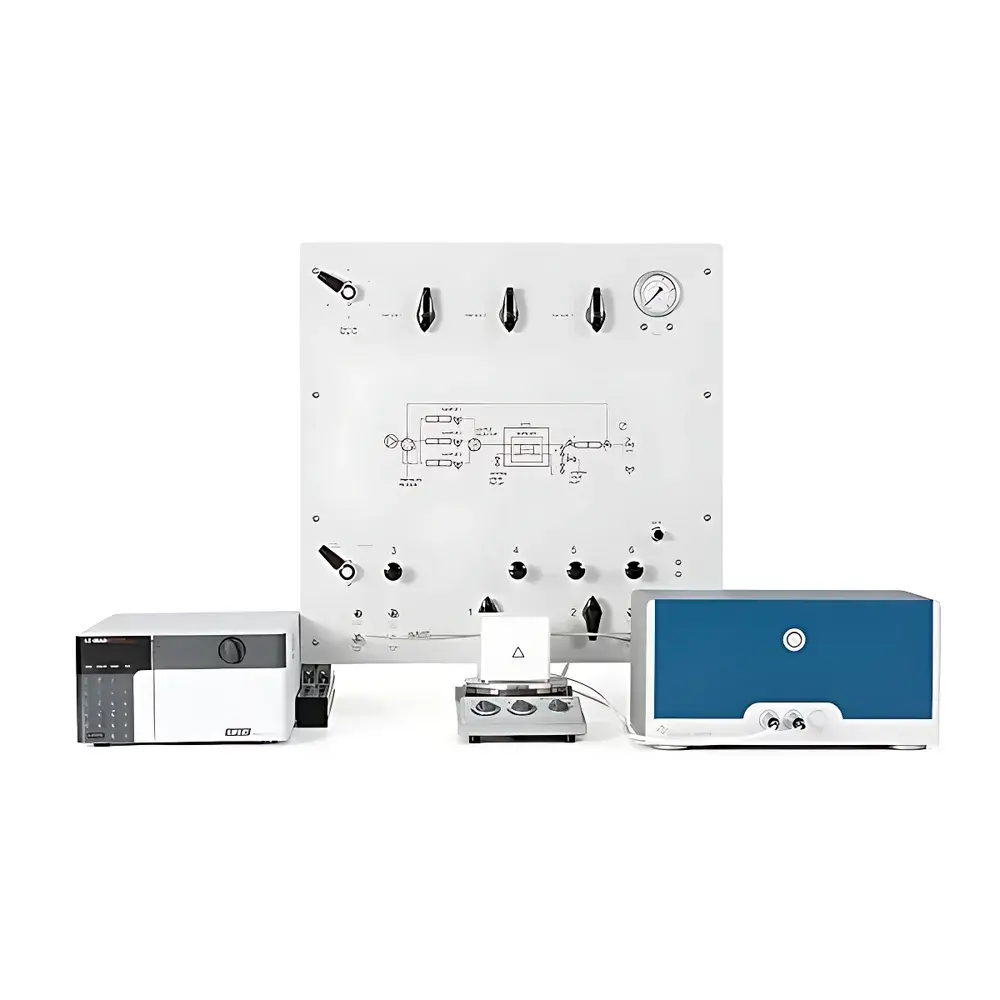
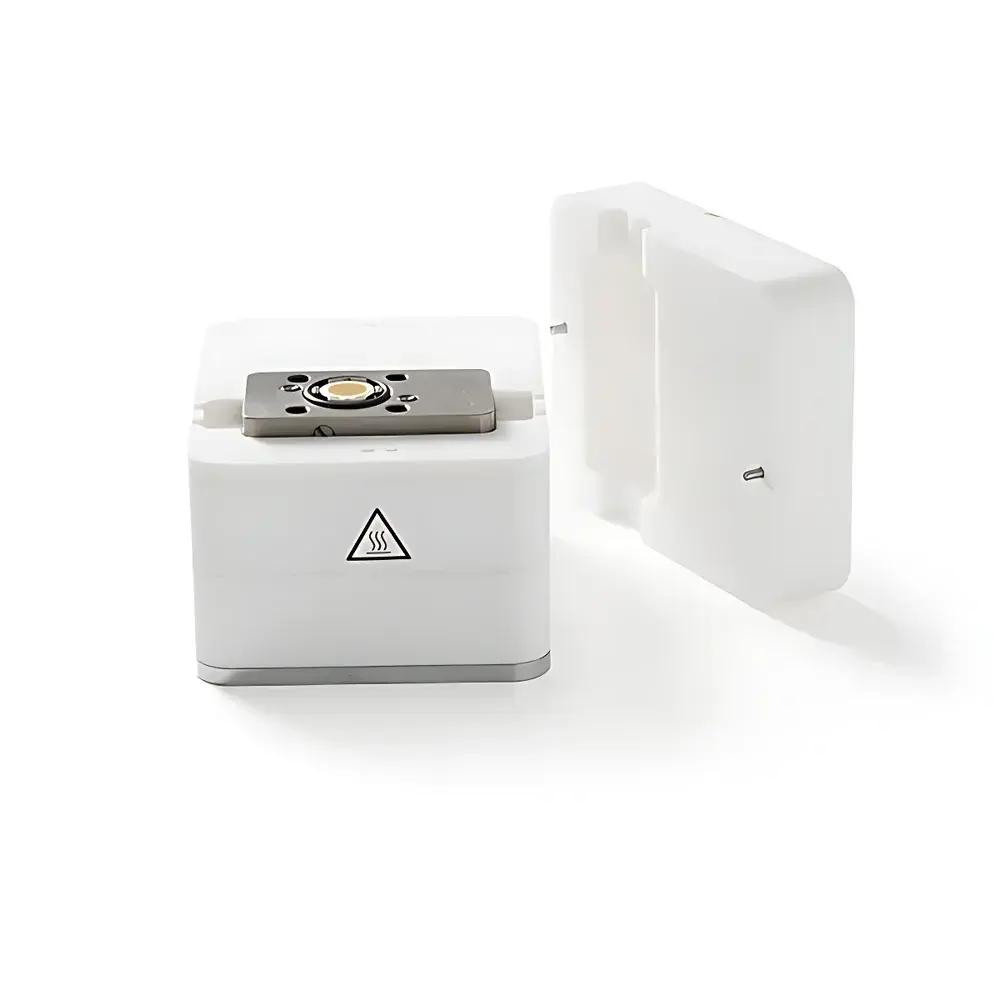
QSense High Pressure QCM-D System
| Brand | QSense |
|---|---|
| Origin | Sweden |
| Manufacturer Type | Authorized Distributor |
| Origin Category | Imported |
| Model | QSense High Pressure |
| Quotation | Upon Request |
| Minimum Sample Volume | 100 µL |
| Temperature Range | 15–150 °C |
| Frequency Range | 1–70 MHz |
| Max. Operating Pressure | 200 bar |
| Temperature Stability | ±0.02 °C (software-controlled) |
| Time Resolution | >100 data points/sec per frequency |
| Liquid-phase Mass Sensitivity | <1 ng/cm² |
| Liquid-phase Dissipation Sensitivity | <0.08 × 10⁻⁶ |
| Chip Surface Options | >50 standard materials (Au, SiO₂, stainless steel SS2343/SS2348, Fe₂O₃, kaolinite, etc.), custom substrates available |
Overview
The QSense High Pressure QCM-D System is a fully integrated, research-grade quartz crystal microbalance with dissipation monitoring platform engineered for real-time, label-free characterization of interfacial processes under industrially relevant high-pressure and high-temperature conditions. Unlike conventional QCM-D instruments limited to ambient or mild thermal environments, this system employs a robust pressure-rated flow cell, precision temperature-controlled sample stage, high-pressure peristaltic pumping module, and dedicated electronics to enable simultaneous measurement of frequency (Δf) and energy dissipation (ΔD) at pressures up to 200 bar and temperatures up to 150 °C. Based on the piezoelectric resonance principle, the instrument detects nanogram-level mass changes (via Sauerbrey or viscoelastic modeling) and structural softness/rigidity of adsorbed layers through coupled acoustic wave propagation and damping analysis. This dual-parameter output provides quantitative insight into molecular adsorption/desorption kinetics, conformational rearrangements, hydration state, and viscoelastic properties of thin films—critical for mechanistic understanding in catalysis, enhanced oil recovery, membrane science, tribology, and food processing engineering.
Key Features
- Full operational range: 90–200 bar pressure; 15–150 °C temperature (±0.02 °C stability, software-regulated)
- Simultaneous multi-harmonic QCM-D detection from 1st to 7th overtone (1–70 MHz), enabling thickness, density, and viscoelastic modeling via Voigt-based fitting
- Modular high-pressure flow cell with sapphire windows and chemically resistant wetted parts (Hastelloy C-276, PEEK, FKM seals) compatible with organic solvents, brines, and corrosive media
- Integrated HPLC-grade peristaltic pump with pulse-dampening and backpressure regulation for stable laminar flow under elevated pressure
- Standard 5-MHz AT-cut quartz sensor with >50 pre-characterized surface chemistries—including Au, SiO₂, stainless steel (SS2343/SS2348), Fe₂O₃, kaolinite, and carbon-based coatings—with optional custom substrate fabrication
- Time resolution exceeding 100 data points per second per harmonic, supporting rapid kinetic profiling of transient interfacial events
- Compliant with ISO/IEC 17025 documentation practices; audit trail functionality in QSoft and QSense Dfind supports GLP/GMP-aligned workflows
Sample Compatibility & Compliance
The QSense High Pressure QCM-D accommodates aqueous and non-aqueous systems, including crude oil fractions, polymer solutions, surfactant micelles, biofluids, and high-salinity formation waters. Its pressure-tolerant fluidics support direct integration with upstream sample conditioning units (e.g., filtration, degassing, inline pH control). All wetted surfaces meet USP Class VI biocompatibility standards, and elastomer selections conform to FDA 21 CFR 177.2600 for food-contact applications. The system complies with CE marking requirements (2014/30/EU EMC Directive and 2014/35/EU Low Voltage Directive) and operates within IEC 61000-6-3 emission limits. For regulated industries, full electronic record integrity—including user authentication, parameter change logs, and raw data immutability—is enforced via QSoft’s 21 CFR Part 11-compliant configuration.
Software & Data Management
Data acquisition and real-time visualization are managed through QSoft v5.x, a Windows-native application supporting USB 2.0 communication and time-stamped metadata embedding (operator ID, environmental conditions, protocol version). Post-experiment analysis is performed using QSense Dfind, which implements advanced inverse modeling algorithms for layered viscoelastic reconstruction, including Voigt-series fitting, hydration-corrected mass calculation, and dissipation-guided structural classification (rigid vs. soft adlayers). Export formats include CSV, Excel (.xlsx), and image-ready vector/raster outputs (WMF, PNG, JPG). All raw sensor data are stored in proprietary .qsd binary format with embedded calibration signatures, ensuring traceability across instrument platforms and laboratory sites. Batch processing and scripting via Python API (QSense SDK) enable automated reporting for QA/QC pipelines.
Applications
- Enhanced Oil Recovery (EOR): Quantifying polymer/surfactant adsorption onto mineral surfaces (e.g., kaolinite, quartz) under reservoir-relevant T/P to optimize flooding formulations and mitigate retention losses
- Membrane Fouling & RO Performance: Monitoring organic/inorganic scaling dynamics on polyamide or cellulose acetate membranes at elevated feed pressures, correlating flux decline with interfacial adhesion energy
- Lubricant Additive Screening: Real-time assessment of anti-wear and detergent molecule binding to stainless steel or ferrous alloy surfaces under simulated engine conditions (T = 120 °C, P = 150 bar)
- Asphaltene Deposition Modeling: Using silica chips functionalized with asphaltenes to study desorption thresholds as a function of pH, solvent composition, and thermal gradient
- Food Processing Hygiene: Characterizing protein-carbohydrate-fatty acid fouling kinetics on SS316L under pasteurization-grade thermal cycling and shear, informing CIP chemical selection
- Heterogeneous Catalysis: Tracking reactant/product adsorption/desorption on supported metal oxides during exothermic reactions, revealing rate-limiting interfacial steps
FAQ
What pressure and temperature ranges are validated for long-term operation?
The system is certified for continuous operation at 200 bar and 150 °C using the standard high-pressure flow cell and SS2348 chip. Extended-duration experiments (>72 h) require active cooling of the electronics cabinet and stable ambient temperature (±1 °C).
Can I use aggressive solvents such as THF or chloroform?
Yes—provided appropriate chemical compatibility verification is performed. Standard flow cells utilize PEEK, Hastelloy, and FKM components rated for broad organic solvent resistance. Custom fluoropolymer-sealed variants are available upon request.
Is calibration traceable to national standards?
Frequency calibration is referenced to NIST-traceable quartz resonator standards. Temperature calibration is verified using PT100 sensors calibrated against accredited metrology labs (ISO/IEC 17025).
How is data integrity ensured in regulated environments?
QSoft supports role-based access control, electronic signatures, and immutable audit trails compliant with FDA 21 CFR Part 11 and EU Annex 11 requirements. Raw data files include cryptographic hash signatures for tamper detection.
Are custom chip geometries or surface chemistries supported?
Yes—QSense offers OEM chip fabrication services, including patterned electrodes, nanoporous templates, and site-specific functionalization (e.g., thiol-terminated SAMs, silane-grafted oxides) with full characterization reports.






